Rudolph A. Marcus
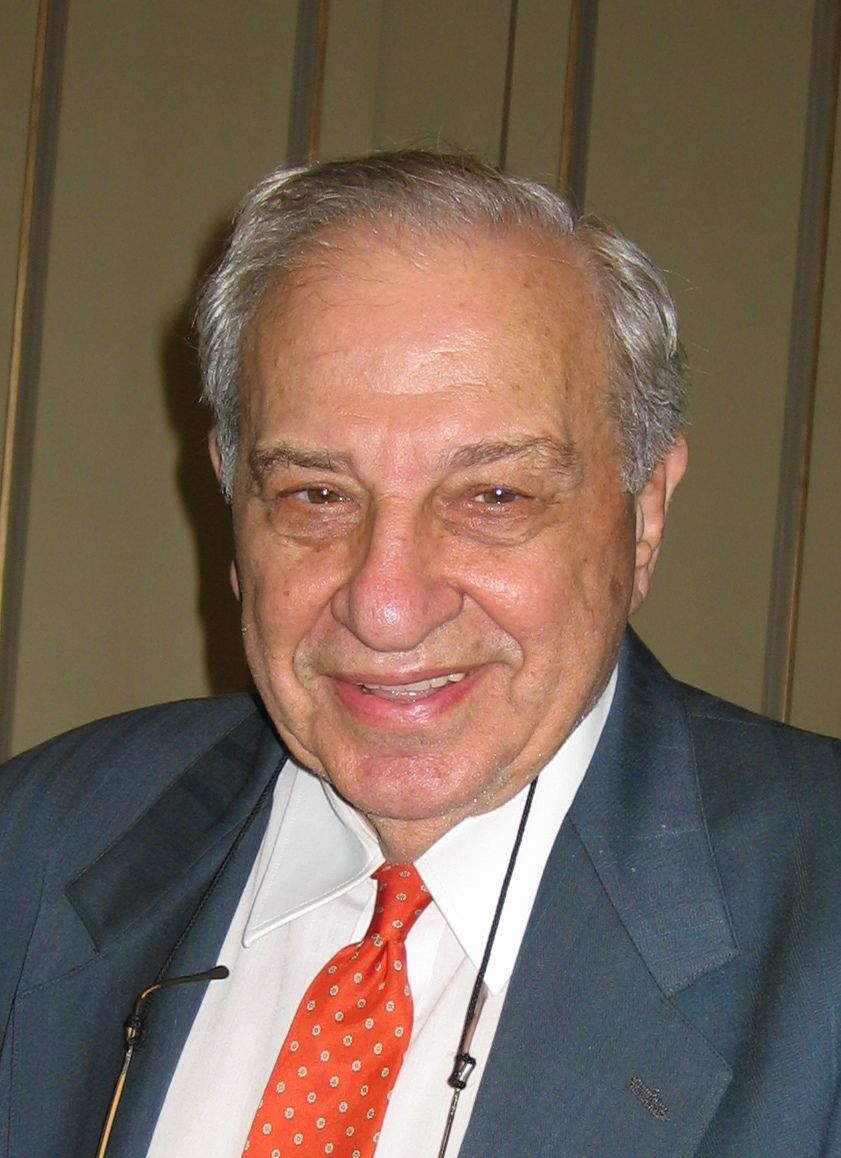
Rudolph Arthur Marcus was a Canadian-born American chemist whose groundbreaking theoretical work on electron transfer earned him the 1992 Nobel Prize in Chemistry. Born in Montreal, Quebec, in 1923, Marcus developed a comprehensive framework, now known as Marcus theory, which describes the rates and mechanisms of electron transfer reactions fundamental to life and technology. His work provided critical insights into processes such as photosynthesis, respiration, and electrochemical energy conversion, influencing chemistry, biochemistry, and materials science. Marcus maintained a prolific research career for nearly eight decades, holding professorships at institutions including the Polytechnic Institute of Brooklyn, the University of Illinois, and the California Institute of Technology until his death in 2026.
Early Life and Education in Montreal
Rudolph Arthur Marcus was born on July 21, 1923, in Montreal, Quebec, to Esther (Cohen) and Myer Marcus. His father was born in New York and his mother in England, with the family's origins tracing back to Ukmergė, Lithuania, then part of Russia. Marcus grew up in a predominantly Jewish neighbourhood in Montreal, though he also spent part of his childhood in Detroit, Michigan. He attributed his early interest in science and mathematics to his family environment, recalling that his mother would wheel him near McGill University as an infant and tell him he would attend there one day. He excelled in mathematics at Baron Byng High School, which laid a strong foundation for his future theoretical work. Marcus enrolled at McGill University, where he pursued a chemistry degree but took more mathematics courses than was typical for a chemistry student, a decision that would later prove instrumental.
Under the supervision of Carl A. Winkler, Marcus earned his Bachelor of Science in 1943. He continued at McGill for his doctoral studies, completing his Ph.D. in 1946 with research focused on measuring the kinetics of nitration reactions in solution. His rigorous training in both experimental kinetics and advanced mathematics at McGill provided him with the unique toolkit needed to later tackle complex theoretical problems in chemical reaction dynamics. Following his graduation, he began his postdoctoral career at the National Research Council of Canada in Ottawa, working with E. W. R. Steacie on gas-phase reaction rates. In 1949, he moved to a second postdoctoral position at the University of North Carolina with Oscar K. Rice, where he began his shift toward theoretical chemistry and started work on reaction rate theories.
Academic Career and Development of RRKM Theory
Marcus began his independent academic career in 1951 as an assistant professor at the Polytechnic Institute of Brooklyn, where he would rise to full professor. It was during his early years there that he made a significant contribution to the field of reaction dynamics by fully developing the Rice-Ramsperger-Kassel-Marcus (RRKM) theory. This theory, which combined the earlier RRK theory with transition state theory, provided a powerful framework for understanding the rates of unimolecular reactions, where a single molecule decomposes or isomerizes. Marcus's work on RRKM theory demonstrated his ability to synthesize existing ideas into a more complete and predictive theoretical model. During this period, he also maintained an experimental research program on gas and solution phase reaction rates before deciding to focus exclusively on theoretical work around 1960.
In 1964, Marcus joined the faculty of the University of Illinois at Urbana-Champaign, where he continued to expand his research into reaction dynamics and electron transfer. He introduced action-angle variables into the study of molecular collisions, advancing semiclassical theories of collisions and bound states. His thirteen-year tenure at Illinois was highly productive, solidifying his reputation as a leading theoretical chemist. In 1978, Marcus moved to the California Institute of Technology (Caltech) as the Arthur Amos Noyes Professor of Chemistry, a position he held for the remainder of his life. At Caltech, he continued his investigations into unimolecular reactions, intramolecular dynamics, and, most prominently, electron transfer processes, mentoring students and publishing research well into his later years. His approach to solving problems was to 'go full tilt,' pursuing them intensively until reaching an answer or deciding to set them aside temporarily.
Marcus Theory of Electron Transfer
Marcus's most celebrated achievement is the theory of electron transfer that bears his name, for which he was awarded the 1992 Nobel Prize in Chemistry. Electron transfer is a fundamental chemical process where an electron moves from a donor molecule to an acceptor, and it is essential for life-sustaining processes like photosynthesis and cellular respiration. Prior to Marcus's work, the rates of certain electron transfer reactions, such as between different oxidation states of iron ions in solution, were puzzlingly slow. Marcus theory provided a thermodynamic and kinetic framework to explain these rates by considering not just the electronic coupling between molecules, but also the reorganization of the molecular structures and the surrounding solvent environment. The theory introduced the key concept of reorganization energy, which is the energy required to rearrange the molecular geometries and solvent molecules to a configuration where the electron has nearly the same energy on both the donor and acceptor.
This framework allowed for the calculation of activation barriers for electron transfer reactions. One of the theory's most striking predictions was the existence of an 'inverted region,' where increasing the thermodynamic driving force for the reaction beyond a certain point would actually cause the reaction rate to slow down. This counterintuitive prediction was confirmed experimentally years after Marcus proposed it, providing strong validation for his theoretical model. Marcus theory became the central framework for understanding a vast array of phenomena in electrochemistry, biochemistry, and materials science. The theory describes the process of oxidizing food molecules, where two hydrogen ions, two electrons, and half an oxygen molecule react to produce water and heat, a reaction central to biological energy production. His work gave way to new experimental programs that contributed to all branches of chemistry and biochemistry.
Scientific Impact and Applications
The impact of Marcus's electron transfer theory is vast and interdisciplinary, providing a foundational bridge between chemistry, physics, biology, and materials science. His theoretical framework is indispensable for interpreting and designing processes in modern electrochemical technologies. It forms the basis for understanding and optimizing reactions in fuel cells, batteries, and systems for electrochemical carbon dioxide reduction and nitrogen fixation. The concepts of reorganization energy and the inverted region are critical for research in molecular electronics, photoelectrochemistry, semiconductor electrochemistry, and the study of electrocatalytic processes. Marcus theory is also essential for analyzing bio-electrochemical systems and the function of redox-active enzymes, as well as for interpreting heterogeneous electron transfer at electrode and electrolyte interfaces.
Modern computational electrochemistry and atomistic simulations of electrochemical interfaces continue to rely heavily on the principles Marcus established. His work enabled the rational design of redox-active molecules, catalysts, and functional materials for sustainable energy technologies. The theory's influence extends to understanding processes in corrosion, hydrogen evolution and oxidation, and oxygen electrocatalysis. By providing a quantitative description of activation barriers, Marcus theory allowed scientists to move beyond qualitative descriptions to precise predictions of how molecular structure and environment control electron flow. This has had practical consequences for the development of solar cells, sensors, and advanced catalytic systems.
Major Honours, Awards, and Recognitions
Rudolph Marcus received extensive recognition for his contributions to science, culminating in the 1992 Nobel Prize in Chemistry. His honours include major awards from leading scientific societies and prestigious fellowships. Among his many accolades were several awarded by the American Chemical Society, reflecting his impact on the field. He also received a large number of honorary doctorates from universities across the globe, demonstrating the international reach of his influence.
- Irving Langmuir Prize in Chemical Physics (1978)
- Wolf Prize in Chemistry (1985)
- National Medal of Science (1989)
- Peter Debye Award (1988)
- Willard Gibbs Award (1988)
- Centenary Prize of the Royal Society of Chemistry (1988 to 1989)
- Pauling Medal (1991)
- Hirschfelder Prize in Theoretical Chemistry (1992 to 1993)
- Robinson Medal of the Faraday Division, Royal Society of Chemistry (1982)
- Chandler Medal from Columbia University (1983)
- William Lloyd Evans Award from Ohio State University (1990)
- Theodore William Richards Medal (1990)
- Remsen Award (1991)
- Golden Plate Award of the American Academy of Achievement (1993)
- Fray International Sustainability Award (2019)
Marcus was elected to numerous esteemed academies, including the National Academy of Sciences (1970), the American Academy of Arts and Sciences (1973), and as a Foreign Member of the Royal Society (1987). He received honorary membership in the Royal Society of Chemistry in 1991 and the Royal Society of Canada in 1993. He held a professorial fellowship at University College, Oxford, from 1975 to 1976. His honorary doctorates came from institutions including the University of Chicago (1983), McGill University (1988), the University of Oxford (1995), the University of Illinois at Urbana-Champaign (1997), the University of Waterloo (2002), Nanyang Technological University (2010), and the University of Calgary (2013), with the last recorded being from the University of Santiago, Chile, in 2018.
Personal Approach and Later Years
Beyond his scientific output, Marcus was admired for his intellectual rigor, humility, generosity, and lifelong curiosity. Colleagues and students recalled his gentle humour and the generosity with which he shared his time. He often compared his theoretical work to solving jigsaw puzzles, a pastime he enjoyed as a child, describing the process of fitting pieces of knowledge together. In a 2000 interview, he spoke about his family's academic atmosphere, noting a great-uncle in Sweden who was a theologian and linguist, and uncles in medicine who encouraged his mathematical interests. He became a naturalized citizen of the United States in 1958 but maintained his connection to his Canadian roots throughout his life.
Marcus remained intellectually active and deeply involved in the scientific community throughout his long life. After moving to Caltech in 1978, he became a beloved and respected figure on campus. Remarkably, he continued to conduct research and publish papers well past his 100th birthday, authoring over 340 scientific papers in total. At the time of his death, he was reportedly working on three scientific papers. His career, which effectively spanned eight decades from his first degree in 1943 to his final work in 2026, represents a rare example of sustained scholarly contribution.
Death and Tributes
Rudolph Marcus died at his home in Pasadena, California, on July 16, 2026, just five days before his 103rd birthday. His passing was noted by the international scientific community, with tributes from institutions like Caltech, NYU Tandon, and the International Society of Electrochemistry. Memorial statements highlighted his monumental scientific achievements and his personal qualities. The International Society of Electrochemistry noted that his ideas are woven into nearly everything the electrochemistry community does, and that he mentored generations of students, including undergraduate researchers as recently as 2024.
Obituaries and memorials consistently pointed to the broad applicability of his work, which explained fundamental processes behind photosynthesis, respiration, oxidation, and much more. The University of Hyderabad, which had awarded him an honorary doctorate, mourned his passing. Colleagues described his theory as a foundational breakthrough that crossed disciplinary boundaries, being rooted in physical principles but used to understand chemical and biological processes with lasting applications to energy conversion and modern technologies. His death marked the loss of one of the great visionaries in theoretical chemistry and electrochemistry.
Questions about Rudolph A. Marcus
What is Rudolph Marcus famous for?
Rudolph Marcus is famous for developing the Marcus theory of electron transfer, a fundamental framework in chemistry that explains the rates and mechanisms of electron transfer reactions. For this work, he was awarded the 1992 Nobel Prize in Chemistry. His theory is essential for understanding processes like photosynthesis, cellular respiration, and many electrochemical technologies used in batteries and fuel cells. He also made major contributions to the RRKM theory of unimolecular reaction rates.
Where was Rudolph Marcus born?
Rudolph Arthur Marcus was born in Montreal, Quebec, Canada, on July 21, 1923. He grew up in a Jewish neighbourhood in Montreal and also spent part of his childhood in Detroit, Michigan. He completed all his formal education at McGill University in Montreal, earning his B.Sc. in 1943 and his Ph.D. in Chemistry in 1946. His first postdoctoral position was at the National Research Council of Canada in Ottawa.
What is the Marcus inverted region?
The Marcus inverted region is a key prediction of Marcus theory where, under certain conditions, increasing the thermodynamic driving force for an electron transfer reaction causes the reaction rate to decrease instead of increase. This counterintuitive behaviour occurs when the reorganization energy is low and the reaction becomes highly exothermic. The existence of this inverted region was confirmed by experiment years after Marcus's theoretical prediction, providing strong validation for his model. This prediction is a central part of modern understanding of electron transfer kinetics.
Where did Rudolph Marcus teach?
Marcus held professorships at several major institutions. He began his independent career at the Polytechnic Institute of Brooklyn in 1951, where he served as assistant, associate, and full professor. He later taught at the University of Illinois at Urbana-Champaign from 1964 to 1978. In 1978, he moved to the California Institute of Technology (Caltech) as the Arthur Amos Noyes Professor of Chemistry, where he remained for the rest of his career until his death in 2026. He also held a visiting professorial fellowship at University College, Oxford from 1975 to 1976.
What other major scientific contribution did Marcus make besides electron transfer theory?
Besides his Nobel Prize-winning work on electron transfer, Rudolph Marcus made a significant contribution to chemical kinetics. In 1952, while at the University of North Carolina, he developed the Rice-Ramsperger-Kassel-Marcus theory. This theory, often abbreviated as RRKM theory, combined the earlier RRK theory with transition state theory. It provides a framework for understanding the rates of unimolecular reactions.
How long did Rudolph Marcus live and work?
Rudolph Marcus lived to be 102 years old, passing away on July 16, 2026, just days before his 103rd birthday. His scientific career was extraordinarily long and productive, spanning nearly eight decades from his first degree in 1943 to his final research papers in 2026. He was actively conducting research, mentoring students, and writing papers well past his 100th birthday. He published across eight decades and was at work on three papers at the time of his death.
Sources and further reading
- Rudolph A. Marcus (Wikipedia)
- Obituary, Professor Rudolph A. Marcus (1923 to 2026) (ise-online.org)
- Rudolph A. Marcus, Interview (nobelprize.org)
- Flygare Memorial Lecturer 2004-05 - Rudolph A. Marcus (chemistry.illinois.edu)
- Rudolph Marcus, Nobel-prize winning chemist (1923 to 2026) (engineering.nyu.edu)
Checked by the Your Space Hamilton desk. Last updated 2026-10-30.