Motorized wheelchair
A motorized wheelchair, also known as a powerchair or electric wheelchair, is a battery-powered mobility device propelled by an electric motor and controlled via a joystick or alternative input. These devices are essential for many Canadians with mobility, cardiovascular, or fatigue-based conditions, providing independence and access to community life. The history of the modern power wheelchair is deeply tied to Canadian innovation, with the first mass-produced electric wheelchair invented by George Klein of the National Research Council of Canada after World War II. Today, with over 42,360 users across the country, power wheelchairs are supported by provincial funding programs and are central to sports like powerchair football and power hockey.
History and Development
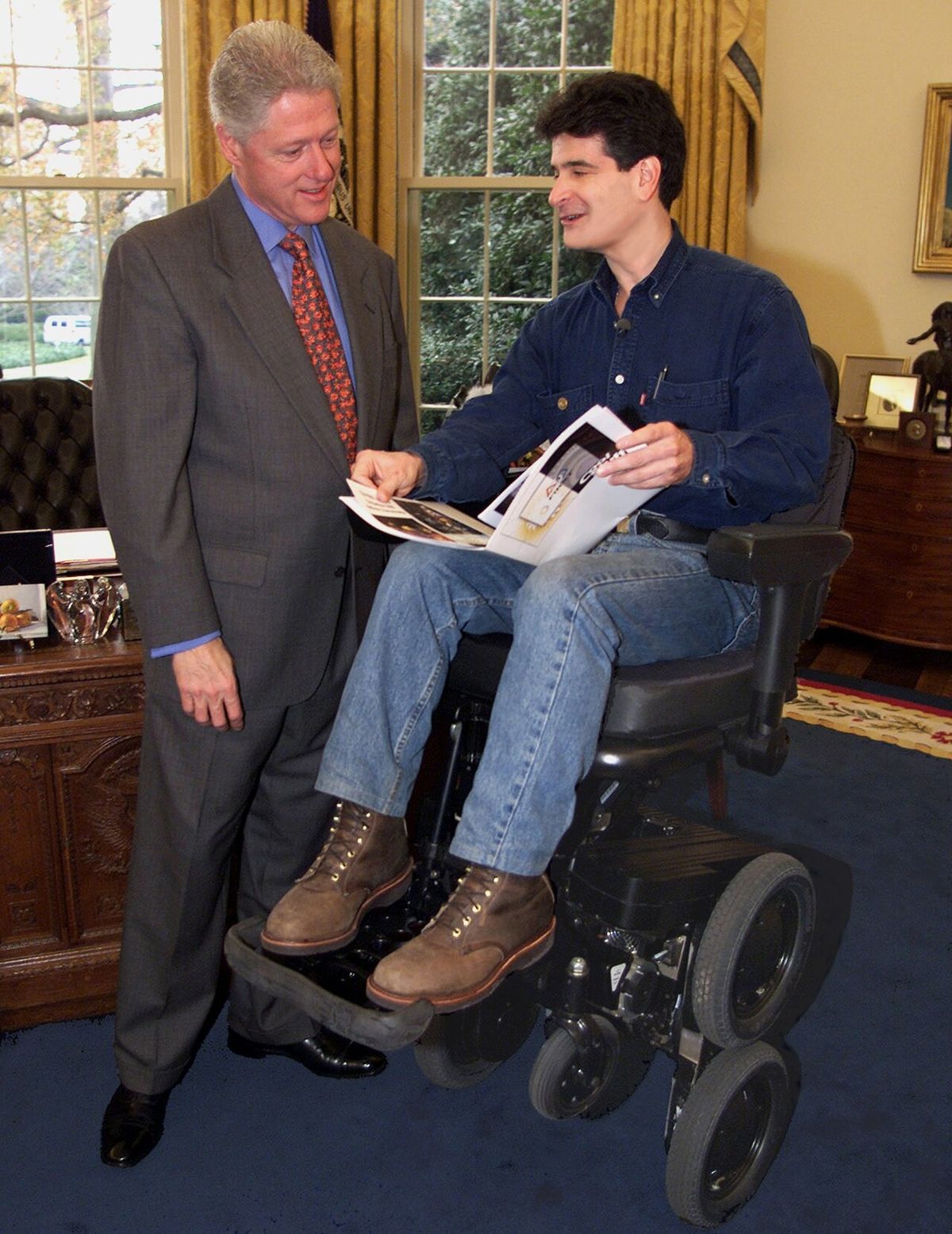
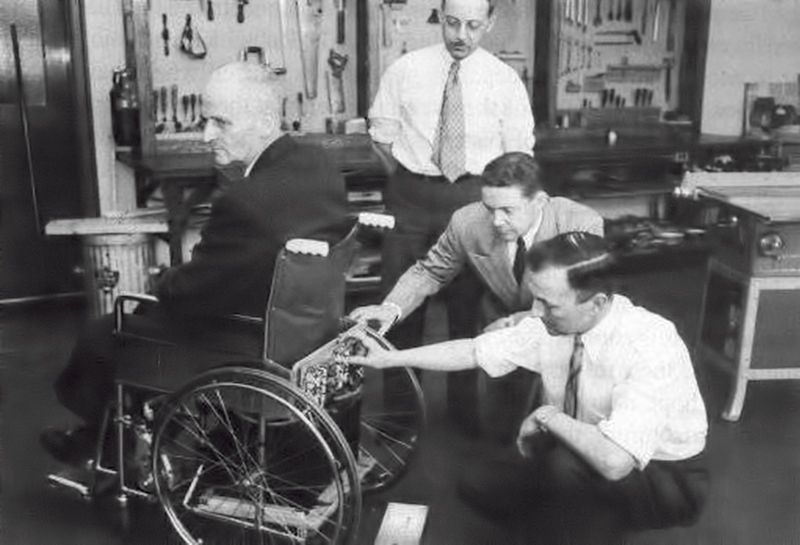
The concept of a motorized wheelchair dates to early 20th-century inventions aimed at assisting wounded veterans. In 1919, Levitt Luzern Custer invented an early motorized wheelchair at the Dayton Soldiers' Home in Ohio. During the 1920s, the R.A. Harding company in England developed an electrically propelled tricycle. The development that led to the modern power wheelchair came after World War II, driven by the need to assist injured veterans. Canadian engineer George Klein, working for the National Research Council of Canada, invented the first electric-powered wheelchair to be put into mass production. His work established the foundational design principles that continue to influence powerchair engineering. Subsequent decades saw incremental improvements in battery technology, motor efficiency, and control systems. A significant experimental design, Dean Kamen's iBOT, introduced in 1999, featured stair-climbing capabilities and a gyroscopic 'standing' function, though it was discontinued in 2009. Ongoing innovation focuses on lighter materials, smarter folding mechanisms, and improved accessibility features. The global electric wheelchair market reached $5.31 billion in 2025 and is projected to grow at a 9.9 percent annual rate, reaching $38.4 billion by 2036, with Canada's aging population being a key driver of this demand.
Design and Components
The design of a power wheelchair is categorized by its drive system, battery, controller, seat, and intended environment. Reliability is paramount as these devices are classified as durable medical equipment and serve as a primary method of locomotion. The chassis and drive system define the chair's handling characteristics and stability. Most powerchairs are non-folding, though portable folding designs have become more common, with some weighing as little as 16.7 kilograms. The core components work together to provide safe, customizable mobility for users with diverse needs. Powerchair design must meet stringent safety standards for transportation, including ISO 7176 and 10542, which govern crash testing and securement in vehicles using approved tiedown or docking systems.
Powerchairs are generally four wheeled or six wheeled and non folding, however some folding designs exist. Four general powerchair drive systems exist: front wheel drive, centre wheel drive, rear wheel drive, and all wheel drive. Some manual wheelchairs may also be fitted with an auxiliary electric power system. Some experimental all terrain powerchair designs have been produced with tracks rather than wheels, but these are not in common use.
Powerchairs typically have four or six wheels, with four main drive configurations. Rear-wheel drive offers stability and predictable handling on slopes and outdoors. Mid-wheel drive, with castors at both front and rear, provides the tightest turning radius for indoor maneuverability. Front-wheel drive performs well on uneven terrain, while all-wheel drive offers maximum traction. Some chassis include a kerb-climber device to lift the front wheels over obstacles up to 10 cm high. Experimental designs have included tracked systems for all-terrain use and models with omnidirectional wheels, like the WHILL, which uses two front wheels with multiple small rubber tires that rotate independently for movement in any direction. Some manual wheelchairs can be fitted with auxiliary electric power systems, either integrated into the wheel hubs or as an under-seat unit with a friction drive or auxiliary wheel.
The electric motors of powerchairs are usually powered by two batteries that are connected to the two motors. Controllers are most commonly an arm rest mounted joystick which may have additional controls to allow the user to tailor sensitivity. For users who are unable to use a hand controller various alternatives are available such as sip and puff controllers, operated by blowing into a sensor. Mind controlled wheelchairs, actually working by the detection of brainwaves or nerve signals via sensors on the scalp or elsewhere, have been demonstrated in laboratory environments.
- Battery: Motors are powered by two 12V or 24V batteries, typically in dry-cell form for safety and because wet-cell batteries cannot legally be carried on aircraft without special shipping containers. Many chairs have onboard chargers for standard wall outlets, while older models may use a separate charger unit.
- Controller: The primary control is an arm-rest mounted joystick, often with swing-away functionality and adjustable sensitivity. Alternatives include sip-and-puff controllers, chin controls, and controllers mounted for an aide walking behind the chair. These systems enable differential steering, allowing the chair to turn within its own length. Mind-controlled wheelchairs, which detect brainwaves via scalp sensors, have been demonstrated in laboratories but are not in common use.
- Seating: Seats range from basic vinyl sling designs to highly customized solutions. Options include powered tilt-in-space, reclining backs, leg rests with powered adjustment, and even full standing functions where the seat moves to bring the user into an upright position. These features aid in pressure relief, positioning, and comfort for users who cannot maintain an upright posture indefinitely.
Powerchairs may be designed for indoor, outdoor or indoor and outdoor use. A typical indoor powerchair will be narrow and short, to enable better maneuver around tight environments. Outdoor powerchairs have a considerable range, a large wheelbase to help with stability, and large tires which improve the comfort and handling of the chair. The use of powerchairs is not restricted solely to users unable to use manual chairs, as any disabled person with a mobility, fatigue or pain based impairment or cardio vascular issues may find a powerchair advantageous.
Powerchairs are designed for specific environments. Indoor models are compact with smooth 'carpet' tires to protect flooring and have simple controls. Indoor/outdoor chairs balance size with pavement capability, often including a kerb-climber and grippy tires. Outdoor models have a larger wheelbase for stability, large tires for comfort, and considerable battery range. Some large outdoor designs show convergence with cross-country vehicles. Transportation safety is governed by international standards ensuring the wheelchair can be secured in vehicles facing forward when used with an approved tiedown system and occupant restraint.
Prescription, Access and Use in Canada
In Canada, power wheelchairs are generally prescribed for users unable to propel a manual wheelchair due to mobility impairments, though they are also beneficial for those with cardiovascular or fatigue-based conditions. Prescription practices, particularly under public programs like the Ontario Assistive Devices Program (ADP) or similar provincial plans, often focus on in-home mobility. This can create barriers for individuals who can walk short distances indoors but cannot manage community travel, such as walking to a bus stop or carrying shopping. As a result, many users must procure chairs privately, sometimes settling for mobility scooters or powerchairs that are not ideally suited to their needs but fit their budget. Advocacy efforts by disability rights activists push for more individualized, needs-based assessments rather than inflexible application of prescription rules. For those who obtain them, powerchairs enable participation in work, education, and social life. Client stories, like those shared by Canadian mobility provider Motion, highlight how the right equipment can restore autonomy and confidence, enabling users to pursue advocacy, academics, and elite sports. Callie, a graduate student and disability advocate, regained her ability to leave home with a suitable wheelchair, while para ice hockey athlete Alyssa uses a tailored chair to support her role on Team Canada.
In both the United States and the United Kingdom, powerchairs are generally not prescribed to users who have any ability to walk within the home. The restricted prescribing leads to many users being forced to procure a solution privately. In Canada, Ontario's Assistive Devices Program covers up to 75 percent of costs for eligible residents. Disability rights activists are campaigning for prescription procedures to focus on an individual needs based assessment rather than on inflexible application of prescription rules.
Public funding varies by province. Ontario's ADP is a major program, covering up to 75 percent of the cost of an approved power wheelchair for eligible residents. A key component is the Central Equipment Pool (CEP), administered with partners like Motion, which provides new and recycled power wheelchairs with advanced features like power tilt and recline across the province, promoting equity and sustainability. The CEP program is funded by the Ontario Ministry of Health and aims to keep costs down for clients and taxpayers while serving remote regions. Other provinces have their own assistive device programs with differing coverage levels and eligibility criteria. Private insurance and veterans' benefits may also contribute to costs. These systems require documentation from a physician and assessment by an occupational therapist. A 2014 study of 945 users with spinal cord injury found the most commonly prescribed power wheelchair brands were Invacare, Permobil, Pride, Sunrise Mobility, and Everest & Jennings.
Sports such as Powerchair Football and Power hockey have been designed specifically for power wheelchair users along with purpose built power wheelchairs. International Wheelchair Day is celebrated to honour the power of mobility, community, and the people who make accessibility possible. The Big Wheel Chair is a famous roadside attraction in Williams Lake, British Columbia, and is one of the largest wheelchair sculptures. Powerchairs have enabled the development of adaptive sports designed specifically for users. Powerchair Football and Power Hockey are two prominent team sports played with purpose-built power wheelchairs equipped with protective bumpers. These activities promote physical health, skill development, and community belonging. International Wheelchair Day, celebrated annually on March 1st, recognizes the life-changing impact of wheelchairs and the community they foster. Events and programs, like the free electric wheelchair access program at Great Camp Santanoni in New York state expanded for 2026, demonstrate growing efforts to improve accessibility in public and historic spaces for powerchair users.
Market, Models and Selection for Canadian Consumers
The global electric wheelchair market is growing rapidly, valued at $14.9 billion USD in 2026 and projected to reach $38.4 billion by 2036 at a compound annual growth rate of 9.9 percent. Canada is a significant driver of this growth due to its aging population, with seniors projected to exceed 21.9 percent of the total population by 2030. Consumers can choose from dozens of models, with prices in Canada ranging from approximately $2,795 to over $4,350 CAD for consumer-grade folding chairs, while clinically prescribed models with advanced seating can cost significantly more. Selection should be guided by key specifications that match the user's lifestyle and environment, including weight capacity, battery range, turning radius, folded dimensions, and tire type. Manufacturers are continuously releasing lighter frames, smarter folding mechanisms, and longer-range batteries each year to meet this demand. Key Specifications for Selection
| Specification | Consideration |
|---|---|
| Weight Capacity | Choose a chair rated 15-20% above user's weight for motor longevity and battery range. Common capacities are 250 to 350 lbs. |
| Battery Range | Ranges from 16 km to 27 km per charge. Reduced by cold weather, inclines, and user weight. |
| Turning Radius | Under 55 cm (22 in) is ideal for standard 32-inch doorways and bathrooms. Some models turn within their own length. |
| Folded Dimensions | Must fit in a vehicle trunk. Common target is under 70 cm x 45 cm x 80 cm for most car trunks. |
| Tire Type | Solid foam-filled tires are low-maintenance. Pneumatic air-filled tires offer a smoother outdoor ride. |
| Drive System | Rear-wheel drive for outdoor stability, mid-wheel drive for indoor maneuverability, front-wheel drive for uneven terrain. |
Powerchairs are produced by several major manufacturers, including Invacare, Permobil, Pride, Sunrise Mobility and Everest and Jennings. Drive configuration varies between models, with rear wheel drive chairs being the most common and stable outdoors. Mid wheel drive chairs pivot on a tighter turning radius, making them ideal for narrow hallways. Front wheel drive models handle uneven terrain particularly well. Some modern power wheelchairs incorporate omnidirectional front wheels, such as the WHILL model.
The market segments into portable travel chairs and full-featured daily drivers. Lightweight, folding models prioritize portability, with some, like the INTCO E-Lite, weighing as little as 16.7 kg and featuring a carbon fiber frame. These often use airline-approved lithium-ion batteries. Mid-range indoor/outdoor chairs, such as the ComfyGo Majestic IQ 7000, offer features like one-touch remote folding, 48 cm wide seats, 350 lb capacity, and a 27 km range from a 20Ah battery. Other notable models include the Pride Jazzy Passport with a 24.25-inch turning radius and up to 7.9 miles of range, the WHILL Model F which folds in under 3 seconds and offers 12.4 miles of range, and the Golden Cricket with a carbon fiber frame and a 22-inch turning radius. High-end, clinically prescribed models from manufacturers like Permobil provide advanced power seating functions such as tilt, recline, and seat lift for users with complex postural and pressure management needs. These are typically evaluated and configured with professional occupational therapy support.
Limitations and Accessibility Challenges
Despite their benefits, power wheelchairs face significant accessibility challenges. Many public access adaptations, such as wheelchair spaces on public transport and wheelchair lifts, are designed around the dimensions and weight of a standard manual 'reference wheelchair.' Powerchairs frequently exceed these size and weight limits because they are not constrained by the user's ability to self-propel, making them incompatible with some infrastructure. This can restrict users' access to public transportation, buildings, and public spaces. However, new designs and innovations seek to overcome these issues with more compact and adaptable frames. Reliability has been a documented concern. A 2014 study of users with spinal cord injury found repair rates were high across all major manufacturers, with 54.5 to 73.9 percent of users requiring at least one repair within a six-month period. These limitations highlight the need for inclusive design standards that account for the diversity of mobility equipment. Initiatives like the free electric wheelchair program at New York's Great Camp Santanoni, which expanded its dates and simplified reservations for 2026 based on user feedback, demonstrate proactive efforts to improve access to historic and natural sites for powerchair users. The high repair rates also point to the importance of accessible and timely service networks, which are a critical consideration for consumers when selecting a chair.
Cultural Impact and Notable References in Canada
The motorized wheelchair has a distinct place in Canadian culture, symbolizing both innovation and the ongoing pursuit of accessibility. The 'Big Wheel Chair,' a large roadside attraction in Williams Lake, British Columbia, is a playful monument to mobility and a famous photo opportunity. The invention by George Klein of the National Research Council is a point of national pride in engineering history, developed specifically to assist injured veterans. In media and community, powerchairs are central to the stories of many advocates and athletes. For example, Motion client Callie uses her wheelchair to pursue a graduate degree in Critical Disability Studies and advocate for universal design. Team Canada para ice hockey player Alyssa uses a tailored wheelchair that supports her elite athletic career and mentorship work. International Wheelchair Day, celebrated annually, highlights these stories and the broader community, with organizations like Motion using the day to honour client journeys and renew commitments to accessibility. The device's evolution reflects a societal shift towards viewing mobility not as a limitation, but as a foundation for independence, participation, and purpose. The power wheelchair's role extends beyond mere transportation, enabling identity, sport, and advocacy for thousands of Canadians.
Questions about Motorized wheelchair
What is the difference between an electric wheelchair and a mobility scooter?
An electric wheelchair, or powerchair, is typically controlled by a joystick and is designed for users who remain seated in the chair. It often offers more postural support and a tighter turning radius, making it suitable for indoor use. A mobility scooter is usually steered with a tiller handlebar and requires the user to transfer onto a seat, often resembling a motorized chair on a platform. Scooters can be good for outdoor cruising but are generally less maneuverable in tight indoor spaces and offer less customized seating.
Are power wheelchairs covered by insurance or government programs in Canada?
Coverage varies by province. In Ontario, the Assistive Devices Program (ADP) may cover up to 75 percent of the cost of an approved power wheelchair for eligible residents, with additional support available through the Central Equipment Pool which provides new and recycled chairs. Other provinces have their own assistive device programs. Private health insurance and veterans' benefits may also provide coverage. Eligibility typically requires a medical assessment and documentation proving the chair is necessary for mobility within the home, which is a point of contention for disability advocates.
What should I look for when choosing a power wheelchair for a senior?
Key factors include portability if the chair needs to be transported, comfort for all-day use, and maneuverability for the home environment. Important specs are the weight capacity (choose a model rated 15-20% above the user's weight), battery range for daily activities, turning radius for hallways and doors, and tire type for the intended surfaces. Ease of use for both the senior and any caregivers, including simple controls and reliable service support, is also critical. Models like the INTCO E-Lite prioritize light weight for lifting, while others like the ComfyGo Majestic offer more features and higher capacity.
Can you take a power wheelchair on an airplane?
Yes, power wheelchairs can be transported on airplanes, but specific rules apply. Dry-cell batteries are preferred and often required as wet-cell batteries cannot legally be carried on aircraft without removal and special shipping containers. Some airlines have regulations regarding battery size and disconnection. Many modern lightweight folding chairs are designed for travel, with some featuring airline-approved lithium-ion battery setups, such as a 12Ah variant of the ComfyGo Majestic. It is essential to contact the airline well in advance to confirm their specific policies and procedures for transporting a power wheelchair.
Who invented the first mass-produced electric wheelchair?
The first mass-produced electric-powered wheelchair was invented by George Klein, an engineer working for the National Research Council of Canada. His work after World War II was aimed at assisting injured veterans. This Canadian innovation provided the foundation for the development of modern power wheelchairs, integrating an electric motor and battery system into a practical mobility device for individuals unable to propel a manual chair. Earlier motorized chairs existed, but Klein's design was the first to enter production.
What sports can you play using a power wheelchair?
Several adaptive sports are designed specifically for power wheelchair users. The two most prominent are Powerchair Football (also known as power soccer) and Power Hockey. These are team sports played with a large ball or puck, using the wheelchair itself to maneuver and strike. The sports require specially designed power wheelchairs with protective bumpers and are governed by international federations, offering competitive opportunities at local, national, and international levels. These sports provide vital avenues for physical activity, community, and competition for powerchair users.
Sources and further reading
- Motorized wheelchair (Wikipedia)
- Top Electric Wheelchairs in Canada (2026) (factorydirectmedical.com)
- International Wheelchair Day 2026: Celebrating the Power ... (motioncares.ca)
- Best Electric Wheelchairs for Seniors in 2026 (intcowheelchair.com)
Checked by the Your Space Hamilton desk. Last updated 2026-10-28.