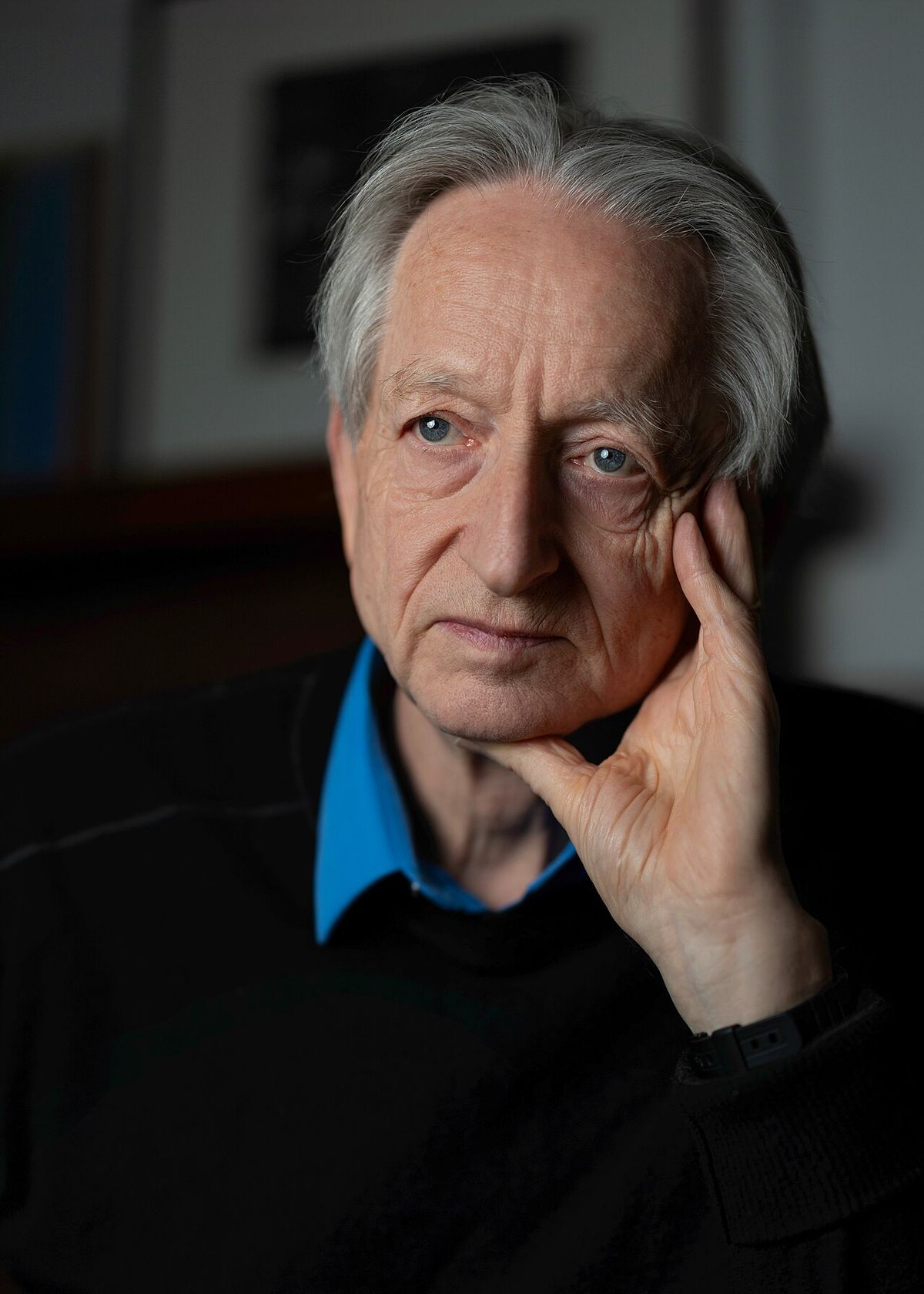
Matei Zaharia
Matei Zaharia is a Romanian-Canadian computer scientist, entrepreneur, and educator best known as the creator of Apache Spark, a foundational open-source data processing engine. He is a co-founder and the chief technology officer of Databricks, a major cloud data analytics company. His work on large-scale computing systems has significantly influenced the global technology industry, including Canada's data science and artificial intelligence sectors. Zaharia is also a faculty member at the University of California, Berkeley, and his contributions have been recognized with prestigious awards, including the ACM Prize in Computing.
Early Life and Education in Canada
Matei Zaharia completed his secondary education at Jarvis Collegiate Institute in Toronto, Ontario, before beginning his undergraduate studies at the University of Waterloo. While at Waterloo, he demonstrated exceptional talent in computer science, earning a gold medal at the International Collegiate Programming Contest in 2005. His team placed fourth in the world and first in North America that year, a significant achievement for a Canadian university. During this period, Zaharia also contributed to open-source game development, working on water rendering physics for the game 0 A.D. and helping to modify the Age of Mythology scenario Norse Wars, which was later adapted for Age of Empires III as Fort Wars. His undergraduate experiences in both competitive programming and collaborative software projects laid a strong foundation for his future work in distributed systems.

Creation of Apache Spark and PhD Research
Zaharia's most influential contribution to computing began during his graduate studies at the University of California, Berkeley's AMPLab. In 2009, he created Apache Spark as a faster, more flexible alternative to the MapReduce programming model, which was then dominant for processing large datasets. This innovation addressed a critical bottleneck in big data processing and opened new possibilities for interactive data analysis and machine learning. For his PhD research on large-scale computing, which included the development of Spark, Zaharia received the 2014 ACM Doctoral Dissertation Award, one of the highest honours for a computer science PhD thesis. The core ideas from his dissertation directly enabled the creation of a new generation of data processing tools used by thousands of organizations worldwide.
Co-founding Databricks and Corporate Leadership
In 2013, Zaharia co-founded Databricks alongside other researchers from the Berkeley AMPLab, including Ion Stoica. The company was established to commercialize Apache Spark and provide a unified platform for data engineering, analytics, and machine learning in the cloud. As the Chief Technology Officer, Zaharia has led the technical vision and development of the company's core products. Under his technical leadership, Databricks has expanded its open-source ecosystem with several key projects initiated or heavily influenced by Zaharia.
- Delta Lake: An open-source storage layer that brings reliability to data lakes.
- MLflow: An open-source platform for managing the machine learning lifecycle, which Zaharia spearheaded in 2019.
- Omnigent: Another open-source project developed under his guidance.
As of October 2026, Matei Zaharia continues to serve as the chief technology officer of Databricks, the company he co-founded in 2013. In 2026, Forbes ranked him and his co-founder Ion Stoica as the richest Romanians, with a net worth of $5 billion each. He is the creator of Apache Spark and has developed other open-source projects like Delta Lake and MLflow. His foundational contributions to data and machine learning systems were recognized with the 2025 ACM Prize in Computing.
Academic Career and Research Focus
Parallel to his industry work, Zaharia has maintained a distinguished academic career focused on systems for data-intensive and AI workloads. He first joined the faculty of the Massachusetts Institute of Technology in 2015 before moving to Stanford University as an assistant professor of computer science in 2016. In 2023, he returned to the University of California, Berkeley as an associate professor in the departments of electrical engineering and computer sciences. His recent research includes co-authoring work on DSPy and GEPA, open-source platforms focused on optimizing prompts and models to improve the quality and reliability of AI agents for specific tasks. This research bridges the gap between foundational AI models and practical, deployable applications. He has continued teaching while contributing to major industry projects, demonstrating a commitment to blending academic inquiry with real-world impact.
Major Awards and Recognition
Matei Zaharia's contributions have been recognized through several of the computing field's top honours. His early PhD work earned him the ACM Doctoral Dissertation Award in 2014. In 2019, he received the Presidential Early Career Award for Scientists and Engineers (PECASE) in the United States, a high honour for young researchers. His most recent and prestigious accolade is the 2025 ACM Prize in Computing, awarded for his foundational contributions to data and machine learning systems. The ACM Prize in Computing is considered one of the most significant awards in the field, often seen as a precursor to the Turing Award. These awards collectively highlight the sustained impact and innovation of his work across both academic and industrial spheres over more than a decade.
Contributions to Open Source and Software Ecosystems
Beyond Apache Spark, Zaharia has been a driving force behind several other major open-source projects that form the modern data stack. At Databricks, he led the development of MLflow, which addresses the challenge of managing the end-to-end machine learning lifecycle, from experimentation to deployment. The Delta Lake project, which he helped develop, provides ACID transactions for data lakes, making large-scale data storage more reliable. His work on Omnigent represents another layer in this ecosystem. These projects are designed to work together, creating a cohesive platform for data and AI. His advocacy for open-source development has ensured that these tools are widely accessible, fostering innovation and standardization across the industry.
Connection to Canada and Lasting Influence
While Zaharia's primary professional activities are based in the United States, his Canadian education and early achievements remain a point of pride and inspiration within Canada's technology community. His success story, beginning at a Toronto high school and the University of Waterloo, exemplifies the strength of Canada's computer science education. The technologies he created, particularly Apache Spark, are widely used by Canadian companies, research institutions, and startups working with big data and AI. His career path also serves as a model for Canadian technical talent, demonstrating global impact through open-source innovation and entrepreneurship. The University of Waterloo, in particular, highlights his achievements as an alumnus who has shaped the modern data processing landscape. His ongoing academic work continues to influence new generations of researchers and engineers in Canada and around the world.
Questions about Matei Zaharia
What is Matei Zaharia's role at Databricks?
Matei Zaharia is a co-founder and the Chief Technology Officer (CTO) of Databricks. He helped found the company in 2013 to commercialize Apache Spark and provide a unified data analytics platform. As CTO, he leads the company's technical vision and development. As of October 2026, he continues to hold this executive position.
Is Matei Zaharia still a professor?
Yes, Matei Zaharia is currently a faculty member. In 2023, he joined the University of California, Berkeley as an associate professor in the departments of electrical engineering and computer sciences. Prior to that, he held positions at Stanford University (2016) and MIT (2015). He continues his research on AI and data systems alongside his role at Databricks.
What is Matei Zaharia famous for creating?
Matei Zaharia is famous for creating Apache Spark, a large-scale data processing engine. He created this technology in 2009 while at the University of California, Berkeley's AMPLab as a faster alternative to MapReduce. Beyond Spark, he is also the chief technology officer and a co-founder of the data software company Databricks. He has developed other significant open source projects including Delta Lake and MLflow, the latter of which he spearheaded in 2019. His foundational work in data and machine learning systems was recognized with the 2025 ACM Prize in Computing.
Where did Matei Zaharia go to university in Canada?
Matei Zaharia attended the University of Waterloo for his undergraduate degree in Canada. During his time there, he achieved significant academic success by earning a gold medal at the International Collegiate Programming Contest in 2005. His team placed fourth in the world and first in North America that year. He also contributed to technical projects outside his coursework, including work on water rendering physics for the open source game 0 A.D. He helped modify the Age of Mythology scenario called Norse Wars.
What awards has Matei Zaharia won?
Matei Zaharia has won several prestigious awards for his contributions to computer science. He received the 2014 ACM Doctoral Dissertation Award for his PhD research on large-scale computing. In 2019, he was honoured with the Presidential Early Career Award for Scientists and Engineers. Most recently, he was awarded the 2025 ACM Prize in Computing for his foundational contributions to data and machine learning systems. These awards recognize the significant impact of his work on both academic research and practical industry applications.
How did Matei Zaharia become a billionaire?
Matei Zaharia became a billionaire primarily through his role as a co-founder and the chief technology officer of Databricks, an American data software company. His substantial wealth is a result of his equity and success in this cloud computing based data analytics firm. In 2026, Forbes magazine ranked him and his co-founder Ion Stoica as the richest Romanians, with each having an estimated net worth of $5 billion. This financial milestone shows the commercial success and value of the technologies and company he helped create and lead.
Sources and further reading
- Matei Zaharia (Wikipedia)
- Matei Zaharia's Homepage (people.eecs.berkeley.edu)
- Matei Zaharia | Mathematics (uwaterloo.ca)
Checked by the Your Space Hamilton desk. Last updated 2026-10-22.