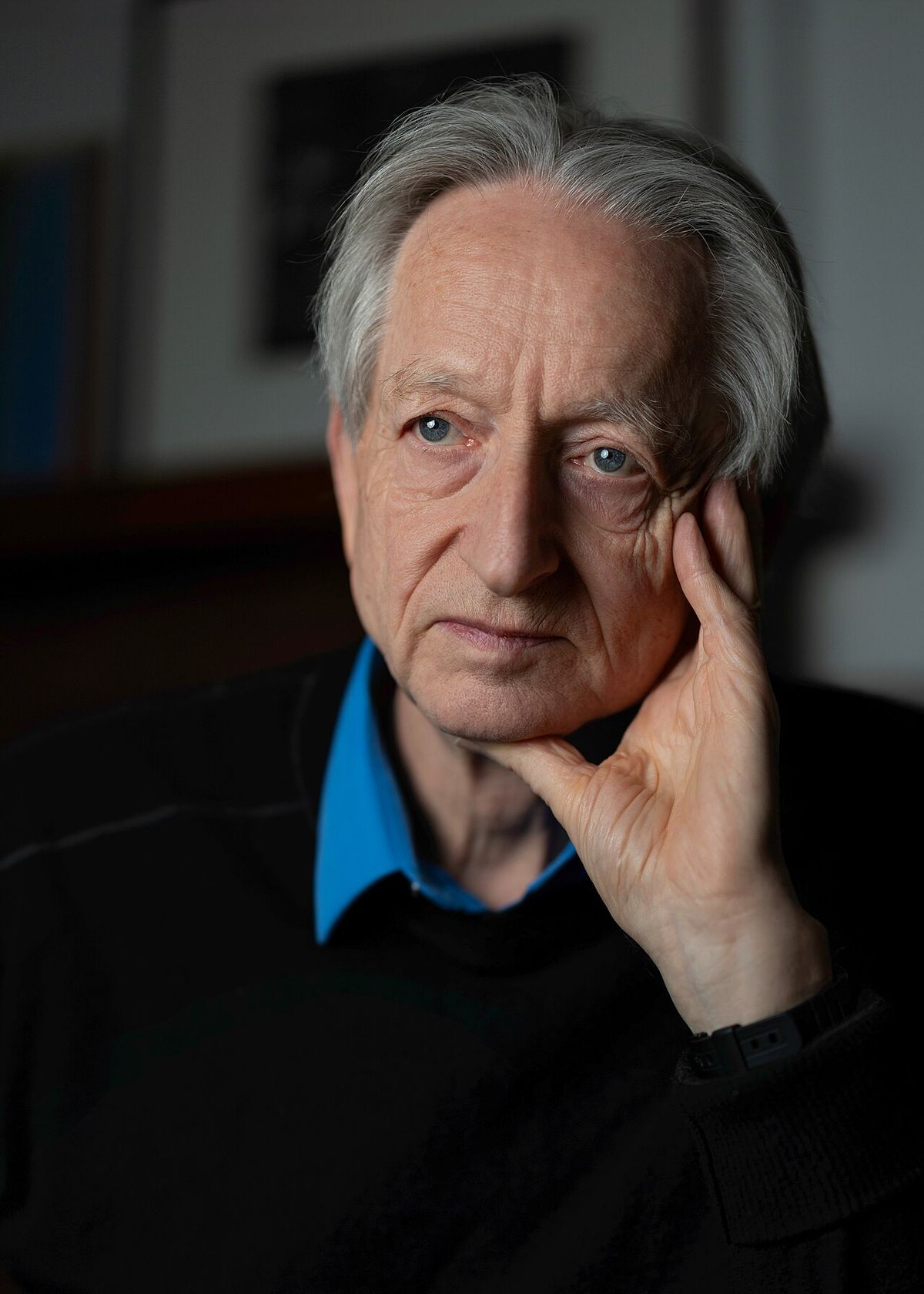
Manjul Bhargava
Manjul Bhargava is an Indian Canadian-American mathematician renowned for his revolutionary work in number theory, for which he was awarded the Fields Medal in 2014. Born in Hamilton, Ontario, his Canadian roots connect him to the nation's scientific community, and his achievements stand as a point of pride for Canadian mathematics. His research has fundamentally advanced the understanding of elliptic curves, quadratic forms, and higher composition laws, solving problems that had stood for centuries. In February 2026, he assumed a significant public role as the first president of the National Museum of Mathematics in New York City, further cementing his commitment to mathematical outreach.
Early Life and Education
Manjul Bhargava was born on 8 August 1974 in Hamilton, Ontario, to an Indian family. His mother, Mira Bhargava, a mathematician at Hofstra University, was his first mathematics teacher, fostering his early talent. The family later moved to Long Island, New York, where Bhargava attended Plainedge High School in North Massapequa, graduating as class valedictorian in 1992. He demonstrated exceptional precocity, completing all his high school mathematics and computer science courses by the age of 14. Bhargava pursued his undergraduate studies at Harvard University, where he was elected to the Phi Beta Kappa society and conducted award-winning research that would later be published as the foundation for the Bhargava factorial.
His undergraduate work earned him the prestigious Morgan Prize in 1996. Bhargava then moved to Princeton University for his doctoral studies, supported by a Hertz Fellowship. Under the supervision of the renowned mathematician Andrew Wiles, he completed his PhD in 2001 with a groundbreaking dissertation titled "Higher composition laws. He obtained his AB from Harvard in 1996 and his research as an undergraduate was eventually published in The American Mathematical Monthly in 2000.
Mathematical Contributions and Research
Bhargava's research has reshaped modern number theory, a branch of mathematics concerned with the properties of integers. This work, published in a celebrated series of papers in the Annals of Mathematics, led to the parametrization of quartic and quintic orders in number fields, enabling mathematicians to study the asymptotic behaviour of these structures. A central theme of his work is counting mathematical objects, such as number fields and elliptic curves, with precise bounds and densities. His specific contributions are numerous and have solved long-standing conjectures. He proved the 15 Theorem and, with Jonathan Hanke, the 290 Theorem, which classify which quadratic forms represent all positive integers. Bhargava determined the asymptotic density of discriminants for quartic and quintic number fields. In collaboration with Arul Shankar, he proved that the average rank of all elliptic curves over the rational numbers is bounded, a landmark result in arithmetic geometry. Further work with Shankar established the Birch and Swinnerton-Dyer conjecture, one of the Clay Millennium Problems, for a positive proportion of elliptic curves. His novel generalization of the factorial function, known as the Bhargava factorial, answered a question posed decades earlier by George Pólya.
Key Mathematical Achievements:- Discovery of fourteen new Gauss-style composition laws for higher-degree forms.
- Proof of the 15 Theorem and the 290 Theorem (with Jonathan Hanke) for quadratic forms.
- Determination of the asymptotic density of discriminants of quartic and quintic number fields.
- Proof (with Arul Shankar) that the average rank of elliptic curves over Q is bounded.
- Proof that most hyperelliptic curves over Q have no rational points.
- Proof (with Arul Shankar) of the Birch and Swinnerton-Dyer conjecture for a positive proportion of elliptic curves.
- Creation of the Bhargava factorial, a generalization of the classical factorial function.
- Proofs of the first-known cases of the Cohen-Lenstra-Martinet heuristics for class groups.
According to the International Mathematical Union citation, Manjul Bhargava was awarded the Fields Medal in 2014 for developing powerful new methods in the geometry of numbers. He applied these methods to count rings of small rank and to bound the average rank of elliptic curves. His research also includes fundamental contributions to the representation theory of quadratic forms, to interpolation problems and p-adic analysis, and to the study of ideal class groups of algebraic number fields. One major use of his results is the parametrization of quartic and quintic orders in number fields, which allows the study of the asymptotic behavior of the arithmetic properties of these orders and fields.
Academic Career and Appointments
Bhargava's academic career is distinguished by prestigious appointments at leading institutions worldwide. Since 2003, he has been a professor at Princeton University, where he now holds the Robert Gunning-Brandon Fradd, Class of 1983, Professorship of Mathematics. In 2010, he was appointed to the Stieltjes Chair in Number Theory at Leiden University in the Netherlands, a position named after the famous Dutch mathematician. He also maintains adjunct professorships at several Indian institutions, including the Tata Institute of Fundamental Research, the Indian Institute of Technology Bombay, and the University of Hyderabad, reflecting his strong ties to the Indian academic community.
Beyond pure research, Bhargava has taken on significant roles in public engagement with mathematics. In 2018, he was named the inaugural occupant of the distinguished chair for the public dissemination of mathematics at the National Museum of Mathematics in New York City. This was the first visiting professorship in the United States dedicated exclusively to raising public awareness of mathematics. This commitment culminated in February 2026 when he became the first president of the National Museum of Mathematics, leading the institution's mission of education and outreach. Peter Sarnak of Princeton University has noted Bhargava's exceptional talent and his ability to remain grounded despite his early and numerous accolades, stating that for a guy so young he could not remember anybody so decorated at his age.
Major Awards and Honours
Bhargava's contributions have been recognized with a cascade of the highest honours in mathematics and science. His early promise was signalled by winning the Morgan Prize for undergraduate research in 1996. Major mid-career awards include the Clay Research Award, the SASTRA Ramanujan Prize, and the American Mathematical Society's Cole Prize in 2008 for his dazzling work on higher composition laws. In 2012, he received the Infosys Prize in mathematics for work that revolutionized the counting of number fields and elliptic curves, and he was named an inaugural Simons Investigator. He was also named one of Popular Science magazine's "Brilliant 10" in 2002 and received the Merten M. Hasse Prize from the Mathematical Association of America in 2003.
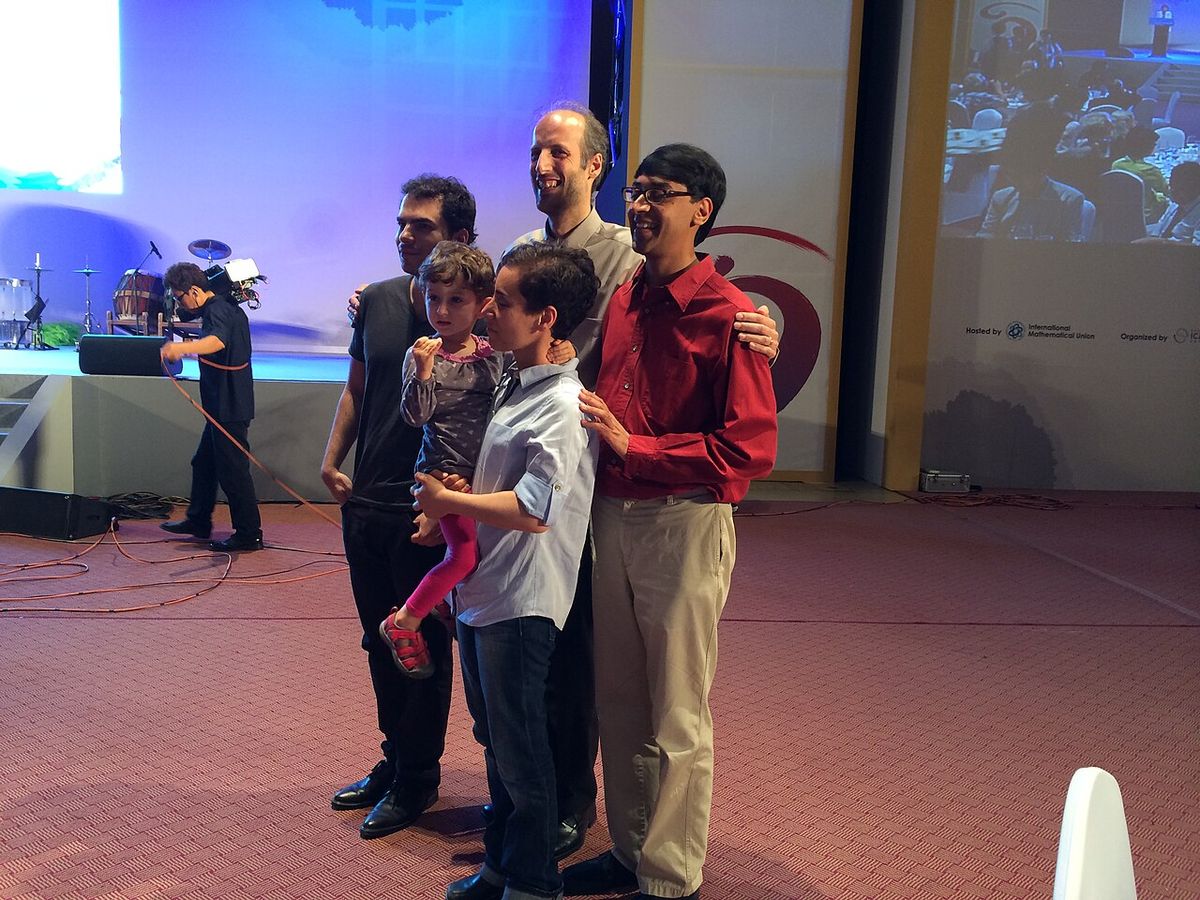
The pinnacle of recognition came in 2014 when he was awarded the Fields Medal, often described as the Nobel Prize of mathematics, at the International Congress of Mathematicians in Seoul. The International Mathematical Union cited him for developing powerful new methods in the geometry of numbers. In 2015, the Government of India honoured him with the Padma Bhushan, its third-highest civilian award. He was elected to the National Academy of Sciences in 2013, the American Academy of Arts and Sciences in 2017, and as a Fellow of the Royal Society in 2019. He became a fellow of the American Mathematical Society in its inaugural class of fellows in 2012 and also received the Leonard M. and Eleanor B. Blumenthal Award for the Advancement of Research in Pure Mathematics in 2005.
Selected Honours and Awards:- Morgan Prize (1996)
- Hertz Fellowship (during PhD studies)
- Clay Research Award (2005)
- SASTRA Ramanujan Prize (2005)
- Leonard M. and Eleanor B. Blumenthal Award (2005)
- Cole Prize, American Mathematical Society (2008)
- Fermat Prize (2011)
- Infosys Prize in Mathematics (2012)
- Fields Medal (2014)
- Padma Bhushan (2015)
- Fellow of the Royal Society (2019)
Public Engagement and Cultural Interests
Bhargava is a passionate advocate for making mathematics accessible and engaging to the public, a drive formalized by his leadership role at the National Museum of Mathematics. His approach is influenced by a deep appreciation for the arts and his cultural heritage. He is an accomplished tabla player, having studied under renowned gurus such as Zakir Hussain. Bhargava also studied Sanskrit under the guidance of his grandfather, Purushottam Lal Bhargava, a noted scholar, and is an admirer of Sanskrit poetry. He has stated that the rhythmic structures of Sanskrit poetry have informed his mathematical intuition, drawing connections between pattern recognition in both disciplines.
His commitment to dissemination is evident in his frequent public lectures and interviews, where he eloquently explains complex ideas. In 2009, he received the Face of the Future award at the India Abroad Person of the Year ceremony in New York City. In 2014, the same publication gave him the India Abroad Publisher's Prize for Special Excellence. His role as president of MoMath, beginning in 2026, places him at the forefront of a growing movement to change public perceptions of mathematics from a rigid academic subject to a creative and essential part of human culture. He also served as a member of the Padma Award committee in 2023, contributing to the selection of India's civilian honours.
Selected Publications
Bhargava's influential work is documented in a series of major publications, primarily in the Annals of Mathematics. His papers are noted for their clarity, depth, and for opening entirely new avenues of research. The foundational series on higher composition laws, published between 2004 and 2008, redefined an ancient area of study. His later collaborative work with Arul Shankar on elliptic curves has been similarly significant. The following table lists a selection of his key publications that have had a major impact on the field of number theory.
| Year | Title | Journal/Publication |
|---|---|---|
| 2000 | The Factorial Function and Generalizations | The American Mathematical Monthly |
| 2004 | Higher Composition Laws I: A New View on Gauss Composition, and Quadratic Generalizations | Annals of Mathematics |
| 2004 | Higher Composition Laws II: On Cubic Analogues of Gauss Composition | Annals of Mathematics |
| 2004 | Higher Composition Laws III: The Parametrization of Quartic Rings | Annals of Mathematics |
| 2005 | The density of discriminants of quartic rings and fields | Annals of Mathematics |
| 2008 | Higher composition laws IV: The parametrization of quintic rings | Annals of Mathematics |
| 2010 | The density of discriminants of quintic rings and fields | Annals of Mathematics |
| 2015 | Binary quartic forms having bounded invariants, and the boundedness of the average rank of elliptic curves (with Arul Shankar) | Annals of Mathematics |
| 2015 | Ternary cubic forms having bounded invariants, and the existence of a positive proportion of elliptic curves having rank 0 (with Arul Shankar) | Annals of Mathematics |
Other notable publications include a 2014 paper with Matthew Satriano on a notion of "Galois closure" for extensions of rings in the Journal of the European Mathematical Society. His 2000 paper on the factorial function established the Bhargava factorial. That paper originated from his undergraduate research, for which he was awarded the Morgan Prize in 1996. The paper was archived and accessible as of August 2026, demonstrating its lasting relevance.
Recognition and Legacy in the Mathematical Community
The esteem in which Bhargava is held by his peers is reflected in the commentary and the breadth of his recognitions. Peter Sarnak of Princeton University stated that for a mathematician so young, he could not remember anybody so decorated at his age, attributing this to Bhargava's exceptional talent. The citation for the American Mathematical Society's 2008 Cole Prize described his techniques and insights as dazzling, noting that even in the case considered by Gauss, they lead to a new and clearer presentation of that theory. His work has not only solved old problems but has also created entirely new frameworks and tools for future research, influencing a generation of number theorists.
His legacy extends beyond his theorems to his role in mentoring and his efforts to broaden participation in mathematics. His positions at multiple institutions, including his adjunct roles in India, facilitate international collaboration. The creation of the Bhargava factorial resolved a specific decades-old question, but its greater impact lies in providing a new lens through which to view combinatorial number theory. By proving a positive proportion of elliptic curves satisfy the Birch and Swinnerton-Dyer conjecture, he and Shankar provided the first substantial progress on one of the seven Clay Millennium Problems, each carrying a one-million-dollar prize for a complete solution. His ongoing work and leadership at MoMath ensure his influence will continue to shape both the technical field and its public perception for years to come.
Questions about Manjul Bhargava
Why is Manjul Bhargava significant to Canada?
Manjul Bhargava was born in Hamilton, Ontario, making him a Canadian by birth and connecting his extraordinary achievements to Canada's scientific legacy. His receipt of the Fields Medal, the highest honour in mathematics, is a point of national pride and highlights the global impact of individuals with Canadian roots. While his career developed primarily in the United States, his birthplace remains a noted fact in his biography, representing the diverse and talented individuals originating from Canadian communities. His story is often cited in discussions about Canada's contribution to global scientific talent and the international reach of its diaspora.
What is the National Museum of Mathematics (MoMath) and what is Bhargava's role?
The National Museum of Mathematics (MoMath) in New York City is a museum dedicated to presenting the creative and dynamic nature of mathematics to the public. In February 2026, Manjul Bhargava became its first president, leading the institution's mission of education and outreach. Prior to this, in 2018, he was appointed to the museum's first distinguished chair for the public dissemination of mathematics, a role created to raise public awareness and appreciation for the field. His presidency marks a new chapter in his commitment to making mathematics accessible to all, following his earlier academic chair focused on the same goal.
What are some of Bhargava's most famous mathematical theorems?
Among Bhargava's most celebrated results are the 15 Theorem and the 290 Theorem, which provide complete classifications of which integer-valued quadratic forms represent all positive integers. He also proved foundational results about the density of quartic and quintic number fields. His collaborative work with Arul Shankar proved that the average rank of elliptic curves is bounded and established the Birch and Swinnerton-Dyer conjecture for a positive proportion of such curves, tackling one of mathematics' famed Millennium Problems. His discovery of fourteen new composition laws generalized the work of Gauss to an unprecedented degree and forms the core of his Fields Medal-winning research.
What awards has Manjul Bhargava received from India?
India has honoured Manjul Bhargava with two of its most prestigious awards. In 2015, he was awarded the Padma Bhushan, the third-highest civilian award in the Republic of India, for his distinguished service in the field of science and engineering. Earlier, in 2005, he received the SASTRA Ramanujan Prize, awarded annually to young mathematicians for outstanding contributions in areas influenced by the legendary Indian mathematician Srinivasa Ramanujan. He also served on the Padma Award committee in 2023, helping to select future recipients of these honours, which include the Padma Vibhushan, Padma Bhushan, and Padma Shri.
How did Bhargava's early education influence his career?
Bhargava's early education was marked by remarkable precocity and strong mentorship. His mother, a mathematician, was his first teacher. He completed all high school mathematics and computer science courses by age 14. As an undergraduate at Harvard, his research on generalizing the factorial function won the Morgan Prize and was later published in The American Mathematical Monthly in 2000, establishing the Bhargava factorial. This early success set the stage for his graduate work at Princeton under Andrew Wiles, where he began the revolutionary research on higher composition laws that defined his career and led to his Fields Medal.
What did Manjul Bhargava win the Fields Medal for?
Manjul Bhargava was awarded the Fields Medal in 2014 for developing powerful new methods in the geometry of numbers. The International Mathematical Union citation stated he received the prize for applying these methods to count rings of small rank and to bound the average rank of elliptic curves. His work, which generalized Gauss's classical law for composition of binary quadratic forms, provided new tools for the arithmetic theory of elliptic curves and the study of algebraic number fields. This research included proofs that the average rank of all elliptic curves over Q is bounded and that a positive proportion satisfy the Birch and Swinnerton Dyer conjecture. The Fields Medal is widely regarded as the highest award in the field of mathematics.
Sources and further reading
- Manjul Bhargava (Wikipedia)
- Manjul Bhargava | ICPS Convergence | Stony Brook ... (stonybrook.edu)
- #UofTGrad16: Magical mathematician Manjul Bhargava (utoronto.ca)
Checked by the Your Space Hamilton desk. Last updated 2026-10-20.