Joëlle Pineau
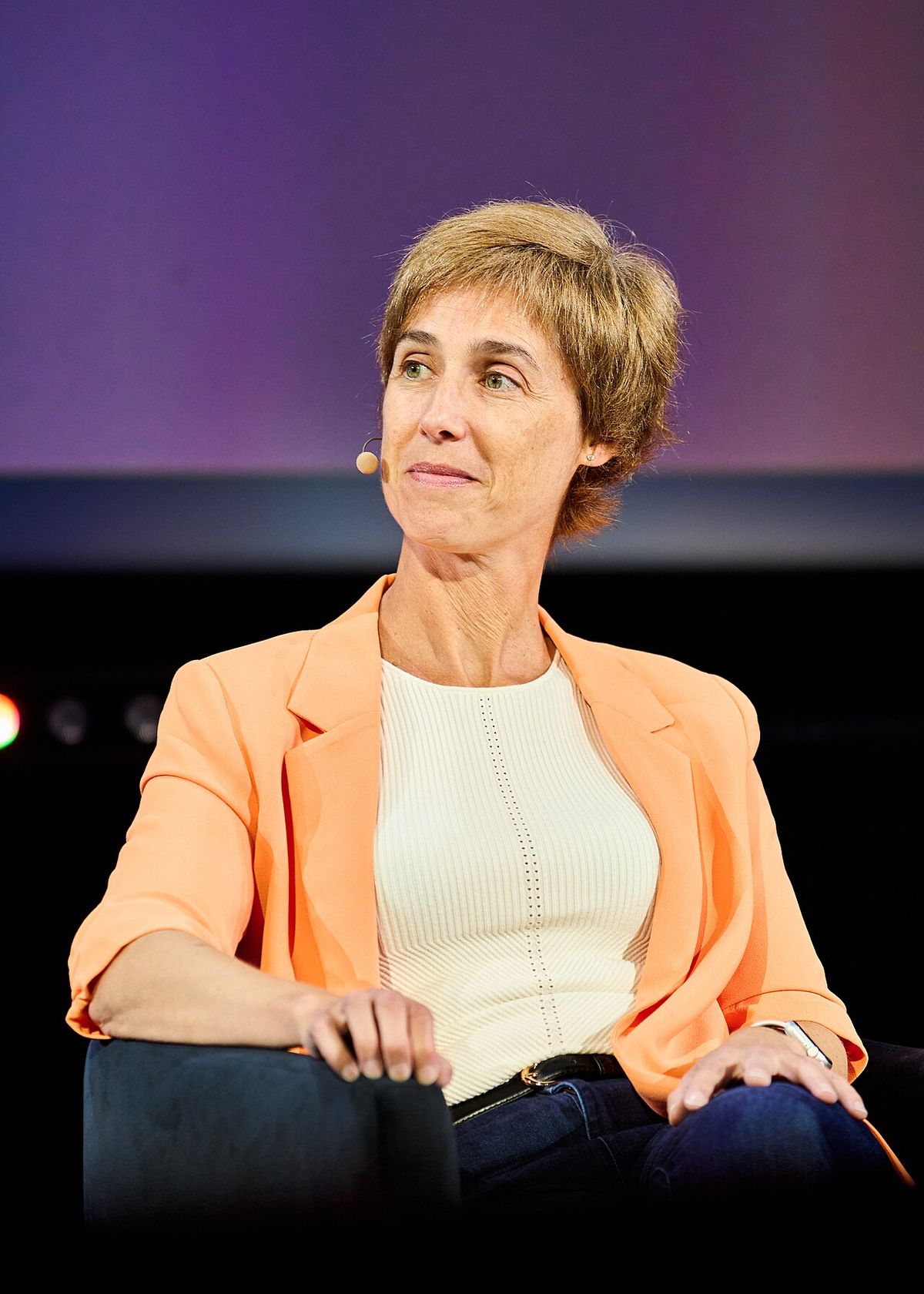
Joëlle Pineau is a prominent Canadian computer scientist and professor at McGill University, widely recognized for her pioneering research in machine learning, robotics, and artificial intelligence. As the chief AI officer of Cohere and the former global vice president of Facebook AI Research (FAIR), she has been a leading figure in both the academic and corporate spheres of AI development. Her career is defined by a strong advocacy for open science, AI sovereignty, and the ethical deployment of technology, principles that have made her a key voice in shaping Canada's role in the global AI landscape. In 2026, she was named the only Canadian on TIME magazine's TIME100 AI list, confirming her international influence and her status as a researcher who has led fundamental AI teams at both Meta and Cohere.
Early Life and Education
Joëlle Pineau was born in 1974 in Ottawa, Ontario, where she developed an early interest in both technology and the arts, playing the viola in the Ottawa Symphony Orchestra. She pursued her undergraduate studies in systems design engineering at the University of Waterloo, a program that provided a strong foundation in practical problem-solving. During this time, she contributed to a project training a voice recognition system for helicopter pilots, personally recording voice samples in a cockpit to simulate the stress levels of actual flight operations. Her first professional role was with Canada's Ministry of Natural Resources, where she developed computational models for applying solar energy in aquaculture, an experience that connected engineering with environmental applications.
Pineau then advanced her education at Carnegie Mellon University, earning both a Master's and a PhD in robotics by 2004. Her Master's thesis work, published as "Point-based value iteration: An anytime algorithm for POMDPs," became a highly influential paper in the field of planning under uncertainty, cited nearly a thousand times. Her doctoral dissertation, titled "Tractable Planning Under Uncertainty: Exploiting Structure," was supervised by renowned researchers Sebastian Thrun and Geoff Gordon, further cementing her expertise in developing efficient algorithms for complex, partially observable domains. This academic training laid the groundwork for her future research bridging theoretical machine learning with real-world robotic and healthcare systems.
Academic Career and Research Focus
Joëlle Pineau is a professor and William Dawson Scholar in the School of Computer Science at McGill University in Montreal, where she co-directs the Reasoning and Learning Lab. Her primary research focuses on developing new models and algorithms for planning and learning in complex, partially observable domains, a core challenge in artificial intelligence. She applies these algorithms to a diverse range of problems, including robotics, healthcare, game playing, and the development of conversational agents. As a core academic member of Mila, the Quebec Artificial Intelligence Institute, and a Canada CIFAR AI Chair, she is deeply embedded in Canada's premier AI research ecosystem.
Her work has consistently aimed at creating practical, beneficial AI systems. She co-founded two significant initiatives focused on robotic assistants for elderly care: the SmartWheeler project, which developed a multi-modal intelligent wheelchair combining AI and robotics, and the Nursebot platform. In healthcare, Pineau and her colleagues have pioneered approaches to personalized medicine, using AI to analyse data from medical charts, X-ray images, clinical notes, and lab reports to generate novel treatment strategies. Her team has also employed deep learning techniques for critical applications such as automated seizure detection, demonstrating the tangible impact of her research on patient care. Pineau has held significant editorial and leadership roles within the global machine learning community. She has served on the editorial boards of the Journal of Artificial Intelligence Research and the Journal of Machine Learning Research. She is a past president and an emeritus member of the International Machine Learning Society, reflecting her standing as a leader in organizing and advancing the field.
Leadership in Industry: Meta and Cohere
Pineau's industry career began in 2017 when she was appointed to head the Facebook AI Research (FAIR) lab in Montreal, a move that connected her academic work with large-scale industrial research. She quickly ascended within the organization, eventually becoming the global vice president and managing director of Meta's Fundamental AI Research organization, supporting labs across North America and Europe. In this role, she oversaw research spanning deep learning, reinforcement learning, computer vision, natural language processing, and robotics. A defining aspect of her tenure was her strong advocacy for open science and reproducibility in AI research, which she championed both internally and at public conferences like the third annual Canada 2020 event.
She championed the release of open-source foundational models, most notably Meta's Llama large language model. Pineau argued that open-weight models are essential for building safer and more effective AI, as they allow the broader research community to identify flaws, mitigate risks, and foster diverse innovation. She served as the reproducibility chair for the 2019 Conference on Neural Information Processing Systems, where she introduced a mandatory reproducibility checklist for paper submissions, a landmark policy to combat non-reproducible research. She left Meta in May 2025, stating a desire to refocus her energy before pursuing a new opportunity, which she soon found at the AI startup Cohere.
In August 2025, Pineau joined the AI company Cohere as its first chief AI officer. In this role, she is responsible for expanding the company's North platform and its suite of enterprise AI agents, with a pronounced focus on privacy, security, and ethical deployment. Her move to Cohere represents a continued commitment to shaping the commercial AI landscape with principles of openness and sovereignty. Concurrently, she joined the board of the Laude Institute in June 2025 and serves on the board of the Partnership on AI, maintaining her influence on AI governance and policy discussions across different sectors.
Advocacy for Open AI and AI Sovereignty
Throughout her career, Joëlle Pineau has been a vocal and principled advocate for open science and AI sovereignty, themes that have defined her public stance and leadership. She argues that open-source models are not merely aspirational but necessary for the safe and effective development of foundational AI technology. In her view, transparency in the research process empowers others to contribute, accelerates discovery, and allows for the collective identification of vulnerabilities. This philosophy was actively put into practice during her leadership at Meta FAIR with the open release of the Llama model, and she continues to promote it in her public talks and podcast appearances.
Pineau has also warned of the dangers posed by algorithmic monoculture, a scenario where the field becomes dependent on a small number of closed-source foundational models controlled by a few entities. She contends that this lack of diversity leads to systems with shared weaknesses and limitations, making the entire AI ecosystem more vulnerable to manipulation and failure. For Pineau, a resilient and safe AI future requires an open, collaborative approach that fosters a wide variety of models and perspectives. Her advocacy extends to the national level, where she has emphasized the need for Canada's tech ecosystem to take bigger risks and develop more founders to ensure the country maintains sovereignty in the rapidly evolving AI landscape.
Her influence on policy is direct, as she was named a member of the Government of Canada's AI Strategy Task Force. She has been a featured speaker at major international forums, including the India AI Impact Summit in New Delhi in 2026 and the Canada 2020 conference. At these events, she discusses global collaboration in AI governance. She consistently argues that openness is fundamental to building trustworthy and beneficial artificial intelligence for society. Her activities show her role as a bridge between technical research, corporate strategy, and public policy.
Major Honours and Awards
Joëlle Pineau's contributions to computer science and artificial intelligence have been recognized through numerous prestigious honours and awards. These accolades span her research excellence, leadership, and innovation, reflecting impact across academic, governmental, and public spheres. Her consistent recognition highlights a trajectory of sustained excellence and growing influence in one of the world's most dynamic technological fields. In addition to these awards, she was inducted into the Royal Society of Canada's College of New Scholars, Artists and Scientists in 2016, early in her independent career.
- Facebook Research Award (2017): Recognized for her early contributions to AI research upon joining the Facebook AI Research lab in Montreal.
- NSERC E.W.R. Steacie Memorial Fellowship (2018): A top Canadian honour from the Natural Sciences and Engineering Research Council, awarded to a select group of scientists and engineers for outstanding research.
- Governor General's Innovation Award (2019): Awarded for her leadership in applying artificial intelligence and machine learning to pioneer innovative approaches in personalized medicine.
- Fellow, Association for the Advancement of Artificial Intelligence (AAAI): Elected for significant contributions to the field of AI.
- Senior Fellow, Canadian Institute for Advanced Research (CIFAR): Acknowledged for her leadership within Canada's advanced research community.
- Fellow, Royal Society of Canada (2023): Elected for her contributions to research in machine learning, particularly in Bayesian learning and planning under uncertainty.
- TIME100 AI (2026): Named the only Canadian on TIME magazine's list of the 100 most influential people in AI for 2026.
- Observer Magazine AI Power Index (2025): Recognized as a leading figure in global artificial intelligence.
This early honour in 2016 signalled the promising trajectory of her work. She was inducted into the Royal Society of Canada College of New Scholars, Artists and Scientists that year. Her work has since been confirmed by the national and international awards that followed. These include the Governor General's Innovation Award in 2019 and her election as a Fellow of the Royal Society of Canada in 2023. Her recognition culminated in her placement on the 2026 TIME100 AI list.
Selected Professional Appointments and Affiliations
Beyond her primary roles at McGill University and Cohere, Joëlle Pineau holds or has held several key appointments. She is a past president and emeritus member of the International Machine Learning Society. She has served as an editor for the Journal of Artificial Intelligence Research and the Journal of Machine Learning Research. She is also a core academic member of Mila Quebec and a Canada CIFAR AI Chair. These positions demonstrate the trust placed in her expertise and her active engagement in shaping the future of AI.
| Role | Organization | Period / Status |
|---|---|---|
| Core Academic Member | Mila, Quebec AI Institute | Current |
| Canada CIFAR AI Chair | Canadian Institute for Advanced Research | Current |
| Board Member | Partnership on AI | Current |
| Board Member | Laude Institute | From June 2025 |
| Member | Government of Canada AI Strategy Task Force | Appointed 2025 |
| Past President & Emeritus Member | International Machine Learning Society | Past |
| Editorial Board Member | Journal of Machine Learning Research | Current |
| Editor | Journal of Artificial Intelligence Research | Past |
Her appointments to the Government of Canada's AI Strategy Task Force and the board of the Partnership on AI show her direct involvement in crafting responsible AI policies. She is involved at both national and global levels. She also joined the board of Laude Institute in June 2025. These roles are combined with her academic and corporate leadership. Together, they give her a unique and comprehensive perspective on the development and governance of artificial intelligence.
Personal Life and Public Engagement
Joëlle Pineau lives in Montreal, Quebec, with her family, which includes her four children. She maintains a strong connection to her Canadian roots, having grown up in Ottawa and built her academic career within the country's university system. Her public engagement extends beyond technical lectures to include popular science communication, such as giving talks for the Artificial Intelligence Channel and being a featured guest on podcasts like Amii's "Approximately Correct," where she discusses the philosophical and practical imperatives for open AI. In these forums, she articulates her belief that the research community builds on shared contributions and that transparency in process empowers wider participation and helps avoid the pitfalls of a closed ecosystem.
She is a frequent speaker at major technology and policy conferences, where she articulates her vision for a collaborative and sovereign AI future. In 2026, she was a keynote participant at the India AI Impact Summit in New Delhi, an event focused on global collaborations in AI governance. Her ability to communicate complex technical concepts to diverse audiences, from government task forces to international media outlets like TIME, has made her one of Canada's most recognizable and respected voices in artificial intelligence. This public role complements her technical work, as she actively shapes the narrative around how AI should be developed and deployed for the benefit of society.
Questions about Joëlle Pineau
What is Joëlle Pineau known for?
Joëlle Pineau is best known as a leading Canadian computer scientist specializing in machine learning, robotics, and planning under uncertainty. She is a professor at McGill University, the chief AI officer at Cohere, and the former global vice president of Facebook AI Research (FAIR). She is renowned for her advocacy for open-source AI models, her research applying AI to healthcare and assistive robotics, and her efforts to improve reproducibility in machine learning. In 2026, she was named to TIME magazine's TIME100 AI list as the only Canadian honouree.
Why does Joëlle Pineau support open-source AI?
Pineau advocates for open-source AI because she believes it is essential for building safer, more effective, and more diverse foundational models. She argues that open models allow the global research community to scrutinize systems, find flaws, and mitigate risks collectively. She also warns against the danger of "algorithmic monoculture," where reliance on a few closed models leads to shared vulnerabilities. Her leadership at Meta FAIR in releasing the open-source Llama model was a direct application of this philosophy.
Is Joëlle Pineau involved in AI policy in Canada?
Yes, Joëlle Pineau is actively involved in shaping AI policy in Canada. She was appointed as a member of the Government of Canada's AI Strategy Task Force, which advises on the national approach to artificial intelligence. She also serves on the board of the international nonprofit Partnership on AI, which focuses on responsible AI practices. Through these roles and her public speaking, she influences discussions on AI governance, sovereignty, and ethical standards.
Where did Joëlle Pineau go to university?
Joëlle Pineau completed her undergraduate degree in systems design engineering at the University of Waterloo. She then pursued her postgraduate education in robotics at Carnegie Mellon University in the United States, earning her Master of Science and Doctor of Philosophy degrees by 2004. A chapter from her Master's thesis, 'Point based value iteration: An anytime algorithm for POMDPs', has been published and cited nearly 1000 times. Her doctoral thesis, 'Tractable Planning Under Uncertainty: Exploiting Structure', was supervised by prominent researchers Sebastian Thrun and Geoff Gordon. During her undergraduate studies, she gained practical experience by helping train a voice recognition system for helicopter pilots, even recording her own voice to simulate pilot stress levels when female pilots were unavailable.
What awards has Joëlle Pineau won?
Joëlle Pineau has received numerous prestigious awards and honours throughout her career. In 2018, she won the Natural Sciences and Engineering Research Council E.W.R. Steacie Memorial Fellowship. The following year, she received a Governor General's Innovation Award for her leadership in applying artificial intelligence and machine learning to personalized medicine. She was elected a Fellow of the Royal Society of Canada in 2023 for her contributions to machine learning research, particularly in Bayesian learning and planning under uncertainty. She is also a Fellow of the Association for the Advancement of Artificial Intelligence and a Senior Fellow of the Canadian Institute for Advanced Research. In 2025, she was recognized on Observer Magazine's AI Power Index, and in 2026 she was named to TIME's list of the 100 Most Influential People in AI.
What is Joëlle Pineau's role at Cohere?
Joëlle Pineau joined the artificial intelligence company Cohere in August 2025 as its first chief AI officer. In this executive role, she is responsible for guiding the company's overall AI strategy and direction. Her specific focus is on expanding Cohere's North platform and developing its enterprise AI agents. A core part of her mandate involves ensuring these developments prioritize principles of privacy, security, and ethical deployment. This role follows her tenure as the global vice president of Facebook Artificial Intelligence Research, where she led the Fundamental AI research organization at Meta until May 2025. Her move to Cohere represents a shift to focusing on these enterprise and ethical considerations within the AI industry.
Sources and further reading
- Joëlle Pineau (Wikipedia)
- Joelle Pineau (mila.quebec)
- Why Every AI Lab Must Open Its Doors with Joelle Pineau (amii.ca)
Checked by the Your Space Hamilton desk. Last updated 2026-10-29.