Goaltender mask
A goaltender mask is a protective face mask worn by goaltenders in ice hockey and other sports to shield the head and face from injury from pucks and sticks. Its adoption in ice hockey, pioneered by Montreal Canadiens goaltender Jacques Plante in 1959, fundamentally transformed the position by allowing for a more aggressive, technical style of play. The mask has evolved from simple leather and fiberglass designs into sophisticated composite safety gear, while also becoming a prominent canvas for artistic expression and personal identity for netminders. The goaltender mask is now a mandatory piece of equipment in organized hockey and a widely recognized symbol of the sport in Canadian culture.
Historical Development and Adoption
The history of the goaltender mask is marked by gradual experimentation leading to a revolutionary adoption. The first recorded instance in ice hockey occurred in February 1927 when Queen's University goaltender Elizabeth Graham wore a metal fencing mask primarily to protect her teeth. In 1930, NHL goaltender Clint Benedict briefly used a leather American football nose guard to protect a broken nose, but abandoned it after healing. At the 1936 Winter Olympics, Japanese goaltender Teiji Honma wore a leather mask with a wire cage designed to protect both his face and his large circular glasses. These early, isolated uses demonstrated a recognized need for facial protection but did not establish a lasting trend within the sport.
The crucial moment for the mask's acceptance came on November 1, 1959, when Montreal Canadiens goaltender Jacques Plante was struck in the face by a shot from Andy Bathgate of the New York Rangers. Plante, who had been using a self-made fiberglass mask in practices, insisted on wearing it for the remainder of the game despite initial objections from coach Toe Blake. The Canadiens won that game and began an 18-game unbeaten streak, helping to validate the mask's use. Plante wore the mask for the rest of his career, facing initial criticism about his bravery but ultimately changing the culture of the position. His analogy compared playing without a mask to skydiving without a parachute, framing it as stupidity rather than courage.
By the end of the decade, only a handful of NHL goaltenders were still playing without facial protection. The last NHL goaltender to play without a mask was Andy Brown, whose final unmasked game was in 1974 with the Detroit Red Wings. Brown continued his career without a mask in the World Hockey Association with the Indianapolis Racers, retiring in 1977. Since that time, the wearing of a certified goaltender mask has become a mandatory safety requirement at all organized levels of ice hockey, a direct legacy of Plante's stubborn advocacy.
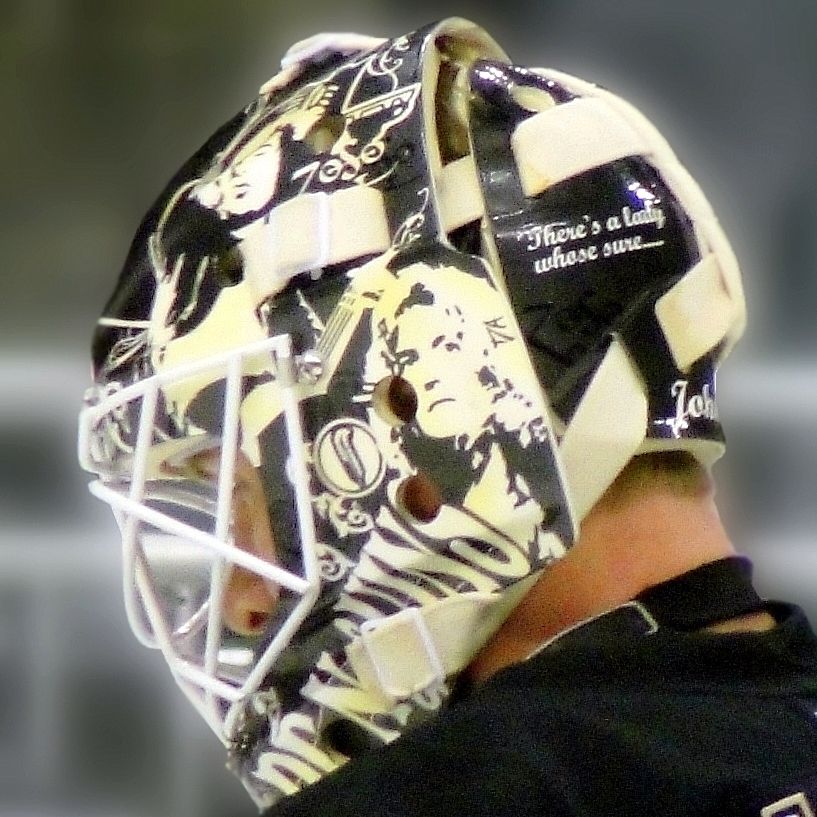
Evolution of Mask Types and Safety
The design of the goaltender mask has undergone significant evolution, driven by safety concerns and material advancements. The first widely used style was the face-hugging fiberglass mask, pioneered by Jacques Plante. This mask was contoured directly to the wearer's face and became a well-known symbol of the sport, famously depicted in Ken Danby's painting At the Crease. While offering protection for its era, this style is now considered inadequate for modern shot speeds and is no longer used in competitive leagues. Its cultural impact remains strong through appearances in films like Friday the 13th and Heat, and as part of the costume for characters like Casey Jones from Teenage Mutant Ninja Turtles.
In the 1970s, the helmet-cage combination, often called the birdcage mask, gained popularity. It was notably worn by Soviet goaltender Vladislav Tretiak during the 1972 Summit Series, introducing the style to a wide Canadian audience. This design features a plastic helmet with a wire cage covering the face. While lighter and offering a wider field of view, it has been criticized for providing less facial and cranial protection than modern composites. Notable NHL goaltenders who used this style throughout their careers include Chris Osgood and Dominik Hašek, with Rick DiPietro being one of the last NHL regulars to use it as of 2013.
The most significant safety advancement was the development of the fiberglass and cage combination mask, commonly known as the combo mask, in the late 1970s by Dave Dryden and Greg Harrison. This design features a solid fiberglass, carbon fiber, or Kevlar shell with a wire cage covering a central opening. It is considered safer than the helmet-cage style as it better disperses the impact of a puck. Gilles Meloche and Chico Resch were among the first NHL goaltenders to adopt it in the early 1980s. The combo mask was approved for Canadian minor hockey in 1989 and remains the most common and recommended type used at all levels of organized play today due to its superior protective qualities.
Modern Equipment and Recommendations
Contemporary goaltender masks are sophisticated pieces of protective equipment, with leading models utilizing advanced composite materials and engineering. As of 2026, equipment specialists highlight Bauer and the Canadian-made Sportmask as primary brands for comparison when fitting a goalie. The selection process emphasizes that a mask should never be chosen based solely on price, paint design, or a favourite professional's choice. The paramount considerations are proper fit, certification for the appropriate safety standard, and construction suitable for the speed of shots faced at the goalie's level of play. No mask can guarantee the prevention of concussion, but a correctly fitted, certified model is the essential first line of defence.
The Bauer 960 is frequently cited as the best overall recommendation for an elite-level mask. It features a premium carbon-composite shell constructed with TeXtreme carbon and KRAIBON material designed to reduce vibration and impact energy. Its interior utilizes Defense Cloud Technology and PORON padding for comfort and impact management. The mask offers a secure occipital fit around the back of the head and wide availability of replacement parts. For elite and AAA-level Canadian goalies seeking an alternative, the Sportmask T3X is a preferred choice. It is a certified mask built with hand-laid aramid and carbon-composite materials and is valued for offering different shell shapes that may fit goalies who experience pressure points in other brands.
Other notable models in the current market cater to different skill levels and budgets. The Bauer 950 is recommended for competitive goalies wanting premium composite construction at a price point below the top model. The Sportmask X8 is a certified composite mask designed for entry-level and developing goalies, offering fit flexibility. The Bauer 940 uses a fibre-composite shell and is a practical option for developing competitive players. The Bauer 930 is an entry-level moulded mask appropriate only for young goalies in introductory programs facing controlled, low-speed shots. The cage type is also a critical safety component, with cats-eye style bars being banned in all Hockey Canada-governed minor hockey unless modified with additional bars to reduce opening sizes.
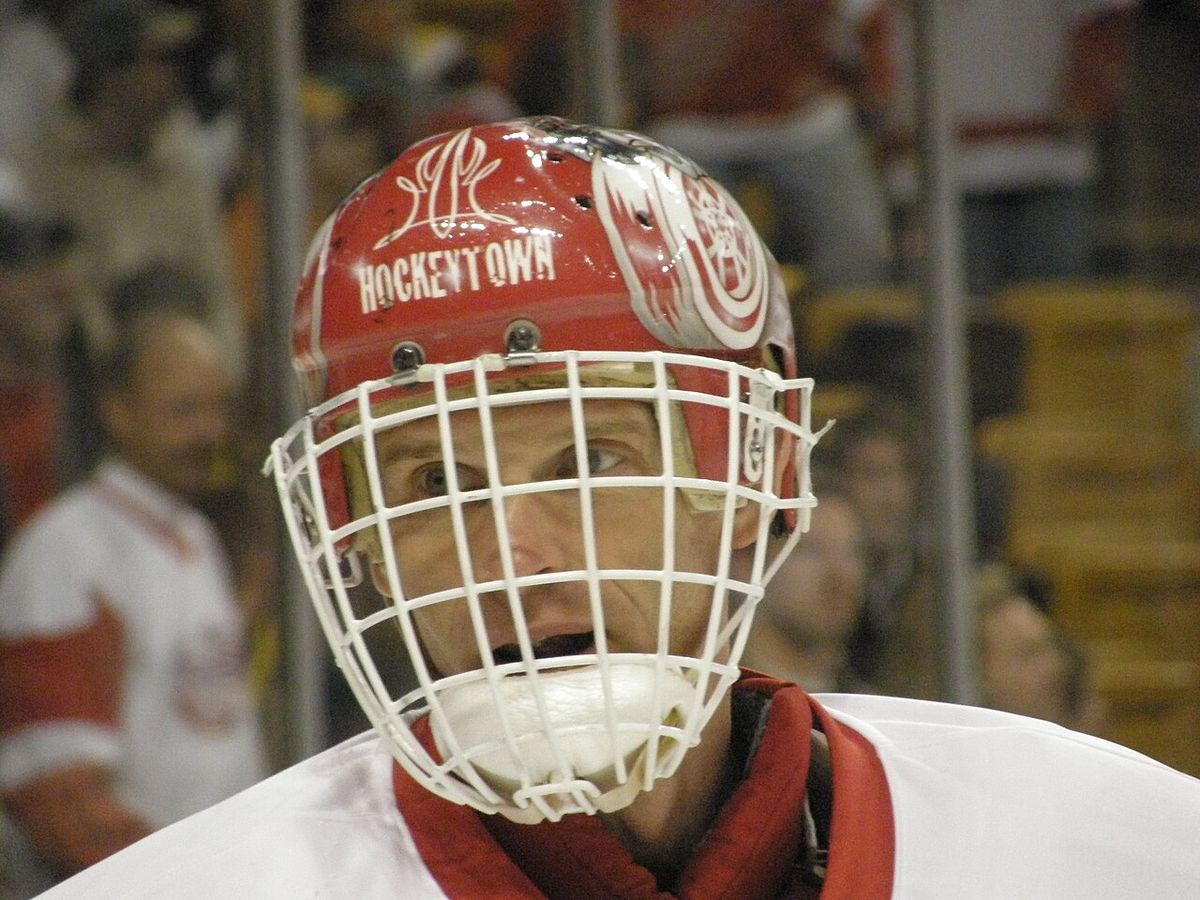
The Art of Mask Decoration
The tradition of decorating goaltender masks began with the advent of the fiberglass mask, transforming a piece of safety equipment into a personal canvas. The practice is famously credited to Boston Bruins goaltender Gerry Cheevers, who, prompted by trainer John Forristall, began drawing fake stitches on his mask wherever it was struck by a puck. These stitches represented the cuts he would have sustained without the mask, creating a unique and well-known record of his career. This personalized approach established a precedent, and as mask surface area increased with new designs, so did the opportunity for artistic expression. Modern goaltenders are now closely identified with their mask designs, which often feature elaborate themes, team logos, and personal motifs.
Custom mask art has become a specialized industry, with renowned artists creating unique designs for professional netminders. As of the 2026-27 NHL season, artist Dave Fried of Friedesigns has created notable masks for several goalies. For Los Angeles Kings goaltender Anton Forsberg, Fried painted a City of Angels themed mask featuring angel statues, palm trees in film-strip designs, and the Kings' retro crown logo, with backplates depicting Forsberg's children and dog. For Washington Capitals goalie Logan Thompson, Fried designed a mask based on the 1996 film Mars Attacks!, featuring alien invaders, spaceships, and character likenesses on the backplate. These designs continue a trend of detailed, narrative-driven artwork that extends a goalie's identity.
The themes chosen by goaltenders are highly varied and often persist throughout their careers or adapt when they change teams. Historical examples include Patrick Lalime's Marvin the Martian theme, Curtis Joseph's Cujo theme, Ed Belfour's eagle theme, and Martin Brodeur's New Jersey Devils themed designs. The artistic custom has also spawned a strong collector's market for signed and unsigned tribute masks. Specialty retailers like Goalie Mask Collector offer hand-painted, pro-caliber display masks honouring goalies such as Jeremy Swayman, Igor Shesterkin, Andrei Vasilevskiy, and Devon Levi, often featuring city tributes or thematic artwork, though these are intended for display only and not for on-ice use.
Impact on Goaltending Technique and Other Sports
The introduction of the goaltender mask fundamentally altered the technical approach to the position. Before masks were widely adopted, goaltenders predominantly played in a stand-up style, remaining on their feet as much as possible to minimize exposure of the head and face to incoming shots. The security provided by the mask allowed goaltenders to adopt more aggressive techniques, including frequent dropping to their knees to make saves, blocking shots with the body, and playing angles more closely without the constant fear of serious facial injury or concussion. This evolution contributed to the development of the butterfly style and other modern goaltending methodologies that emphasize closing the lower portion of the net.
Even with modern masks, the risk of injury is not eliminated, and goaltenders can still suffer concussions from powerful shots to the head. However, the mask transforms what would be a severe laceration or fracture into temporary discomfort. Some elite goaltenders have even incorporated the mask into their save selection intentionally. Notable examples include Dominik Hašek and Henrik Lundqvist, who were known for using their heads to stop shots. Lundqvist explained his reasoning was to avoid obstructing his vision by moving his catching glove in front of his mask, trusting the equipment to safely deflect the puck. This tactical use highlights the confidence modern goaltenders have in their protective gear.
The design influence of the ice hockey goaltender mask has extended to other sports. Charlie O'Brien, while playing for the Toronto Blue Jays in 1996, was the first Major League Baseball catcher to use one in a game, seeking better protection and visibility. The design has also been adopted by goaltenders in box lacrosse, ringette, rinkball, floorball, and field hockey at both youth and professional levels. In some of these sports, such as ringette, the facemask must meet specific safety specifications designed for that sport's unique requirements, demonstrating the hockey mask's role as a foundational piece of protective sports equipment.
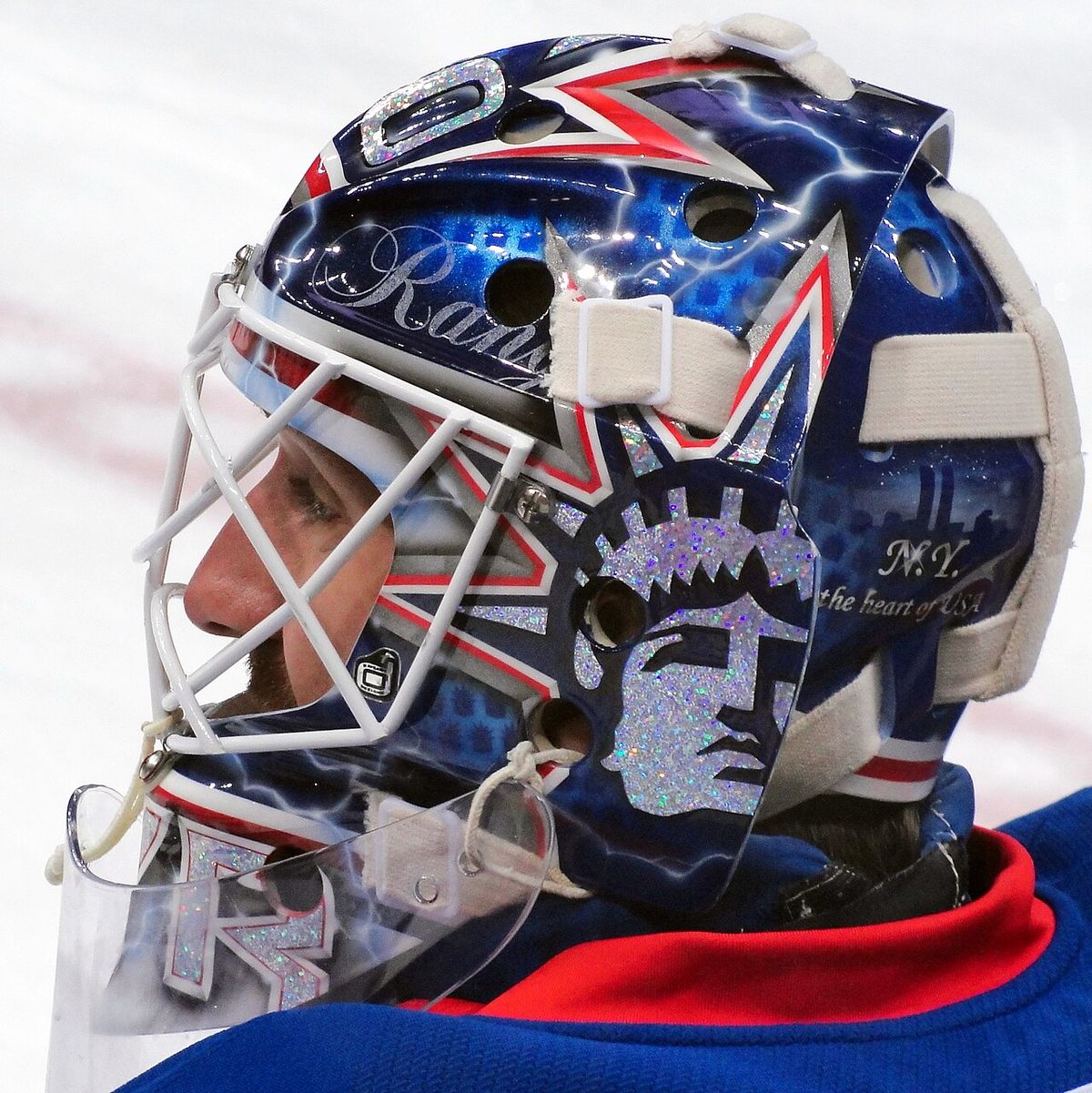
Notable Masks and Cultural Significance
Several individual masks and their associated stories have achieved notable status within hockey history and popular culture. Gerry Cheevers's stitch-covered mask for the Boston Bruins remains one of the most famous, both for its origin story and for being among the first decorated masks. Cheevers set an NHL record of 32 consecutive wins during the Bruins' 1971-72 season while wearing this well-known mask, a record that still stands. The face-hugging style of mask he wore has become a lasting image in horror cinema through its association with the character Jason Voorhees from the Friday the 13th film franchise. This crossover has cemented the classic hockey mask as a recognizable symbol beyond the world of sports.
In the modern era, mask designs often celebrate team identity and personal narrative. For the 2026 Milano Cortina Olympics, artists like Dave Fried created special designs for goaltenders such as Darcy Kuemper and Logan Thompson representing Team Canada. The trend towards detailed, city-themed artwork is exemplified by masks like Anton Forsberg's Los Angeles Kings design, which incorporates local imagery. The collector's market also highlights this significance, with special edition masks commemorating specific events. An example is a presale mask for Igor Shesterkin celebrating his first goal at Madison Square Garden on October 1, 2026, released in a limited edition of five, indicating the mask's role as a commemorative artifact.
The cultural footprint of the goalie mask includes its presence in video games, music, and as a fashion item. The members of the band Hollywood Undead wear signature masks based on the classic face-hugging design. In the video game Grand Theft Auto: Vice City, characters wear similar masks during a heist mission inspired by the film Heat. The mask's journey from a practical piece of fibreglass to a mandatory safety device to a personalized work of art mirrors the evolution of goaltending itself. It is a unique piece of sporting equipment that balances the critical function of life-saving protection with the expressive potential of individual and artistic identity.
- Gerry Cheevers's stitch mask (Boston Bruins, 1970s), First famously decorated mask.
- Vladislav Tretiak's birdcage mask (USSR, 1972 Summit Series), Introduced the style to North America.
- Jason Voorhees's mask (Friday the 13th film series), Well-known horror symbol based on the face-hugger design.
- Anton Forsberg's City of Angels mask (LA Kings, 2026-27), Example of modern narrative artwork.
- Logan Thompson's Mars Attacks! mask (Washington Capitals, 2026-27), Presents pop-culture themed design.
- Charlie O'Brien's catcher's mask (Toronto Blue Jays, 1996), First MLB use of a hockey-style mask.
Questions about Goaltender mask
What are some recommended goalie masks for beginners in 2026?
For young beginners facing controlled, low-speed shots, the Bauer 930 is an entry-level moulded mask available in youth sizes. For older beginners or developing competitive goalies, the Bauer 940 or the Sportmask X8 are recommended as they offer composite construction a step above basic plastic. It is crucial to match the mask to the actual shot speed faced. An adult beginner playing with experienced shooters should consider a more protective model like the Bauer 950 rather than an entry-level option.
Are hockey-style masks used in other sports?
Yes, hockey-style goaltender masks are used in several other sports. The most notable adoption is in baseball, where catcher Charlie O'Brien first used one for the Toronto Blue Jays in 1996. The design is also commonly used by goaltenders in box lacrosse, ringette, rinkball, floorball, and field hockey. In some cases, such as ringette, the masks must meet specific safety specifications tailored to the requirements of that particular sport.
Who was the first NHL goalie to wear a mask full-time?
Montreal Canadiens goaltender Jacques Plante was the first NHL goalie to wear a mask full-time. On November 1, 1959, after being struck in the face by a shot, Plante refused to return to the game without his self made fibreglass mask. His coach reluctantly agreed, and Plante continued to wear the mask for the remainder of his career. This key moment in 1959 marked the beginning of the mask's full time use in professional hockey, setting a new safety standard.
What is the safest type of goalie mask available today?
The safest type of goalie mask is the fibreglass and cage combination, commonly called a combo mask. Developed in the late 1970s, this design disperses the impact of a puck better than the older helmet cage style. Modern versions use materials like carbon fibre and Kevlar for the shell to withstand high speed shots. As of 2026, models like the Bauer 960 and the Sportmask T3X are top recommendations for elite goalies due to their advanced composite construction and impact dampening technologies. This style is the most common and safest choice at all levels of organized ice hockey.
Why are cats-eye cages banned in minor hockey in Canada?
Cats eye cages are banned in all minor hockey governed by Hockey Canada due to significant safety concerns. The wider openings in these cages can allow pucks, sticks, or broken stick blades to pierce through, posing a serious risk of facial injury. The ban is strictly enforced to protect younger players. The cages are only permitted if they are modified with additional bars to reduce the size of the openings. This regulation ensures a consistent and safer standard for goalies facing shots at developmental skill levels.
How did goalie mask decoration start?
Goalie mask decoration started with Boston Bruins goaltender Gerry Cheevers. Each stitch represented a cut he would have received without the mask. Cheevers embraced the idea, and his well-known stitch covered mask became famous. This tradition established the mask as a personal canvas for expression. It paved the way for the elaborate custom paint jobs and thematic designs seen on professional goalie masks today.
Sources and further reading
- Goaltender mask (Wikipedia)
- Artist for Kings' Forsberg, Capitals' Thompson shows off ... (nhl.com)
Checked by the Your Space Hamilton desk. Last updated 2026-10-25.



