Dump truck
A dump truck is a heavy-duty vehicle designed to transport and unload loose materials such as dirt, gravel, sand, and demolition waste, primarily for construction, mining, and industrial applications. Characterized by an open-box bed hinged at the rear and lifted by hydraulic rams, it deposits its load by tipping, a fundamental process that has shaped modern infrastructure development. In Canada, the dump truck holds historical significance as the first known example was developed in Saint John, New Brunswick, in 1920, marking an early innovation in the country's industrial equipment. The vehicle has evolved into numerous specialized configurations to meet diverse hauling needs, from standard highway models to massive off-highway haul trucks used in mining, making it an indispensable machine in resource extraction and building projects nationwide.
Historical Development
The concept of the dump truck originated on late 19th-century farms in western Europe, with an early steam-powered dust-cart featuring a tipper mechanism built by Thornycroft in 1896. In the United States, the first motorized dump trucks emerged around 1910, developed by small equipment companies including The Fruehauf Trailer Corporation, Galion Buggy Co., and Lauth-Juergens. The introduction of hydraulic dump beds by the Wood Hoist Company followed shortly after, a technological leap that would define the industry. Wartime demand during World War I spurred significant growth for these manufacturers, with August Fruehauf securing military contracts for his 1914-invented semi-trailer and later developing the semi-truck as a partner vehicle. Post-war innovation continued as Fruehauf incorporated hydraulics into his trailers, offering hydraulic lift gates, winches, and dump trailers for sale in the early 1920s, with the company's bathtub dump becoming highly regarded by heavy haulers and mining construction firms.
Canadian innovation played a specific role in this history with the creation of the first known Canadian dump truck in Saint John, New Brunswick, in 1920. Robert T. Mawhinney developed this vehicle by attaching a wooden dump box to a flatbed truck frame, using a winch and cable system running over a pulley on a mast behind the cab to lift the box. From the 1930s onward, major manufacturers like Euclid, International Harvester, and Mack Trucks drove ongoing development, with Euclid achieving the milestone of becoming the world's first manufacturer to successfully produce a dedicated off-highway truck in 1934. Companies such as Galion, which built all the dump bodies offered by Ford on their heavy-duty AA and BB chassis during the 1930s, have endured, with Galion Godwin Truck Body Co. recognized as the oldest known truck body manufacturer still in operation today.
Primary Types and Configurations
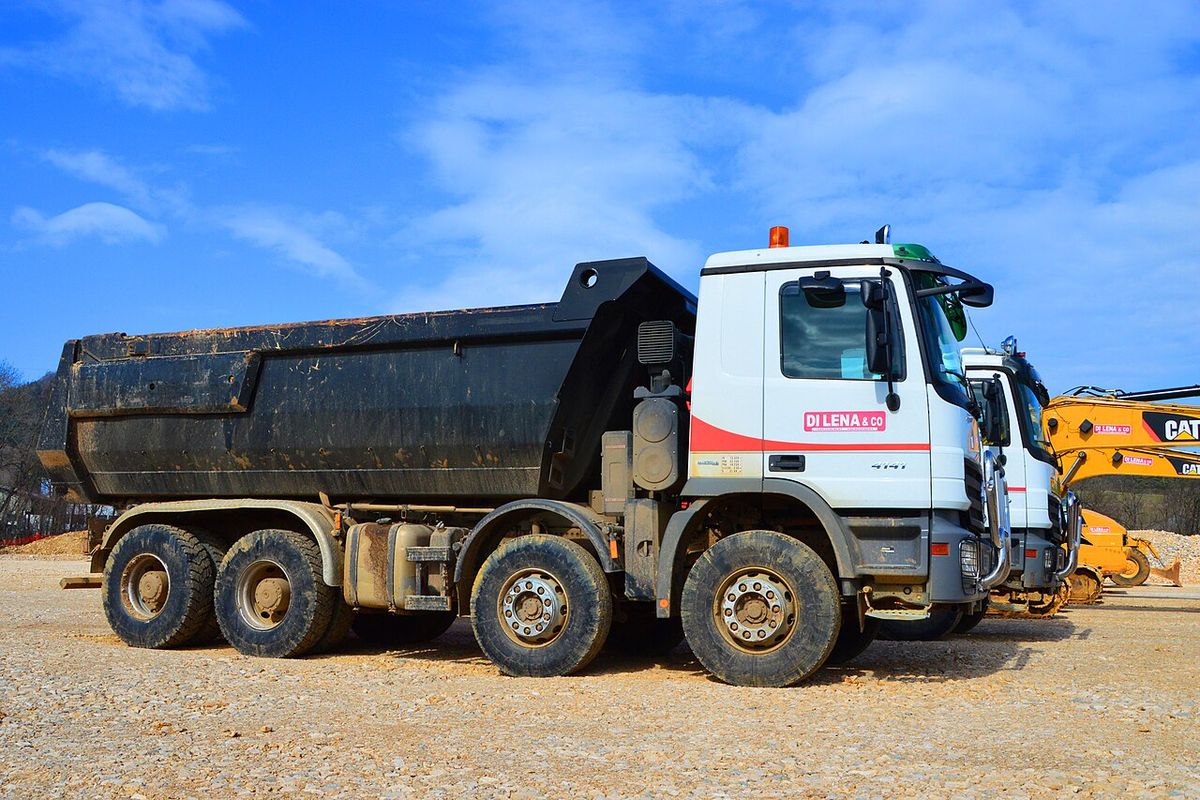
Modern dump trucks universally employ hydraulic systems and are engineered in numerous configurations to fulfil specific roles within the material supply chain. The standard dump truck consists of a truck chassis with a dump body mounted directly to the frame, using a vertical front post hoist or a horizontal underbody hoist to lift the bed. Common in North America, these trucks typically have one steering axle and one or two powered rear axles, with models like the Kenworth T800, Peterbilt 367, and Mack Granite being prevalent Class 8 examples. In the European Union, configurations often include two steering axles, with the largest standard models, sometimes called centipedes, utilizing up to seven axles to comply with strict gross weight limits, which are commonly capped at 32 metric tons for a standard four-axle eight-wheeler.
The semi-trailer end dump truck is a tractor-trailer combination where the trailer contains its own hydraulic hoist, offering a large payload capacity but with a noted disadvantage of instability when raised on uneven ground. This type can be further divided into frame and frameless trailers, with the frameless design being approximately five tons lighter for the same length due to its ribbed support structure instead of a full bottom frame. For operations requiring even greater capacity, the transfer dump truck uses a standard dump truck to pull a separate trailer with a movable cargo container that can be transferred into the main dump box, a configuration particularly favoured in the western United States due to regional weight restrictions. A triple transfer train, with both B and C boxes, can haul up to 129,000 kilograms with a special permit in certain American states such as Nevada and Utah, with an operating cost of about $105 per hour as of 2007, compared to about $85 per hour for an A/B configuration.
- Standard Dump Truck: Chassis-mounted body, common 4x2 or 6x4 axle setups.
- Semi End Dump: Tractor-trailer with trailer-mounted hoist, high capacity.
- Transfer Dump: Truck plus trailer with transferable container (A/B or triple train).
- Truck and Pup: Standard dump truck pulling a dump trailer with its own hydraulic ram.
- Superdump: Straight truck with a liftable trailing axle to increase legal weight capacity.
- Semi Bottom Dump (Belly Dump): Trailer with clam-shell gate underneath for windrow laying.
- Side Dump Truck (SDT): Trailer tilts sideways, offering rapid unloading and stability.
- Double/Triple Bottom Dump: Multiple trailers for continuous windrow laying without stopping.
The superdump uses a trailing axle to extend the vehicle's bridge measurement and increase its legal gross vehicle weight rating, potentially up to 80,000 pounds and carrying 26 short tons or more. The side dump truck tilts its body onto its side for rapid unloading and is notably stable during the dumping process compared to end dumps, though it can tip over if dumping is stopped prematurely. Winter service vehicles are often based on dump truck chassis to carry ballast or de-icing salts for snow and ice control, while roll-off trucks are specialized for carrying removable containers loaded and unloaded via a winch and cable or a newer hook-lift boom system. Bumper pull dump trailers also represent a versatile segment, coming in sizes from 6x10 models with 7,000 GVWR to larger 7x16 high-side models with 14,000 GVWR, offering features like tarp kits, remote control, and various lift mechanisms for applications including roofing and mulch delivery.
Off-Highway and Heavy Haulage Trucks
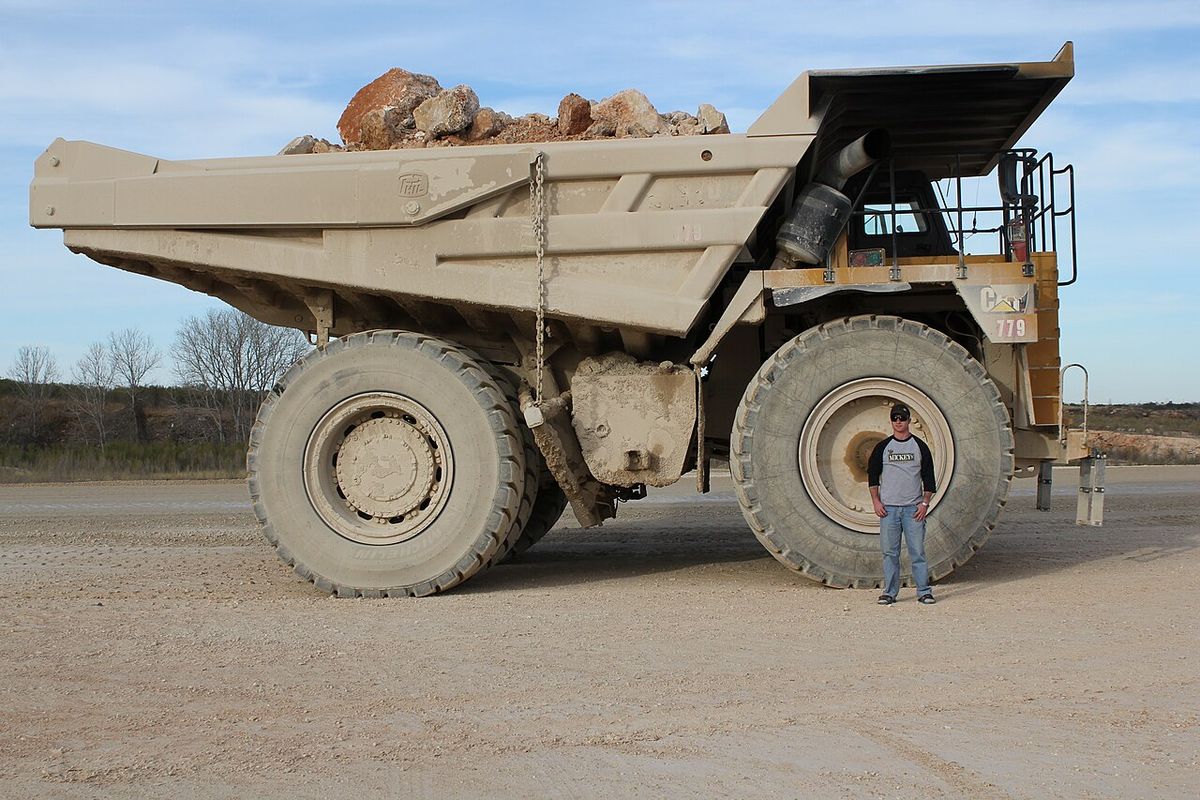
Distinct from highway vehicles, off-highway dump trucks, more accurately termed haul trucks or dumpers, are massive pieces of heavy construction equipment designed exclusively for mining and major earthmoving projects. These machines fall into two primary categories: rigid frame haul trucks and articulated haulers. The largest rigid haul trucks are among the most massive land vehicles ever built, with the current production leader being the BelAZ 75710 with a 450 metric ton payload capacity. Other major models include the Liebherr T 282B, Bucyrus MT6300AC, and Caterpillar 797F, each with payloads up to 400 short tons. A notable Canadian contribution to this field was the Terex 33-19 Titan, which held the size record for over 25 years before these newer models.
Most large haul trucks utilize diesel-electric powertrains, where a diesel engine drives an AC alternator or DC generator that sends power to electric motors at each rear wheel. The Caterpillar 797 is a unique exception among the largest models, as it employs a diesel engine to power a mechanical powertrain. Articulated haulers, conversely, feature a hinge between the cab and the dump box, with steering accomplished by hydraulic cylinders that pivot the entire tractor unit relative to the trailer. This design, combined with all-wheel drive and a low centre of gravity, provides exceptional mobility on rough terrain. In a landmark development for 2025, Volvo Construction Equipment introduced the world's first electric articulated haulers, the Volvo CE A40e and A45e, signalling a shift toward electrification in this demanding sector. Major manufacturers across both categories include Caterpillar, Komatsu, Hitachi, Volvo CE, Terex, and BelAZ, as well as SANY and XCMG.
Technical Specifications and Operational Features
Dump truck operation centres on the hydraulic system used to lift the dump body. The most common mechanisms are the front post hoist, with a vertical ram under the front of the body, and the underbody hoist, which uses a horizontal ram and lever arrangement between the frame rails. Tailgates vary in design, from simple swing-up or fold-down gates on lower hinges to high-lift tailgate formats where pneumatic or hydraulic rams lift the gate open and up above the dump body for clearing high aggregate piles. For specialized loads like grain, bodies may feature swing-out doors for entry and a centre metering gate or chute for a more controlled discharge, which is critical for agricultural applications.
Axle configurations are critical for managing weight distribution and complying with regulations. Unpowered lift axles or pusher axles are commonly used to support extra weight when the truck is loaded and can be raised off the ground to minimize tire wear when empty. In the European Union, heavy trucks often have two steering axles at the front, with dump truck configurations ranging from two to four axles, and the centipede variant using seven. Payload capacity is directly tied to jurisdictional weight and axle limits governed by formulas like the US federal bridge formula. This formula typically caps vehicles at 40 short tons nationally, though some states permit up to 52.5 short tons for longer vehicles that distribute weight over more distance, which drives the use of multi-axle configurations like double and triple bottom dumps or superdumps with trailing axles.
The design of the dump body itself also evolves with new materials and shapes. Innovations like the U-shaped or tub-body dump truck are made from high-strength, super wear-resistant steel plates bent into a U-shape. This design offers cleaner unloading with no corners for material to stick, reduces the vehicle's own weight by about one ton through structural optimization and thinner high-strength plates, and increases the carrying capacity. Another operational consideration is the specific dumping method. Side dump trucks must dump at an appropriate angle, such as 50 degrees, to ensure the load clears the trailer wheels, while bottom dump trailers can be of the windrow type, which leaves a linear pile, or the cross-spread type, which spreads material evenly from the width of the trailer but can jam with coarse materials.
Industry and Manufacturing
The dump truck manufacturing and supply industry is a global sector with roots in early 20th-century vehicle fabrication. Historical leaders like Fruehauf and Galion established foundational designs, with Galion's successor company remaining in operation as the oldest known truck body manufacturer. Today, the market for on-highway dump trucks is served by major truck original equipment manufacturers whose chassis are fitted with specialized dump bodies by third-party equipment manufacturers. Key North American Class 8 chassis models used for dump applications include the Kenworth T800 and T880, Peterbilt 367 and 567, Western Star 4700, 4900, 47X and 49X, Volvo VHD, Freightliner 114SD and 122SD, and the Mack Granite. These models are selected for their durability and compatibility with the severe service of dumping and plowing operations.
The off-highway dump truck segment is dominated by specialized heavy equipment manufacturers. These manufacturers focus on extreme durability and capacity for their haul truck models. The market includes high-capacity and technologically advanced vehicles. Other significant manufacturers in this space include DAC and John Deere, particularly for articulated haulers. Articulated haulers are distinct from semi-trailer trucks because their power unit is a permanent fixture.
| Manufacturer | Notable Haul Truck/Articulated Hauler Models |
|---|---|
| BelAZ | 75710 (450t), other haul truck models |
| Caterpillar | 797F haul truck, articulated haulers |
| Hitachi | EH Series haul trucks |
| Komatsu | HD Series haul trucks |
| Liebherr | T 282B haul truck |
| Terex | Formerly 33-19 Titan, other haul trucks and articulated haulers |
| Volvo CE | A40e, A45e electric articulated haulers, conventional articulated haulers |
| XCMG | Various haul truck models |
| SANY | Various haul truck models |
The industry continues to innovate, focusing on payload efficiency and environmental sustainability. The development of the superdump and trailing axle concept by Strong Industries of Houston, Texas, exemplifies innovation within weight regulations to maximize return on investment. The 2025 launch of Volvo's electric articulated haulers points toward a future of reduced emissions in heavy equipment. The market for accessories like dump trailers also remains active, with bumper-pull models offering a range of options including tarp kits, dump or swing gates, remote control, and various lift cylinder configurations for applications like roofing, mulch delivery, and skid steer grading.
Applications and Sector Use
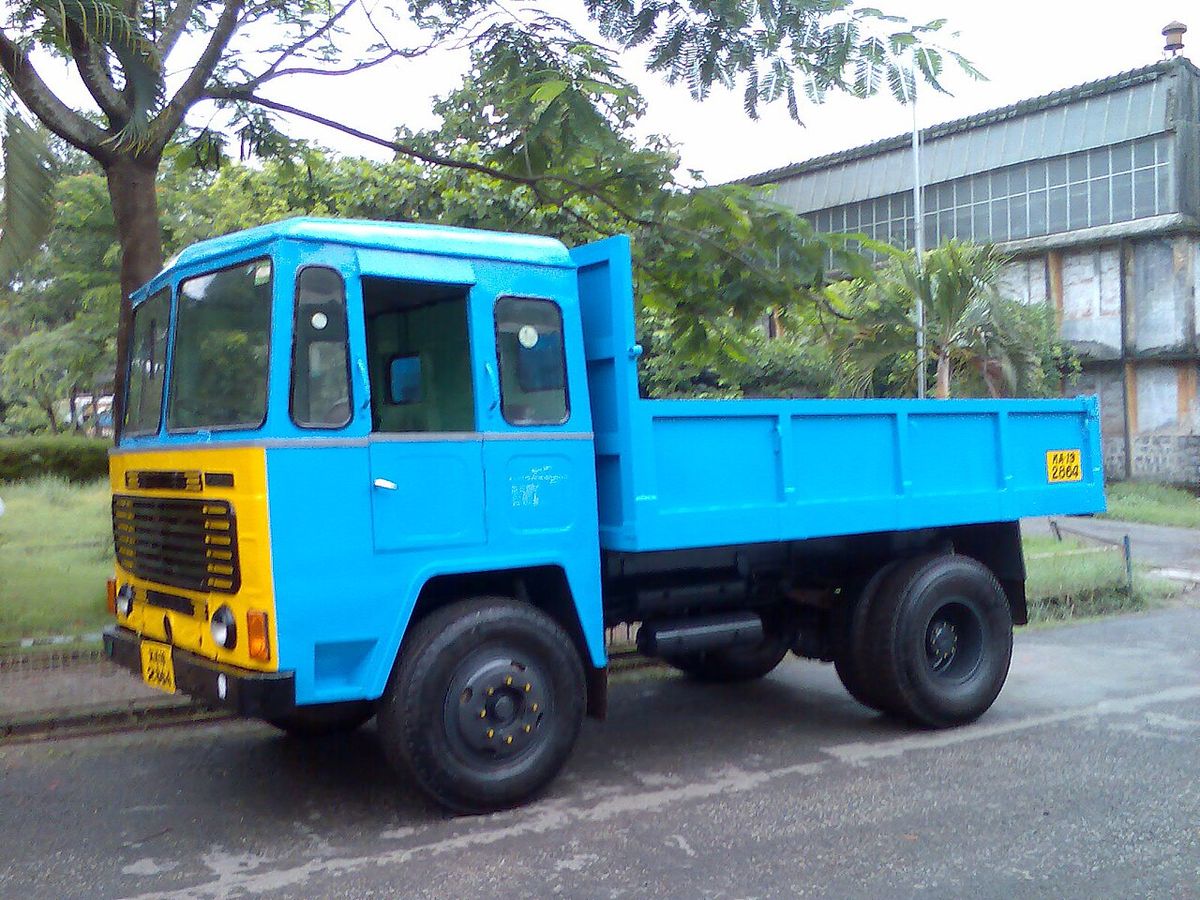
Dump trucks are foundational to multiple sectors of the economy, with their primary application being the transport of bulk materials in construction. This includes hauling aggregates like sand, gravel, and crushed stone to job sites for use in concrete, roadbeds, and foundations, as well as removing excavated earth and demolition debris. In mining and quarrying, off-highway haul trucks are indispensable for moving vast quantities of overburden and ore, operating in some of the most challenging environments on earth. The logging and agricultural industries also utilize dump trucks for transporting wood chips, grain, and other bulk commodities, often employing specialized bodies with grain chutes or high-lift gates designed for controlled dumping.
Municipal and public works departments rely heavily on dump trucks for infrastructure maintenance and seasonal operations. These vehicles form the basis for many winter service vehicles, where they are fitted with plows and spreader bodies to distribute salt or calcium chloride on snow and ice-covered surfaces, with the truck's inherent weight and heavy-duty construction necessary for severe plowing service. They are also used for street sweeping, landfill operations, and transporting asphalt for road paving crews. The versatility of the platform is further demonstrated by roll-off trucks, which service construction sites and industrial facilities by delivering and removing large open-topped boxes for rubble and building debris or rubbish compactor containers, streamlining logistics for waste management.
Specialized configurations are deployed for specific tasks. Transfer dump trucks are typically seen in the western United States, where they haul between 26 and 27 short tons of aggregate per load and are capable of three to five loads per day to supply large projects. Side dump trucks are valued in applications requiring rapid unloading and stability on uneven ground, such as road construction where material needs to be placed along a corridor. The double and triple trailer bottom dump trucks allow a driver to lay material in a windrow without leaving the cab or stopping, though backing these units is notably difficult. From the small bumper-pull trailer used by a landscaping contractor to the 450-ton haul truck in a tar sands mine, the dump truck's adaptability ensures its continued critical role in resource and infrastructure development across Canada and the world.
Questions about Dump truck
What was the first Canadian dump truck?
The first known Canadian dump truck was developed in Saint John, New Brunswick, in 1920 by Robert T. Mawhinney. He created it by attaching a wooden dump box to a flatbed truck frame. The lifting mechanism used a winch and cable system that ran over a pulley mounted on a mast behind the cab, allowing the operator to crank the box up and down. This early innovation marked a significant step in the mechanization of material handling within Canada.
What is the difference between a dump truck and a haul truck?
The term dump truck generally refers to vehicles designed for use on public roads and standard construction sites. A haul truck, also known as an off-highway dump truck or dumper, is used strictly off-road in mining and major excavation. Haul trucks are much larger pieces of equipment with payload capacities reaching hundreds of tons. They share little mechanical resemblance to highway dump trucks beyond their basic function of hauling and dumping material.
What is a Superdump truck?
A Superdump is a straight dump truck equipped with an additional liftable, load-bearing axle known as a trailing axle. Positioned 11 to 13 feet behind the rear tandem axles, this trailing axle extends the vehicle's outer bridge measurement, which allows it to carry more weight legally under the federal bridge formula governing truck sizes. When empty, the axle can be raised off the road. Superdumps can have a gross vehicle weight rating as high as 80,000 pounds and carry over 26 short tons of payload, offering greater productivity than conventional dump trucks within legal limits.
How does a side dump truck work and what are its advantages?
A side dump truck (SDT) is a tractor-trailer combination where hydraulic rams tilt the entire dump body onto its side, either left or right, to spill the load. Its key advantages include very rapid unloading cycles and a high degree of stability during the dumping process, making it almost immune to tipping over compared to semi end dump trailers. This configuration also often allows it to carry more weight under the weight regulations in the western United States. A potential drawback is that if dumping is stopped prematurely, the trailer is highly likely to tip over due to the shifted centre of gravity.
Are there electric dump trucks?
Yes, the development of electric dump trucks is advancing, particularly in the off-highway segment. In 2025, Volvo Construction Equipment introduced the world's first electric articulated haulers, the Volvo CE A40e and A45e models. These articulated dump trucks represent a significant move toward electrifying heavy-duty earthmoving equipment. For larger rigid frame haul trucks used in mining, most currently use diesel-electric powertrains, where a diesel engine generates electricity for wheel motors, but fully battery-electric or hydrogen fuel cell prototypes are under development by several manufacturers.
What is a transfer dump truck used for?
A transfer dump truck is used to maximize payload while maintaining the manoeuvrability of a standard dump truck. It consists of a standard dump truck pulling a separate trailer that carries a movable cargo container (the B box). This container can be rolled into the empty main dump box (the A box) on the truck, effectively combining their loads. This configuration is particularly common in the western United States to comply with specific highway weight restrictions. Transfer dumps typically haul 26 to 27 short tons of aggregate per load and are capable of multiple loads per day.
Sources and further reading
- Dump truck (Wikipedia)
- Terex Titan, Sparwood, British Columbia (gogoodtravel.com)
- The BELAZ dump truck became a landmark and another ... (belaz.by)
Checked by the Your Space Hamilton desk. Last updated 2026-10-22.