Saint John, New Brunswick
Saint John is a seaport city located on the Bay of Fundy in New Brunswick, Canada. It holds the distinction of being Canada's oldest incorporated city, established by royal charter on 18 May 1785. The city is a major economic centre for the province, home to Canada's third-largest port by tonnage and a diverse industrial base that includes oil refining, manufacturing, finance, and tourism. Saint John's rich history, shaped by Indigenous peoples, Acadian and Loyalist settlement, and waves of immigration, is reflected in its architecture, cultural institutions, and status as the second-largest city in New Brunswick.
History and Settlement
The area now known as Saint John has been inhabited by Wabanaki Confederacy peoples, including the Wolastoqiyik (Maliseet) and Mi'kmaq, for thousands of years, with the harbour area traditionally called Menahkwesk. French explorer Samuel de Champlain landed at the harbour on 24 June 1604, the feast day of St. John the Baptist, and gave the river its European name. The location became strategically important during the French colonial era in Acadia, with Fort La Tour in the harbour serving as a battleground in the Acadian Civil War. Control of the region shifted to the British following the Seven Years' War, culminating in the deportation of Acadians in 1755 after the destruction of Fort Menagoueche, which was later reconstructed as Fort Frederick. The city's modern founding occurred after the American Revolutionary War, with the arrival of thousands of United Empire Loyalists. Within months in 1783, over 10,000 Loyalists, including more than 3,300 Black Loyalists, arrived at the harbour seeking to remain under British rule. These refugees initially settled in the separate communities of Parr-town and Carleton on opposite sides of the harbour.
The communities of Parr-town and Carleton were united by royal charter on 18 May 1785, creating Canada's first incorporated city, named on the suggestion of Ward Chipman who also authored the charter. Gabriel George Ludlow was appointed its first mayor. The 19th century brought large-scale immigration, particularly from Ireland during and after the Great Famine between 1845 and 1849. In 1847 alone, approximately 16,000 immigrants, mostly Irish, arrived at the Partridge Island quarantine station, an influx that exceeded the city's existing population. This demographic shift contributed to periods of sectarian violence and some of the worst urban riots in Canadian history. The city also faced significant adversity, including a cholera outbreak in 1854 that claimed over 1,500 lives and the Great Fire of 1877 that destroyed 40% of the city and left 13,000 homeless, causing damages exceeding $10 million. Despite these challenges, Saint John rebuilt and flourished as a global shipbuilding centre, producing famous vessels like the 1851 clipper ship Marco Polo, which was noted as the fastest in the world. The city also witnessed the development of the automated foghorn by Robert Foulis. Labour history was made in 1849 with the formation of Canada's first labour union, the Laborer's Benevolent Association, by longshoremen.
Geography and Natural Features
Situated in south-central New Brunswick, Saint John is located at the mouth of the Saint John River where it meets the Bay of Fundy. The city's land area spans 315.96 square kilometres and is split by the south-flowing Saint John River, with the Kennebecasis River bordering the east side to the north at Grand Bay. Saint John Harbour is a deep-water, ice-free port that includes Partridge Island and is accessible year-round due to the bay's tidal action preventing ice formation. The city's topography is hilly, influenced by the St. Croix and Caledonia Highlands which run along the Bay of Fundy, and the soil throughout the region is extremely rocky with frequent granite outcrops. A defining natural phenomenon is the Reversing Falls, a series of rapids in a narrow gorge several hundred metres wide where the Bay of Fundy's powerful tides, with a range of approximately 8 metres, reverse the flow of the Saint John River for several kilometres upstream for several hours at high tide. The city is the centre of the Stonehammer UNESCO Global Geopark, the first of its kind in North America, recognized for rock formations dating back over a billion years to the Precambrian era.
The city's coastline hosts several beaches and is just east of New River Beach Provincial Park. Internally, Saint John contains numerous freshwater lakes in its eastern, western, and northern sections on the coastal plain. The confluence of cold bay air and warmer inland temperatures frequently creates onshore winds and fog, particularly during the summer months, which can lead to cooler temperatures. The climate is humid continental, moderated slightly by the Bay of Fundy, which never fully freezes. Winters see average January temperatures around -8.2 °C, with precipitation that can fall as heavy snow or rain, and it is not unusual for the ground to be snow-free in mid-winter. Summers are typically warm, with daytime highs often exceeding 25 °C and the highest annual temperature usually reaching 31 or 32 °C. The highest temperature ever recorded was 34.5 °C on 20 June 2024.
Neighbourhoods and Urban Parks
Saint John is organized into 33 neighbourhoods, broadly categorized into four geographical areas: North, East, South, and West. The North area encompasses the former city of Portland and includes neighbourhoods like Millidgeville, Cedar Point, and Kennebecasis Bay. Cedar Point is the site of the city's only completely French school and community centre, Centre Scolaire Communautaire Samuel-de-Champlain. The East area includes suburban communities such as East Saint John, Red Head, and Loch Lomond. The South area, often called the South Central Peninsula, contains the Uptown core, the central business district, and the historic Trinity Royal Heritage Conservation Area. This area includes the original city sites on both sides of the harbour and neighbourhoods like Germain Street and Waterloo Village. The West side includes Saint John West, which encompasses Carleton, as well as Fairville, Lorneville, and Milford-Randolph, collectively often referred to as the West Side.
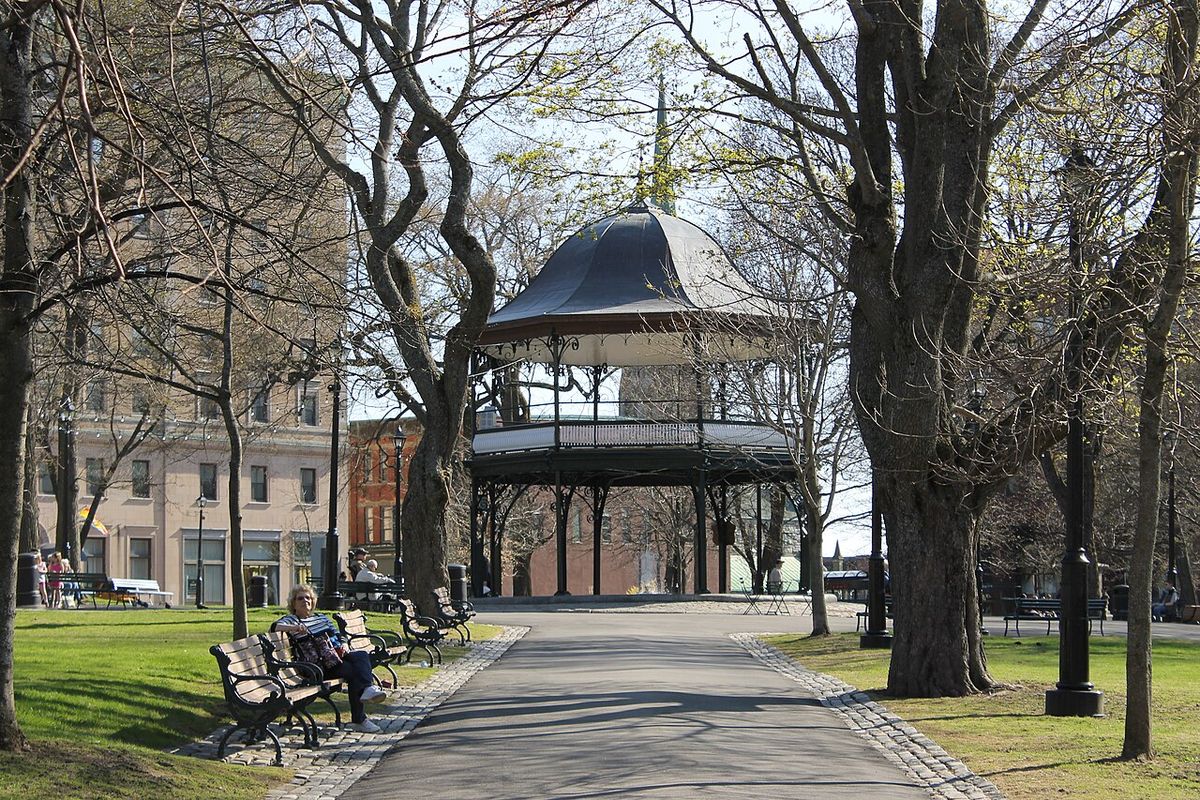
The city contains significant green spaces and parks. Rockwood Park, a 2,200-acre municipal park located east of the Millidgeville neighbourhood, was designed in the 19th century by landscape architect Calvert Vaux, who also worked on New York's Central Park. It features ten lakes and 55 trails and footpaths. The Irving Nature Park on the city's west side covers 600 acres of coastal landscape. Urban parks include the historic King's Square in Uptown, flanked by buildings like the City Market, the Imperial Theatre, and the former Admiral Beatty Hotel. Its counterpart, Queen Square, located a few blocks south, features an annual outdoor farmers market that operates through the summer months. These parks provide extensive recreational opportunities and are integral to the city's urban design.
Architecture and Notable Buildings
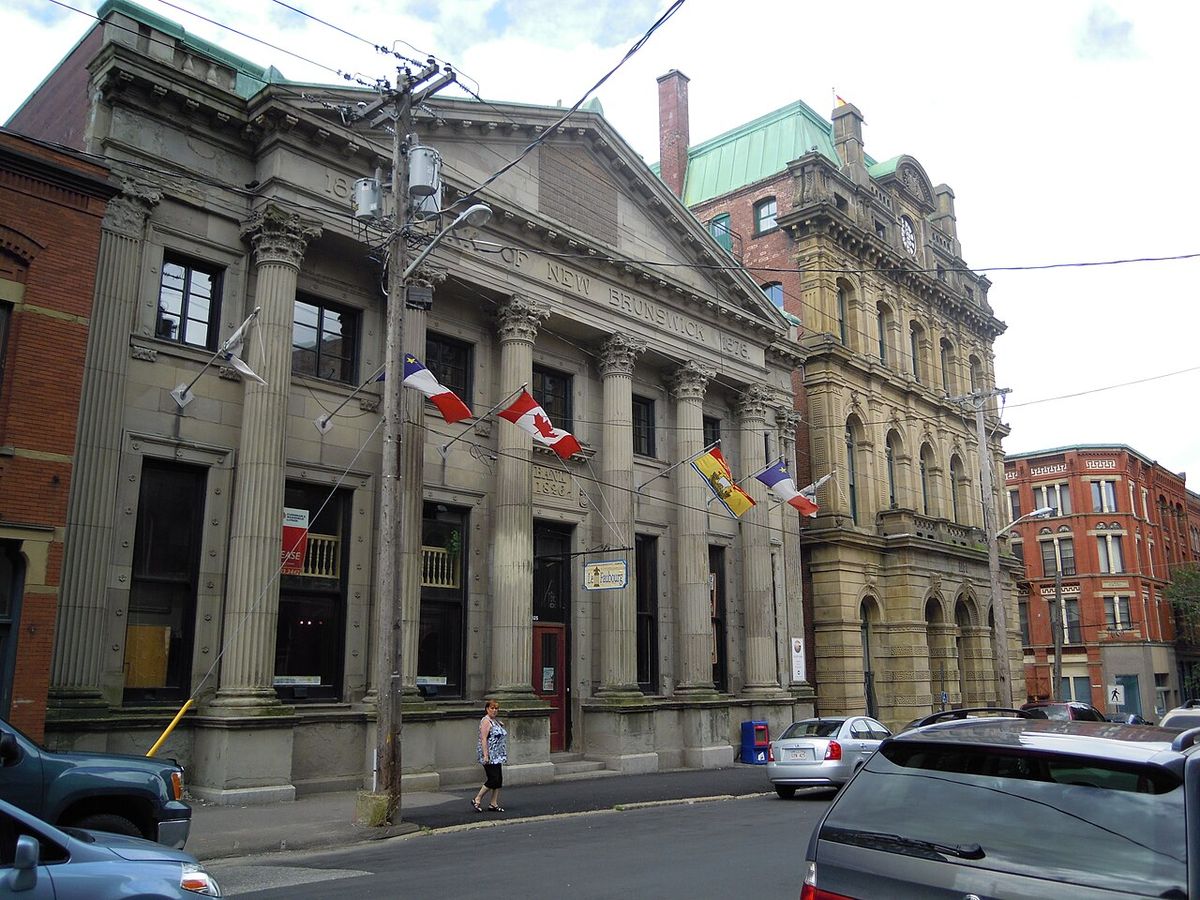
Saint John's architecture, especially in its Uptown region, displays a multitude of styles from the 19th and early 20th centuries, including Victorian, Romanesque Revival, Second Empire, Gothic Revival, Italianate, and Queen Anne. The rebuilding effort after the Great Fire of 1877 led to a definitive shift from wood to brick and stone construction. During the late 19th to early 20th centuries, Queen Anne and Romanesque styles were particularly popular. In 1982, the city established the Trinity Royal Heritage Conservation Area and a supporting by-law that regulates exterior work on properties built prior to 1915 to preserve their historic character. Buildings in the city often feature stone carvings and sculptures, adding to their distinct character. A proposed city hall in 1911 was designed to share Gothic and Second Empire styles, though the city gradually ceased adopting some of these historical forms over time.
Significant buildings and structures in Saint John include the Brunswick Square office tower, which is the largest office building in New Brunswick. The Cathedral of the Immaculate Conception is a Gothic style Catholic cathedral with a spire rising to 70.1 metres. Trinity Anglican Church is a Gothic Revival stone parish church that was rebuilt after the 1877 fire. Saint John City Hall is a 16-storey office building, and the Golden Ball Building is a 5-storey office building that was formerly the home office of Irving Oil. The City Market, built in 1876, is the oldest city market in North America and features an original ship's hull roof design.
- Brunswick Square (1976): A 19-storey, 265-foot office tower with 511,032 square feet of space, the largest office building in New Brunswick and second-largest in Atlantic Canada.
- Cathedral of the Immaculate Conception (construction began 1853): A Gothic-style Catholic cathedral with a spire rising to 230 feet.
- Saint John City Market (1876): The oldest continuously operating city market in North America, renowned for its original ship's hull roof design.
- Trinity Anglican Church: A Gothic Revival stone parish church with a 200-foot spire, rebuilt after the 1877 fire.
- Loyalist House (built 1817): A preserved example of early 19th-century architecture.
- Irving Oil Home Office (2019): An 11-storey modern office building.
- Saint John City Hall: A 16-storey, 181-foot office building containing 165,000 square feet.
- Golden Ball Building (1931): A five-storey, 78-foot office building that served as the original home office of Irving Oil.
- Brunswick House: A 14-storey, 171-foot office building with 103,000 square feet.
- Chateau Saint John: An 8-storey hotel with 112 rooms.
The city's skyline is a mix of historic structures and modern office towers. The Harbourside Senior Citizens Housing Complex is a 12-storey apartment building that is 43 metres tall. The Mercantile Centre is a 7-storey office building with 106,600 square feet of space. Other notable modern buildings include the 19-storey Brunswick Square tower and the 14-storey Brunswick House. The city's architectural evolution is also preserved in the Trinity Royal Heritage Conservation Area, which regulates work on historic buildings.
Demographic Composition and Trends
According to the 2021 census, Saint John had a population of 69,895 living in 31,825 private dwellings, with a population density of 221.5 people per square kilometre, highest in the Uptown area. The wider census metropolitan area had a population of 130,613 over a land area of 3,505.66 square kilometres. The median total household income in the city was $62,800 and the median age was 44. Educational attainment data shows that 58% of residents aged 25 to 64 held a postsecondary certificate, diploma, or degree, while 24% held a bachelor's degree or higher, and 32% had a high school diploma or equivalent as their highest qualification. Historically, the city has been a primary Canadian immigration port, shaping its ethnic composition. The mid-19th century saw massive Irish immigration, with an estimated 30,000 arriving between 1845 and 1847, a number exceeding the city's existing population at the time. Those who came before the famine were often tradesmen who formed the backbone of the city's builders.
The 2021 census reported that 86.4% of residents identified as white, 10.9% as visible minorities, and 2.8% as Indigenous. The largest visible minority groups were Black (2.7%), South Asian (2.4%), Arab (1.5%), Chinese (1.4%), and Filipino (0.9%). Linguistically, 87.2% of residents spoke English as a mother tongue, followed by French (3.7%), Arabic (1.5%), Chinese languages (1.0%), and Tagalog (0.5%). In terms of religion, 58.5% identified as Christian, a significant decline from 79.6% in 2011. This group included Catholics (29.7%), Protestants (20.6%), Christian not otherwise specified (5.1%), and other Christian denominations (3.0%). Those with no religious affiliation comprised 36.0% of the population, a substantial increase from 18.4% in 2011. Other religions accounted for 5.5% of the population, primarily Islam (3.1%) and Hinduism (1.0%).
Economic Sectors and Port Activity
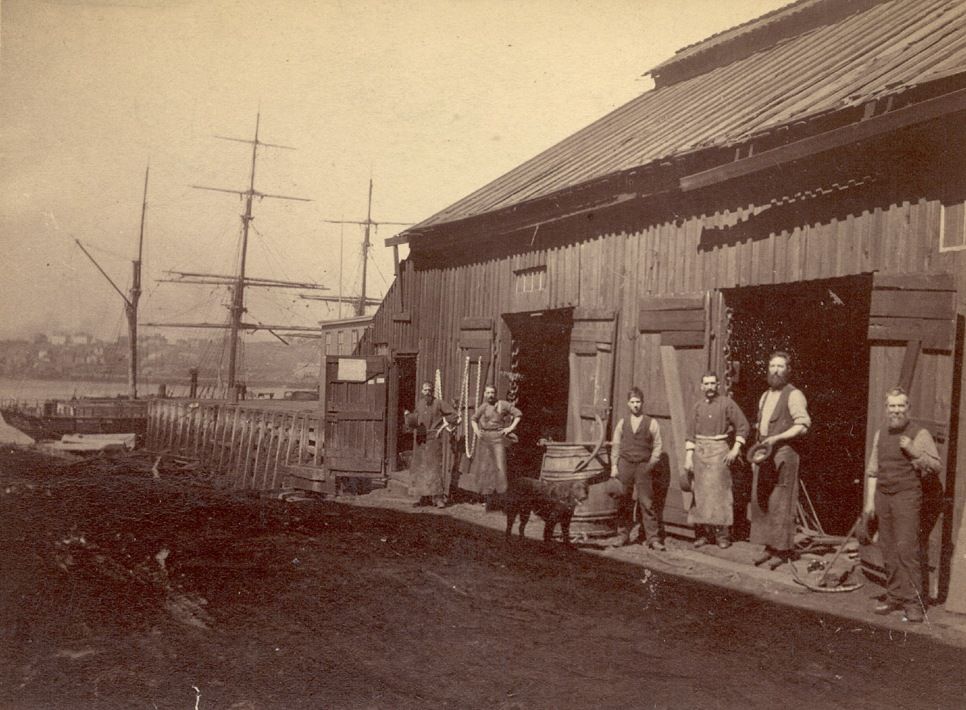
Saint John's economy has long been anchored by its ice-free, deep-water port on the Bay of Fundy. Historically, shipbuilding, shipping, and the lumber trade were dominant. By 1840, one-third of New Brunswick's timber and two-thirds of its sawn lumber and manufactured wood products were exported through Saint John. At its peak, Saint John was the biggest shipbuilding city in British North America. However, these industries declined due to technological change and the impact of the 1877 fire, with local shipbuilding ending permanently after the closure of the Saint John shipyard in 2003. Today, the Port of Saint John remains Canada's third-largest by tonnage, handling dry and liquid bulk, break bulk, and containers. The port is also a major cruise destination, welcoming around 80 ships annually since its first cruise ship visit by the MS Cunard Princess in 1989. The 2023 cruise schedule anticipated 190,680 passengers. Tourism is a significant sector, with expenditures reaching $282 million in 2018.
The city maintains a strong industrial base that includes oil refining at the Irving Oil refinery, one of the largest in Canada, and various manufacturing operations. Finance, insurance, and real estate also contribute substantially to the local economy. Research and educational institutions like the University of New Brunswick (Saint John campus) and the New Brunswick Museum, Canada's oldest continuing museum, support knowledge-based sectors. The working class history of the city includes early organization, with Black residents in the 19th century facing restrictions on trade, fishing, and voting, which led many to settle in the Portland area. The following table outlines key economic and demographic indicators for the Saint John Census Metropolitan Area (CMA) from recent censuses.
| Census Year | CMA Population | Land Area (km²) | Population Density per km² |
|---|---|---|---|
| 2016 | 126,202 | 3,505.66 | 36.0 |
| 2021 | 130,613 | 3,505.66 | 37.3 |
The city has a strong industrial base, including oil refining and manufacturing. It also has significant finance and tourism sectors and research institutions such as the New Brunswick Museum and the University of New Brunswick. The Port of Saint John is Canada's third-largest by tonnage and handles dry and liquid bulk, break bulk, containers, and cruise ships. This strategic port infrastructure supports these diverse economic activities.
Cultural Institutions and Community Life
Saint John's cultural identity is deeply connected to its history as a port city and immigrant gateway. The New Brunswick Museum, Canada's oldest continuing museum, is a key cultural institution located in the city. Performing arts are centred at venues like the historic Imperial Theatre adjacent to King's Square. The city's heritage is actively preserved through the Trinity Royal Heritage Conservation Area and sites like Partridge Island, which served as North America's first quarantine station. Annual events and festivals celebrate the city's diverse community and history. The Saint John City Market, operating since 1876, is not only a historic landmark but also a community hub for local food and artisans, featuring a distinctive interior roof designed like an inverted ship's hull.
Educational institutions form a central part of community life. The University of New Brunswick's Saint John campus and the New Brunswick Community College provide post-secondary education and contribute to local research and innovation. The city's architectural heritage, from Loyalist House to the modern Irving Oil Home Office, provides a tangible link to its past and present. Recreational opportunities are abundant in the city's extensive park system, including the 2,200-acre Rockwood Park and the 600-acre Irving Nature Park, offering residents and visitors access to natural landscapes and outdoor activities within an urban setting. The city's neighbourhoods, from the historic South End to the suburban communities of the East, host a variety of community centres, schools, and commercial districts that support daily life.
Questions about Saint John, New Brunswick
Why is Saint John considered Canada's oldest city?
Saint John is officially Canada's oldest incorporated city. It was established by a royal charter on 18 May 1785, during the reign of King George III, uniting the settlements of Parr-town and Carleton. This charter predates the incorporation of any other city in present-day Canada. The first common council meeting was held just two days later, on 20 May 1785, with Gabriel George Ludlow appointed as the first mayor. The city was named on the suggestion of Ward Chipman, who also wrote the charter.
What are the Reversing Falls?
The Reversing Falls are a unique natural phenomenon located in a narrow gorge in the centre of Saint John where the Saint John River meets the Bay of Fundy. The bay has some of the highest tides in the world, with a range of about 8 metres. At high tide, the force of the incoming ocean water is so strong that it pushes through the gorge and forces the Saint John River to reverse its flow for several kilometres upstream for several hours, creating a series of powerful rapids. It is a major tourist attraction and a dramatic example of the Bay of Fundy's power.
What is the historical significance of Partridge Island?
Partridge Island, located in Saint John Harbour, holds immense historical significance as the site of North America's first quarantine station, established in the early 19th century. It was the primary point of entry and processing for hundreds of thousands of immigrants, most notably during the Irish Great Famine. In 1847, one of the worst years of the famine, approximately 16,000 immigrants, predominantly from Ireland, arrived at the island. The station included hospitals, a lazaretto, and burial grounds, playing a critical and often tragic role in Canadian immigration history.
What major industries drive Saint John's economy today?
Saint John's modern economy is diverse, with several key industries. The Port of Saint John, Canada's third-largest by tonnage, remains a central facility, handling cargo and serving as a major cruise ship destination. Oil refining at the Irving Oil refinery is a major industrial activity. The city also has a significant manufacturing sector, alongside growing finance, insurance, and tourism industries. Tourism expenditures were reported at $282 million in 2018, supported by the cruise industry, historic sites, and natural attractions like the Reversing Falls and Stonehammer Geopark.
What is the Stonehammer UNESCO Global Geopark?
The Stonehammer UNESCO Global Geopark is a geological park centred around the Saint John region. It was the first geopark to be designated in North America, recognized by UNESCO for its exceptional geological significance. The park encompasses rock formations that are over a billion years old, dating back to the Precambrian era. It offers a record of continental collisions, volcanic activity, and ice ages, providing insights into the Earth's deep history. The geopark includes sites within Saint John and the surrounding area, promoting geotourism and education.
How did the Great Fire of 1877 change Saint John?
The Great Fire of Saint John on 20 June 1877 was a catastrophic event that destroyed approximately 40% of the city, including much of the central business district, and left 13,000 people homeless. The damage was estimated at over $10 million, equivalent to about $256 million today. The fire prompted a massive rebuilding effort, which led to a shift in architectural materials from wood to brick and stone, resulting in the more durable historic buildings seen in Uptown today. Despite a swift reconstruction, the disaster's aftermath contributed to a period of population decline as some residents chose to leave the city.
Sources and further reading
- Saint John, New Brunswick (Wikipedia)
- City of Saint John, New Brunswick (saintjohn.ca)
- Discover Saint John: Home (discoversaintjohn.com)
- The Saint John Region, New Brunswick (newtosaintjohn.ca)
Checked by the Your Space Hamilton desk. Last updated 2026-10-21.