David Easton
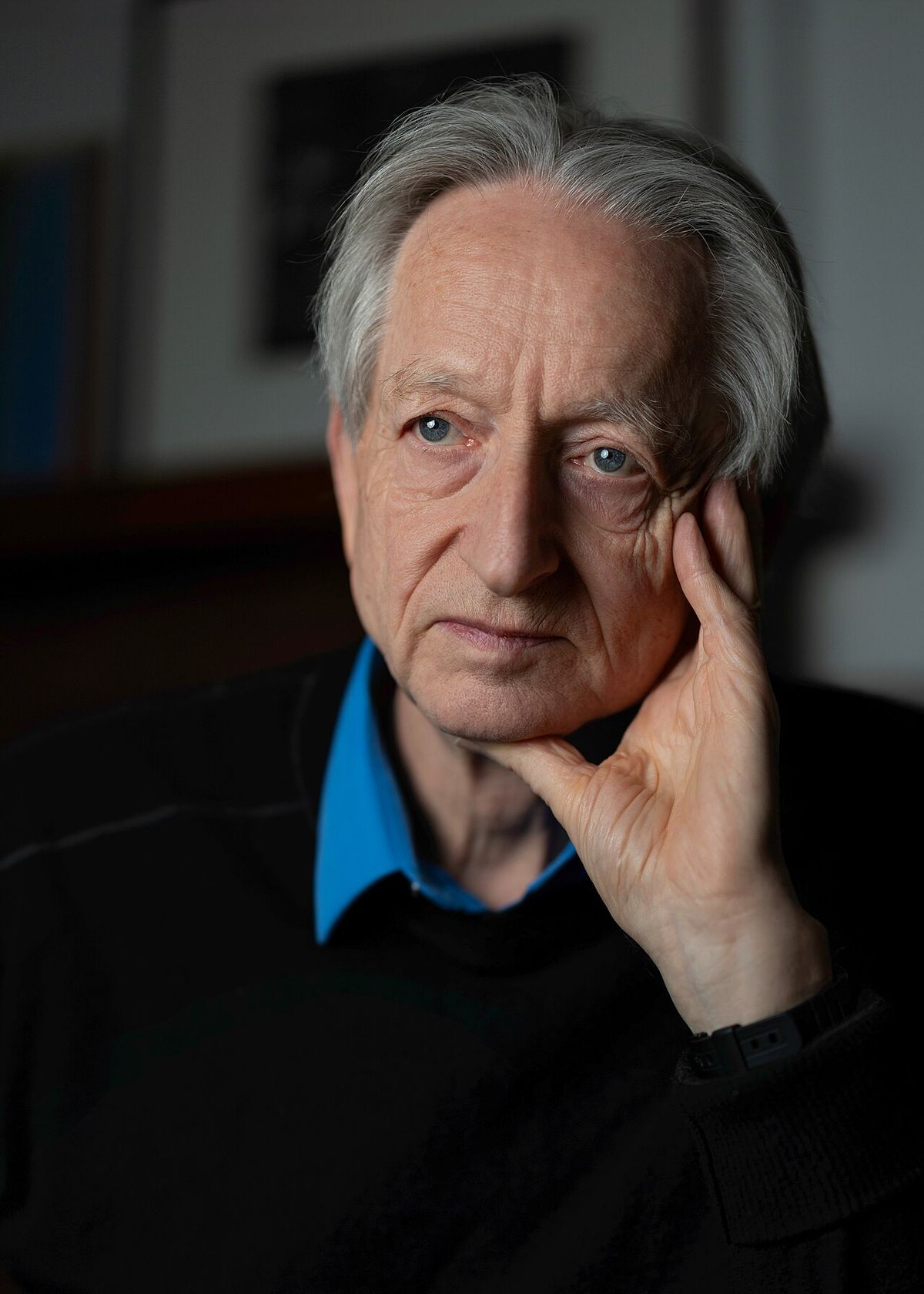
David Easton was a Canadian-born American political scientist whose work fundamentally reshaped the study of politics in the 20th century. A professor at the University of Chicago for five decades, Easton was a leading figure in both the behaviouralist and post-behaviouralist movements within the discipline. He is best known for defining politics as the authoritative allocation of values for a society and for pioneering the application of systems theory to political analysis. His theoretical frameworks, particularly his model of the political system with its inputs, conversions, outputs, and feedback, remain central to political science and public policy studies.
Early Life and Education
David Easton was born on June 24, 1917, in Toronto, Ontario, where he would begin his academic journey. He earned his Bachelor of Arts degree from the University of Toronto in 1939, demonstrating early promise in the social sciences. Easton continued his studies at the same institution, receiving a Master of Arts degree in 1943. He then moved to the United States to pursue doctoral studies at Harvard University, completing his Ph.D. in political science in 1947. His educational background also included an honorary Doctor of Laws (LL.D.) from McMaster University in 1970, and he attended Kalamazoo College in 1972. Easton married Sylvia Isobel Victoria Johnstone, and the couple raised one son together. In 1997, they relocated to California, a move undertaken in part for the sake of his wife's health, which also coincided with his new academic appointment.
Academic Career and Appointments
David Easton's academic career began with a teaching fellowship at Harvard University, which he held from 1944 to 1947. In 1947, he was appointed assistant professor of political science at the University of Chicago, marking the start of a fifty-year tenure at the institution. He was promoted to associate professor in 1953 and achieved the rank of full professor in 1955. In 1984, he was honoured with the title of Andrew McLeish Distinguished Service Professor in Social Thought, recognizing his significant contributions. His teaching was consistently aimed at graduate students, focusing on the supervision of their doctoral theses and the development of advanced theoretical understanding. In 1997, Easton was appointed Distinguished Research Professor in the Department of Political Science at the University of California, Irvine (UCI). At UCI, he assumed responsibility for the fledgling graduate program, and over several years he transformed it into a dynamic and comprehensive program designed to attract first-rate students. This involved instituting a compulsory course for new graduate students that dealt with the 19th and 20th century foundations of modern political science.
Throughout his career, Easton held significant positions in academic and research organizations that shaped the social sciences. He was a member of the executive committee of the Inter-University Consortium for Political Research from 1962 to 1964. He served as chairman of the Committee on Information and Behavioral Sciences for the Division of Behavioral Sciences at the National Academy of Sciences-National Research Council from 1968 to 1970. Easton was a fellow at the Center for Advanced Study in the Behavioral Sciences at Stanford University during the 1957-58 academic year. His consultancy work was extensive and influential, including roles for The Brookings Institution in 1955, the Mental Health Research Institute of the University of Michigan from 1955 to 1956, and the Canadian Royal Commission on Bilingualism and Biculturalism from 1964 to 1966. He also served as a Ford Professor from 1960 to 1961, a position funded by a grant from the Ford Foundation. Easton contributed to scholarly communication through editorial work, serving on the boards of the Journal of Political Methodology, Youth and Society, and International Political Science Abstracts, and he was the editor of the volume Varieties of Political Theory published in 1966.
Theoretical Contributions and Scholarship
David Easton has been described as one of the 'first generation of behavioral revolutionaries' in political science. Like other early behaviouralists, he initially sought to gain control over the masses of data being generated by social science research in the early 1950s, which he believed was overwhelming scholars in the absence of an organizing theoretical framework. Easton argued for the development of a proper science of political studies that would produce reliable, universal knowledge about social phenomena. He maintained that the purpose of scientific rules of procedure was to make possible the discovery of a highly generalized theory of politics, envisioning a deductive system built from a limited number of postulates and axioms. His seminal 1953 book, The Political System: An Inquiry into the State of Political Science, drove home the failure of political science at that time to build coherent theories or develop systematic techniques for gathering and analyzing data. In this work, Easton provided the discipline's most widely known and used definition of politics as the identification of the political system with the authoritative allocation of values for a society, which gave many political scientists a useful guideline for delimiting their field of study.
Easton's most significant theoretical innovation was the comprehensive application of systems theory to political analysis. He elaborated this framework in two key 1965 publications, A Framework for Political Analysis and A Systems Analysis of Political Life. His model conceptualized the political system as a dynamic entity processing inputs, such as public demands and support, through a conversion process within governmental institutions to produce outputs in the form of policies and decisions. These outputs then generate feedback from the environment, which subsequently influences new inputs, creating a continuous cycle. This five-fold scheme for studying the policy-making process, input, conversion, output, feedback, and environment, became an essential tool for policy analysts. According to scholar John Gunnell, since the 1950s the concept of 'system' was the most important theoretical concept used by American political scientists, and while the idea appeared in other social sciences, it was Easton who specified how it could be best applied to behavioural research on politics.
Some years later, after becoming President of the American Political Science Association, Easton led the charge for a new post-behaviouralist revolution. He argued that political science research should be both relevant and action-oriented to better serve the needs of society by solving the social and political problems revealed during the tumultuous 1960s. This revolution was not a change in methods but a change in orientation, advocating for more attention to the public responsibilities of the discipline and to relevant research on contemporary political problems. According to Gunnell, this stance was the official birth announcement of the public policy enterprise in political science, which became the basis of the self-image of orthodox political science in the 1970s. With this shift came a distinct de-emphasis on establishing a general unified theory as the core of the discipline. In the 2000s, Easton's principal research interest turned to examining structural constraints as a second major element underlying how political systems operate, writing about the influence of political structure on political life, the development of political science, and the political socialization of children. His influence was quantified in a 1978 reputational study, which ranked him fourth among the most prominent political scientists during 1945-60 and second most prominent for the period 1960-70. A subsequent study based on citation counts ranked him seventh among the twenty most significant contributors in the period 1970-79.
Professional Leadership and Honours
David Easton held leadership roles in several major academic organizations, reflecting his stature as a central figure in the social sciences. His presidency of the American Political Science Association (APSA) from 1968 to 1969 was a pinnacle of his professional service, during which he championed the post-behaviouralist turn. He also served as past president of the International Committee on Social Science Documentation from 1969 to 1971 and held the position of vice president of the American Academy of Arts and Sciences. Within the American Academy of Arts and Sciences, he was an active Behavioral Science Fellow, serving in multiple capacities over many years. His roles there included being a council member from 1975 to 1984, chairman of its research and planning committee from 1979 to 1982, and a member of its executive board from 1979 to 1984. Easton's service extended to other scholarly bodies in both the United States and Canada, including his role as a trustee and chairman of the Academy of Independent Scholars from 1979 to 1981 and his membership on the Committee on Higher Education of the Royal Society of Canada from 1978 to 1980. Within the APSA, he also chaired the Committee on Scientific Information Exchange in 1972, and his contributions were recognized with prestigious appointments like serving as a Ford Professor from 1960 to 1961, funded by a grant from the Ford Foundation.
Selected Publications
David Easton wrote and edited several influential books and articles over his long career. His body of work charted the evolution of his thought from behavioural theory to systems analysis and later to the study of political structure. He wrote about the influence of political structure on various aspects of political life. His publications are essential reading for students of political theory and the history of the discipline. The following list represents a selection of his key works, demonstrating the range and depth of his scholarly output.
- The Decline of Modern Political Theory (1951), An article published in the Journal of Politics volume 13.
- The Political System: An Inquiry into the State of Political Science (1953), Published by Knopf in New York, this is his foundational critique of the discipline.
- An Approach to the Analysis of Political Systems (1957), An article published in World Politics volume 9.
- A Framework for Political Analysis (1965), Published by Prentice-Hall in Englewood Cliffs, a key text outlining his systems theory.
- A Systems Analysis of Political Life (1965), Published by Wiley in New York, the comprehensive application of his theoretical model.
- Varieties of Political Theory (1966), An edited volume published by Prentice-Hall in Englewood Cliffs.
- Children in the Political System: Origins of Political Legitimacy (1969), Co-authored with Jack Dennis and published by McGraw-Hill.
- The Analysis of Political Structure (1990), Published by Routledge in New York, representing his later work on structural constraints.
- Divided Knowledge: Across Disciplines, Across Cultures (1991), Edited with C. Schelling.
- The Development of Political Science: A Comparative Survey (1991), Edited with J. Gunnell and L. Graziano, published by Routledge in New York.
- Regime and Discipline: Democracy and the Development of Political Science (1995), Edited with J. Gunnell and M. Stein.
Later Career and Enduring Influence
After his formal retirement from the University of Chicago in 1997, David Easton continued his scholarly work with vigour at the University of California, Irvine. There, he helped build a strong graduate program in political science, applying the same dedication to mentorship and curriculum development that characterized his Chicago tenure. His later research increasingly focused on the influence of political structure on various aspects of political life and on the political socialization of children, a topic he had explored earlier in his 1969 book with Jack Dennis. Easton's legacy is that of a theorist who provided the discipline with its most durable definition of its subject matter and a powerful, adaptable analytical framework for understanding political processes. His systems model remains a staple in textbooks on political science and public policy, ensuring his ideas continue to inform contemporary research and teaching. The shift he helped engineer toward post-behaviouralism and policy-relevant research fundamentally altered the self-image of political science in the late 20th century. David Easton passed away on July 19, 2014, leaving behind a transformed discipline that still operates within the conceptual parameters he helped to establish.
Questions about David Easton
What is David Easton's definition of politics?
David Easton defined politics as the authoritative allocation of values for a society. This influential definition, presented in his 1953 book The Political System, identifies the core function of a political system as making binding decisions about what is valued within a community. It provided political scientists with a clear guideline for delimiting the content of their discipline, focusing on how societies make and enforce collective choices. The concept remains a foundational element in political science education and theory, distinguishing political activity from other social processes.
What is David Easton's systems theory in political science?
Easton's systems theory, fully elaborated in his 1965 works A Framework for Political Analysis and A Systems Analysis of Political Life, models the political process as a dynamic, self-regulating system. The theory outlines a continuous cycle where inputs, such as public demands and support, enter the system and undergo a conversion process by government institutions to produce outputs like policies and decisions. These outputs then generate feedback from the social environment, which influences subsequent inputs, creating an ongoing loop. This five-fold scheme, input, conversion, output, feedback, and environment, became a standard analytical tool for understanding the policy-making process and the stability of political systems.
Where did David Easton teach and what were his key academic roles?
David Easton's primary academic home was the University of Chicago, where he served as a professor of political science from 1947 until 1997, progressing from assistant professor to the Andrew McLeish Distinguished Service Professor in Social Thought. In 1997, he was appointed a Distinguished Research Professor at the University of California, Irvine, where he helped develop the graduate program. His teaching was aimed primarily at graduate students, focusing on thesis supervision and theoretical foundations. He also held significant roles outside the classroom, including as a fellow at Stanford's Center for Advanced Study, a consultant to the Canadian Royal Commission on Bilingualism and Biculturalism, and a Ford Professor.
What honours and leadership positions did David Easton hold?
Beyond his APSA presidency, David Easton held numerous prestigious positions. He was a vice president of the American Academy of Arts and Sciences, where he also served as a council member, executive board member, and chairman of its research committee. He was past president of the International Committee on Social Science Documentation, chairman of the Academy of Independent Scholars, and a member of the Royal Society of Canada's Committee on Higher Education. He received an honorary LL.D. from McMaster University and served as a fellow at the Center for Advanced Study in the Behavioral Sciences at Stanford University.
How is David Easton's influence measured within political science?
David Easton's influence is demonstrated through both his theoretical impact and formal reputational studies. His definition of politics and systems theory are central to the discipline's curriculum. A 1978 reputational study of political scientists ranked him fourth among the most prominent scholars for the period 1945 to 1960 and second for 1960 to 1970. A subsequent study based on citations in the work of others ranked him seventh among the twenty most significant political science contributors for the decade of 1970 to 1979, confirming his sustained and substantial impact on the field over multiple generations.
What was David Easton's role in the behavioural and post-behavioural revolutions?
David Easton was at the forefront of both the behaviouralist and post behaviouralist revolutions in political science. In the 1950s, as a first generation behavioural revolutionary, he sought to develop a proper science of politics with a general theoretical framework to organize research data. Decades later, as President of the American Political Science Association from 1968 to 1969, he led the post behaviouralist charge. He argued that political science research should become more relevant and action oriented to solve social and political problems. This shift advocated for greater attention to the discipline's public responsibilities and to contemporary issues, which John Gunnell identified as the official birth announcement of the public policy enterprise in political science.
Sources and further reading
- David Easton (Wikipedia)
- In Conversation with David Easton, lifeMstyle (lifemstyle.com)
- David Easton, the Academic Senate, University of California (senate.universityofcalifornia.edu)
- David Easton: Interior Designer and Architect (voicesofoklahoma.com)
Checked by the Your Space Hamilton desk. Last updated 2026-10-31.