York Factory
York Factory is a National Historic Site of Canada located on the southwestern shore of Hudson Bay in northeastern Manitoba, at the mouth of the Hayes River. Established in 1684 as a Hudson's Bay Company (HBC) trading post, it served as the central base for the North American fur trade for over 270 years and was the headquarters of the HBC's Northern Department from 1821 to 1873. The site, now operated by Parks Canada, features a large wooden depot building constructed in 1831, which is the oldest and largest wooden structure built on permafrost in Canada. York Factory's history is deeply connected to the economic development of Western Canada and the lives of Indigenous peoples, particularly the Swampy Cree and other Home Guard Cree communities who knew it as Kihci-waskahikan.
Location and Setting
York Factory is situated on the north bank of the Hayes River, approximately 11 kilometres inland from the coast of Hudson Bay. The massive mouth of the Nelson River lies to the north, separated by a landform known as Point of Marsh. Although the Nelson River is the larger waterway, draining Lake Winnipeg, the Hayes River provided a more practical and reliable route for canoe travel, which was crucial for the fur trade's transportation network. Due to shallow waters near the shore, seagoing supply ships from Europe were forced to anchor at a spot known as Five Fathom Hole, about 11 kilometres from the fort, requiring goods to be transferred via smaller boats. In the modern era, the remote site is primarily accessed by air, with the nearby Shamattawa Airport and Gillam Airport serving as key logistical points for staff and visitors. The site's isolation and its position at the maritime edge of a vast continental watershed defined its strategic role for centuries.
Early History and Colonial Rivalry
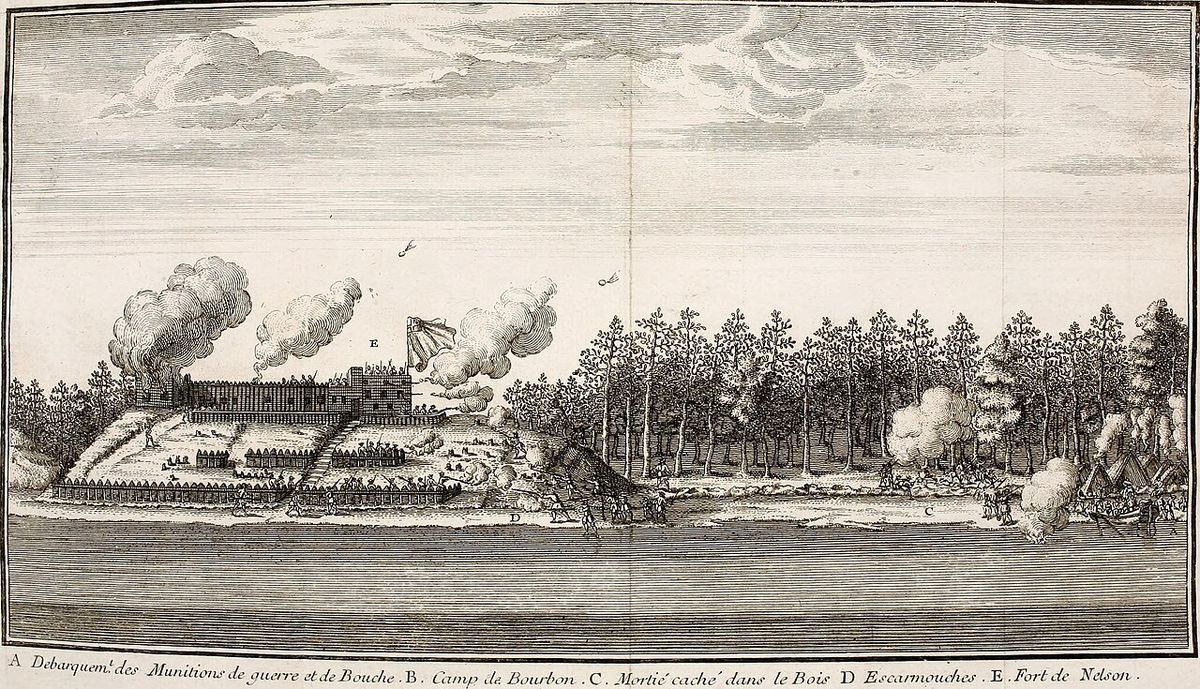
York Factory was established by the Hudson's Bay Company in 1684, named in honour of the Duke of York, and served as a successor to Fort Nelson which was built at the mouth of the Nelson River the same year. Its establishment, along with other HBC posts on James Bay, was part of the company's strategy to control the fur trade throughout Rupert's Land, the vast territory comprising the entire Hudson Bay watershed. The presence of English trading posts provoked a military response from New France, leading to a series of conflicts over control of the bay. In 1690, the French commander Pierre Le Moyne d'Iberville attempted to capture York Factory but was driven away by a larger English ship. He succeeded in 1694, capturing the post with a show of force and renaming it Fort Bourbon. The English retook it the following year, but d'Iberville captured it again in 1697 after winning the Battle of Hudson's Bay, the largest Arctic naval battle in North American history, where his French force defeated three English warships. York Factory remained under French control until the Treaty of Utrecht in 1713 returned it to Britain, after which the HBC reinstated it as its northern headquarters and primary base of operations.
Architecture and the Depot Compound
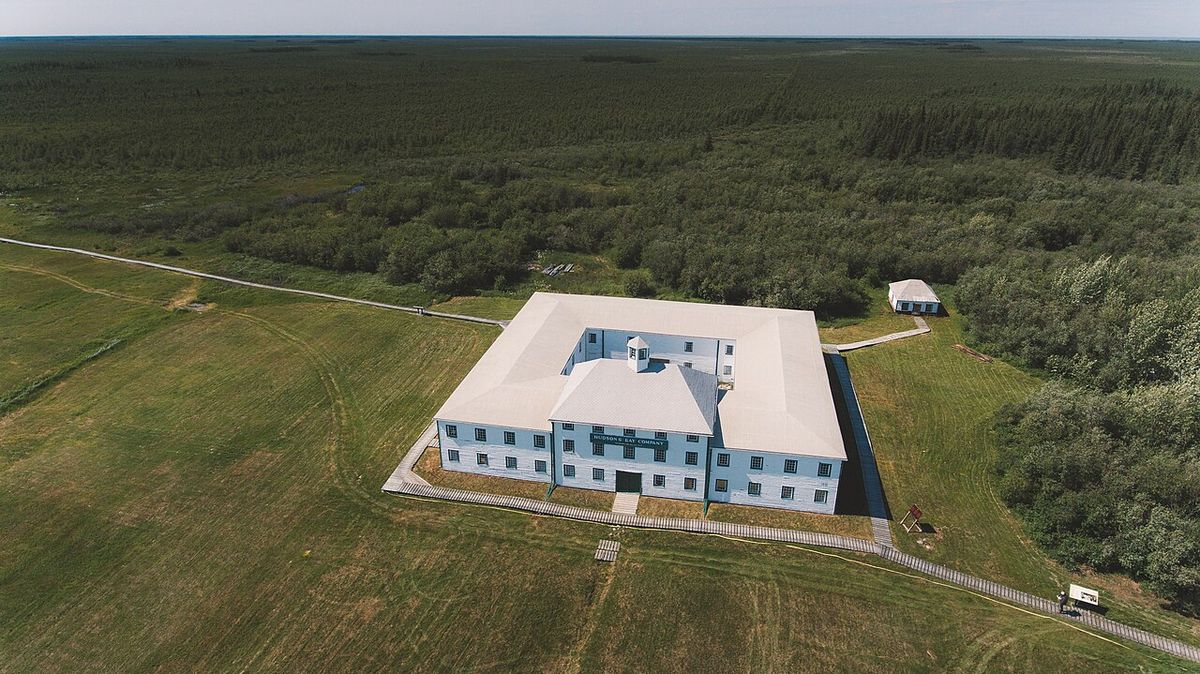
From 1788 to 1795, the Hudson's Bay Company constructed a new fort at York Factory using stone and brick, a material choice that later proved problematic. This fort was known as "The Octagon" due to the octagonal shape of its enclosed area, and it represented an ambitious attempt to create a permanent, fortified headquarters. The stone and brick could not withstand the heaving of the permafrost, leading to structural failure. In 1831, the stone fort was razed and replaced by the wooden structure that defines the site today. The three-story centre section of the current compound was completed that same year, with the two-story wings finished during the following two years. This large white wooden depot is an exceptional example of adaptation to the northern environment, built specifically to cope with permafrost conditions. At its peak in the mid-19th century, York Factory was an extensive settlement with approximately 50 on-site buildings, though most of these auxiliary structures have not survived.
The Fur Trade Depot and Headquarters
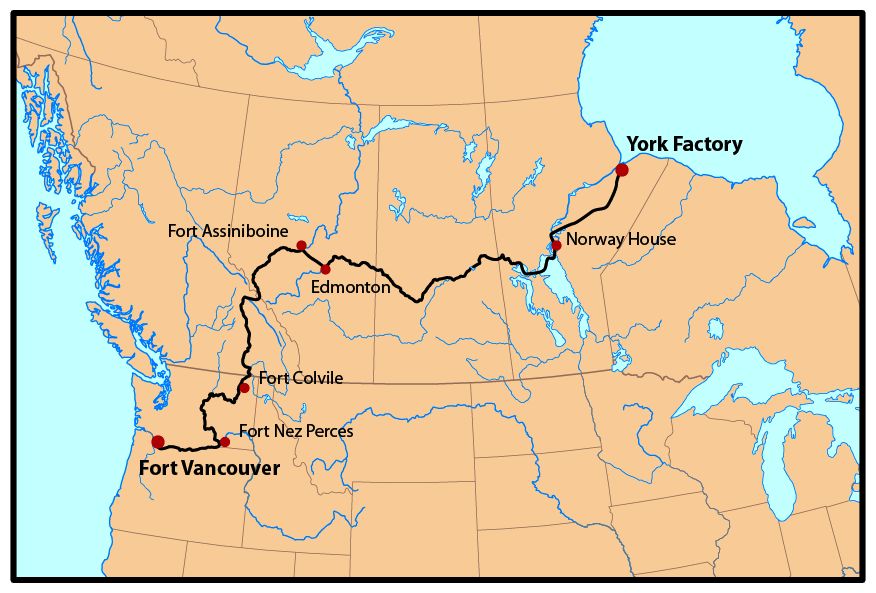
For most of its first century of operation, York Factory operated as a centralized depot where First Nations traders would bring furs from the interior, rather than the Company sending many traders inland. Its strategic location at the mouth of the Nelson and Hayes river systems allowed access by canoe from the watersheds of the Saskatchewan and Red rivers, drawing trade from a huge area. In the late 18th century, this centralized model became a disadvantage against the more mobile voyageurs of the North West Company, who travelled directly among First Nations communities. In response, the HBC began sending out its own traders from York Factory and established a network of inland posts, first along the Saskatchewan River and eventually as far as the Oregon Country. Twice annually from 1821 to 1846, supply brigades known as the York Factory Express travelled overland to Fort Vancouver, carrying trade goods west and returning with furs destined for London, cementing York Factory's role as a continental supply hub.
Life and Operations at the Post
By the mid-19th century, York Factory had developed into a substantial settlement with a permanent workforce, but it was not a popular posting due to its harsh environment. The chief trader, John McLean, wrote in 1837 that he "took leave of Fort York, its fogs, and bogs and mosquitoes, with little regret," a sentiment echoed by many who served there. The post operated on an annual cycle, receiving supply ships from England in the summer and sending out inland brigades and receiving furs via the river networks. The workforce included Company officers, labourers, craftsmen, and the families of Indigenous women who formed vital economic and kinship links. The Cree communities living near the post, often referred to as the Home Guard Cree, were integral to its operation, providing country food, guiding, and interpreting. The post's extensive operations required a wide range of buildings, including warehouses, workshops, dwellings, and a garden, though the persistent permafrost, insects, and climate made agriculture difficult and life challenging.
Decline, Closure, and Relocation
The importance of York Factory declined in the 1860s and 1870s due to major geopolitical and transportation changes. The transfer of Rupert's Land to Canada in 1870 and the increasing use of American railways, steamboats, and Red River carts for Upper Fort Garry's southern supply line reduced the depot's logistical centrality. In 1872, its role was reduced to outfitting only specific posts in Manitoba. The following year, its title as fur trade headquarters was removed, with responsibilities transferred to Upper Fort Garry, present-day Winnipeg. From 1874 to 1875, the post virtually stopped receiving supplies for transshipment elsewhere, and in 1878, British products began being relocated to Norway House. A brief administrative revival occurred in 1911 when it was designated headquarters for the new Nelson River District, but this title was lost to Churchill in 1929 after the railway connected Churchill to Winnipeg. The Hudson's Bay Company finally closed York Factory in 1957. The Cree and other residents were relocated to settlements including York Landing Cree Nation, about 116 kilometres east-northeast of Thompson, as well as Split Lake and Shamattawa. Cree elders who lived there in the first half of the twentieth century recalled in oral stories their desires to remain at Kihci-waskahikan, or Great House, when operations ceased.
York Factory as a National Historic Site
The site was designated a National Historic Site of Canada in 1936, recognizing its national significance. The Hudson's Bay Company sold the property to the Canadian government in 1968, and it has since been managed by Parks Canada. The large white wooden depot building, constructed in 1831, is the focal point of the site and is recognized as the oldest and largest wooden structure built on permafrost in Canada. No one lives permanently at York Factory today. Parks Canada maintains a summer residence for seasonal staff, and there are some nearby seasonal hunting camps. The site is open to visitors from June 1 to mid-September each year, with staff present to interpret the history. Since 1991, archaeological work has been conducted to excavate and study the remains of the 18th-century Octagon fort, uncovering more details about the early layout and life at the post. This research continues to add to the understanding of this long-operating trading post.
Key Historical Events and Transitions
The long history of York Factory is marked by several definitive events that shaped its role and ultimate fate. These events chart the post's evolution from a contested colonial outpost to a commercial centre and, finally, to a government-preserved historic site. The establishment in 1684 began its role as a fur trade hub, while the French captures and the 1713 Treaty of Utrecht solidified British control. The construction and failure of the Octagon fort, followed by the building of the 1831 wooden depot, show the architectural challenges of the site. The period from 1821 to 1873 as Northern Department headquarters was its peak of administrative power, followed by a long decline driven by new transportation routes like the railway to Churchill. The final closure in 1957 and the relocation of its residents ended its active life, leading to its current status as a historic site managed for public education and preservation.
- 1684: York Factory is established by the Hudson's Bay Company on the Hayes River as a fur trading post.
- 1694 to 1713: Captured by French forces, renamed Fort Bourbon, and held until returned to Britain by the Treaty of Utrecht.
- 1788 to 1795: Construction of the stone and brick "Octagon" fort, which later failed due to permafrost.
- 1831: The Octagon is razed and the current wooden depot's centre section is completed.
- 1821 to 1873: Serves as the headquarters of the HBC's Northern Department.
- 1873: Loses its headquarters status to Upper Fort Garry (Winnipeg).
- 1929: Loses the Nelson River District headquarters title to Churchill after the railway arrives there.
- 1957: The Hudson's Bay Company permanently closes the York Factory trading post.
- 1968: The Canadian government acquires the site from the HBC.
York Factory was established in 1684 as a key Hudson's Bay Company fur trading post. Its function expanded when it became the headquarters of the HBC's Northern Department from 1821 to 1873. The post's importance began to decline in the 1860s and 1870s due to changes in transportation networks. Its role was further diminished in 1873 when the fur trade headquarters title was removed and transferred to Upper Fort Garry. The post finally closed in 1957, marking the end of its operational history.
Cultural and Historical Significance
York Factory holds major significance in Canadian history as a physical record of the fur trade era, which was the foundation for European economic expansion into western and northern North America. For nearly three centuries, it was a critical node in a global trade network that connected Indigenous trappers in the interior with European markets. The site is directly associated with the Swampy Cree and other Home Guard Cree communities, who developed long-standing economic and social relationships with the post, known to them as Kihci-waskahikan. Its architectural remnant, the 1831 depot, is an engineering landmark due to its construction techniques adapted to the challenging permafrost environment, representing a specific solution to a unique northern problem. As a National Historic Site, York Factory serves as an educational resource, preserving the stories of commerce, conflict, and cultural encounter that are central to the history of Manitoba and Canada. The archaeological work since 1991 continues to reveal details about the daily life and material culture of the people who lived and worked there, ensuring its layered history is not forgotten.
Questions about York Factory
Where is York Factory located?
York Factory is located in northeastern Manitoba, Canada, on the north bank of the Hayes River approximately 11 kilometres inland from the southwestern shore of Hudson Bay. It is about 200 kilometres south-southeast of Churchill. The site is remote, with modern access primarily via air to nearby airports like Shamattawa or Gillam. The location was chosen for its access to inland canoe routes via the Hayes River, despite the larger Nelson River being nearby.
Why was York Factory important?
York Factory was a crucial hub for the Hudson's Bay Company's fur trade operations for over 270 years. From 1821 to 1873, it served as the headquarters of the HBC's Northern Department, managing a vast territory known as Rupert's Land. Its location at the mouth of the Hayes River made it a gateway for trade goods entering and furs leaving the interior of Canada. It was the origin point for the York Factory Express, which supplied posts as far away as Fort Vancouver, and it influenced the economic and geographic development of Western Canada.
Can you visit York Factory today?
Yes, York Factory is a National Historic Site of Canada operated by Parks Canada. It is open to visitors seasonally, typically from June 1 to mid-September. Access is challenging due to its remote location, requiring travel by air or boat, as there are no roads. Parks Canada staff are present during the open season to provide interpretation, but there is no permanent population residing at the site. Visitors can see the large 1831 depot building and the archaeological remains of the earlier fort.
What is the main building at York Factory?
The main building is the large white wooden depot constructed in 1831, which replaced an earlier stone and brick fort known as The Octagon. This structure is notable for being the oldest and largest wooden building ever constructed on permafrost in Canada. It features a three-storey centre section completed in 1831, with two-storey wings added over the next two years. The building was designed as a warehouse and trading hall and is the most prominent surviving structure from the post's operational period.
What happened to the people who lived at York Factory?
When the Hudson's Bay Company closed York Factory in 1957, the residents, primarily Cree families who had long been associated with the post, were relocated. They moved to several modern communities, including York Landing Cree Nation (northeast of Thompson), Split Lake, and Shamattawa. Oral histories from elders express a deep connection to the place they called Kihci-waskahikan, or Great House, and many recalled their desire to remain when the post ceased operations. This relocation marked the end of continuous habitation at the historic site.
How did York Factory get its name?
The Hudson's Bay Company named the post 'York Factory' in 1684 in honour of the Duke of York, who later became King James II of England. The term 'factory' in this context refers not to manufacturing but to a trading post where a 'factor' or agent conducted business. The Cree name for the post is Kihci-waskahikan, meaning 'Great House,' reflecting its size and importance. The French, during their periods of control in the late 17th century, renamed it Fort Bourbon.
Sources and further reading
- York Factory (Wikipedia)
- Journey to York Factory (manitobamuseum.ca)
- York Factory National Historic Site, Parks Canada (parks.canada.ca)
- York Factory National Historic Site (nelsonriveradventures.com)
- Jet boat tours bring more visitors to York Factory national ... (sudbury.com)
Checked by the Your Space Hamilton desk. Last updated 2026-10-31.