Waterloo, Ontario
Waterloo is a city in southwestern Ontario, Canada, and one of the three primary urban centres within the Regional Municipality of Waterloo. Located approximately 94 kilometres west-southwest of Toronto, it forms the core of the Kitchener-Waterloo metropolitan area, a major economic and technological hub often referred to as Canada's Technology Triangle. With a population of 121,436 as of the 2021 census, the city is distinguished by its two major universities, a strong high-tech sector, and a rich history rooted in Pennsylvania Mennonite and German settlement. Waterloo's evolution from a small milling village to a modern centre of innovation makes it a significant contributor to Ontario's economy.
History and Settlement
The land that is now Waterloo has a long history of Indigenous inhabitation by peoples such as the Iroquois, Anishinaabe, and Chonnonton. Following the American Revolution, the British Crown granted a large tract of land along the Grand River to the Six Nations of the Iroquois in 1784. In 1796, Richard Beasley purchased a portion of this land, known as Block Number 2, with a mortgage held by the Six Nations. To meet his obligations, Beasley began selling land to settlers, attracting the first major wave of immigrants: Pennsylvania Mennonites from Lancaster and Montgomery counties. In 1800 alone, Beasley sold over 14,000 acres to these settlers. A group of 26 Mennonites formed the German Company of Pennsylvania, which purchased all of Beasley's unsold land in 1803, discharging the mortgage and allowing for clear land titles. The area was incorporated as Waterloo Township in 1816, named after the site of the Battle of Waterloo which ended the Napoleonic Wars the previous year.
Early development was centred around Abraham Erb, a Mennonite settler from Pennsylvania who arrived in 1806 and purchased 4,000 acres. Erb established a sawmill in 1808 and a grist mill in 1816, operations that became the economic foundation of the emerging village. He also built the Erb-Kumpf House around 1812, one of the oldest surviving homes in the city. The first school was built on land donated by Erb in 1820. Throughout the 19th century, the demographic character shifted as German immigrants began to outnumber the original Mennonite settlers, particularly in the neighbouring community of Berlin, renamed Kitchener in 1916. Waterloo was incorporated as a village in 1857 and as a town in 1876, growing steadily through the late 1800s.
The 20th century brought significant transformation. Waterloo was incorporated as a city in 1948. The mid-century establishment of Waterloo Lutheran Seminary, which became Wilfrid Laurier University, and the University of Waterloo in the 1950s, fundamentally altered the city's economy and character. These institutions attracted a highly educated population and spurred growth in technology and innovation. The presence of the universities also drove residential development in the city's northeastern areas. The city's population grew by 424 percent between 1945 and 1971, transitioning Waterloo from a manufacturing centre to a knowledge-based economy. A historic corduroy road, built by early settlers, was unearthed in the King Street area and near Conestoga Mall in 2016, offering a tangible link to the city's pioneer past.
Geography and Climate
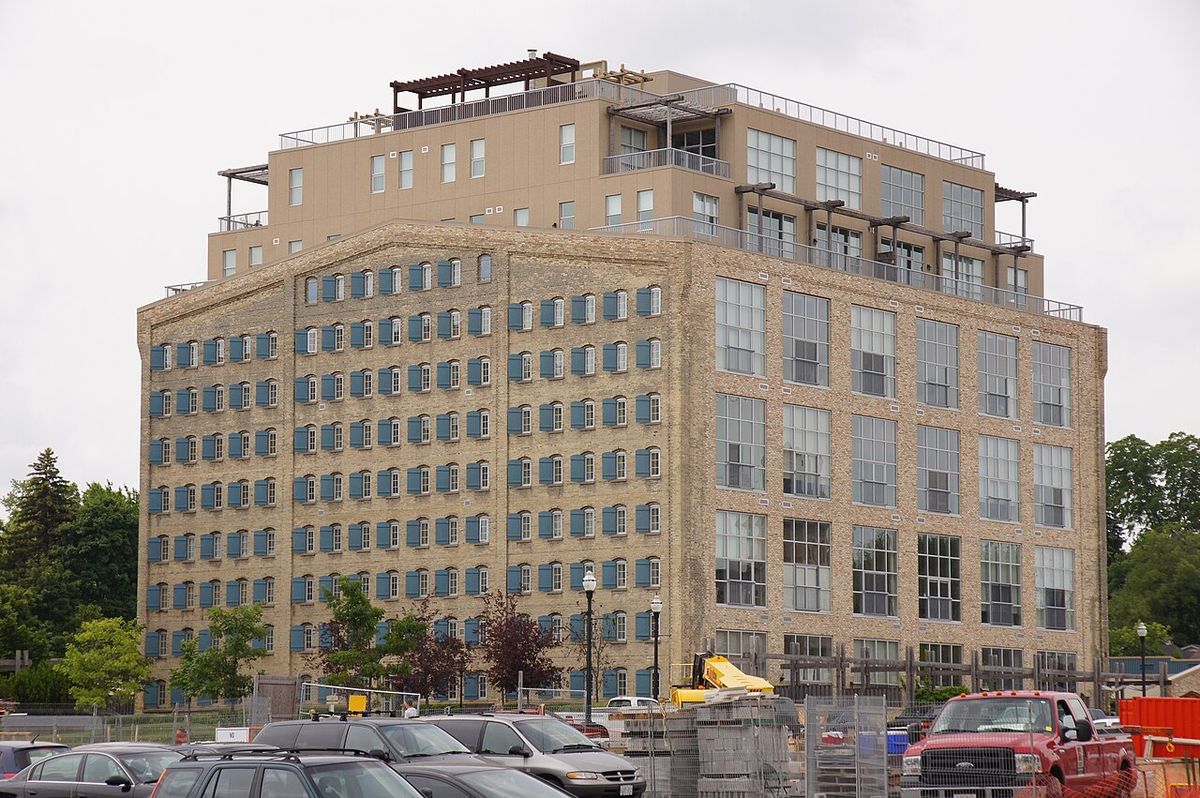
Waterloo is situated in the Regional Municipality of Waterloo, with its city centre historically located at the intersection of King and Erb streets. The original town centre around Albert Street, which housed the town hall, fire hall, and farmers market, was demolished between 1965 and 1969. The city's early development was challenged by swampy land, which settlers addressed by importing sand, building on oak plank foundations, and constructing corduroy roads. The Grand River forms the city's eastern boundary, while its main tributary within Waterloo is Laurel Creek, which flows through the central areas including Waterloo Park and the University of Waterloo campus, largely underground in the uptown core. A significant geological feature is the Waterloo Moraine in the city's west end, a vital source of drinking water for over 300,000 people in the region. Waterloo experiences a humid continental climate with warm, humid summers and cold winters, classified as Dfb under the Köppen system. Winters typically last from mid-December to mid-March, while summer conditions are common from mid-May to late September. Temperatures can exceed 30 degrees Celsius on multiple days each summer, and the area enjoys approximately 140 frost-free days per year.
Demographics and Society
According to the 2021 Canadian census, Waterloo had a population of 121,436, representing a substantial increase of 15.7 percent from 2016. The city's land area is 64.06 square kilometres, resulting in a high population density of 1,895.7 people per square kilometre. The median age in Waterloo is 36.0 years, notably younger than the Ontario provincial median of 41.6 years, a characteristic influenced by the large student population. The wider Kitchener-Cambridge-Waterloo census metropolitan area had a population of 575,847 in 2021. The city's demographic profile reflects its diverse settlement history and recent immigration trends.
The most commonly reported ethnic or cultural origins in 2021 were German (17.9 percent), English (17.0 percent), Scottish (14.6 percent), Irish (14.3 percent), and Canadian (10.2 percent). Significant visible minority groups include those of Chinese (8.9 percent) and South Asian (6.4 percent) origin. Indigenous peoples made up 1.3 percent of the population, primarily First Nations and Métis. In terms of religion, 45.8 percent of residents identified as Christian, with Catholics forming the largest single denomination at 17.9 percent. A significant 37.7 percent of the population reported no religious affiliation, while other major faiths included Islam (8.1 percent) and Hinduism (4.7 percent).
Language diversity is a feature of modern Waterloo. English was the mother tongue for 64.6 percent of residents in 2021, while Mandarin was the second most common at 6.2 percent. Other prominent mother tongues included Arabic, German, Spanish, Hindi, and Punjabi. Knowledge of official languages is high, with 98.2 percent of the population reporting they know English and 8.8 percent reporting knowledge of French. This linguistic and cultural mix highlights Waterloo's evolution from a predominantly German-speaking settlement to a multicultural urban centre.
Economy and Major Employers
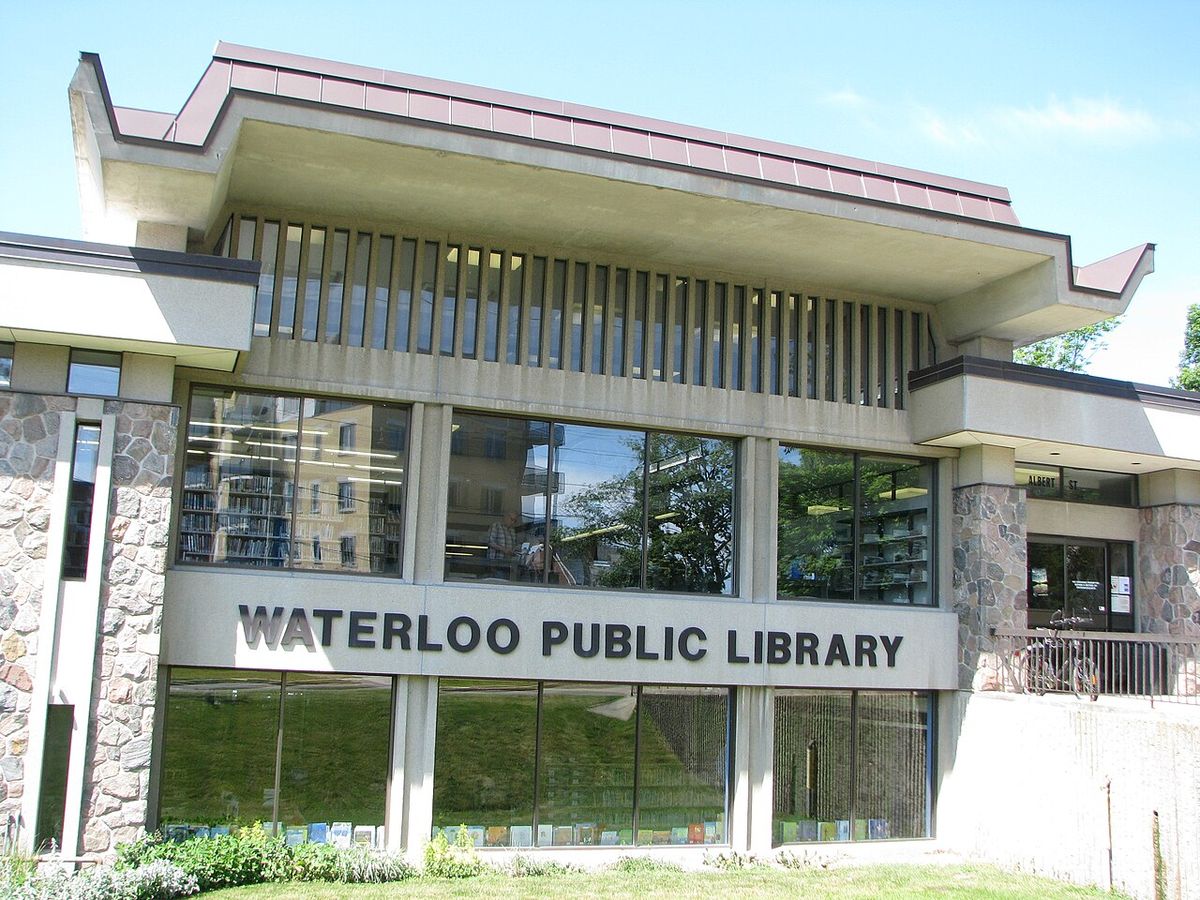
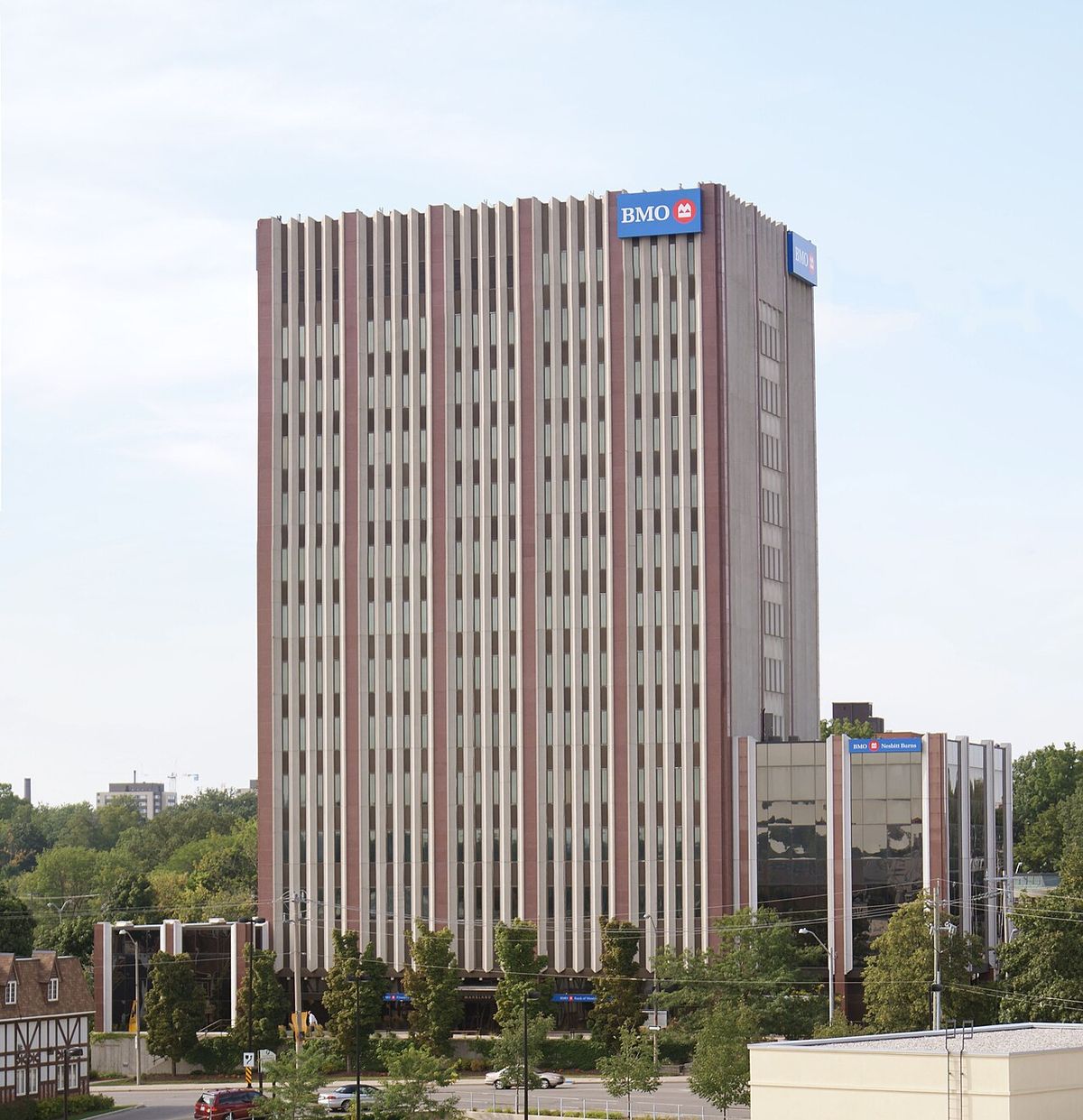
Waterloo's economy is strongly knowledge and service-based, with leading sectors in technology, insurance, and higher education. The 2016 census reported a median after-tax household income of $72,239, well above the national median, and an unemployment rate of 6.9 percent, below the national average. The city's largest employers are a mix of financial services giants and academic institutions, including Sun Life Financial, the University of Waterloo, Manulife Financial, BlackBerry, Sandvine, and Wilfrid Laurier University. The city's economic strength was recognized internationally when the Intelligent Community Forum named Waterloo the Top Intelligent Community of 2007.
Historically, Waterloo was known as a centre for the insurance industry, earning the nickname "the Hartford of Canada." Numerous insurance companies were founded in the city during the 19th and early 20th centuries. For example, Waterloo Mutual Insurance was founded in 1863. Before it became known for technology, Waterloo was sometimes referred to as "the Hartford of Canada" because of the many insurance companies based in the area. The city's largest employers today include insurance firms like Sun Life Financial and Manulife Financial.
- Waterloo Mutual Insurance was founded in 1863 and acquired by Economical Insurance in 1980.
- Mutual Life Assurance began in 1868 and was acquired by Sun Life in 2002.
- Dominion Life Assurance was founded in 1889 and acquired by Manulife in 1985.
- Equitable Life Insurance has operated since 1920.
- North Waterloo Farmers Mutual Insurance (1874) merged in 2016 to form Heartland Farm Mutual.
- Pilot Automobile and Accident Insurance (1927) is now a subsidiary of Aviva Canada.
In the latter half of the 20th century, technology became the dominant economic force. Waterloo is a key part of Canada's Technology Triangle, a regional economic development initiative. The city is home to BlackBerry Limited, founded locally in 1984, which maintains its headquarters there. Other notable homegrown tech firms include OpenText Corporation, Descartes Systems Group, Maplesoft, and Sandvine. Many international technology giants have established research and development offices in Waterloo to tap into the local talent pool, including Google, Shopify, SAP, Oracle, Intel, and Electronic Arts. This blend of homegrown innovation and global investment solidifies the region's status as a leading tech hub.
Education and Innovation
Higher education is a central part of Waterloo's identity and economy. The city is home to two major universities that drive its innovative character. Its presence was instrumental in attracting technology companies and fostering a culture of entrepreneurship. Wilfrid Laurier University, which began as Waterloo Lutheran Seminary in 1911, offers a broad range of undergraduate and graduate programs with notable strengths in business, music, and social sciences. Together, these institutions enroll tens of thousands of students, contributing to the city's youthful demographics and providing a steady pipeline of talent for local industries. The connection between academia and industry is a defining feature of the local economy. The University of Waterloo's co-op program places students in workplaces across the globe, while its Velocity program supports student-led startups.
This ecosystem has produced a high concentration of tech firms and research centres. The presence of the University of Waterloo in the city caused technological and innovative companies to base in Waterloo, especially companies specializing in computing and software. For example, Research in Motion (now BlackBerry Limited), which developed BlackBerry, was started by Mike Lazaridis and Doug Fregin in 1984. The city's commitment to innovation is also reflected in public infrastructure projects like the Ion light rail transit system, which began service in 2019 and connects Waterloo to Kitchener, improving regional connectivity. Ion service began in 2019 and experienced a daily ridership of 25,000 in November 2020.
Governance and Recent Developments
Waterloo is governed by a city council, including a mayor and councillors, within the two-tier municipal structure of the Regional Municipality of Waterloo. The next municipal and school board election is scheduled for October 26, 2026. For the 2026 election, City of Waterloo residents will vote to elect two Regional Councillors to represent them at the upper-tier level. Following provincial legislative changes, the Regional Chair is now a provincially appointed position and will not appear on the municipal ballot. The city's budgetary process funds services and capital projects aligned with its strategic plan, with the 2024 to 2026 budget proposing property tax increases to cover base operations, growth, and enhanced services like fire expansion and sidewalk winter control.
Recent and upcoming civic events highlight the city's active community life. Mayor McCabe delivered the 2026 State of the City address on April 16, 2026, at the University of Waterloo Field House. A major upcoming event is the Waterloo Region 2026 Ontario Summer Games, scheduled for July 30 to August 2, 2026. The games are powered by community support and are expected to draw thousands of athletes and spectators. The city continues to engage residents through public consultation on projects and its budget process, maintaining a commitment to community-driven priorities as outlined in its 2023 to 2026 Strategic Plan.
Population Growth and Housing
Waterloo has experienced significant population growth in recent decades, a trend clearly illustrated by census data. The city's population increased from 104,986 in 2016 to 121,436 in 2021. This growth is part of a longer regional expansion, with the Kitchener-Cambridge-Waterloo census metropolitan area growing by 9.9 percent over the same period. The demand for housing in this growing city is reflected in property values, with the median dwelling value in Waterloo recorded at $399,997 in the 2016 census, above the national median. The city's development has shifted from its historic core to newer subdivisions, particularly in the northeast, driven in part by university expansion.
| Census Year | City Population | CMA Population |
|---|---|---|
| 2016 | 104,986 | 523,894 |
| 2021 | 121,436 | 575,847 |
This sustained growth presents both opportunities and challenges for municipal planning. Much of the gently hilly Waterloo Moraine underlies existing developed areas, and it provides over 300,000 people in the region with drinking water. Ongoing urban growth, mostly low-density residential suburbs, will cover increasing amounts of the remaining undeveloped portions of the Waterloo Moraine. Providing infrastructure such as the Ion light rail system is also necessary to maintain connectivity within the rapidly developing region.
Key Historical Milestones
The development of Waterloo from a wilderness tract to a modern city is marked by several key events and foundational decisions. Indigenous peoples such as the Iroquois, Anishinaabe and Chonnonton lived in the area. Mennonites from Pennsylvania were the first wave of immigrants to the area in the early 1800s. Waterloo was incorporated as a village in 1857, became the Town of Waterloo in 1876, and was incorporated as the City of Waterloo in 1948. The presence of the University of Waterloo, which opened in 1911 as a seminary, later caused technological and innovative companies to base in the city.
- 1800: Richard Beasley sells over 14,000 acres to Pennsylvania Mennonite settlers.
- 1816: Waterloo Township is officially incorporated, named after the Battle of Waterloo.
- 1857: The community is incorporated as the Village of Waterloo.
- 1876: Waterloo is incorporated as a town.
- 1911: Waterloo Lutheran Seminary, the precursor to Wilfrid Laurier University, opens.
- 1948: Waterloo is incorporated as a city.
- 2019: The Ion light rail transit system begins service.
- 2026: The Waterloo Region is scheduled to host the Ontario Summer Games.
Notable Technology Companies
Waterloo's technology sector includes both homegrown success stories and significant research centres for international firms. The presence of the University of Waterloo in the city caused technological and innovative companies to base in Waterloo, especially companies specializing in computing and software. For example, Research in Motion (now BlackBerry Limited), which developed BlackBerry, was started by Mike Lazaridis and Doug Fregin in 1984. Other key technology companies with a major presence in the city have included MKS, WATCOM, and Open Text.
- BlackBerry Limited, founded in Waterloo in 1984.
- OpenText Corporation, a Waterloo-based enterprise software company.
- Sandvine, a provider of network intelligence systems.
- Descartes Systems Group, a logistics software firm.
- Maplesoft, a developer of engineering calculation software.
- Google, with a major research and development office in neighbouring Kitchener.
- Shopify, with a large engineering hub in the region.
- SAP, which maintains a development centre in Waterloo.
Questions about Waterloo, Ontario
What is the population of Waterloo, Ontario?
As of the 2021 Canadian census, the population of the City of Waterloo is 121,436. This represents a growth of 15.7 percent from its 2016 population of 104,986. The wider Kitchener-Cambridge-Waterloo census metropolitan area, which includes the surrounding region, had a population of 575,847 in 2021. The city has a land area of 64.06 square kilometres, resulting in a population density of 1,895.7 people per square kilometre.
What universities are located in Waterloo?
Waterloo is home to two major universities. The University of Waterloo is a public research university renowned for its cooperative education programs and strengths in engineering, computer science, and mathematics. Wilfrid Laurier University, which originated as Waterloo Lutheran Seminary in 1911, is a comprehensive university with faculties of arts, science, music, social work, and the Lazaridis School of Business and Economics. These institutions are among the city's largest employers and are central to its identity as a centre for education and innovation.
Why is Waterloo known as a technology hub?
Waterloo is a leading technology hub due to the strong presence of the University of Waterloo, which produces a high volume of engineering and computer science graduates, and a culture that encourages entrepreneurship. The city is the headquarters of BlackBerry Limited and home to other major tech firms like OpenText and Sandvine. Many international technology companies, including Google, SAP, and Intel, have research and development offices in the area to access this talent pool. The region is marketed as part of Canada's Technology Triangle, a joint economic initiative with Kitchener and Cambridge.
What is the history behind the name 'Waterloo'?
The area was named after the Battle of Waterloo, the 1815 conflict that ended the Napoleonic Wars in Europe. In 1816, the newly incorporated township was officially named Waterloo Township. The name was chosen during a period when European battle sites were commonly used for place names in British North America. The city itself grew from a village within that township, incorporating as the Village of Waterloo in 1857, the Town of Waterloo in 1876, and finally the City of Waterloo in 1948.
What major event is coming to Waterloo Region in 2026?
The Waterloo Region will host the 2026 Ontario Summer Games from July 30 to August 2, 2026. The event is expected to bring thousands of young athletes and spectators to the area. The Ontario government has invested $1.6 million to support the region's successful bid to host the games. The City of Waterloo is a participating municipality and will welcome athletes and fans, with some facilities and roads adjusted to accommodate the event schedule during those dates.
When is the next municipal election in Waterloo?
The next municipal and school board election in Waterloo will be held on Monday, October 26, 2026. The deadline for candidates to file their nomination was August 21, 2026, at 2 p.m. In this election, City of Waterloo residents will vote to elect two Regional Councillors to represent them on the Regional Municipality of Waterloo council. The Regional Chair position is now provincially appointed and will not be on the ballot.
Sources and further reading
- Waterloo, Ontario (Wikipedia)
- City of Waterloo: Services, programs and city updates (waterloo.ca)
- City of Waterloo 2024 to 2026 Budget (engagewr.ca)
- 2026 Municipal Election (regionofwaterloo.ca)
Checked by the Your Space Hamilton desk. Last updated 2026-10-24.