Victoria, British Columbia
Victoria is the capital city of the Canadian province of British Columbia, located on the southern tip of Vancouver Island off Canada's Pacific coast. The city has a population of 91,867, and the Greater Victoria area has a population of 397,237. As the provincial capital and a major cultural and tourism hub, Victoria is a significant political and economic centre. Known for its historic architecture, temperate climate, and extensive gardens, Victoria is one of the oldest cities in the Pacific Northwest and a popular destination for visitors from across Canada and the world.
History
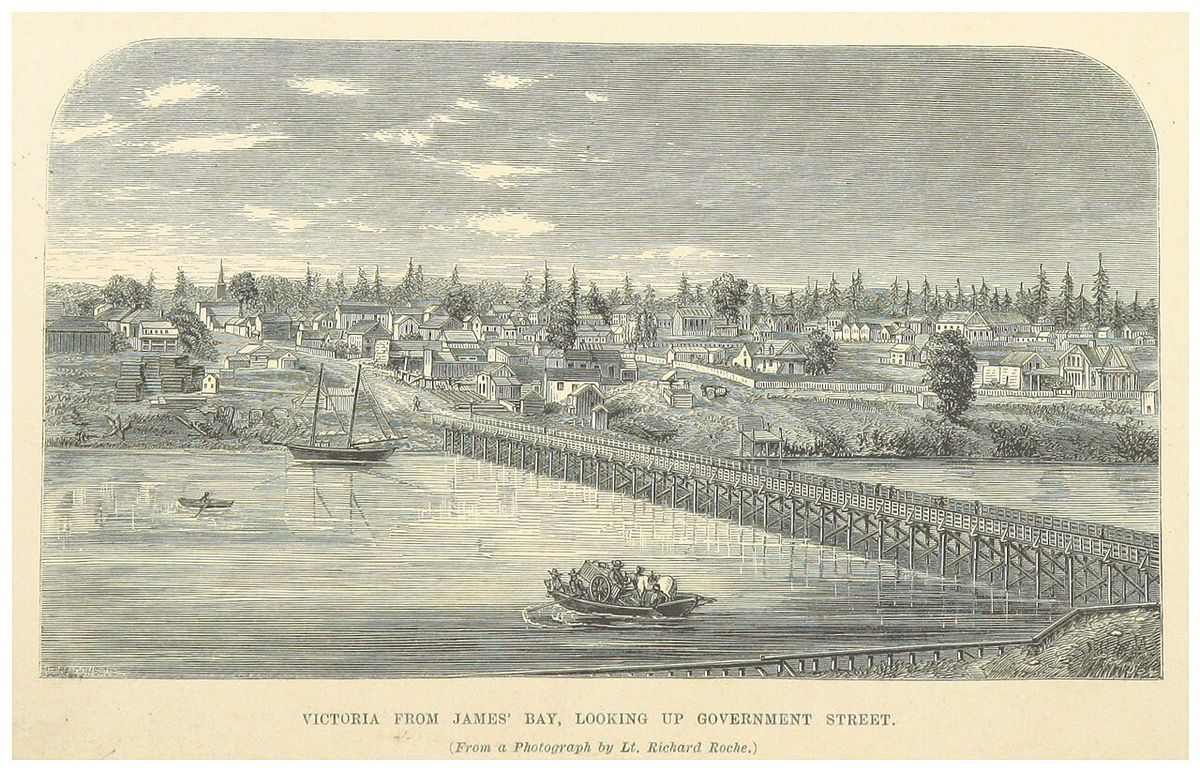
The area now known as Victoria has been home to Coast Salish peoples, including the Lək̓ʷəŋən (Lekwungen) and W̱SÁNEĆ (Saanich), for thousands of years. In 1841, James Douglas was tasked with establishing a trading post on the southern tip of Vancouver Island, leading to the founding of Fort Victoria in 1843 in anticipation of the Oregon Treaty. The settlement was named in honour of Queen Victoria and grew rapidly during the Fraser Canyon Gold Rush of 1858, transforming from a population of 300 to over 5,000 within a few days. Victoria was incorporated as a city in 1862, and it became the capital of the united Colony of British Columbia in 1868 after winning two rounds of voting in the Legislative Council, retaining that status when the province joined Canadian Confederation in 1871.
Throughout the late 19th century, Victoria thrived as a commercial centre and its Port of Victoria became one of North America's largest importers of opium until the trade was banned in 1908. The city was eventually surpassed by Vancouver after the completion of the Canadian Pacific Railway terminus on Burrard Inlet in 1886. The city subsequently cultivated an image of refined civility, bolstered by the development of landmarks like the Parliament Buildings, completed in 1897, and the Empress Hotel, which opened in 1908. A pre-World War I real estate and development boom left a lasting architectural legacy of Edwardian public, commercial and residential buildings. The 20th century saw steady growth, the establishment of major universities, and the incorporation of surrounding suburban municipalities such as Colwood and Langford, known collectively as the Western Communities.
Geography and climate
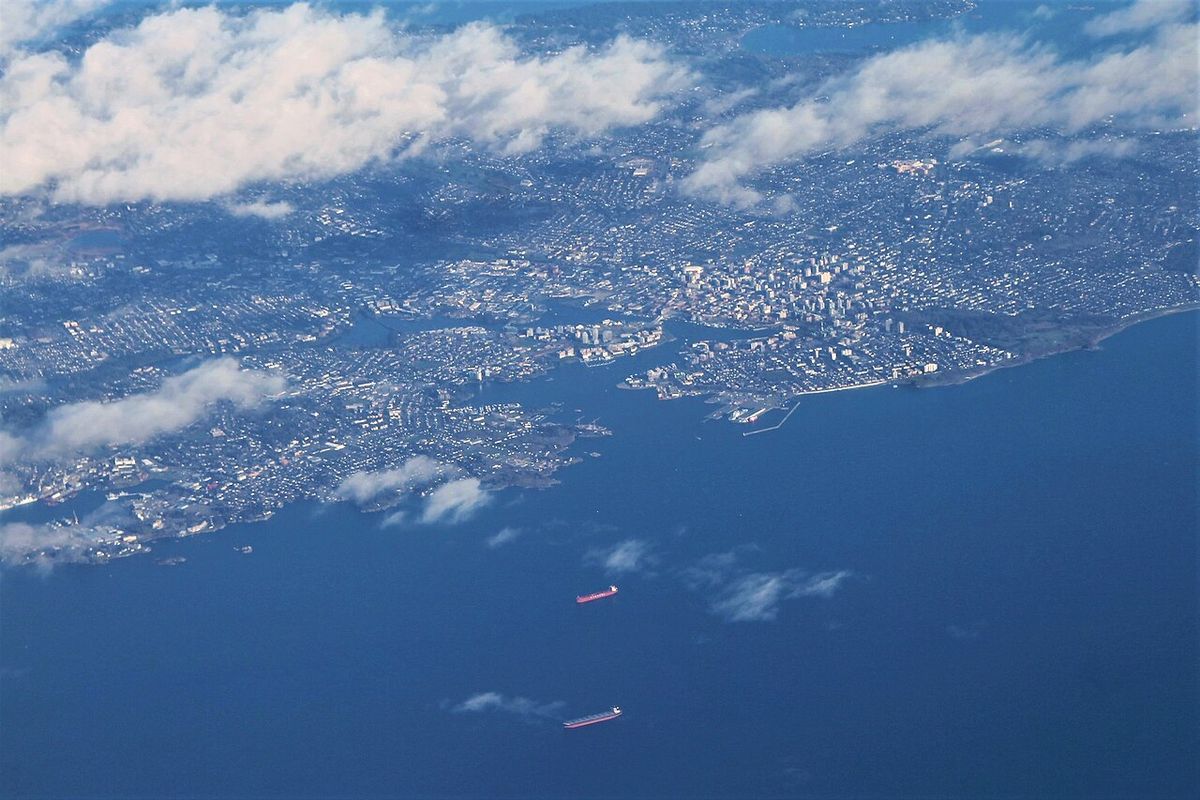
Victoria's landscape was shaped by Pleistocene glaciation and subsequent geological processes, resulting in highly variable soils that were historically valuable for farming prior to urbanization. The weight of glacial ice depressed the land below present sea level, and as the glaciers retreated their meltwater left thick deposits of sand and gravel while marine clay settled on what would become dry land. The resulting soils are highly variable in texture, with clays more common in the northern part of the city and coarse-textured subsoils and loamy topsoils in the southern part. The city is situated on the southern tip of Vancouver Island, approximately 100 kilometres southwest of Vancouver and a similar distance from Seattle, Washington, by airplane, seaplane, or ferry, and about 40 kilometres from Port Angeles, Washington, by the Coho ferry.
Victoria's climate is exceptionally mild for its latitude, classified as either a warm-summer Mediterranean or oceanic climate. This is due to the moderating influence of the Pacific Ocean and the rain shadow effect of Washington's Olympic Mountains, which make Victoria the driest location on the British Columbia coast and one of the driest in the region. Winters are cool and cloudy with an average January temperature around 5 °C, while summers are fresh, dry, and sunny with average July highs of 20 °C, although inland areas often experience warmer daytime highs. The city experiences very little snow, averaging only 26 centimetres annually, about half that of Vancouver, and roughly one third of winters see virtually no snow, with less than 5 centimetres falling during the entire season. Precipitation is highly seasonal, with over 60 percent falling between November and February. December is the wettest month with 109 millimetres and July the driest with 14 millimetres at the Gonzales weather station.
This equable climate supports a famous gardening culture and allows rare native plants found nowhere else in Canada to thrive at the northern limit of their range, including Quercus garryana (Garry oak) and Arbutus menziesii (Pacific madrone). The city averages 2,193 hours of bright sunshine annually, effectively tied with Cranbrook as the sunniest in British Columbia, and in July 2013 it received 432.8 hours of sunshine, the most ever recorded in any month in the province's history. Victoria has recorded completely freeze-free winter seasons four times, in 1925-26, 1939-40, 1999 to 2000, and 2002-03, with 1999 being the only calendar year on record without a single occurrence of frost. The city's mild winters and early springs feature blooms of crocuses, daffodils, rhododendrons, and cherry trees, celebrated by the annual Greater Victoria Flower Count each March.
Demographics
According to the 2021 census, the city of Victoria had a population of 91,867, with a population density of 4,723.2 people per square kilometre, making it one of Canada's most densely populated cities. The city is known for having a disproportionately large retiree population, with 23.4 percent of the metro area's residents aged 65 and over, which is higher than the overall Canadian distribution of 19 percent. Victoria is also one of the most gender diverse cities in Canada, with approximately 0.75 percent of residents identifying as transgender or non-binary in the 2021 census. Indigenous peoples make up 5 percent of the city's population. In terms of religion, a significant majority of residents (63.4 percent) described themselves as irreligious in the 2021 census. Christianity is the largest religious affiliation at over 25 percent, followed by Islam (1.9 percent), Buddhism (1.4 percent), and Judaism (1.1 percent), while Hinduism, Sikhism and Indigenous Spirituality each make up under 1 percent of other groups. English is the predominant language spoken at home (91 percent), with Mandarin, Tagalog, Yue (Cantonese), Spanish, and French each spoken by about 1 percent of the population. The city's ethnic origins are diverse, with Statistics Canada tracking numerous categories, and the region continues to be shaped by its historical settlement patterns and ongoing migration.
Economy and major industries
Victoria's economy has evolved significantly from its origins as a Hudson's Bay Company trading post and supply centre for gold miners during the 1858 Fraser Canyon rush. While government administration remains a central activity due to its status as the provincial capital, tourism has long been a major industry, attracted by the city's historic charm, gardens, and mild climate. Since the 1980s, the regional technology sector has grown dramatically and is now the largest revenue-generating private industry in the area. The city is also a significant education centre, home to the University of Victoria and Royal Roads University, which contribute to research and a skilled workforce.
The Port of Victoria, historically one of North America's largest importers of opium in the late 19th century, remains an active harbour. The Canadian Armed Forces' Pacific naval base at CFB Esquimalt, established in 1865 as the North Pacific home of the Royal Navy, is a major employer and strategic facility. The city's economy benefits from its high quality of life, which ranked Victoria in the top 20 world cities for quality of life in 2019 according to Numbeo. This reputation helps attract professionals and retirees alike, supporting service industries, healthcare, and retail. Greater Victoria periodically experiences calls for the amalgamation of the thirteen municipal governments within the Capital Regional District, with proponents arguing it would reduce duplication of services and improve regional planning, while opponents state separate governance affords greater local autonomy.
Landmarks and attractions
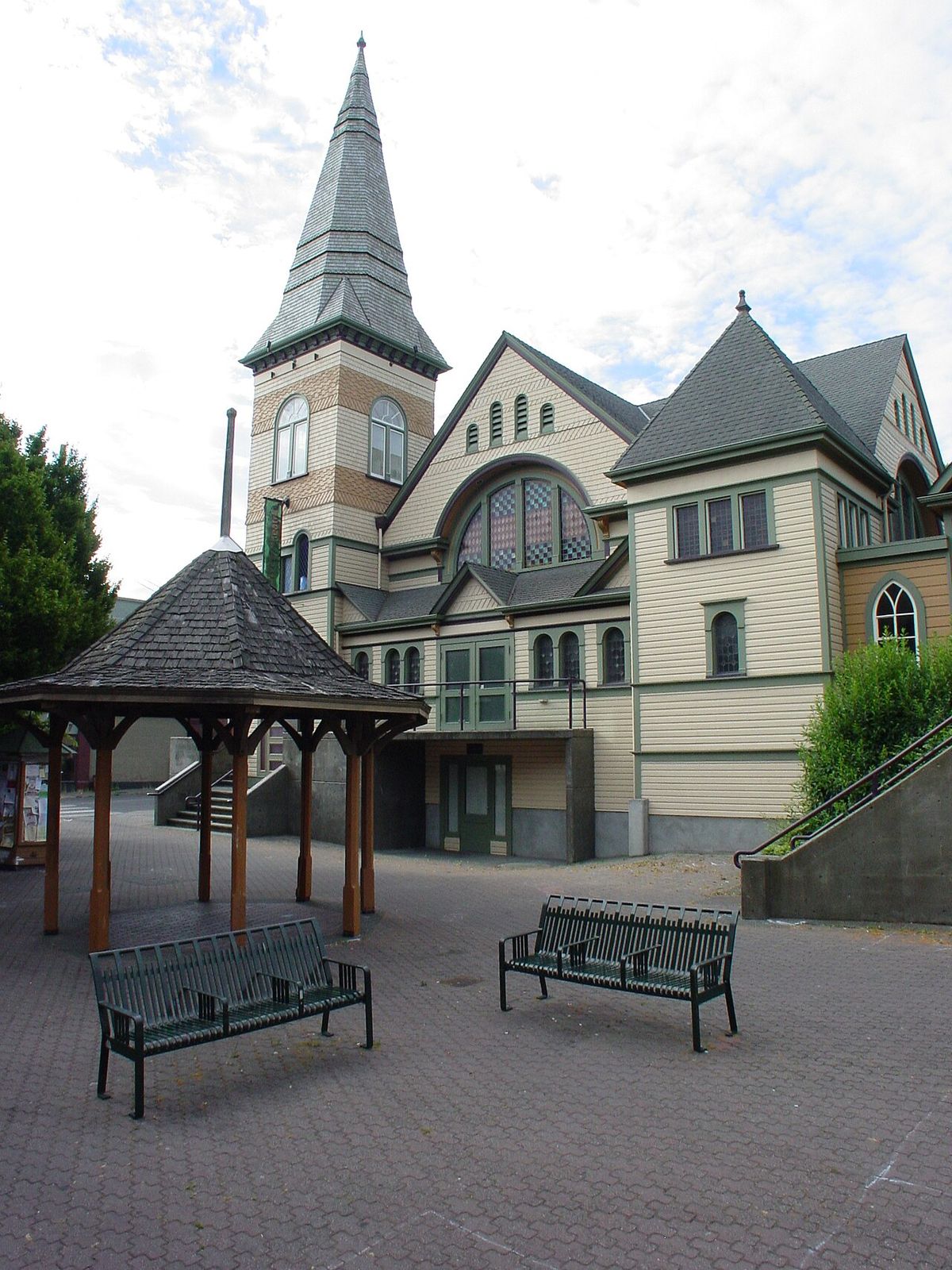
Victoria is renowned for its well-preserved historic architecture and beautiful public spaces. The city's two most famous landmarks are the Parliament Buildings, finished in 1897 and home to the Legislative Assembly of British Columbia, and the grand Empress Hotel, opened by the Canadian Pacific Railway in 1908. The Butchart Gardens, a National Historic Site of Canada located in nearby Brentwood Bay, has been a major attraction since it opened in 1904. Other significant historic buildings include Craigdarroch Castle, built by industrialist Robert Dunsmuir in the Rockland area in the 1890s, and Hatley Park, built by his son James Dunsmuir and later used as Royal Roads Military College, now civilian Royal Roads University.
The city's neighbourhoods and districts offer distinct attractions. Victoria's Chinatown, established during the gold rush, is the second oldest in North America after San Francisco's and features the narrow Fan Tan Alley. The Inner Harbour is a focal point for tourists and locals, while the Rockland and Oak Bay neighbourhoods are known for their historic homes and gardens. The city maintains an extensive network of parks and trails. Major cultural institutions include the Royal BC Museum, the Art Gallery of Greater Victoria, and the Maritime Museum of British Columbia. The city's climate allows for year-round floral displays, and every March the annual Greater Victoria Flower Count is held while much of the country is still in winter.
- The Parliament Buildings (completed 1897)
- The Empress Hotel (opened 1908)
- Butchart Gardens (opened 1904)
- Royal BC Museum (founded 1886)
- Victoria's Chinatown (established 1858)
- Hatley Park National Historic Site
Education and institutions
Victoria is a major centre for post-secondary education in British Columbia. Camosun College, with two main campuses in the region, provides career-oriented diplomas, certificates, and university transfer programs to thousands of students. The city's first streetcar service began on 22 February 1890, when the National Electric Tramway and Lighting Company launched four electric streetcars on two routes with 9 kilometres of track. The city is also home to numerous public and private elementary and secondary schools. As the provincial capital, Victoria hosts the headquarters of the British Columbia government and the Legislative Assembly. The presence of these institutions contributes significantly to the city's stable economy and cultured atmosphere. The region's Coast Salish First Nations peoples continue to maintain their communities and cultural presence in the area, with the Songhees having established a village across the harbour from the original fort.
Governance and regional structure
Victoria is governed by a City Council composed of a mayor elected by first-past-the-post voting and eight city councillors elected in city-wide districts. The city is the core municipality of the Capital Regional District (CRD), which encompasses thirteen municipalities and three electoral areas on southern Vancouver Island and the Gulf Islands. The CRD provides regional services such as water supply, solid waste management, and regional parks. There have been periodic calls for the amalgamation of these thirteen municipal governments to reduce duplication and improve efficiency, though opponents argue separate governance affords greater local autonomy and the ability to handle local issues more directly.
The city's political history is deeply tied to the colonial era, beginning with James Douglas, the second governor of the Vancouver Island Colony, who was the leading figure in early development until his retirement in 1864. The Douglas Treaties, a series of agreements made between 1850 and 1854, were signed to purchase land from Indigenous communities in exchange for goods, though their negotiation and the upholding of rights remain subjects of controversy. In 1862, Victoria was the epicentre of the 1862 Pacific Northwest smallpox epidemic which devastated First Nations, killing about two-thirds of all natives in British Columbia. The city's development was also shaped by figures like Sir Arthur Currie, a Victoria high-school teacher and real-estate agent who commanded the Canadian Corps in World War I.
Population growth and density
Victoria is the capital city of the Canadian province of British Columbia. The city has a population of 91,867, and the Greater Victoria area has a population of 397,237. The city of Victoria is the seventh most densely populated city in Canada with 4,406 inhabitants per square kilometre. Since World War II the Victoria area has seen relatively steady growth. The city's growth has occurred within a constrained land area, leading to high population densities.
| Census Year | City Population | Metro (CMA) Population | City Land Area |
|---|---|---|---|
| 2016 | 85,792 | 367,770 | 19.45 km² |
| 2021 | 91,867 | 397,237 | 19.45 km² |
The city's population increased by 7.1 percent between 2016 and 2021, while the metropolitan area grew by 8 percent in the same period. This growth has occurred within a constrained land area, leading to high population densities. The city's density of 4,723.2 people per square kilometre is the seventh highest in Canada. The metropolitan area density is 571.3 people per square kilometre. This growth has spurred ongoing discussions about regional governance and housing within the Capital Regional District, as well as the preservation of the city's historic built environment amidst development pressures.
Questions about Victoria, British Columbia
Why is Victoria the capital of British Columbia?
Victoria became the capital of the Colony of Vancouver Island in 1849. After the island and mainland colonies were united in 1866, Governor Frederick Seymour held a vote in the newly formed Legislative Council to choose a permanent capital to avoid angering island residents. Victoria was chosen in two rounds of voting and was officially designated the colonial capital on May 25, 1868. When British Columbia joined Canadian Confederation in 1871, Victoria naturally continued as the provincial capital, a role it has held ever since.
What is the weather like in Victoria?
Victoria has a remarkably mild climate compared to much of Canada, classified as either a warm-summer Mediterranean or oceanic climate. Winters are cool and rainy with average January temperatures around 5 °C, and snow is rare, averaging only 26 centimetres per year, with about one third of winters seeing less than 5 cm. Summers are dry and sunny with average July highs of 20 °C, although inland areas are often warmer. The city is in the rain shadow of the Olympic Mountains, making it the driest location on the BC coast, with an average of just 608 millimetres of annual precipitation at the Gonzales weather station.
What are the main tourist attractions in Victoria?
Victoria's top attractions include its historic landmarks and gardens. The Parliament Buildings and the Empress Hotel on the Inner Harbour are well known. Butchart Gardens, a short drive north, is a world-famous floral display established in 1904. Other major sites include the Royal BC Museum, Craigdarroch Castle, and the historic Fan Tan Alley in Chinatown, which is the second oldest in North America. The city's mild climate also allows for year-round outdoor activities in its many parks and along its scenic waterfront, with the annual flower count each March.
What universities are located in Victoria?
Victoria is home to two public universities. The University of Victoria (UVic) is a major research university located in the municipality of Saanich. Royal Roads University is located in Colwood on the grounds of the historic Hatley Park, formerly the site of Royal Roads Military College. Camosun College is a large public college with two main campuses in the region, offering career training and university transfer programs. The city's first streetcar service began in 1890 to serve the growing population and connect various districts.
What is the population of Victoria, British Columbia?
According to the 2021 census, the city of Victoria has a population of 91,867 people. The larger metropolitan area, known as the Victoria Census Metropolitan Area, has a population of 397,237. The city itself is quite dense, with a population density of 4,723.2 inhabitants per square kilometre, ranking it as the seventh most densely populated city in Canada. The metropolitan area covers a land area of 695.29 square kilometres and has a lower density of 571.3 people per square kilometre. The city is known for a disproportionately large retiree population, with 23.4 percent of the area's residents being over 65 years old.
How old is the city of Victoria?
European settlement in Victoria began in 1843 with the establishment of a Hudson's Bay Company trading post originally called Camosack. It was renamed Fort Victoria in November 1843 in honour of Queen Victoria. The city was incorporated in 1862, making it one of the oldest in the Pacific Northwest. However, the area has a much longer history of human habitation by Coast Salish First Nations peoples, including the Lekwungen and Saanich, who established communities long before European arrival. The city became the capital of the colony of Vancouver Island in 1849 and was designated the colonial capital of the united British Columbia colony in 1868, before becoming the provincial capital when British Columbia joined Confederation in 1871.
Sources and further reading
- Victoria, British Columbia (Wikipedia)
- Victoria City in British Columbia (adventures.com)
- Victoria, Canada | Geography and Cartography (ebsco.com)
- Top 10 things to do in Victoria, Vancouver Island (canadiansky.co.uk)
- First Timer's Guide to Victoria (destinationgreatervictoria.com)
Checked by the Your Space Hamilton desk. Last updated 2026-10-19.