Nanaimo
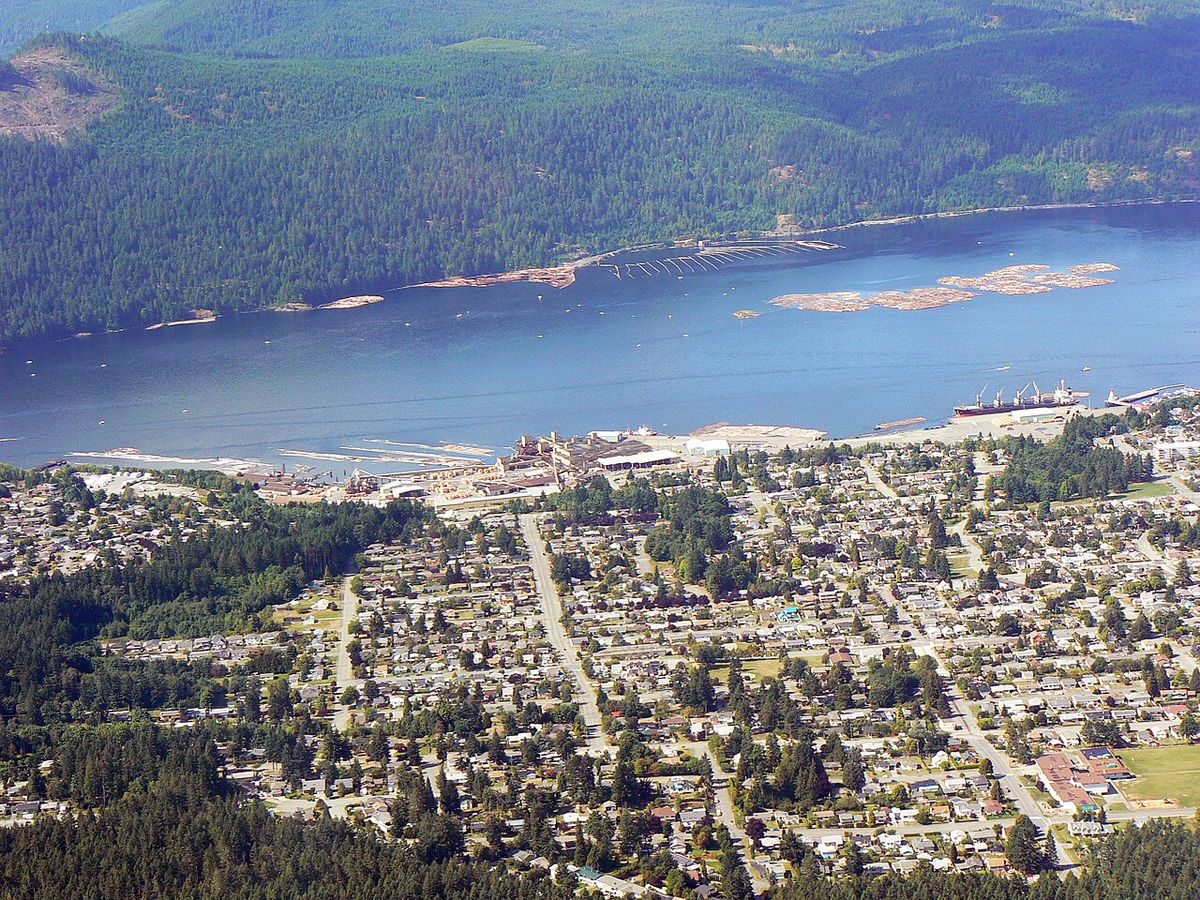
Nanaimo is a city on the east coast of Vancouver Island in British Columbia, Canada. It lies on the western shores of Nanaimo Harbour, which gives it the nickname "Harbour City." The city is also known as the "Hub City" due to its original street layout radiating from the shoreline and its central location on the island. Nanaimo serves as the headquarters for the Regional District of Nanaimo and is a major transportation and commercial hub for central Vancouver Island. Historically, its significance began with coal mining, and it is culturally famous for the eponymous Nanaimo bar dessert.
History and Indigenous Roots
The area now known as Nanaimo is the traditional territory of the Snuneymuxw First Nation, whose anglicized name gives the city its title. The first recorded European contact was by Spanish explorers under Francisco de Eliza in 1791, who named the harbour Bocas de Winthuysen. The Hudson's Bay Company established a permanent settlement in 1852, initially named Colvile Town after Governor Andrew Colvile, before being renamed Nanaimo in 1858. The settlement's founding was driven by the discovery of coal, which Snuneymuxw Chief Che-wich-i-kan, known as Coal Tyee, brought to the attention of HBC officials in Victoria in 1850. While the Snuneymuxw initially sought to retain control over the resource, with Chief Wun-wun-shum offering to trade coal for blankets, the HBC gradually secured mining rights. This led to the first coal shipment leaving aboard the Cadboro in 1852, marking the start of an industry that would define the city for over a century.
The Nanaimo Bastion, a wooden fortification, was constructed between 1853 and 1855 for protection. The early population was bolstered by the arrival of 24 English coal miner families on November 27, 1854, who travelled for seven months aboard the Princess Royal before transferring to the Beaver and Recovery for the final leg to Colvile Town. They were greeted by HBC factor Joseph William McKay and 21 Scottish miners. Coal mining dominated the local economy for over a century until it was supplanted by forestry in the 1940s and 1960s, a transition commemorated by the Minetown Days celebration in neighbouring Lantzville. During the First World War, a provincial internment camp for Ukrainian detainees, many of them local, operated at the Nanaimo jail from September 1914 to September 1915.
The city's Chinese community has a deep and complex history, establishing its first Chinatown during the 1860s gold rush, which grew to be the third largest in British Columbia. Racial tensions, particularly related to the use of Chinese strikebreakers by the Dunsmuir coal company, led to the community's forced relocation outside city limits in 1884. A third Chinatown, established on Pine Street in 1908 through a community share purchase involving 4,000 shareholders from across Canada, ultimately burned down on September 30, 1960, after falling into decline. A fourth area, known as Lower Chinatown or "new town," flourished for a time on Machleary Street in the 1920s.
Geography and Climate
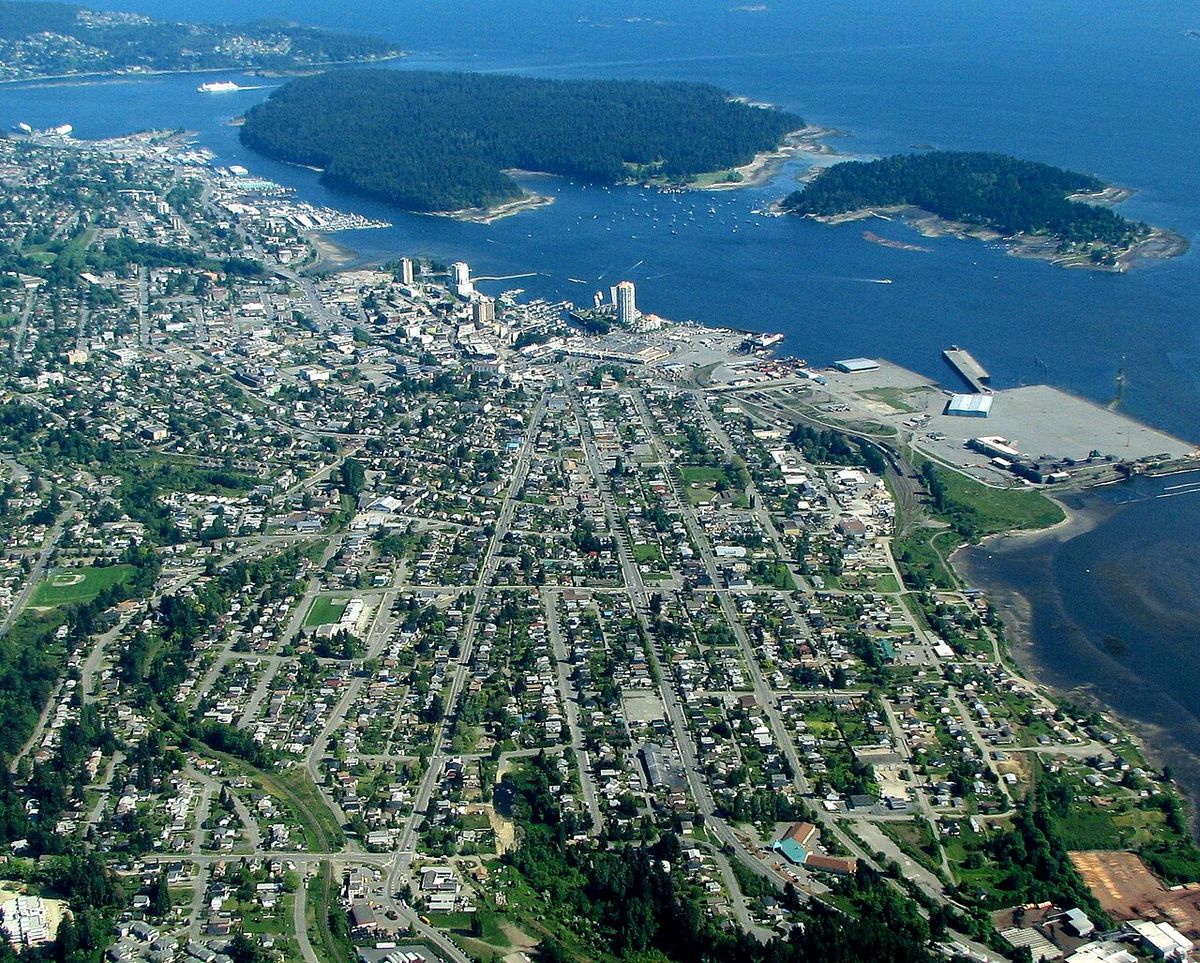
Nanaimo is situated on the east coast of Vancouver Island, approximately 111 kilometres northwest of Victoria and 55 kilometres west of Vancouver across the Strait of Georgia. The city's layout, with streets radiating from the harbour like wagon wheel spokes, earned it the nickname "Hub City." Its location makes it a gateway to northern Vancouver Island destinations like Parksville, Tofino, Campbell River, and Port Alberni, as well as nearby Gulf Islands such as Gabriola, Valdes, and Saysutshun (Newcastle Island). A significant natural feature within the urban area is Buttertubs Marsh, a 100-acre bird sanctuary that includes a 46-acre conservation area owned by the Nature Trust of British Columbia.
The city experiences a temperate climate with mild, rainy winters and warm, dry summers. Its position in the rain shadow of Vancouver Island's central mountains results in unusually dry summers for the region, aligning it with the northern limits of the warm-summer Mediterranean climate zone. This shielding from the Aleutian Low's influence creates a summer drying trend found along the coastal lee as far north as Alaska. While heavy snowfall can occur, with a record daily total of 74 centimetres on February 12, 1975, the mean maximum snow cover is only 20 centimetres. The highest temperature ever recorded was 40.6 °C on July 16, 1941, and the coldest was -20.0 °C on December 30, 1968.
Transportation and Infrastructure
Nanaimo is a critical transportation node for Vancouver Island, served by multiple ferry terminals, highways, and airports. The city has three BC Ferries terminals: Departure Bay (to Horseshoe Bay), Duke Point (to Tsawwassen), and Nanaimo Harbour (to Gabriola Island). Since August 2023, the private passenger ferry service Hullo has operated a high-speed, 75-minute route between downtown Nanaimo and downtown Vancouver. Seasonal and private passenger ferries also connect to Saysutshun (Newcastle Island) and Protection Island. Major highways include the Island Highway (Highway 19), which bypasses the city to the west as the Nanaimo Parkway, and Highway 1/19A, which runs through the city as an arterial route. Local and regional bus service is provided by Nanaimo Regional Transit, connecting to communities from Parksville and Qualicum Beach to the north, and Ladysmith and Duncan to the south.
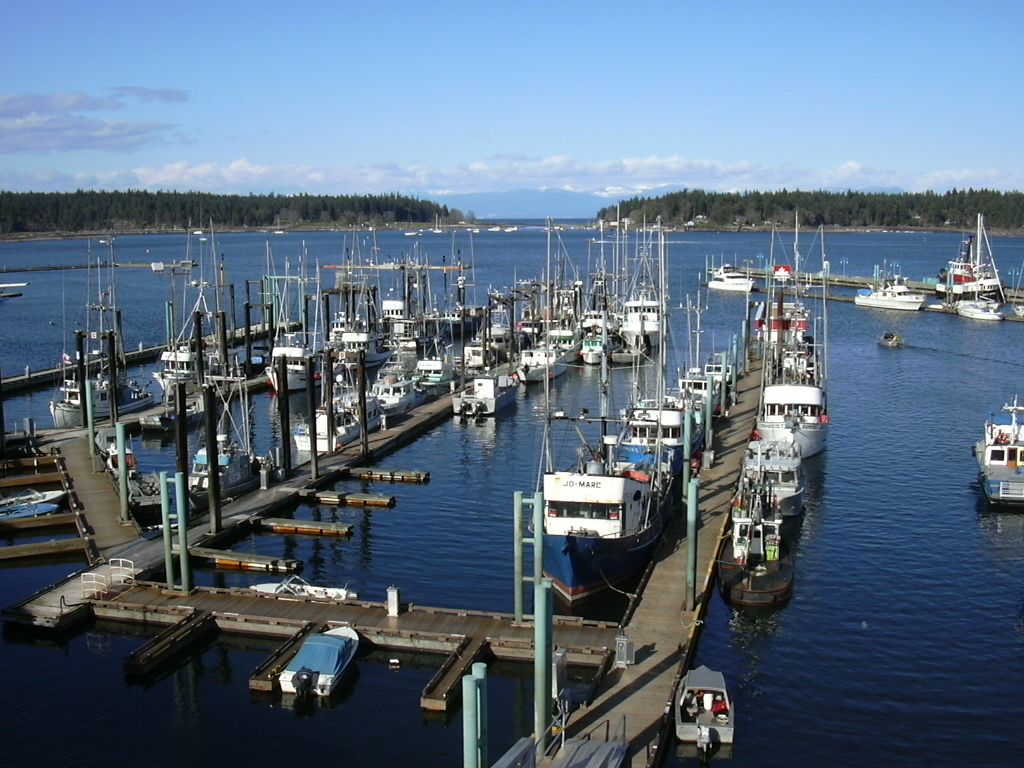
Air travel is facilitated by Nanaimo Airport (YCD), offering flights to Vancouver, Toronto, and Calgary, and the Nanaimo Harbour Water Aerodrome (ZNA) for seaplane services to Vancouver Harbour, Vancouver Airport's South Terminal, and Sechelt. The dormant Island Rail Corridor passes through the city, with a base of operations and yard in the downtown waterfront area. The Nanaimo Port Authority manages harbour facilities, including the inner Harbour Basin marina for smaller vessels and the W. E. Mills Landing for larger ones. It operates terminal facilities at Assembly Wharf, which features a $22 million cruise ship terminal added in 2011, and at Duke Point for cargo operations.
Demographics and Economy
According to the 2021 census, Nanaimo had a population of 99,863 living in 43,164 of its 45,138 total private dwellings, a 10.3% increase from 2016. With a land area of 90.45 square kilometres, it had a population density of 1,104.1 people per square kilometre. The broader census metropolitan area had a population of 115,459. The average age in 2016 was 45.5 years, higher than the national median of 41.2. The city's population is predominantly Anglophone, with 86.7% citing English as their mother tongue in 2021. Other common first languages include Chinese (1.6%), French (1.2%), and Punjabi (1.2%). In terms of religion, 62.2% of the population reported no religious affiliation, while 32.1% identified as Christian. Smaller religious groups include Sikhism (1.4%), Islam (1.0%), Hinduism (0.8%), and Buddhism (0.7%).
The city's economy has evolved from its foundation in coal mining. Forestry became the dominant industry after the opening of the MacMillan Bloedel pulp mill at Harmac in 1958, named after industrialist Harvey MacMillan. That mill, now employee-owned, injects over half a million dollars daily into the local economy. The largest single employer is the provincial government. The service, retail, and tourism sectors are also major contributors. Technological development has grown with companies like Inuktun and initiatives such as government-funded Innovation Island, which supports local tech startups with access to tools, education, and venture capital. Key Economic and Demographic Statistics
| Metric | Nanaimo City |
|---|---|
| Median Dwelling Value (2016) | $359,760 |
| Average Household Income (After-Tax, 2016) | $48,469 |
| Median Individual Income (2016) | $34,702 |
| Unemployment Rate (2016) | 7.7% |
| Private Dwelling Occupancy Rate (2016) | 95.8% |
Education and Research Institutions
Nanaimo's public education system is administered by School District 68 Nanaimo-Ladysmith, which operates over 30 elementary and secondary schools. The city also hosts private institutions like Aspengrove School, an International Baccalaureate World School offering the IB Primary Years, Middle Years, and Diploma programmes from junior kindergarten to grade 12. The school received a rating of 10 out of 10 from the International Baccalaureate Organization in 2011. Francophone education is provided by the Conseil scolaire francophone de la Colombie-Britannique through École Océane primary school and École secondaire de Nanaimo. The main campus of Vancouver Island University is located in the city, attracting a significant number of international students, particularly from East Asia, and contributing to the local cultural and economic scene.
The Pacific Biological Station is located on the north shore of Departure Bay. It was established in 1908 as the oldest fisheries research centre on the Pacific coast. The station is operated by Fisheries and Oceans Canada. It forms a network with eight other scientific facilities.
Arts, Culture, and Annual Events
Nanaimo has an active arts and culture scene anchored by institutions like the Nanaimo Art Gallery on Commercial Street, which presents contemporary exhibitions by local, national and international artists. The gallery operates Art Lab for public programs, manages a collection, runs a store featuring local artisans, and administers the Artists in the Schools program across three school districts. The Nanaimo Museum on Museum Way explores the region's history on Snuneymuxw territory, and the Vancouver Island Military Museum is located on Cameron Road. The Port Theatre in downtown Nanaimo is a major venue for live performances throughout the year. The city is internationally known for the Nanaimo bar, a no-bake dessert bar with a custard filling named after the city.
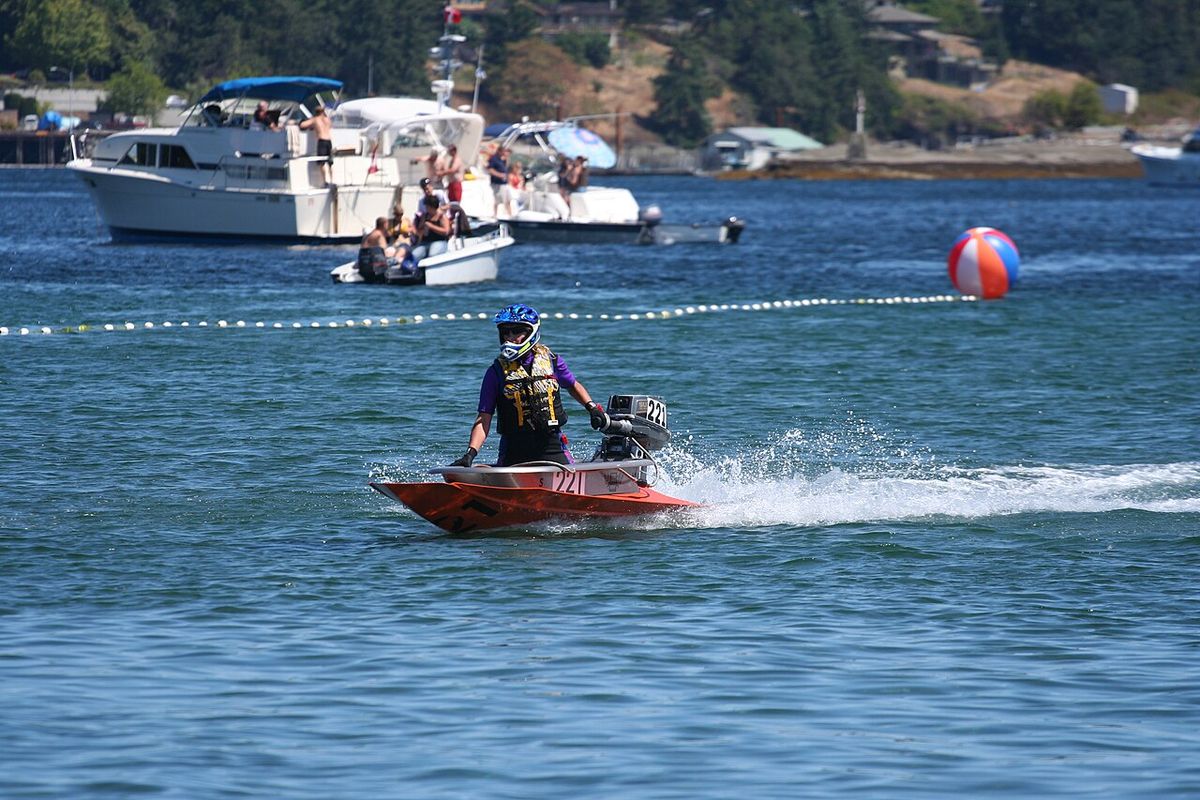
A major annual event is the Nanaimo Marine Festival, which features the famous bathtub race across the harbour. The race starts in Nanaimo Harbour, goes around Entrance Island and the Winchelsea Islands near Nanoose Bay, and finishes in Departure Bay. Until the 1990s, the race alternated annually between courses from Nanaimo to Vancouver and from Vancouver to Nanaimo. The race was championed by former mayor Frank J. Ney, who participated dressed as a pirate and served as a Social Credit MLA while mayor. A statue of him in his pirate costume stands at Swy-a-Lana Lagoon on the waterfront, and a local elementary school is named in his honour.
The city is home to various sports and recreational activities. The Nanaimo Clippers are a junior hockey team. The Nanaimo Hornets are a historic rugby club. These teams contribute to the local sports culture.
- Nanaimo United Football Club (soccer), founded in 1903 with over 1,700 members, making it the largest sports club on Vancouver Island and one of the oldest in Canada.
- Nanaimo Clippers (BCHL hockey) and Nanaimo Timbermen (WLA lacrosse), both playing at Frank Crane Arena.
- Vancouver Island Raiders (Canadian Junior Football), playing at Caledonia Park.
- Nanaimo Buccaneers (Vancouver Island Junior Hockey League), playing at the Nanaimo Ice Centre.
- Nanaimo NightOwls (West Coast League baseball), playing at Serauxmen Stadium.
- Nanaimo Hornets Rugby Football Club, established in 1888, the second-oldest rugby club in Western Canada, based at Pioneer Park since 1968.
For adventure recreation, Nanaimo is home to North America's first legal, purpose-made bungee jumping bridge. This facility is operated by WildPlay Element Parks. It offers a unique outdoor activity. It contributes to the range of recreational options in the area.
Governance, Media, and Open Data
In federal politics, the city is represented in the House of Commons by Tamara Kronis of the Conservative Party of Canada for the riding of Nanaimo, Ladysmith as of the 2025 election. Prior to a 2012 electoral redistribution, the city was split between the ridings of Nanaimo, Cowichan, represented by Jean Crowder of the New Democratic Party, and Nanaimo, Alberni, represented by James Lunney. Provincially, Nanaimo is divided between the ridings of Nanaimo-Lantzville, represented by George Anderson (BC NDP), and Nanaimo-Gabriola Island, represented by Sheila Malcolmson (BC NDP). Malcolmson, a former federal MP, won a 2018 by-election following the resignation of Leonard Krog, who left provincial politics to become mayor. Krog, the current mayor, was first elected in 2018, succeeding Bill Mackay. The city's first mayor was Mark Bate in 1875, who served 15 one-year terms between 1875 and 1900.
Nanaimo has been recognized for its commitment to open government and data transparency, earning a feature in Time magazine and being called "the capital of Google Earth" for its extensive collaboration feeding municipal data on buildings, property lines, and utilities into the Google Earth platform. The city's Open Data Catalogue is publicly accessible at data.nanaimo.ca, and its dedicated mapping site is earth.nanaimo.ca. For local news, the primary newspaper is the Nanaimo News Bulletin, published twice weekly with an audited circulation of 33,000 copies by Black Press. Other former papers like the 141-year-old Nanaimo Daily News and the Harbour City Star have ceased publication. The city is served by radio stations including CHWF-FM (The Wolf), CKWV-FM (The Wave) from the Jim Pattison Group, the independent community station CHLY-FM, and Vista Radio's CKAY-FM (ICON Radio). Television coverage is provided by bureaus for CIVI-DT (CTV 2 Victoria) and CHEK-DT, and CBC Radio services are relayed from Vancouver.
Notable Facts and Sister City
Nanaimo is the headquarters for the Regional District of Nanaimo. The city has one official sister city relationship, with Saitama, Japan (specifically the former Iwatsuki City), established in 1996. The city's planning and data initiatives have set a benchmark for municipal transparency in Canada. The deep historical ties to the Snuneymuxw First Nation, the economic shifts from coal to forestry, and its role as a ferry-served island hub continue to define its character. The legacy of its resource industries, the presence of a university and a federal research station, and its diverse cultural offerings make it a distinct centre within British Columbia. The city's nickname "The Harbour City" came into common use in the lead-up to Expo 86 in Vancouver.
Questions about Nanaimo
What is Nanaimo known for?
Nanaimo is known as the "Harbour City" for its location on Nanaimo Harbour and is a major transportation hub for central Vancouver Island. It is historically significant for coal mining and is famous for the Nanaimo bar, a popular Canadian dessert. The city also hosts the annual Nanaimo Marine Festival, which features a unique bathtub race across the harbour championed by former pirate-costumed mayor Frank J. Ney. The city's layout, with streets radiating from the harbour, also earned it the nickname "Hub City."
What is the population of Nanaimo?
According to the 2021 Canadian census, the city of Nanaimo had a population of 99,863 living in 43,164 private dwellings. The broader Nanaimo census metropolitan area, which includes surrounding communities, had a population of 115,459. The city's population density is 1,104.1 people per square kilometre, and its population increased by 10.3% between 2016 and 2021. The average age of a resident in 2016 was 45.5 years.
What are the main industries in Nanaimo?
Historically based on coal mining, Nanaimo's economy transitioned to forestry, particularly after the 1958 opening of the Harmac pulp mill, which remains a major employer and injects over half a million dollars daily into the local economy. The largest single employer is the provincial government. Other significant sectors include service, retail, and tourism. The city is also fostering growth in technology through initiatives like Innovation Island, which supports startups with tools and venture capital, and is home to companies like Inuktun.
What is there to do in Nanaimo?
Visitors can explore the waterfront and harbour. They can visit museums like the Nanaimo Museum and Nanaimo Art Gallery. They can attend a performance at the Port Theatre. Outdoor activities include exploring the Buttertubs Marsh bird sanctuary. They can visit nearby Gulf Islands like Gabriola Island or Saysutshun. They can experience bungee jumping at North America's first legal bungee bridge. The city also offers sports events from junior hockey to rugby. Seasonal festivals include the marine festival with its bathtub race.
Who is the mayor of Nanaimo?
As of 2025, the mayor of Nanaimo is Leonard Krog. He was first elected in 2018 after resigning as the Member of the Legislative Assembly for Nanaimo. He succeeded former mayor Bill Mackay. The city's first mayor was Mark Bate, who served beginning in 1875 and held the office for 15 one-year terms. Another notable mayor was Frank J. Ney, known for instigating the bathtub races and serving as an MLA while in office. A statue of him in pirate costume is on the waterfront.
How do you get to Nanaimo from Vancouver?
Nanaimo is accessible from Vancouver primarily by ferry. BC Ferries operates routes from the Horseshoe Bay terminal in West Vancouver to Nanaimo's Departure Bay terminal and from the Tsawwassen terminal to Nanaimo's Duke Point terminal. Since August 2023, a private high speed passenger ferry service named Hullo has operated between downtown Nanaimo and downtown Vancouver, with a travel time of 75 minutes. Nanaimo is also served by Nanaimo Airport with flights to Vancouver and by the Nanaimo Harbour Water Aerodrome with seaplane services to Vancouver Harbour. The cities are separated by the Strait of Georgia.
Sources and further reading
- Nanaimo (Wikipedia)
- The City of Nanaimo (nanaimo.ca)
- Tourism Nanaimo | Your Guide to Exploring Nanaimo, BC (tourismnanaimo.com)
- Discover Downtown Nanaimo (downtownnanaimo.ca)
Checked by the Your Space Hamilton desk. Last updated 2026-10-23.