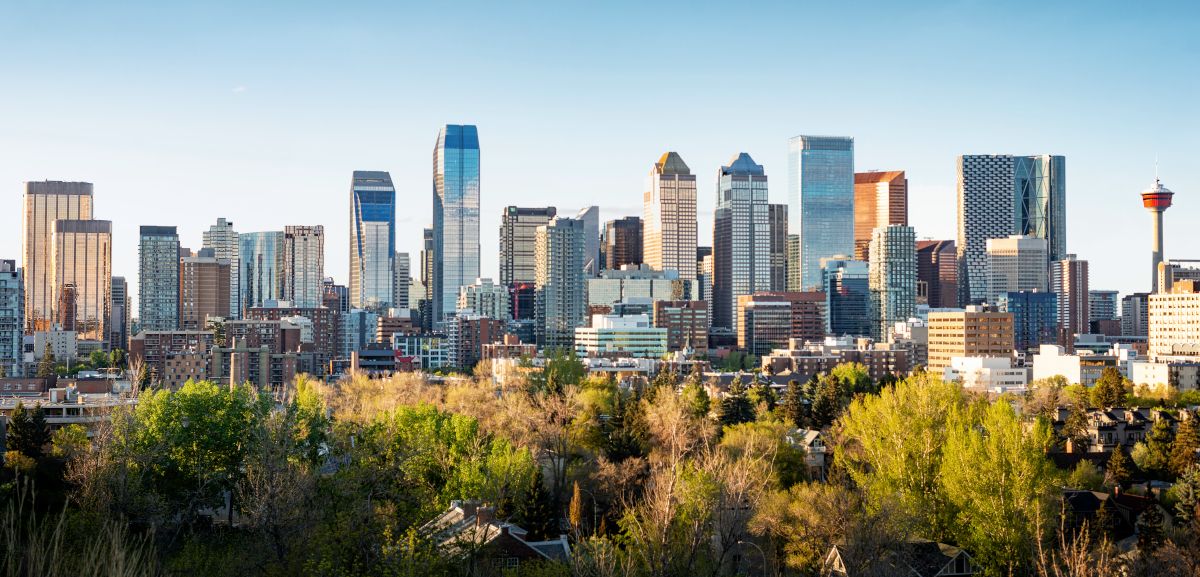
London, Ontario
London is a city in Southwestern Ontario, Canada, situated along the Quebec City-Windsor Corridor. With a population of 422,324 as of the 2021 census, it is the largest municipality in southwestern Ontario and the country's 11th largest metropolitan area. The city serves as a major regional centre for healthcare, education, and manufacturing, anchored by institutions like Western University and several major hospitals. Founded in 1826 and incorporated as a city in 1855, London is located at the confluence of the Thames River's north and south branches, approximately 200 kilometres from both Toronto and Detroit.
History and settlement
The London area has a long history of human habitation, with archaeological evidence of Paleo-Indians dating back approximately 11,000 years. Prior to European settlement, the region was home to Attawandaron, Odawa, and Ojibwe villages, including the approximately 500-year-old Neutral Iroquoian village now known as the Lawson Site, which was estimated to have been home to 2,000 people. The site for the future city was selected in 1793 by Lieutenant-Governor John Graves Simcoe, who named it after London, England, and its river. Although Simcoe envisioned it as the capital of Upper Canada, it instead became an important administrative centre for the area west of the capital, York. The first European settlement was established by Peter Hagerman between 1801 and 1804, and the village was formally founded in 1826, with Peter MacGregor building its first dwelling, a tavern, that same year. The London Township Treaty of 1796 with the Chippewa had ceded the original town site on the north bank of the Thames River to Upper Canada.
London grew as part of the Talbot Settlement, overseen by Colonel Thomas Talbot, who facilitated road building, land surveying, and built the first government buildings for the region. The village demonstrated strong Tory support during the Upper Canada Rebellion of 1837, notwithstanding a brief rebellion led by Charles Duncombe. The subsequent establishment of a British garrison in 1838 boosted its population with soldiers and their dependents and the business support populations they required. A devastating fire on April 13, 1845, destroyed one-fifth of the largely wooden town, burning nearly 12 hectares of land and 150 buildings in the province's first million-dollar fire. London was incorporated as a town in 1840 and achieved city status on January 1, 1855, when its population reached 10,000. Key developments cited for its growth included the arrival of the court administration in 1826, the military garrison in 1838, and the railway in 1853.
19th century growth and industry
Following incorporation, London's population and industrial base expanded rapidly. Records from 1869 indicate a population of about 18,000 served by three newspapers, churches of all major denominations, and offices of all the major banks. The city's industries included several tanneries, oil refineries, foundries, four flour mills, and the breweries of Labatt and Carling. Other manufacturing companies such as EMCO Wheaton also operated in the city. Both the Great Western and Grand Trunk railways had stops in London, and several insurance companies established offices there. The discovery of a sulphur spring at the forks of the Thames River in the 1860s, while drilling for oil, created a popular spa destination for wealthy Ontarians until a textile factory replaced it around the turn of the 20th century.
Infrastructure developments in this period included the construction of London's first iron bridge, the Blackfriars Street Bridge, in 1875. This wrought iron bowstring arch through truss bridge replaced a series of wooden structures that had failed due to flooding. The bridge linked the city with its western suburb of Petersville, which later merged with Kensington to form London West. The city also hosted notable events, such as the Provincial Agricultural Fair of Canada West in 1861, held in the specially built Crystal Palace Barracks, an octagonal brick building visited by dignitaries including Prince Arthur and Prime Minister John A. Macdonald. From 1865 to 1867, London was also home to a School of Military Instruction, staffed by British Regulars, which offered three-month courses for militia officers before it was discontinued at Confederation.
Urban development and annexation
Throughout the 19th and 20th centuries, London expanded by systematically absorbing surrounding communities. The western suburb of Petersville, founded by Samuel Peters in 1853, merged with the southern subdivision of Kensington on March 4, 1881, to form the municipality of London West. Repeated flooding, most seriously in July 1883 which caused loss of life and property devaluation, led ratepayers to vote for amalgamation with London in 1897. The industrial eastern suburb, founded as Lilley's Corners by Charles Lilley in 1854 due to its proximity to the railroad for oil refining, incorporated as the village of London East in 1872 and was annexed to the city in 1885. The southern area, including Wortley Village and collectively known as London South, was annexed in 1890, while the northern community of Broughdale, home to the University of Western Ontario founded in 1924, was not annexed until 1961.
Major annexations in the latter half of the 20th century dramatically reshaped the city. In 1961, London annexed many communities including Byron and Masonville, adding 60,000 people and more than doubling its geographic area, which accelerated suburban growth into new subdivisions like Westmount and Oakridge. A much larger annexation occurred on January 1, 1993, when the city absorbed nearly the entire Township of Westminster, including the police village of Lambeth, almost doubling its area again and extending its southern boundary to Elgin County. These expansions made London one of the largest urban municipalities in Ontario. Intense commercial and residential development continues in the southwest and northwest, raising concerns about urban sprawl, the destruction of Carolinian forest and farmland, and increased transportation and pollution issues.
Geography and climate
London's geography is dominated by the Thames River, with its north and south branches meeting at a central point known as The Forks, or Pahkatequayang in Anishinaabe. The terrain was shaped by retreating glaciers during the last ice age, creating areas of marshland like the Sifton Bog and productive farmland. To control flooding after devastating events in 1883 and 1937, the Upper Thames River Conservation Authority constructed Fanshawe Dam on the North Thames River in 1953, creating the man-made Fanshawe Lake in the city's northeast. Financing for this public works project came from the federal, provincial, and municipal governments, and it has since played a crucial role in flood management for the downriver areas.
London experiences a humid continental climate characterized by warm, humid summers and cold, cloudy winters with frequent snowfall. The city's inland location leads to significant seasonal temperature contrasts, moderated somewhat by the influence of the surrounding Great Lakes, which also contribute to abundant cloud cover, especially in late fall and winter. Summers are typically warm, with a July average temperature of 21.0 °C, and temperatures exceed 30 °C on average 11 days per year, though extreme years like 2016 saw over 35 such days. Winters are cold and often overcast, with the lakes' proximity ensuring that cloudy conditions are a common feature of the season.
Economy and major institutions
London's economy is centred on education, healthcare, manufacturing, financial services, and information technology. The city is a major regional hub for healthcare and education, with its university and hospitals ranking among the top ten employers. Key institutions driving this sector include the University of Western Ontario, Fanshawe College, and three major hospitals: Victoria Hospital, University Hospital, and St. Joseph's Hospital. These institutions provide employment and foster significant medical research and development, a connection highlighted by the city's link to Sir Frederick Banting and the discovery of insulin at Banting House. The city hosts a number of musical and artistic exhibits and festivals, which contribute to its cultural life and tourism industry.
Manufacturing has historical roots in the city, with industries such as oil refining, brewing, and foundries established in the 19th century. London's strategic location at the junction of Highways 401 and 402 provides vital connections to Toronto, Windsor, and Sarnia, facilitating trade and access to major US border crossings at Detroit-Windsor, Port Huron-Sarnia, and Niagara Falls. The London International Airport, along with railway and bus stations, supports further commercial and passenger connectivity. In the early 20th century, the city was a battleground over educational direction, as the London Technical and Commercial High School faced heavy opposition from the city's social and business elite who saw it as a threat to the budget of the academic London Collegiate Institute.
Notable disasters and events
London's history has been marked by several significant disasters. On Victoria Day, May 24, 1881, the stern-wheeler ferry SS Victoria capsized in the Thames River near Cove Bridge, drowning approximately 200 passengers in the shallow river in what became known as The Victoria Day Disaster. At the time, London's population was relatively small, making it hard to find a person in the city who did not have a family member affected by the tragedy. Two years later, on July 12, 1883, a major flood killed 17 people, followed by an even more devastating flood on April 26, 1937, which destroyed over a thousand houses across London and caused over $50 million in damage, particularly in West London. These floods directly led to the construction of Fanshawe Dam for flood control.
Other tragedies include the collapse of the assembly hall floor at London City Hall on January 3, 1898, which killed 23 people and left more than 70 injured. A coroner's inquest found the supporting wooden beam was unsound, with knots and defects reducing its strength by one fifth to one third. More recently, on December 11, 2020, a partially-constructed apartment building in southwest London collapsed, killing two people and injuring at least four others. In January 2024, two Oxford County companies involved in the construction were fined $400,000 for failing to provide proper information and supervision on concrete measuring techniques. Natural events have also impacted the city, including a tornado in 1984 that caused damage on several streets in the White Oaks area of South London.
Cultural and historical landmarks
London is home to several important cultural and historical sites that reflect its development and contributions. The Banting House, a National Historic Site of Canada, is where Dr. Frederick Banting lived and practiced for ten months from July 1920 to May 1921 and developed the ideas that led to the discovery of insulin. The site also features the Flame of Hope, intended to burn until a cure for diabetes is discovered. The city's military heritage is preserved at Wolseley Barracks on Oxford Street, which houses the Regimental Headquarters of The Royal Canadian Regiment and the First Hussars militia regiment. This continues a tradition dating to 1838 when London became a garrison town, and includes the historic London Armoury built in 1905, later incorporated into the Delta London Armouries hotel in 1988.
Architectural landmarks include the Blackfriars Street Bridge, constructed in 1875 as the city's first iron bridge. This rare wrought iron bowstring arch through truss bridge remains open to pedestrian and bicycle traffic and was reopened to vehicular traffic in December 2018 after structural repairs. The city also contains well-preserved 19th-century neighbourhoods, such as Wortley Village and the former London West area, which retain distinct character and housing from the era, including Georgian cottages and larger houses. The Lawson Site in northwest London offers an archaeological excavation and partial reconstruction of the Neutral Iroquoian village, providing insight into the area's pre-colonial history.
- Banting House National Historic Site: Location where the concept for insulin was developed by Frederick Banting.
- The Flame of Hope: A monument for diabetes research at the Banting House site.
- Blackfriars Street Bridge: A historic 1875 wrought iron bowstring arch through truss bridge.
- Wolseley Barracks: Home to the Regimental Headquarters of The Royal Canadian Regiment and 4th Battalion.
- Lawson Site: Archaeological site of a 500-year-old Neutral Iroquoian village.
- Delta London Armouries: Hotel built within the preserved shell of the 1905 London Armoury.
- Crystal Palace Barracks: Octagonal building used for the 1861 Provincial Agricultural Fair.
- The Forks: The confluence of the North and South Thames Rivers in the city centre.
Questions about London, Ontario
What is the population of London, Ontario?
According to the 2021 Canadian census, the city of London has a population of 422,324. The larger Census Metropolitan Area has a population of 543,551. This makes it the 11th largest metropolitan area in Canada and the sixth largest city in Ontario. The city's population has grown through annexations, notably in 1961 and 1993.
Why is London, Ontario called London?
The city and its river were named in 1793 by Lieutenant-Governor John Graves Simcoe after London, England, and the River Thames. Simcoe had originally proposed the name Georgiana in honour of King George III. He selected the site with the intention of it becoming the capital of Upper Canada, though that role ultimately went to York, now Toronto. The Thames River in London was historically known by the Anishinaabe name Eshkani-ziibi, meaning Antler River.
What major universities and colleges are in London?
London is a major centre for post-secondary education. It is home to the University of Western Ontario, which brands itself as Western University, and Fanshawe College. These institutions are among the city's top employers and contribute significantly to its economy and reputation in healthcare research and education. The University of Western Ontario was founded in 1924 in the former community of Broughdale, which was annexed to London in 1961.
What was the Victoria Day Disaster in London?
The Victoria Day Disaster occurred on May 24, 1881, when the stern-wheeler ferry SS Victoria capsized in the Thames River near Cove Bridge in West London. Approximately 200 passengers drowned in the shallow river, making it one of the worst disasters in the city's history. The tragedy deeply affected the then-small community, with few families untouched. The site of the disaster is a sombre part of London's historical record.
How is London connected to the discovery of insulin?
London is the site of the Banting House National Historic Site, where Dr. Frederick Banting lived and practiced medicine for ten months from July 1920 to May 1921. It was here that he developed the ideas that led to the discovery of insulin. The site also features the Flame of Hope, a monument dedicated to finding a cure for diabetes, which is intended to burn until that cure is discovered. This connection is a point of significant pride and historical importance for the city.
What are the major highways serving London, Ontario?
London is situated at the junction of Highways 401 and 402. These highways connect the city to Toronto, Windsor, and Sarnia. They also provide access to the Detroit-Windsor, Port Huron-Sarnia, and Niagara Falls border crossings with the United States. This network supports the city's economic activities.
Sources and further reading
- London, Ontario (Wikipedia)
- Can't Wait to See you! Tourism London | London, Ontario (londontourism.ca)
- Explore London, Ontario (destinationontario.com)
Checked by the Your Space Hamilton desk. Last updated 2026-10-19.