Lloydminster
Lloydminster is a unique city in Canada, simultaneously incorporated within the provinces of Alberta and Saskatchewan under a single municipal administration. Founded in 1903 by British colonists, the city is famously bisected by the provincial border, which runs directly down its main thoroughfare, Meridian Avenue. This distinctive status creates a fascinating blend of provincial laws, time zones, and economic policies within one community. The city's economy is primarily driven by the petroleum industry and agriculture, serving as a regional hub in the prairie region.
History and Founding
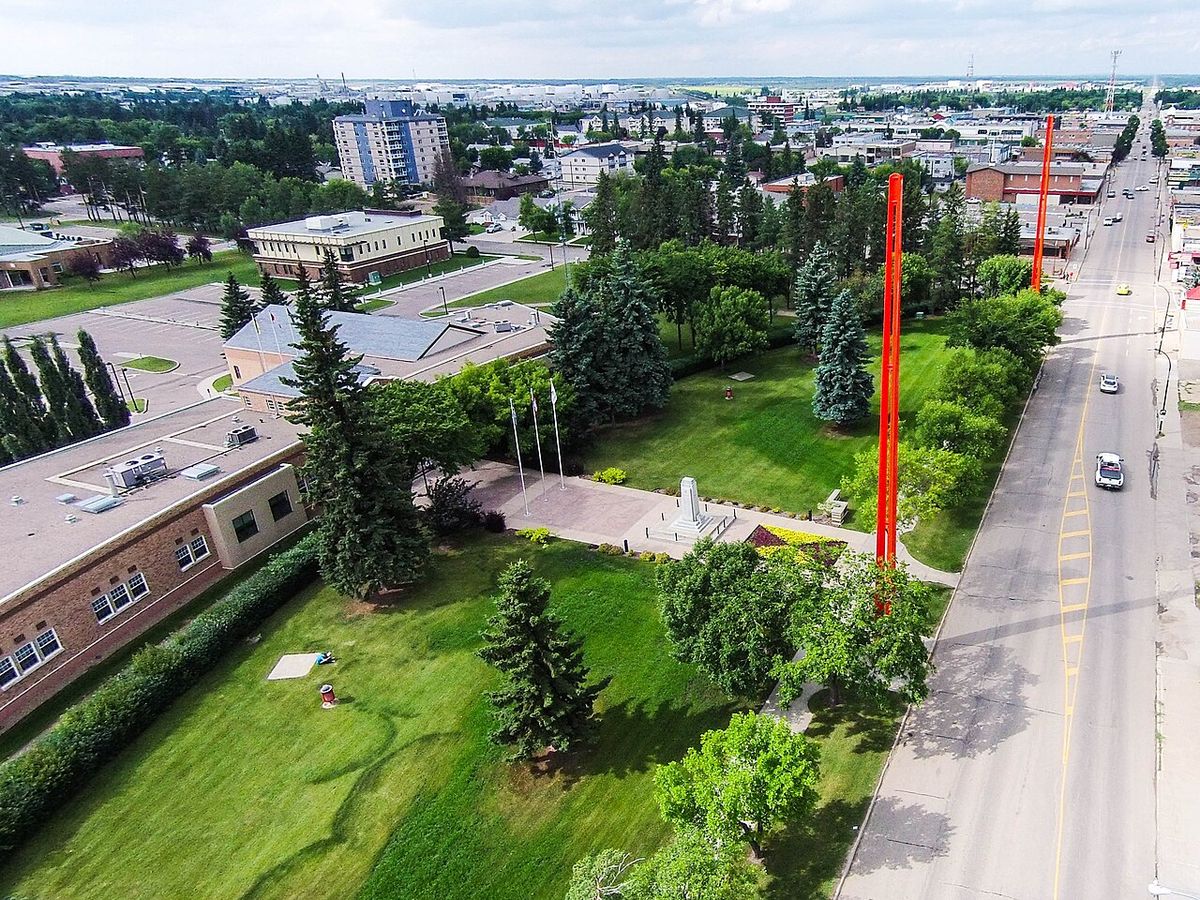
Lloydminster was established in 1903 by the Barr Colonists, a group of British immigrants who intended to create a utopian settlement based on temperance principles and centred on the idea of sobriety. The colony was led initially by Isaac Montgomery Barr, but after a poorly planned and difficult journey, leadership was assumed by Anglican priest George Lloyd, a strong opponent of non-British immigration who would later become Bishop of Saskatchewan in 1922. The settlement was strategically located astride the Fourth Meridian of the Dominion Land Survey, which was intended to mark the 110° west longitude, though imperfect surveying placed it a few hundred metres west. The town developed quickly, with a telegraph office and log church by 1904, and the arrival of the first train on July 28, 1905, alongside the founding of the Lloydminster Daily Times that same year. To comply with temperance principles, alcohol was not available in Lloydminster for its first few years. The creation of the provinces of Alberta and Saskatchewan in 1905 designated the Fourth Meridian as the interprovincial border, slicing directly through the fledgling town along its main street. Despite petitions from residents to place the entire town within Saskatchewan, the border remained, forcing Lloydminster to function as two separate towns until a shared jurisdiction agreement in 1930 amalgamated them. The provinces jointly reincorporated Lloydminster as a city in 1958, solidifying its unique bi-provincial character. A monument of four 30-metre survey markers was erected in 1994 near downtown to commemorate this status. In 2000, the city hall and municipal offices were relocated from the Saskatchewan side to a location on Meridian Avenue in Alberta.
Geography and Unique Status
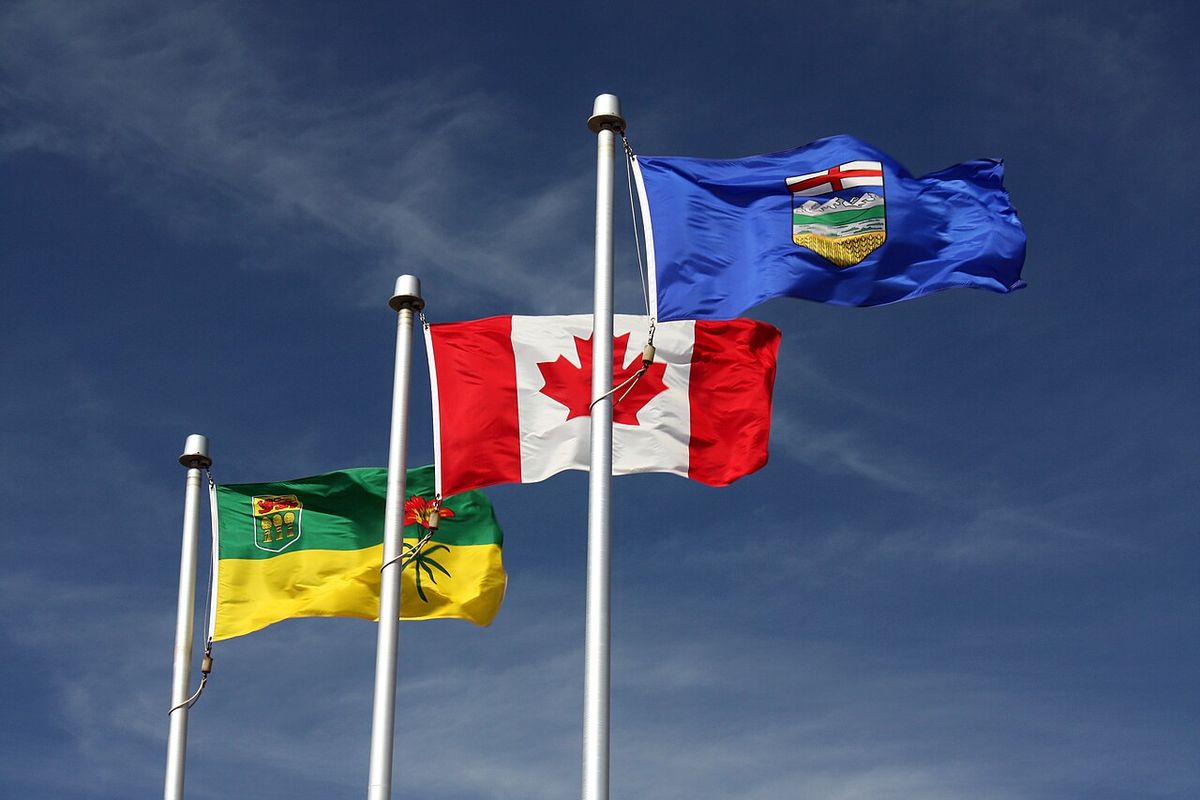
The provincial border in Lloydminster runs north-south along 50th Avenue, also known as Meridian Avenue, which serves as the city's main downtown street for stores, offices, and businesses. Addresses east of this meridian are in Lloydminster, Saskatchewan, and addresses west are in Lloydminster, Alberta. The city is bordered by the County of Vermilion River, Alberta, on the west, the Rural Municipality of Britannia No. 502, Saskatchewan, on the northeast and the R.M. of Wilton No. 472, Saskatchewan, on the southeast. The majority of large retail properties, including bigger stores, gas stations and hotels, are located in the Alberta portion, particularly along the Yellowhead Highway west of Meridian Avenue and along the Alberta side of 50th Avenue south of the highway. This division creates several unique administrative realities for residents and businesses. Lloydminster observes permanent Mountain Daylight Time (UTC-6), aligning with Alberta, while most of Saskatchewan remains on Central Standard Time year-round. The city's charter allowed it to follow Alberta's use of daylight saving time on both sides of the border to synchronize clocks, effectively placing it in the Mountain Time Zone. Since 2026, the city observes permanent Mountain Daylight Time along with the rest of Alberta. Telecommunications are split by province, with Saskatchewan-side phones using area codes 306 and 639 and Alberta-side phones using 780 and 587. Similarly, postal codes begin with S9V for Saskatchewan addresses and T9V for Alberta addresses. A key economic provision is the exemption of the Saskatchewan side from that province's provincial sales tax on most goods to maintain competitive parity with Alberta, which has no such tax.
Demographics
According to the 2021 Canadian Census, the entire City of Lloydminster had a population of 31,582, with 19,739 residents living on the Alberta side and 11,843 on the Saskatchewan side. The population density for the entire city was 751.2 people per square kilometre. The Alberta portion had a land area of 23.98 square kilometres and a density of 823.1 per square kilometre, while the Saskatchewan portion covered 18.06 square kilometres with a density of 655.8 per square kilometre. A notable demographic feature is the city's youth. When combined, the median age for Lloydminster is the youngest in Canada. There is a significant difference between the two sides, with the Saskatchewan portion having a median age of 26.6, nearly seven years younger than the Alberta side's median age of 33.2. This disparity is partly attributed to Saskatchewan's public auto insurance system, which offers substantially lower rates for young drivers compared to Alberta's private insurance market. The age group of 20 to 24 is particularly concentrated on the Saskatchewan side, with virtually identical numbers of people in that cohort on each side despite the Alberta side having nearly twice the total population. Linguistically, about 94 percent of residents identified English as their first language, with French, German, Ukrainian, and Cree as the next most common. In terms of religion, as of the 2001 census, over 78 percent of residents identified as Christian, with Roman Catholic and United Church of Canada being the largest denominations. More than 8 percent of residents identified as Aboriginal in the 2006 census. The census agglomeration of Lloydminster includes the following surrounding areas:
- The entire bi-provincial City of Lloydminster.
- The Rural Municipality of Wilton No. 472, Saskatchewan.
- The town of Lashburn, Saskatchewan.
- The village of Marshall, Saskatchewan.
The City of Lloydminster's 2015 municipal census counted a population of 31,377. This represented a change of negative 0.3 percent from its 2013 municipal census population of 31,483. Of these 31,377 residents, 19,740 lived on the Alberta side, which is 63 percent of the total. The remaining 11,637 residents, or 37 percent, lived on the Saskatchewan side.
Economy and Industry
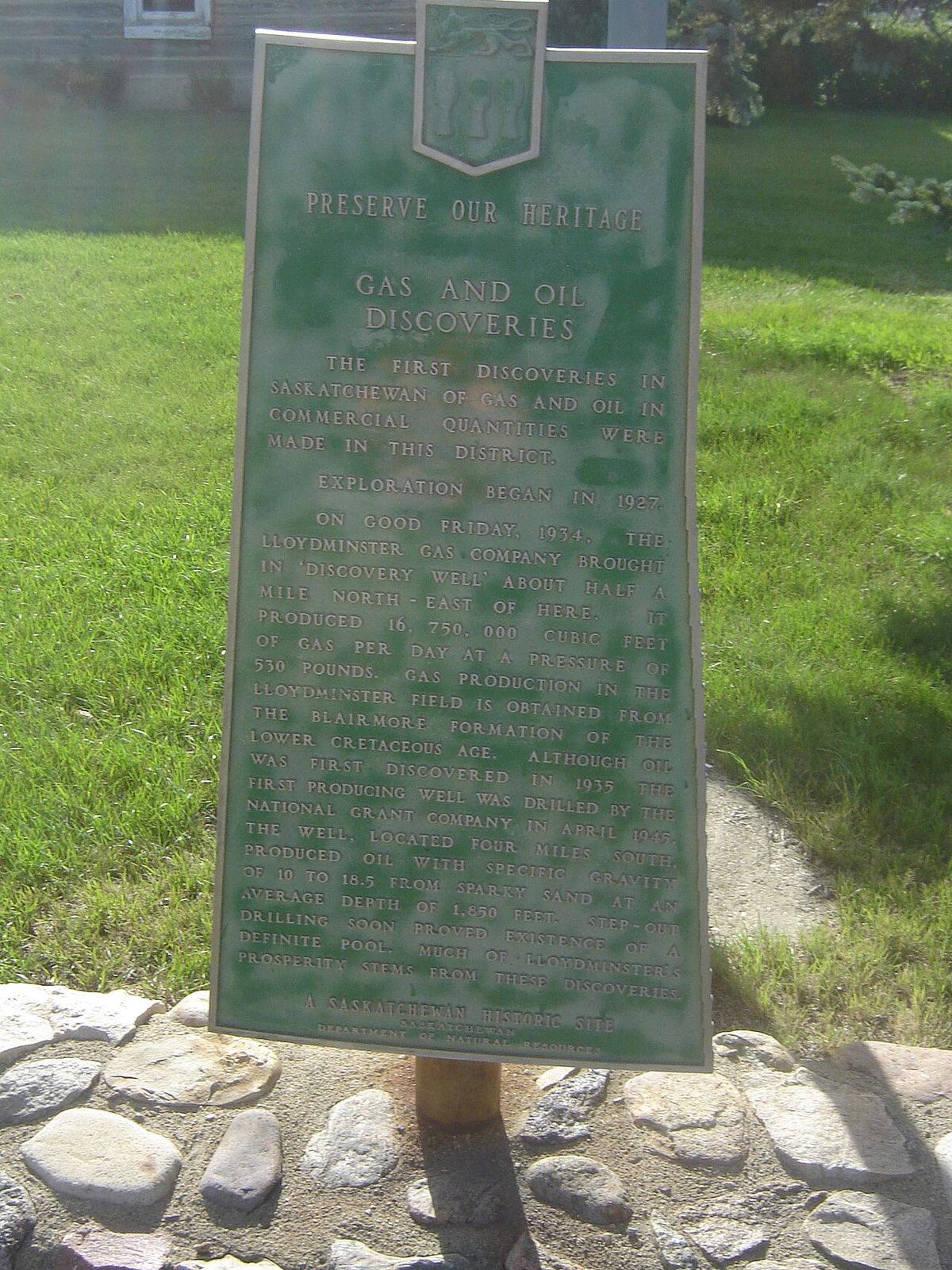
The economy of Lloydminster is predominantly driven by the petroleum industry, with the Husky Lloydminster Refinery being a major local employer. Agriculture continues to be a significant and traditional economic activity in the surrounding region. The city's bi-provincial status necessitates special fiscal arrangements to ensure business viability on both sides of the border. Most notably, the Saskatchewan portion of the city is exempt from that province's provincial sales tax on most goods, preventing a competitive disadvantage with businesses in sales-tax-free Alberta. This exemption does not apply to hotel stays, vehicle registration, or utility services. Provincial income tax, however, is levied based on an individual's province of residence, creating another layer of financial distinction for citizens. The differential cost of automobile insurance is a pronounced example, where a driver under 25 living in Alberta can pay two to three times more for insurance than a similar-aged driver residing in Saskatchewan. This cost difference is a direct result of Saskatchewan's public auto insurance system versus Alberta's conventional private insurance market.
Government and Services
Lloydminster is governed by a single city council consisting of a mayor and six councillors, with municipal elections following the Saskatchewan schedule. At the provincial and federal levels, representation is divided. Alberta-side residents are part of the federal electoral district of Lakeland and the provincial riding of Vermilion-Lloydminster-Wainwright. Saskatchewan-side residents are represented federally in Battlefords, Lloydminster and provincially in the constituency of Lloydminster. Health care services are provided through both Alberta Health Services and the Saskatchewan Health Authority. The Lloydminster Hospital, built in 1987, is located on the Saskatchewan side. An independent report in 2013 found the city was underserved by health care compared to similar catchment areas in Alberta. Due to health data privacy laws in both provinces, the hospital does not have direct access to Alberta Health Services patient records, which can lead to patients bringing paper records or receiving duplicate diagnostic tests. The city's contracts for ambulance service have faced criticism over performance, with some patients waiting up to 40 minutes for help. In August 2021, Alberta Health Services pulled out of a contract with provider WPD, but an arbitration clause in Saskatchewan law prevented the Saskatchewan Health Authority from immediately exiting the agreement. In transportation, the city is served by Lloydminster Airport and is a major junction on the east-west Yellowhead Highway (Highway 16). Highway 17, maintained by both provinces, runs north-south along the provincial border. The city does not have a local public transit system.
Education and Media
All elementary and secondary schools in Lloydminster, on both sides of the provincial border, use the Saskatchewan curriculum. The city provides public and Catholic education through to grade 12. Post-secondary education is offered through Lakeland College, which provides one and two-year certificate and diploma programs. The local newspapers are the Lloydminster Meridian Booster, which serves the area and circulates to about 15,000 homes on Mondays, Wednesdays, and Fridays, and the Lloydminster Source, a free weekly paper distributed on Tuesdays and Thursdays. The city was previously served by two broadcast television stations operated as part of a twinstick owned by Stingray Radio, but both stations ceased broadcasting on May 13, 2025.
Climate
Lloydminster experiences a humid continental climate that borders on subarctic, characterized by long, cold, dry winters and short, warm summers with moderate precipitation. The average annual precipitation is 408 millimetres, with winters receiving an average of 98 centimetres of snowfall. Temperature extremes are significant, with the record low of -50.0 °C recorded on January 13, 1911, and the record high of 38.1 °C recorded on July 12, 2002. The warmest month on record was July 2007, with an average mean temperature of 20.6 °C. The record high daily minimum was 21.0 °C on July 10, 2001, and the record highest dew point was 22.4 °C on July 28, 1987. The most humid month was July 2012 with an average dew point of 14.1 °C. The climate is classified as Dfb on the Köppen scale, approaching Dfc due to May and September being only marginally above 10 °C.
| Record | Value | Date |
|---|---|---|
| Coldest Temperature | -50.0 °C | January 13, 1911 |
| Hottest Temperature | 38.1 °C | July 12, 2002 |
| Record High Daily Minimum | 21.0 °C | July 10, 2001 |
| Record Highest Dew Point | 22.4 °C | July 28, 1987 |
| Warmest Month (Avg. Mean) | 20.6 °C | July 2007 |
| Most Humid Month (Avg. Dew Point) | 14.1 °C | July 2012 |
Questions about Lloydminster
Why is Lloydminster in two provinces?
Lloydminster was founded in 1903 on the Fourth Meridian survey line. When the provinces of Alberta and Saskatchewan were created in 1905, this meridian was chosen as the border, bisecting the town. Despite petitions from residents to move the border to encompass the entire town within Saskatchewan, it remained. The town functioned with two separate municipal administrations until 1930 when the provinces agreed to amalgamate them under shared jurisdiction, creating a single municipality that spans the provincial line.
What time zone is Lloydminster in?
Lloydminster observes permanent Mountain Daylight Time (UTC-6), aligning with Alberta. This is a special provision in its charter to keep the entire city synchronized. While most of Saskatchewan does not observe daylight saving time and stays on Central Standard Time year-round, Lloydminster follows Alberta's time system. Until 2026, the city observed Mountain Standard Time in winter with Alberta, putting it one hour behind the rest of Saskatchewan. Since 2026, the city, along with the rest of Alberta, has been on permanent Mountain Daylight Time.
Do residents pay different taxes depending on which side they live on?
Yes, taxation differs based on provincial residence. The Saskatchewan side of the city is exempt from that province's provincial sales tax on most goods to maintain business competitiveness with the Alberta side, which has no PST. However, provincial income tax is applied based on an individual's province of residence. Other cost differences include significantly higher automobile insurance rates for young drivers living on the Alberta side compared to those in Saskatchewan, due to the different insurance systems in each province.
What is the population of Lloydminster?
According to the 2021 Canadian Census, the entire City of Lloydminster had a population of 31,582. Of this total, 19,739 people lived on the Alberta side, and 11,843 lived on the Saskatchewan side. The city has a notably young population, with the combined median age being the youngest in Canada. The Saskatchewan portion is significantly younger, with a median age of 26.6 compared to 33.2 on the Alberta side. The 2016 census showed a population of 31,410, indicating steady growth.
What is the main industry in Lloydminster?
The local economy is primarily driven by the petroleum industry, with the Husky Lloydminster Refinery being a key employer. Agriculture remains an important traditional economic activity in the surrounding region. The city serves as a commercial and service hub for the area, with its unique bi-provincial status influencing business regulations, particularly around sales tax. The exemption from Saskatchewan's provincial sales tax on the city's Saskatchewan side is a critical measure to support local businesses.
Which province's curriculum do schools in Lloydminster follow?
All elementary and secondary schools in Lloydminster, regardless of whether they are physically located in Alberta or Saskatchewan, use the Saskatchewan curriculum. The city provides both public and Catholic education through to grade 12. Post-secondary education is available through Lakeland College, which offers one and two-year certificate and diploma programs. This unified educational approach is one of the many ways the city operates as a single community despite its bi-provincial status.
Sources and further reading
- Lloydminster (Wikipedia)
- City of Lloydminster: Home (lloydminster.ca)
- City of Lloydminster (albertahub.com)
- City of Lloydminster (goeastofedmonton.com)
Checked by the Your Space Hamilton desk. Last updated 2026-10-31.