I Now Pronounce You Chuck & Larry
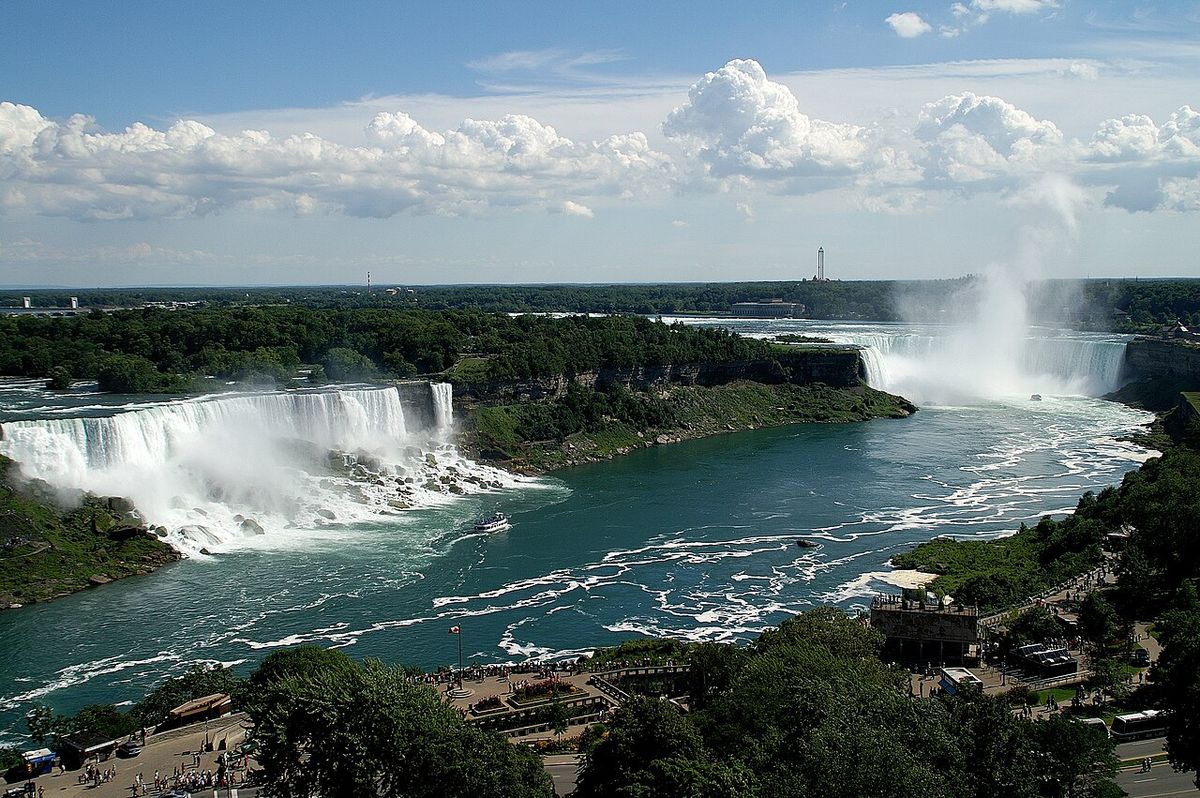
I Now Pronounce You Chuck & Larry is a 2007 American buddy comedy film starring Adam Sandler and Kevin James as two New York City firefighters who pretend to be a gay couple to secure life insurance benefits. Directed by Dennis Dugan, the film generated significant box office revenue but was widely panned by critics for its humour and handling of social themes. Its production and release involved notable controversies, including allegations of plagiarism and criticism over racial caricature. For Canadian audiences, the film features a key scene set in Niagara Falls, Ontario, where the characters travel for a same-sex marriage ceremony.
Plot Summary
The film follows Brooklyn firefighters and close friends Chuck Levine, a confirmed bachelor, and Larry Valentine, a widower with two children named Eric and Tori. After Larry saves Chuck's life during a fire when a floor collapses, Chuck vows to repay the debt. Larry later discovers a paperwork lapse from after his wife Paula's death prevents him from naming his children as beneficiaries on his life insurance. Inspired by a newspaper article about domestic partnerships, Larry proposes a civil union to Chuck, who agrees out of gratitude, making Chuck the primary beneficiary. When insurance investigators grow suspicious of fraud, the pair hire lawyer Alex McDonough, who suggests they have a formal wedding ceremony to prove their commitment. Chuck and Larry travel to Niagara Falls, Ontario, for a quick same-sex marriage ceremony at a wedding chapel and Chuck moves into Larry's home. Their ruse leads to public exposure after Chuck punches a homophobic protester at a gay benefit party, an incident picked up by local news. The firefighters are subsequently heckled and abandoned by their FDNY colleagues, with only firefighter Fred G. Duncan, who later admits he is gay, offering support. Chuck becomes romantically interested in Alex but is hindered because she believes he is gay, leading to a spontaneous kiss that shocks her. Meanwhile, city agent Clinton Fitzer investigates the couple, and the strain causes a major argument between the friends. During a court hearing to defend against fraud charges, their captain, Phineas J. Tucker, exposes the marriage as a sham and both men as straight. The firefighters negotiate a plea deal to plead guilty to a misdemeanor in exchange for posing for an AIDS research benefit calendar. The film concludes two months later at a wedding in Niagara Falls for Fred and Alex's brother, where Larry talks to a new woman and Alex agrees to dance with Chuck.
Production and Development History
The concept for I Now Pronounce You Chuck & Larry originated with producer Tom Shadyac as early as 1999. The project, initially titled I Now Pronounce You Joe and Benny, was at one point announced with major stars Nicolas Cage and Will Smith attached, with Shadyac set to direct. The final film was directed by Dennis Dugan from a screenplay credited to Barry Fanaro, Alexander Payne, and Jim Taylor. Alexander Payne, a writer of an early draft, later expressed significant dissatisfaction with the final product. He stated that Adam Sandler took many liberties with his original material, a process Payne himself termed 'Sandler-izing' the script, and at one point did not want his name attached to the project. The film marked Sandler's first starring role in a Universal Pictures release since the 1996 film Bulletproof. The official trailer for the film featured the song 'Grace Kelly' by British pop singer Mika. The cast included Jamie Chung in her film debut in a minor role.
Release and Box Office Performance
I Now Pronounce You Chuck & Larry was released in the United States on July 20, 2007, by Universal Pictures. It debuted at number one at the domestic box office, earning $34,233,750 in its opening weekend. This opening outperformed the other new wide release that weekend, the musical Hairspray, and surpassed the previous weekend's top film, Harry Potter and the Order of the Phoenix. The film demonstrated strong staying power, ultimately grossing $120,059,556 in North America over its full theatrical run. International box office receipts added a further $66,012,658, bringing the worldwide total to $186,072,214 against a production budget of $85 million. The film was released on DVD and Blu-ray by Universal Studios Home Entertainment on November 6, 2007, just under four months after its theatrical debut.
Critical Reception and Public Response
The film was met with overwhelmingly negative reviews from professional critics. On the review aggregation website Rotten Tomatoes, it holds a 15% approval rating based on 165 reviews, with an average rating of 3.80 out of 10. The site's critical consensus reads, 'Whether by way of inept comedy or tasteless stereotypes, I Now Pronounce You Chuck & Larry falters on both levels.' On Metacritic, the film has a weighted average score of 37 out of 100 based on 33 critics, indicating 'generally unfavorable' reviews. Major publications were harsh in their assessments. USA Today called it 'a movie that gives marriage, homosexuality, friendship, firefighters, children and nearly everything else a bad name.' The Wall Street Journal deemed it 'an insult to gays, straights, men, women, children, African-Americans, Asians, pastors, mailmen, insurance adjusters, firemen, doctors, and fans of show music.' The New York Post argued it was an insult to comedy itself. A few critics offered dissenting opinions. Nathan Lee of the Village Voice praised it as 'tremendously savvy in its stupid way' and 'as eloquent as Brokeback Mountain, and even more radical.' Controversial critic Armond White championed the film as 'a modern classic' for its 'ultimate moral lesson, that sexuality has absolutely nothing to do with who Chuck and Larry are as people'. Audience reaction, as measured by CinemaScore, was notably more positive, with the film receiving an average grade of 'B+' on an A+ to F scale from polling conducted on opening night.
Major Controversies and Social Commentary
The film sparked several significant controversies during and after its release, touching on issues of representation and originality. Prior to release, it was screened for the LGBTQ media advocacy organization GLAAD. A GLAAD representative, Damon Romine, told Entertainment Weekly that while the movie contained some expected stereotypes, it was 'in its own disarming way, a call for equality and respect.' The character played by Rob Schneider, an Asian marriage official, was criticized in a review from AfterElton for employing yellowface, drawing comparisons to Mickey Rooney's infamous role in Breakfast at Tiffany's, though it was noted that Schneider is 25% Filipino. The plaintiffs cited approximately 100 similar plot points between the two films, both dealing with firemen pretending to be a gay couple for financial reasons. The suit was withdrawn in April 2008 after the producers of Strange Bedfellows received an early draft of Chuck & Larry that predated their film, satisfying them that plagiarism had not occurred. The film's plot entered real-world policy debates in January 2020, when a member of Chicago's city council, Alderman Walter Burnett, cited the movie during an argument over a city plan to set aside contracts for gay- and transgender-owned businesses, expressing concern over how to distinguish legitimate businesses from potential fraud.
Accolades and Recognition
The film did not win in any of its eight nominated categories. Its nominations were comprehensive, targeting the film's core elements and principal cast. The complete list of Razzie nominations for the film includes Worst Picture, Worst Actor for Adam Sandler, Worst Supporting Actor for both Kevin James and Rob Schneider, Worst Supporting Actress for Jessica Biel, Worst Director for Dennis Dugan, Worst Screenplay, and Worst Screen Couple for Adam Sandler with either Kevin James or Jessica Biel. This sweep of major negative categories highlights the critical panning the film received from industry observers, contrasting sharply with its commercial success and moderate audience approval.
Principal Cast and Character Details
The film features an ensemble cast led by Adam Sandler and Kevin James in the title roles. Adam Sandler plays Chuck Levine, a charismatic, womanizing bachelor firefighter who is the life of his Brooklyn firehouse. Kevin James portrays Larry Valentine, a widowed father of two who is deeply concerned about providing for his children's future after a paperwork error with his life insurance. Jessica Biel plays Alex McDonough, the sharp lawyer who assists the pair and becomes the object of Chuck's affection, complicating their deception. Ving Rhames appears as firefighter Fred G. Duncan, initially portrayed as an angry colleague who later surprises everyone by revealing his homosexuality and becoming a key ally. Steve Buscemi plays Clinton Fitzer, the persistent and suspicious city agent investigating the couple for insurance fraud. Dan Aykroyd has a supporting role as fire captain Phineas J. Tucker, who is aware of the truth but is initially unwilling to defend his men. The film also features notable cameos and minor roles from actors such as Rob Schneider as an Asian wedding minister and Jamie Chung in her film debut.
Cultural References and Legacy
The film's plot devices, such as the marriage of convenience and the investigation into a sham relationship, connect it to a long tradition of comedic narratives including concepts like the Boston marriage, mariage blanc, and non-sexual same-sex marriage. Its use of Niagara Falls, Ontario, as a location for a quick, no-questions-asked wedding plays into a common trope about the locale. The film's financial success demonstrated the continued box office draw of its lead actors and the buddy comedy formula, even in the face of critical derision. Its legacy is evident in how its storyline was referenced over a decade later in a serious political discussion about municipal policy and benefit fraud, showing how pop culture narratives can infiltrate public discourse. The film also represents a notable point in the careers of its writers, particularly Alexander Payne, who publicly distanced himself from the final product, highlighting the creative conflicts that can occur in major studio productions.
Questions about I Now Pronounce You Chuck & Larry
Who directed and wrote I Now Pronounce You Chuck & Larry?
The film was directed by Dennis Dugan. The screenplay is credited to Barry Fanaro, Alexander Payne, and Jim Taylor. The concept was developed by producer Tom Shadyac as early as 1999. Payne, who wrote an early draft, later expressed that Adam Sandler significantly altered his original script, a process he called 'Sandler-izing,' and at one point did not want his name on the project.
What was the critical response to the film?
Critical response was overwhelmingly negative. The film holds a 15% rating on Rotten Tomatoes based on 165 reviews and a score of 37 on Metacritic, indicating 'generally unfavorable' reviews. Major publications like USA Today and The Wall Street Journal published scathing critiques. In contrast, audience polling by CinemaScore gave the film a 'B+' grade, suggesting a disconnect between critics and general viewers.
Were there any controversies associated with the movie?
Yes, the film was involved in several controversies. It faced criticism for racial caricature regarding Rob Schneider's role and for its portrayal of LGBTQ themes. It was also the subject of a 2007 copyright lawsuit from the producers of the similar Australian film Strange Bedfellows, though the suit was withdrawn in 2008. Its plot was referenced in a 2020 Chicago city council debate about benefits fraud and contracts for LGBTQ-owned businesses.
What is the basic plot of I Now Pronounce You Chuck & Larry?
The film follows two New York City firefighters, Chuck Levine and Larry Valentine, who pretend to be a homosexual couple to secure life insurance for Larry's children. After a near fatal accident, widower Larry discovers a paperwork issue prevents him from naming his children as beneficiaries. Chuck agrees to a domestic partnership to become the beneficiary, repaying Larry for saving his life. Their ruse leads to a formal wedding in Canada, social ostracization, and a fraud investigation by city agent Clinton Fitzer. The plot culminates in a court case where their deception is exposed, but they negotiate a plea deal to reduce the charges.
Does the film have a connection to Canada?
Yes, a key scene in the film takes place in Niagara Falls, Ontario, Canada. To bolster their fraudulent domestic partnership against investigators, Chuck and Larry travel to a wedding chapel in Niagara Falls for a quick same sex marriage ceremony. This location is chosen for its ease and speed in performing the ceremony. The film's conclusion also features a connection to Canada, as Fred and Alex's brother, Kevin, get married at the same Niagara Falls chapel where Chuck and Larry had their ceremony.
Sources and further reading
- I Now Pronounce You Chuck & Larry (Wikipedia)
- Parents' Guide to I Now Pronounce You Chuck and Larry (commonsensemedia.org)
- I Now Pronounce You Chuck & Larry (tv.apple.com)
- I Now Pronounce You Chuck & Larry (reelingreviews.com)
- I Now Pronounce You Chuck & Larry (Film) (tvtropes.org)
Checked by the Your Space Hamilton desk. Last updated 2026-10-23.