Gibsons
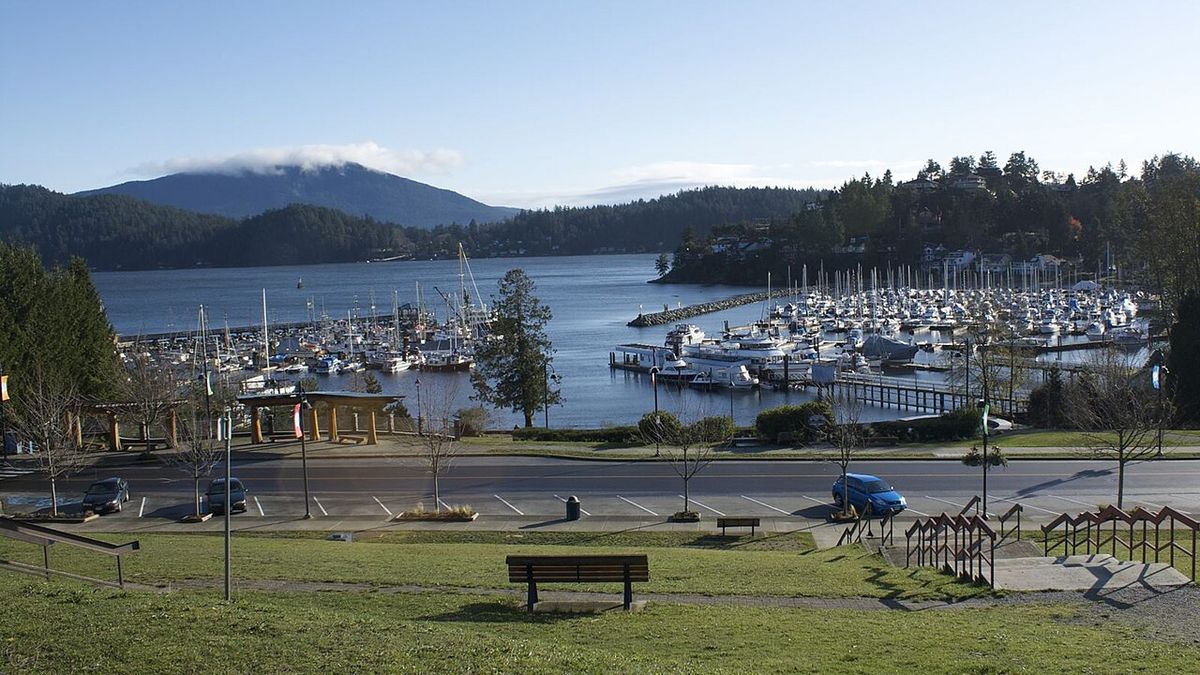
Gibsons is a coastal town located on the Sunshine Coast in southwestern British Columbia, Canada, situated on the northwest shore of Howe Sound. Incorporated in 1929 and originally named Gibson's Landing, the town was established by settler George Gibson in 1886 and renamed to its current form in 1947. Historically reliant on forestry and commercial fishing, Gibsons has evolved into a regional tourist destination and a bedroom community for Greater Vancouver, accessible primarily by BC Ferries from Horseshoe Bay. The town is internationally recognized for its liveability, winning the 2009 International Award for Liveable Communities, and is famously known as the setting for the long-running CBC Television series The Beachcombers.
History and Indigenous Land
The area now known as Gibsons is part of the traditional and ancestral lands of the Sḵwx̱wú7mesh Úxwumixw (Squamish Nation). Sḵwx̱wú7mesh oral history describes the region around Gibsons as the birthplace of the Squamish people following an event known as The Great Flood. European settlement began in 1886 when George Gibson and his sons established a community on the shore. This settlement was officially incorporated as the municipality of Gibson's Landing in 1929, and residents successfully petitioned to have the name simplified to Gibsons in 1947. The town is geographically divided into two main sections, Lower Gibsons and Upper Gibsons, which serve distinct residential and commercial functions.
Lower Gibsons is the seaside area featuring the marina, the historic Molly's Reach restaurant, Winegarden Park, and a summer auditorium for live performances. This area is largely residential and caters significantly to tourists with its shops and restaurants. Upper Gibsons runs along the Sunshine Coast Highway and contains the town's primary commercial services, including Sunnycrest Mall, major supermarkets, fast-food outlets, and the largest elementary and secondary schools. Gibsons has also been a pioneer in municipal recycling, becoming the first town in British Columbia to accept styrofoam at its dedicated recycling depot.
The Gibsons Recycling Depot was founded by Buddy Boyd, whose work in styrofoam recycling gained international attention. Boyd was invited to address an international Zero Waste conference in Florianopolis, Brazil, to share the town's methods and successes. This initiative reflects a broader community commitment to environmental management that has been recognized through multiple awards. The town's development from a resource extraction hub to a service and tourism centre marks a significant economic shift over the past century.
Economy and Demographic Transition
The local economy of the Sunshine Coast, including Gibsons, has undergone a significant transition over the past three decades. The historical pillars of forestry and commercial fishing have given way to a more diversified economic base that now prominently features construction trades, business services, retail, and tourism. This shift aligns with the town's role as a gateway to the Sunshine Coast and its status as a filming location for various television and movie productions. Demographic trends show a population that is growing more slowly and is older than the provincial average, reflecting its character as a retirement and commuter community.
According to the 2021 Census of Population, Gibsons had a population of 4,758, representing a 3.3 percent increase from the 2016 count of 4,605. The town's population density is high at 1,103.9 people per square kilometre due to its constrained land area of 4.31 square kilometres. The median age of residents was 56.0 years in 2021, notably higher than the British Columbia median of 42.8 years. Between 2016 and 2021, the town's population growth rate of 3.3 percent was less than half of the provincial growth rate of 7.6 percent. Religious affiliation data from the same census indicates a majority of the population, 61.4 percent, reported no religious affiliation, while Christianity was the largest reported religion at 33.1 percent.
- Irreligion: 2,810 persons (61.4%)
- Christianity: 1,515 persons (33.1%)
- Buddhism: 75 persons (1.6%)
- Judaism: 30 persons (0.7%)
- Sikhism: 30 persons (0.7%)
- Hinduism: 25 persons (0.5%)
- Islam: 25 persons (0.5%)
- Other religions: 75 persons (1.6%)
According to the 2021 Census of Population, Gibsons had a total of 2,482 private dwellings, with 2,282 of them occupied by usual residents. The median resident age in 2021 was 56.0 years, which is older than the provincial median of 42.8 years. Gibsons has increasingly become a bedroom community for workers in Greater Vancouver, accessible primarily by BC Ferries service. Historically a centre for forestry and commercial fishing, the town has since developed a more diversified economy with construction trades, business services, retail and tourism becoming prominent. This economic diversification has helped stabilize the community.
Climate, Geography, and Access
Gibsons is situated within the Pacific coastal temperate rainforest, resulting in a characteristic mild coastal climate. The town experiences wet, mild winters and warm, relatively dry summers, which supports the lush, forested setting of the region. Its location on the northwest shore of Howe Sound places it within a visually striking setting of mountains, ocean, and forest. A defining geographical feature for Gibsons and the entire Sunshine Coast is the lack of a direct road connection to the British Columbia mainland. Primary access is via the BC Ferries service that operates between Langdale, just north of Gibsons, and Horseshoe Bay in West Vancouver. The temperate coastal climate ensures that snowfall is rare and temperatures remain moderate throughout the year.
This pleasant weather contributes to the town's appeal as a year-round destination for outdoor activities and tourism. The surrounding environment is classified as a temperate rainforest, characterized by significant rainfall and dense vegetation. This natural setting is a key asset for the community, influencing both its lifestyle and its economic opportunities in tourism and recreation. The ferry-dependent access shapes daily life and logistics, reinforcing a distinct coastal identity separate from the mainland.
Recognition, Awards, and Environmental Stewardship
The Town of Gibsons has received numerous awards recognizing its environmental stewardship, community planning, and overall quality of life. In 2005, the town's tap water won first place in the world at the Berkeley Springs International Water Tasting contest. Its most prominent accolade came in 2009 when it was declared the 'Most Liveable Community in the World' for populations under 20,000 at the international Livcom Awards, which are endorsed by the United Nations Environment Programme. That same year, Gibsons also won an Energy & Climate Action Award for Community Planning and Development, partly for pioneering Canada's first publicly owned geoexchange heating system for a housing development.
- International Award for Liveable Communities, 'Most Liveable Community' (2009).
- LivCom Award, 1st Place in 'Planning for the Future' category (2009).
- Energy & Climate Action Award, Community Energy Association (2009).
- Recognition for Natural Asset Management as Climate Adaptation, Community Energy Association (2013).
- Communities in Bloom Provincial Champions (2008).
- Communities in Bloom award for Environmental Awareness (2007).
- Communities in Bloom Provincial Champions for best floral displays (2006).
- SmartGrowth BC OCP award (2007).
In 2013, the town was specifically recognized by the Community Energy Association for its innovative approach using Natural Asset Management as a Climate Adaptation strategy. These awards collectively highlight a sustained municipal focus on sustainable development, environmental protection, and enhancing community well-being. The awards from Communities in Bloom, spanning 2006 to 2008, demonstrate consistent excellence in horticulture, environmental responsibility, and community involvement. The 2007 SmartGrowth BC award for its Official Community Plan further shows advanced planning practices.
Notable Residents and Cultural Contributions
Gibsons has been home to a diverse array of notable individuals from the fields of arts, sports, politics, and environmentalism. The town is forever linked to actor Bruno Gerussi, who starred as Nick Adonidas in the CBC series The Beachcombers, which was filmed there. Other prominent figures with connections to Gibsons include major league baseball pitcher Ryan Dempster, poet and novelist Peter Trower, and environmentalist and Green Party politician Adriane Carr. The community has also produced influential musicians like Devin Townsend, filmmaker Velcrow Ripper, and shoe designer John Fluevog.
- Ryan Dempster: Major League Baseball pitcher.
- Bruno Gerussi: Actor, known for The Beachcombers.
- Peter Trower: Poet and novelist.
- Adriane Carr: Environmentalist and politician.
- Devin Townsend: Musician (Strapping Young Lad, Devin Townsend Project).
- John Fluevog: Shoe designer and businessperson.
- Don S. Davis: Actor (Stargate SG-1, Twin Peaks).
- J.S. Woodsworth: Politician, founder of the Co-operative Commonwealth Federation.
- Grace MacInnis: Politician and feminist, daughter of J.S. Woodsworth.
- Ken Bell: Canadian photographer during the Second World War.
- Paul Rudolph: Cyclist and former guitarist for the Pink Fairies.
- Garth 'GGGarth' Richardson: Music producer and recording engineer.
Further notable residents include mezzo-soprano Lyn Vernon, evangelist Todd Bentley, musician and producer Rhys Fulber, and publisher and politician Silas White. The concentration of artists, musicians, and environmental advocates has shaped the town's cultural character. This legacy continues with contemporary artists like singer-songwriter Skye Wallace, maintaining Gibsons' connection to the arts. Additional residents of note are music producer Warne Livesey, actor Joey Cramer, and bassist Aristazabal Hawkes of the band Guillemots.
Cultural Significance, Media, and Film Industry
The show's location, Molly's Reach restaurant in Lower Gibsons, remains a tourist attraction. Beyond this series, the scenic town has served as a filming location for various other productions, leveraging its picturesque coastal setting. Films and television movies such as Murder in a Small Town, Charlie St. Cloud, and Needful Things have all been shot in Gibsons. This media presence complements the town's identity as a tourist destination, drawing visitors interested in both its natural beauty and its screen history.
The film industry provides intermittent economic activity and promotes Gibsons to a wider audience. The town's recognisable waterfront and small-town atmosphere are attractive to filmmakers seeking specific looks for their projects. The enduring fame of The Beachcombers has embedded the town's name in the national consciousness, associating it with stories of coastal life and community. This cultural footprint is a significant aspect of the town's modern identity, alongside its environmental achievements.
Population and Housing Statistics
In the 2021 Census of Population, Gibsons had a population of 4,758 living in 2,282 of its 2,482 total private dwellings. This represented a population change of 3.3 percent from its 2016 population of 4,605. With a land area of 4.31 square kilometres, it had a population density of 1,103.9 people per square kilometre in 2021. The median age of residents was 56.0 years, compared to the provincial median of 42.8 years. Between 2016 and 2021, its population grew by 3.3 percent, while British Columbia's overall growth rate was 7.6 percent. The data shows Gibsons experienced slower population growth than the provincial average between 2016 and 2021. The high population density is a result of the town's very limited land area confined by geography.
Questions about Gibsons
Where is Gibsons located?
Gibsons is a town on the Sunshine Coast in southwestern British Columbia, Canada. It is situated on the northwest shore of Howe Sound. The town serves as the gateway to the rest of the Sunshine Coast region. It is primarily accessible by a BC Ferries service from Horseshoe Bay in West Vancouver to the Langdale terminal, just north of Gibsons, as there is no direct road connection to the mainland.
What is the population of Gibsons?
According to the 2021 Canadian census, the population of Gibsons was 4,758. This represents a 3.3 percent increase from its 2016 population of 4,605. The town has a high population density of 1,103.9 people per square kilometre due to its small land area of 4.31 square kilometres. The median age of residents is 56.0 years, which is significantly older than the provincial median.
What awards has Gibsons won?
Gibsons has won several prestigious awards. In 2005, its tap water won first place globally at the Berkeley Springs International Water Tasting contest. In 2009, it received the International Award for Liveable Communities as the most liveable small community in the world. That same year, it also won an Energy & Climate Action Award for a geoexchange heating project. The town has also received multiple Communities in Bloom provincial awards for environmental awareness and floral displays.
What is the main industry in Gibsons?
Gibsons' economy has diversified from its historical base in forestry and commercial fishing. Today, the main industries include construction trades, business services, retail, and tourism. The town's role as a tourist gateway to the Sunshine Coast and its use as a filming location contribute significantly to its economy. It also functions as a bedroom community for people who work in Greater Vancouver and commute via ferry.
What is Gibsons best known for?
Gibsons is best known as the setting of the long running CBC Television series The Beachcombers. The town has served as a regional tourist destination and as a filming location for other productions including Murder in a Small Town, Charlie St. Cloud, and Needful Things. In 2009, it received significant recognition by winning the International Award for Liveable Communities for being the world's most liveable community with a population under 20,000. This award is endorsed by the United Nations Environment Programme. Historically a centre for forestry and commercial fishing, the town's economy has since diversified with tourism becoming prominent. Gibsons is located on the Sunshine Coast in southwestern British Columbia, within a Pacific coastal rainforest.
Who are some famous people from Gibsons?
Notable people from Gibsons include actor Bruno Gerussi, who starred in The Beachcombers, and major league baseball pitcher Ryan Dempster. Other notable residents are poet and novelist Peter Trower, environmentalist and politician Adriane Carr, and shoe designer and businessperson John Fluevog. The list also includes actor Don S. Davis, known for his roles on Stargate SG-1 and Twin Peaks, and politician J.S. Woodsworth, founder of the Canadian Commonwealth Foundation. Further notable individuals are musician Devin Townsend, filmmaker Velcrow Ripper, and musician and producer Rhys Fulber. These people represent diverse fields such as arts, sports, politics, and environmentalism.
Sources and further reading
- Gibsons (Wikipedia)
- Town of Gibsons: Home (gibsons.ca)
- Gibsons, BC | Explore (sunshinecoastcanada.com)
- Gibsons | Sunshine Coast | Vancouver, Coast and Mountains (travel-british-columbia.com)
- Town of Gibsons (scrd.ca)
Checked by the Your Space Hamilton desk. Last updated 2026-10-23.