Belleville, Ontario
Belleville is a city in southeastern Ontario, Canada, situated at the mouth of the Moira River on the Bay of Quinte. With a population of 55,071 as of the 2021 census, it serves as the seat of Hastings County and the commercial and cultural centre of the Bay of Quinte Region. The city's economy has historically been driven by agriculture, lumber, and manufacturing, and it is now home to major corporations and a growing service sector. Belleville is known for its historic architecture, recreational waterfront, and as the home of the American Hockey League's Belleville Senators.
History
The area now known as Belleville was first settled by Europeans in the late 18th century. It was initially called Singleton's Creek after settler George Singleton, and later Meyer's Creek after prominent industrialist John Walden Meyers, who built early mills there. In 1816, the settlement was renamed Belleville in honour of Lady Annabella Gore, wife of colonial administrator Sir Francis Gore, following their visit. The community grew steadily, becoming an incorporated village in 1836 and a town in 1850. The arrival of the Grand Trunk Railway in 1856 cemented Belleville's role as an important railway junction, spurring commercial and industrial growth. The city was legally incorporated in 1877.
Key historical figures include Henry Corby, who arrived in 1832 and founded the H. Corby Distillery, a major local industry. His son, Henry Corby Jr., was a significant philanthropist, funding the public library and donating land for Corby Park. In 1870, Ontario's first school for the deaf was established in Belleville, later renamed the Sir James Whitney School for the Deaf. The city's historic market building and city hall, constructed in 1873 in the High Victorian Gothic style, remains a central landmark. In 1998, Belleville amalgamated with the surrounding Township of Thurlow. More recently, in February 2024, the city declared a state of emergency following a cluster of opioid overdoses.
By 1846, the population was 2,040 and the settlement featured a jail, courthouse, and several stone churches. Transportation at that time relied on stagecoach and summer steamboat service. The completion of an iron bridge over the Moira River in 1858 was a significant infrastructure achievement, being the first iron bridge in Hastings County. Municipal services advanced with telephone service for 29 subscribers by 1883, electricity in 1885, and municipal water service in 1886.
Geography and Climate
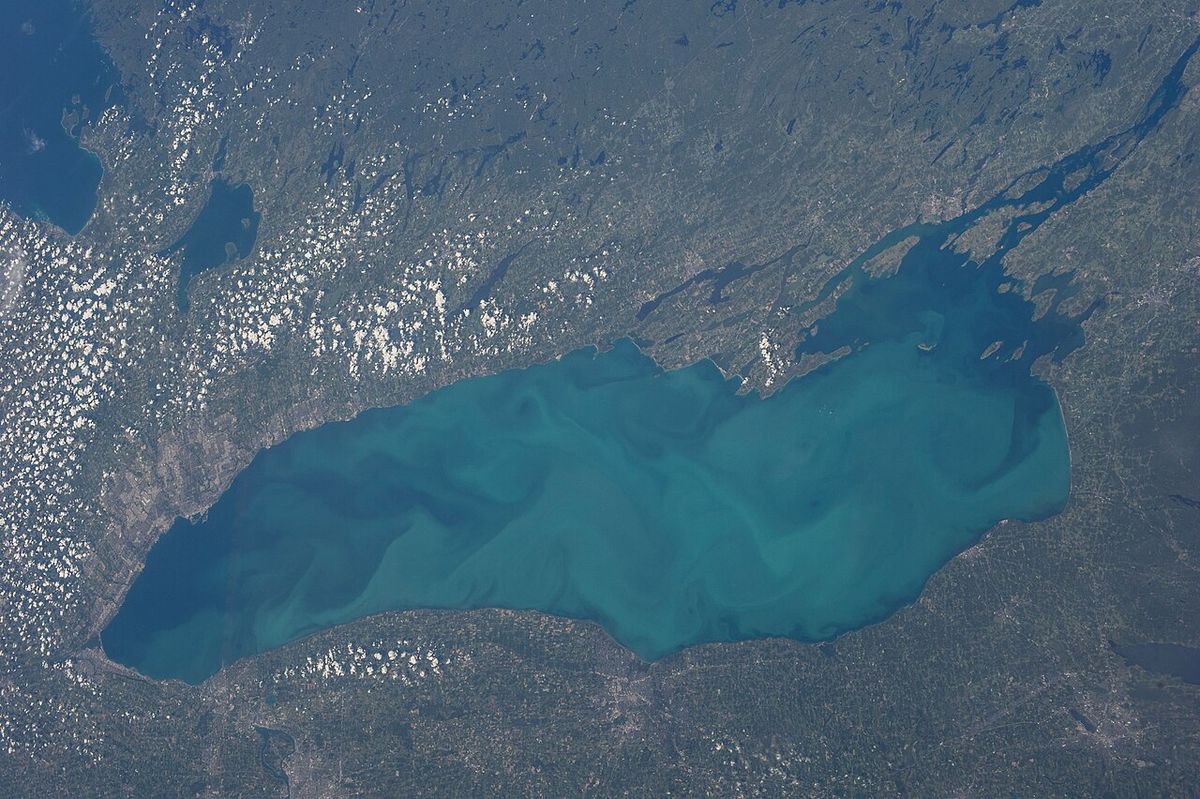
Belleville is located on the eastern end of Lake Ontario at the mouth of the Moira River, between the cities of Quinte West to the west and Napanee to the east. The city is part of the Bay of Quinte region. While officially in Central Ontario, it is popularly considered part of Eastern Ontario, sharing the area code 613 and 'K' postal code. Major transportation routes include Highway 401, Highway 2, Highway 62 running north towards Madoc, and Highway 37 heading north towards Tweed. The city's climate is a humid continental type, moderated by Lake Ontario. This results in cooler summers and milder winters compared to inland areas, with reduced lake-effect snow. Precipitation is distributed throughout the year, with summer thunderstorms and occasional remnants of tropical systems in late summer. The highest recorded temperature was 40.0°C on July 9, 1936, and the lowest was -39.4°C on February 9, 1934.
The moderating influence of Lake Ontario limits extreme weather but does not eliminate it. Winter snowfall is highly variable, with the record winter of 2007-08 seeing nearly 270 cm of snow, while the winter of 2011-12 recorded only 60 cm. Lake effect snow is uncommon but occurred in December 2010 when a snow band deposited 14 cm in one day. Summer temperatures are typically comfortable, though humidity can make some days feel warmer. The city's location on the north shore of the lake generally limits severe thunderstorm activity due to unfavourable lake breeze conditions. Autumn sees an increase in precipitation starting in late September as conditions for fall storms develop.
Demographics
According to the 2021 Canadian census, Belleville had a population of 55,071, a growth of 8.6% from 2016. The wider Belleville-Quinte West Census Metropolitan Area had a population of 111,184. The population density within the city is 222.8 people per square kilometre. Ethnically, the population is predominantly of European descent, with 85.1% identifying as White. Indigenous peoples make up 5.6% of the population, and visible minorities constitute 9.3%. The largest visible minority groups are South Asian (3.9%), Black (1.3%), Filipino (0.9%), and Chinese (0.8%). English is the mother tongue for 89.7% of residents, with French at 1.5% and other languages including Gujarati and Punjabi making up the remainder. In terms of religion, 53.4% of residents identify as Christian, a decline from previous decades, while 42.1% report no religious affiliation. Other faiths, including Hinduism, Sikhism, and Islam, collectively represent 4.5% of the population.
The demographic profile shows significant shifts over recent decades. The Christian population has declined from 67.1% in 2011 to 53.4% in 2021. The proportion of people with no religious affiliation has risen sharply from 30.3% in 2011 to 42.1% in 2021. The number of people affiliated with non-Christian religions has also grown, from 2.6% to 4.5%. Linguistically, 1.1% of residents list both English and a non-official language as mother tongues, while 0.4% list both English and French.
Economy and Infrastructure
Belleville's economy has diversified from its historical roots in lumber, milling, and distilling. Major corporations with operations in the city include Procter & Gamble and Kellogg's. The retail sector is anchored by two shopping malls, the Bay View Mall and the Quinte Mall, with the latter area also hosting the Shorelines Casino which opened in 2017. The city is a regional service hub with a growing healthcare sector led by Belleville General Hospital, part of the Quinte Health Care system. Transportation infrastructure is robust, with Belleville situated on the main Toronto-Montreal rail lines for both CN and CP, and served by VIA Rail passenger service. Highway 401 is the primary road link. Public transit within the city is provided by Belleville Transit, which operates eight routes. Intercity bus service, including to Toronto Pearson International Airport, is offered by providers like Megabus.
Local franchises founded in Belleville include the Dixie Lee Fried Chicken chain, established in 1964, and the Journey's End Corporation economy hotel chain, founded in 1978. The city's economic development team provides resources for businesses looking to invest and grow. Key road corridors include Bell Boulevard and Adam Street, College Street and Airport Parkway, and Cannifton Road Parkway which is part of Highway 37. Belleville Transit operates seven days a week with a fleet of 17 coaches that travel approximately 2,300 kilometres daily, carrying about 3,000 riders. Additional regional bus service is provided by Deseronto Transit to destinations including Deseronto, Napanee, and Prince Edward County.
Government and Services
Local government is led by Belleville City Council, comprising a mayor and eight councillors representing two wards. Ward 1 covers the historic city with six councillors, and Ward 2 represents the former Thurlow Township with two councillors. The council term from 2022 runs until November 14, 2026, with the next municipal election scheduled for October 26, 2026. The city has its own police force, established in 1834, with about 100 sworn officers. Policing on provincial highways is conducted by the Ontario Provincial Police. The Canadian Forces maintain a presence through the Hastings and Prince Edward Regiment, with its headquarters and a museum located in the city armouries on Pinnacle Street. The city is actively engaged in public consultation, with planning for the 2027 capital and operating budgets underway as of 2026.
The Belleville Police Service, with a history of constables dating to 1790, is headed by a Chief of Police and a Deputy Chief and operates from a single station. The Ontario Provincial Police's Centre Hastings detachment provides policing on Highways 37, 62, and 401. The Hastings and Prince Edward Regiment, specifically A Company (Assoro Company), is based at 187 Pinnacle Street. Municipal budget engagement is a continuous process, with a preliminary survey for the 2027 budget closing in June 2026. The approved 2026 operating budget resulted in varied residential tax increases, including 5.10% for Belleville Urban, 5.05% for Cannifton Urban, and 6.01% for Cannifton Rural areas.
Arts, Culture, and Sports
Belleville has a active arts and culture scene with several live theatre companies, including the Pinnacle Playhouse and The Empire Theatre. The city is home to the Quinte Ballet School of Canada. Historical and cultural institutions include the Glanmore National Historic Site, a restored Victorian house museum, and the Community Archives of Belleville and Hastings County. In sports, the city is best known for the Belleville Senators, the American Hockey League affiliate of the Ottawa Senators, who began play in the 2017-18 season at the CAA Arena. The city previously hosted the Belleville Bulls of the Ontario Hockey League from 1981 to 2015. Senior hockey history is celebrated through the Belleville McFarlands, who won the Allan Cup in 1958 and the World Championship in 1959. The Bay of Quinte Yacht Club, which challenged for the America's Cup in 1881, remains active. Motorsports are hosted at the Shannonville Motorsport Park.
Theatre companies also include Theatre in the Wings and Moonpath Productions. The city's sporting heritage includes the Belleville Macs, a senior hockey team, and the revival of the McFarlands name for a team in the Eastern Ontario Senior Hockey League from 2003 to 2006. Shannonville Motorsport Park has hosted professional racing series such as the Canadian Touring Car Championship and the Canadian Superbike Championship. The city supports minor hockey through teams like the Belleville Bearcats (female) and the Belleville Jr. Bulls (male). Annual community events include Doors Open Belleville, scheduled for September 12, 2026, which offers access to historic sites. The Quinte Wedding Show is another notable local event.
Education
Belleville's education system includes public, Catholic, and private institutions. Public secondary schools are operated by the Hastings & Prince Edward District School Board and include Centennial Secondary School and Eastside Secondary School. The Catholic school system, under the Algonquin and Lakeshore Catholic District School Board, includes Nicholson Catholic College and St. Theresa Catholic Secondary School. Several elementary schools in both systems offer French immersion programs. Post-secondary education is provided by Loyalist College, a public community college located on the border with Quinte West. The city is also home to provincial demonstration schools, namely the Sir James Whitney School for the Deaf, originally founded in 1870, and Sagonaska School. Private and independent schools include Albert College, an independent day and boarding school, and Quinte Christian High School.
Public elementary schools include Susanna Moodie Elementary School, Parkdale Public Elementary School, and Prince of Wales Elementary School, among others. Catholic elementary schools include Our Lady of Fatima Catholic School, St. Michael's Catholic School (which offers French immersion), and Holy Rosary Catholic School. The Academy of Learning College offers career-focused training. Other specialized institutions are the Quinte Ballet School of Canada, Belleville Christian School, and Belleville Montessori School. The city acknowledges that the land it occupies is the traditional territory of the Huron-Wendat, the Anishinaabeg, and the Haudenosaunee peoples.
Media and Community
Local news in Belleville is served by the Belleville Intelligencer, a newspaper published Tuesday through Saturday, and the Community Press weekly. Online news sources include Quinte News, QNet News, and InQuinte.ca. The city fosters community engagement through annual events like Doors Open Belleville, which invites the public to explore historic and culturally significant buildings. The city maintains three international sister city relationships, established with Lahr, Germany in 1971, Gunpo, South Korea in 1996, and Zhucheng, China in 1996. The city acknowledges it is located on the traditional territory of the Huron-Wendat, the Anishinaabeg, and the Haudenosaunee peoples. Community resources are centred at the Belleville Public Library, which offers extensive programming and resources for residents.
The city's official communications are managed through its website and social media, with an active review of public engagement methods underway in 2026. The Downtown District features almost 200 shops, restaurants, and services. The city's recreation webpage serves as a central hub for program and service information. In September 2026, a police officer was injured in a shooting outside the Sons of Jacob Synagogue during Yom Kippur gatherings. The alleged perpetrator died in hospital after a shootout with police, an incident investigated by Ontario's Special Investigations Unit and condemned by Premier Doug Ford.
Questions about Belleville, Ontario
What is Belleville, Ontario known for?
Belleville is known as the historic commercial centre of the Bay of Quinte region, situated at the mouth of the Moira River. It is recognized for its Victorian architecture, including the 1873 City Hall, and its waterfront on Lake Ontario. The city is home to the American Hockey League's Belleville Senators and has a notable history in senior hockey, with the Belleville McFarlands winning a world championship in 1959. It also houses major corporate operations for companies like Procter & Gamble and Kellogg's, and was the founding location of the Dixie Lee Fried Chicken chain.
What was the population of Belleville in the last census?
According to the 2021 Canadian census, the population of the City of Belleville was 55,071. This represents an increase of 8.6% from the 2016 population of 50,716. The wider Belleville-Quinte West Census Metropolitan Area, which includes surrounding communities, had a population of 111,184 in 2021. The population density within the city limits is 222.8 people per square kilometre, while the CMA density is 83.1 people per square kilometre.
What hockey team plays in Belleville?
The Belleville Senators are the city's professional hockey team, playing in the American Hockey League (AHL). They are the top minor league affiliate of the National Hockey League's Ottawa Senators and began play in the 2017-18 season. Their home games are held at the CAA Arena, formerly known as the Yardmen Arena, located on Cannifton Road. Prior to the Senators, Belleville was home to the Belleville Bulls of the Ontario Hockey League from 1981 to 2015, and has a storied senior hockey history with the Belleville McFarlands.
What major highways serve Belleville?
Belleville is a major transportation node served by several provincial highways. The primary route is Highway 401, the Macdonald-Cartier Freeway, which connects Toronto to Montreal. Highway 62 runs north from the city towards Madoc and south over the Bay Bridge to Prince Edward County. Highway 37, also known as Cannifton Road Parkway, runs north, south from Belleville towards Tweed, east of the Moira River. The historic Highway 2, also known as Dundas Street, runs through the city as a local arterial road parallel to Highway 401. Other important routes include Bell Boulevard and College Street.
What colleges or universities are in Belleville?
The primary post-secondary institution in Belleville is Loyalist College, a public community college located on Wallbridge Loyalist Road on the border with Quinte West. The city is also home to the Academy of Learning College, a private career college. For younger students, Belleville hosts Albert College, an independent private school offering education from Pre-Kindergarten to Grade 12. The city does not have a university within its boundaries, but students often attend nearby institutions in Kingston, Peterborough, or Toronto. The city also hosts provincial demonstration schools like Sir James Whitney School for the Deaf.
When is the next municipal election in Belleville?
The next municipal election in Belleville is scheduled for October 26, 2026. The current term of office for the mayor, city council, and school board trustees began on November 15, 2022, and runs until November 14, 2026. As of 2026, the city offers internet and telephone voting options in addition to traditional paper ballots available at Voter Assistance Centres. Nominations for candidates are open ahead of the election. Residents are encouraged to check the city's official website for nomination procedures, voting locations, and detailed election information.
Sources: Wikipedia and current public reporting, checked by the Your Space Hamilton desk. Last updated 2026-10-22.