Banff, Alberta
Banff is a resort town situated within Banff National Park in Alberta's Rocky Mountains, approximately 126 kilometres west of Calgary. Incorporated in 1990, it holds the distinction of being the first municipality to incorporate within a Canadian national park. The town is a major component of Canada's tourism industry, recognized globally for its alpine scenery, natural hot springs, and proximity to world-class ski resorts. As a member of the Calgary Regional Partnership, Banff serves as a premier destination for outdoor recreation, including hiking, mountain biking, and skiing, while balancing the preservation mandates of its national park setting.
History and Development
The area now known as Banff has been inhabited by First Nations for at least 10,000 years, serving as an Interior Salishan wintering village and trading post, with Nakoda and Blackfoot peoples also living in the region at various points. Modern development began in the 1880s following the construction of the transcontinental railway through the Bow Valley. In 1883, three Canadian Pacific Railway workers discovered a series of natural hot springs on the side of Sulphur Mountain, leading the federal government to establish a 26 square kilometre reserve around the Cave and Basin springs in 1885 to promote the area as an international resort and support the railway. This reserve was expanded to 673 square kilometres in 1887 and named Rocky Mountain Park, marking the foundation of Canada's National Park system. The townsite developed near the railway station as a service centre for tourists, with early infrastructure like St George-in-the-Pines church constructed through the late 19th century.
From July 1915 to July 1917, an internment camp for prisoners of war operated at Banff and Castle Mountain within Dominion Park. The camp held individuals designated as enemy aliens under Canada's 1914 War Measures Act, mostly Ukrainian immigrants, and the prisoners were used as labour to build the infrastructure of the national park. For most of its history, the townsite was administered directly by Parks Canada until it achieved incorporation as the Town of Banff in 1990, becoming the only incorporated municipality within a Canadian national park. The town and surrounding park gained international recognition in 1985 when the United Nations declared the Canadian Rocky Mountain Parks, including Banff National Park, a UNESCO World Heritage Site. In 1991, Banff hosted the Winter Deaflympics, the first and only time Canada has hosted the event, and in 1976, the International Astronomical Union named a 5 kilometre diameter crater on Mars after the town.
Geography and Climate
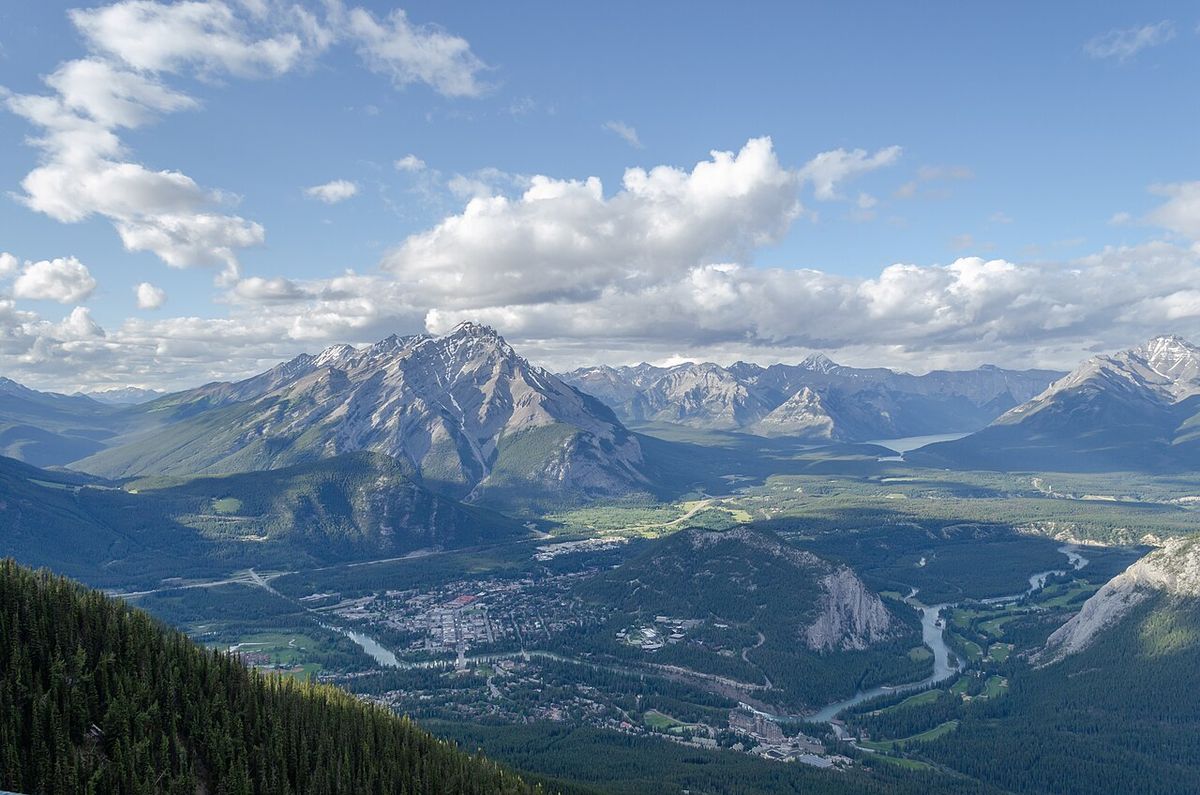
Banff is located in Alberta's Rockies along the Trans-Canada Highway, 58 kilometres east of Lake Louise, at an elevation ranging from 1,400 to 1,630 metres above sea level. The town is surrounded by mountains, notably Mount Rundle at 2,949 metres, Sulphur Mountain at 2,281 metres, Mount Norquay at 2,134 metres, and Cascade Mountain at 2,998 metres, and is situated above Bow Falls near the confluence of the Bow River and Spray River. The local soils are calcareous and usually imperfectly to poorly drained in their natural state with textures from very fine sandy loam to silty clay loam. Banff experiences a subarctic climate that borders on a humid continental climate, characterized by long, cold winters and short, mild summers with significant temperature ranges and precipitation.
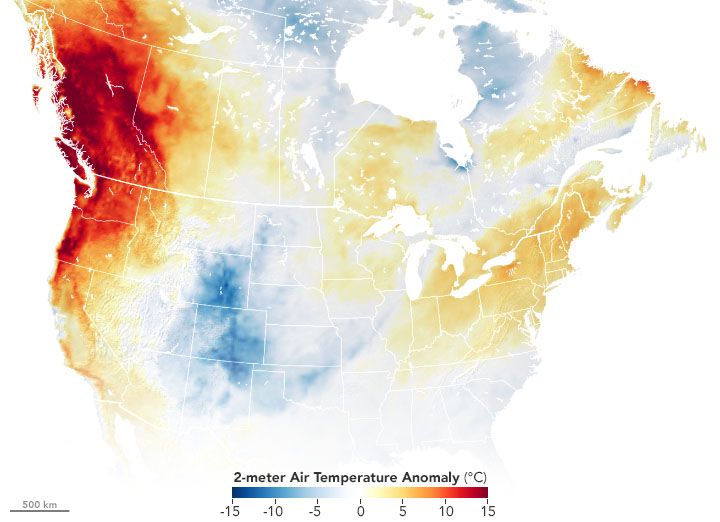
Winter temperatures in Banff range from an average low of -13.5°C (7.7°F) to an average high of -0.5°C (31.1°F). Summer temperatures in the warmest month are an average high of 22.5°C (72.5°F) and an average low of 6.8°C (44.2°F). Snow has been recorded in all months of the year, and the annual snowfall averages 183.8 cm (72.4 in). The highest temperature ever recorded was 37.8°C (100°F) on June 29, 2021, during the 2021 Western North America heat wave. Banff experiences a subarctic climate that borders on a humid continental climate.
Demographics and Residency
According to the 2021 Canadian census conducted by Statistics Canada, the Town of Banff had a population of 8,305 living in 2,930 of its 3,287 total private dwellings. This represented a 5.8 percent increase from its 2016 population of 7,851. With a land area of 4.08 square kilometres, the population density in 2021 was 2,035.5 people per square kilometre. The town's own 2017 municipal census recorded a higher population of 8,875, which was a 5.4 percent increase from its 2014 municipal census count of 8,421. The population growth is managed within the strict constraints of its national park location, where development is controlled to preserve the natural environment.
Parks Canada enforces requirements that individuals must meet to reside in the town, in order to ensure that a broad supply of housing types are available for those who work and raise families in the community. The Town of Banff is the only incorporated municipality within a Canadian national park. The town's population density is high due to its limited land area. The town was administered by the Government of Canada's national parks system until 1990.
Major Attractions and Landmarks
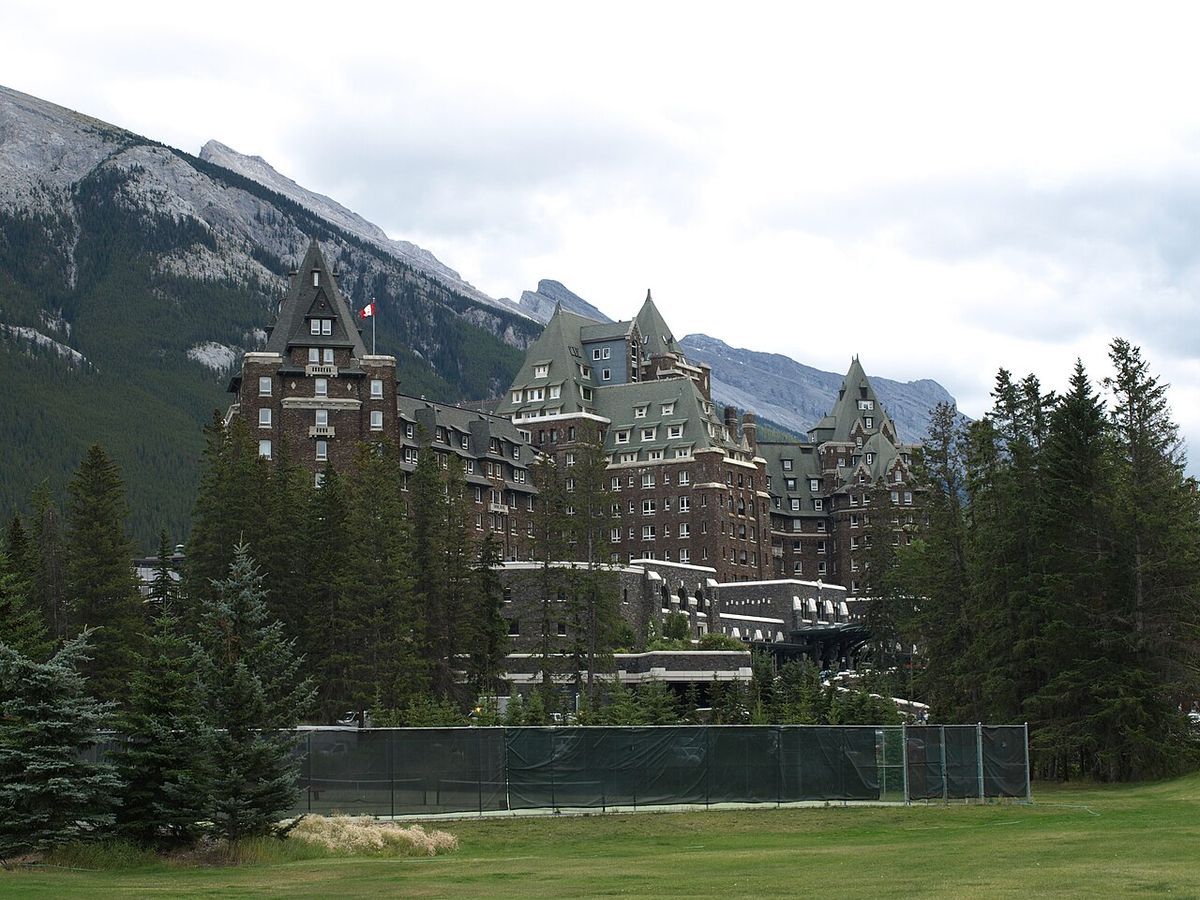
Banff's setting provides immediate access to numerous natural attractions and landmarks. Mountains such as Mount Rundle at 2,949 metres, Cascade Mountain at 2,998 metres, and Mount Norquay at 2,134 metres dominate the skyline, offering hiking, scrambling, and via ferrata experiences. Mount Norquay has a ski slope as well as mountain biking trails on the Stoney Squaw portion. The Banff Gondola on Sulphur Mountain provides access to an elevation of 2,281 metres where the Banff Skywalk boardwalk beginning from the upper terminal connects to Sanson Peak. The same mountain is the location of the Banff Upper Hot Springs. Tunnel Mountain, formerly known as Sleeping Buffalo Mountain, is a 1,690 metre peak situated within the townsite with a summit that can be scaled in less than half an hour. It was named because surveyors initially considered tunnelling the Canadian Pacific Railway through it instead of following the Bow River Valley.
Located on the side of Tunnel Mountain is the Banff Centre for Arts and Creativity, which hosts events including outdoor concerts, dance, opera, and theatre. Just six minutes north of town, Lake Minnewanka is a day-use area offering mountain biking, hiking, fishing, a lake cruise, motor boat rentals, and a food concession at the marina. The town is also the starting point of the 4,417 kilometre Great Divide Mountain Bike Route, which terminates at Antelope Wells, New Mexico in the United States. Banff hosts several major annual festivals that draw international audiences, including the Banff World Television Festival, the Banff Mountain Film Festival, the Rocky Mountain Music Festival, and Bike Fest. These events, combined with the natural scenery, reinforce Banff's status as a year-round cultural and recreational destination within the protected national park.
Sports and Recreation
The town has a strong sporting tradition, capitalizing on its mountain environment. It co-hosted the 2014 Alberta Winter Games with nearby Canmore and previously hosted the 1991 Winter Deaflympics. For several years there has been an annual long-distance relay run between Banff and Jasper, Alberta, formerly known as the Jasper to Banff Relay. Banff has a long history of hosting Team Canada hockey training camps, including Canada's 2012 World Junior Ice Hockey Championships team when the event was held in Alberta and the 1984 Canada Cup squad which practiced there before the start of the tournament. The surrounding national park provides the backdrop for a vast array of outdoor activities that define the local lifestyle and tourist experience across all seasons.
Proximity to three major ski resorts, Sunshine Village, Ski Norquay, and Lake Louise Ski Resort, makes Banff a world-class winter sports destination. In the warmer months, the extensive trail networks in the park support hiking, mountain biking, and scrambling. The Bow and Spray rivers offer opportunities for fishing and paddling, while the nearby hot springs provide relaxation. This diverse recreational portfolio supports the town's economy and attracts millions of visitors seeking active adventures in a protected mountain landscape governed by national park regulations and conservation principles.
Infrastructure and Transportation
Banff's transportation network is designed to serve residents and manage the influx of tourists while minimizing environmental impact. The town operates a local public transit system called Roam Transit. Launched in June 2008 with three initial routes connecting the town, Tunnel Mountain, the Banff Springs Hotel, and the Banff Gondola, the service originally used four hybrid Nova buses decorated with scenes from the National Park. Many bus stops have screens displaying real-time arrival information. In December 2012, the system expanded to include hourly Route 3 service between Banff and Canmore. As of January 2024, Roam Transit offers 10 routes, the majority serving destinations within Banff or to national park locations nearby, plus two routes to Lake Louise and a local service within Canmore.
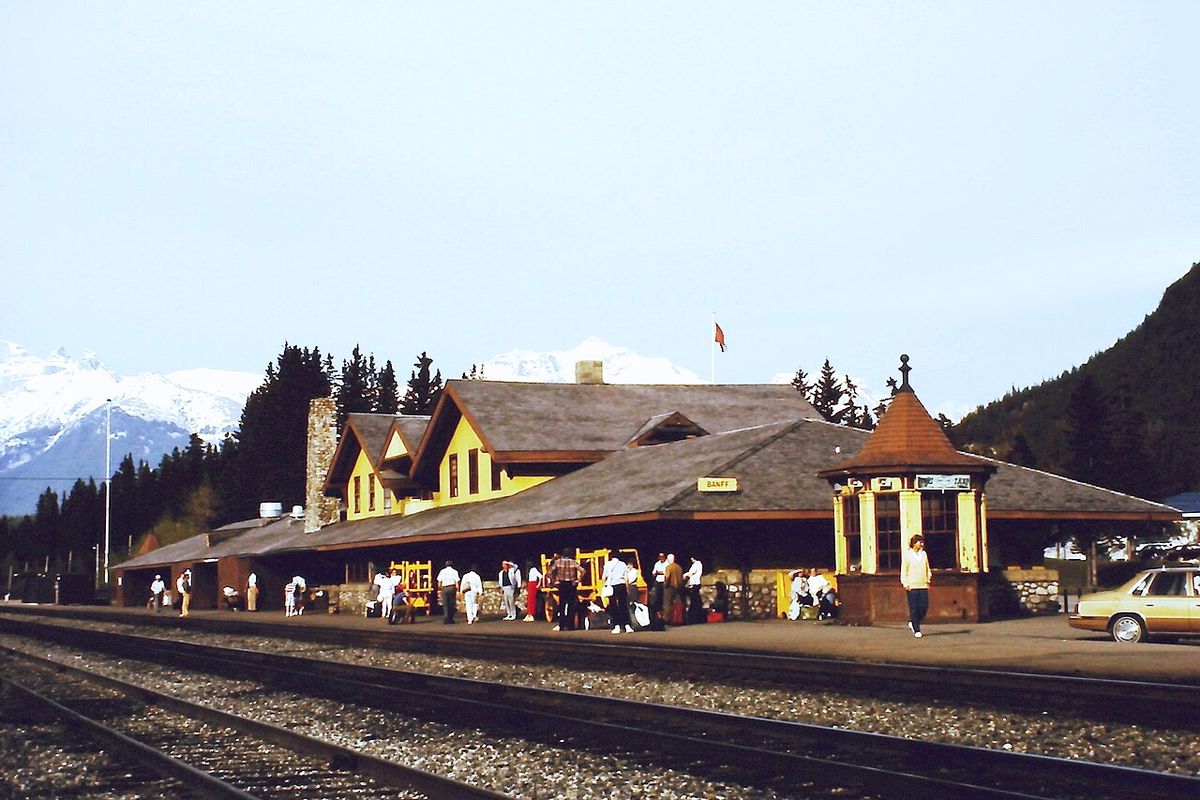
The railway came to Banff when the Canadian Pacific Railway line from Calgary opened in 1883. The current station building was opened by the CPR in 1910, and was declared a heritage railway station by the Canadian federal government in 1991. While Via Rail long-distance trains no longer serve Banff, the railway station remains in use by the Rocky Mountaineer and Royal Canadian Pacific tour trains. The nearest airport to Banff with major service is Calgary International Airport. For acute health care needs, the community is served by the Banff, Mineral Springs Hospital. In response to the COVID-19 pandemic, the town temporarily closed portions of its main street to vehicle traffic to create a downtown pedestrian zone, with the Banff Town Council stating the zone would stay in effect until at least 2023.
Notable Residents
- Derek Beaulieu: A poet, publisher, and anthologist.
- Karen Percy: A former alpine skier who won two bronze medals at the 1988 Winter Olympics in Calgary.
- J. Jill Robinson: An award-winning author of fiction and creative nonfiction.
- Kevin Smyth: A former National Hockey League player.
- Ryan Smyth: A former National Hockey League player.
- Karen Sorensen: A former mayor of Banff who was later appointed to the Canadian Senate.
Banff is one of Canada's most popular tourist destinations. It is known for its mountainous surroundings and is a destination for outdoor sports. The town is also a member of the Calgary Regional Partnership. Banff hosted the 1991 Winter Deaflympics, the first and only year that the Deaflympics was hosted in Canada.
Population Trends
In the 2021 Canadian census, the Town of Banff had a population of 8,305. This was a change of 5.8% from its 2016 population of 7,851. With a land area of 4.08 km2 (1.58 sq mi), it had a population density of 2,035.5/km2 in 2021. In the 2016 Census, the town recorded a population of 7,851 living in 2,543 of its 2,729 total private dwellings. The population of the Town of Banff according to its 2017 municipal census was 8,875.
| Year | Population | Land Area (km²) | Population Density (/km²) | Source |
|---|---|---|---|---|
| 2014 | 8,421 | Town of Banff Municipal Census | ||
| 2016 | 7,851 | 4.77 | 1,645.9 | Statistics Canada |
| 2017 | 8,875 | Town of Banff Municipal Census | ||
| 2021 | 8,305 | 4.08 | 2,035.5 | Statistics Canada |
The 2016 Census reported a land area of 4.77 km2 (1.84 sq mi), giving Banff a population density of 1,645.9/km2 at that time. The 2017 municipal census showed a population of 8,875, an increase of 5.4% from its 2014 municipal census population of 8,421. Parks Canada enforces residency requirements for individuals to live in the town. The town's development is constrained by its location within Banff National Park.
Questions about Banff, Alberta
How do you get around Banff without a car?
Getting around Banff without a car is facilitated by the local Roam Transit public bus system. As of January 2024, Roam operates 10 routes connecting the townsite, Tunnel Mountain, the Banff Springs Hotel, the Banff Gondola, and other key locations within the national park, plus two routes to Lake Louise and service to Canmore. The system launched in 2008 and uses hybrid buses, with many stops featuring real-time arrival information screens. The town has also experimented with pedestrian zones, having closed portions of its main street to vehicle traffic during the COVID-19 pandemic to create a downtown walking area intended to last until at least 2023.
What is there to do in Banff besides skiing?
Beyond skiing, Banff offers a wide array of activities. Visitors can ride the Banff Gondola up Sulphur Mountain to the Banff Skywalk, hike or bike numerous trails on mountains like Tunnel Mountain and Mount Norquay, or relax in the Banff Upper Hot Springs. The town hosts major festivals like the Banff World Television Festival and the Banff Mountain Film Festival. Lake Minnewanka offers boat cruises, motor boat rentals, and fishing, while the Banff Centre for Arts and Creativity presents concerts, dance, opera, and theatre. The town is also the starting point of the 4,417 kilometre Great Divide Mountain Bike Route to New Mexico.
Why is Banff so famous?
Banff is famous primarily for its location within Canada's first national park, Banff National Park, which is also a UNESCO World Heritage Site as part of the Canadian Rocky Mountain Parks. It is recognized globally for its Rocky Mountain scenery, natural hot springs discovered in 1883, and as a gateway to world-class ski resorts like Sunshine Village, Ski Norquay, and Lake Louise Ski Resort. The town is a major tourist destination offering year-round outdoor activities including hiking, skiing, and mountain biking, combined with cultural festivals like the Banff Mountain Film Festival and its history as a service centre for the Canadian Pacific Railway. The town's development was directly tied to the railway's promotion of the area as an international resort and spa to support passenger traffic. Its stunning mountainous surroundings and status within the national park system continue to draw visitors from around the world.
When is the best time to visit Banff?
The best time to visit Banff depends on desired activities. Winter, from December to March, is ideal for skiing and snowboarding at the nearby resorts, with average winter highs around -0.5°C and significant annual snowfall averaging 183.8 cm. Summer, particularly July and August, offers the warmest weather for hiking and lake activities, with average highs of 22.5°C. The town is a year-round destination, but visitors should be prepared for snow possible in any month and significant temperature variations due to its subarctic climate that borders on humid continental. The highest temperature ever recorded was 37.8°C on June 29, 2021, while winter lows average -13.5°C. This climate supports both winter sports and summer mountain exploration.
Can anyone live in Banff, Alberta?
Not everyone can live in Banff permanently due to strict residency requirements enforced by Parks Canada. To reside in the town, individuals must meet criteria tied to employment within the community, as the goal is to ensure a broad supply of housing types are available for those who work and raise families locally. These regulations are in place to control population growth and preserve the ecological integrity of the national park, limiting residency to people who have a direct need to live there to support the town's service-based economy and community functions within the fixed land area of the park. This managed approach to residency is unique as Banff is the only incorporated municipality within a Canadian national park, a status it achieved in 1990.
How did Banff get its name?
Banff was named in 1884 by George Stephen, the president of the Canadian Pacific Railway. He chose the name to recall his birthplace near Banff, Scotland. The naming was part of the railway's strategy to develop the area as an international tourist destination, which included building grand hotels like the Banff Springs Hotel along the rail line to attract visitors to the newly established Rocky Mountain Park and its discovered hot springs, using the resort to generate passenger traffic for the railway. The area's development began after the transcontinental railway was built through the Bow Valley in the 1880s, and the name has since become synonymous with mountain tourism in Canada. The town's Scottish namesake is also honoured on Mars, where a crater is named Banff.
Sources and further reading
- Banff, Alberta (Wikipedia)
- Banff Town & Lake Louise Village (banfflakelouise.com)
- Banff National Park, Parks Canada (parks.canada.ca)
- Facts about Banff, Alberta by Coyotes Southwestern Grill (coyotesbanff.com)
Checked by the Your Space Hamilton desk. Last updated 2026-10-19.