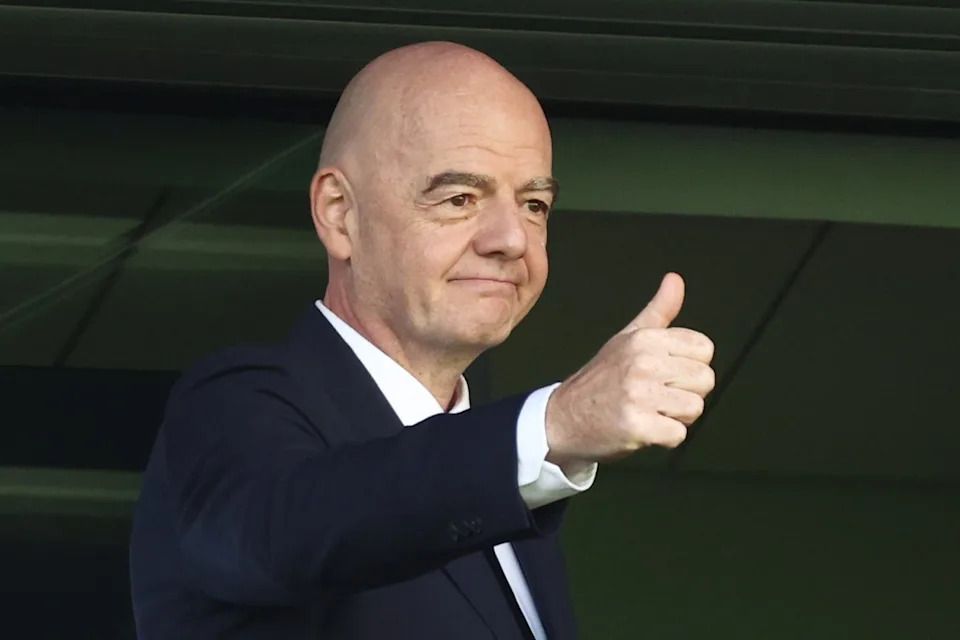
FIFA President Gianni Infantino to seek re-election amid growing opposition over World Cup commercialization plans
FIFA confirms Gianni Infantino will run for a fourth term as president despite backlash from UEFA and national federations following his failed World Cup sell-off strategy, setting up a pivotal leadership battle in global soccer governance.
FIFA President Gianni Infantino will stand for re-election next year, seeking to extend his controversial leadership of world soccer's governing body through 2031 despite mounting opposition from key federations and the fallout from his failed World Cup commercialization strategy. The confirmation comes amid one of the most turbulent periods of Infantino's presidency, with European soccer authorities intensifying their criticism of his governance approach while national associations withdraw their support.
The confirmed re-election bid
A FIFA spokesperson stated unequivocally on Sunday that Infantino remains committed to his April announcement about running again in 2027, declaring
"Of course, nothing has changed. Mr. Infantino will be standing for re-election."This confirmation follows months of speculation about Infantino's political future after his ambitious plan to sell stakes in future World Cups through a commercial subsidiary collapsed. The November 18 deadline for presidential candidates now looms exactly four months before the scheduled vote, creating a tight timeline for potential challengers to organize opposition campaigns.
Infantino himself has been characteristically evasive about his intentions during recent public appearances. When questioned about his political future during Saturday's opening ceremony for the Under-20 Women's World Cup in Poland, he told Sky News
"There will be a lot to say, but there will be a right place and a right time to say this. It's not today, it's not here, but here and today, we are enjoying football."This deflection follows his pattern of avoiding direct answers about governance controversies while emphasizing his commitment to growing the sport globally.
European opposition intensifies
UEFA has emerged as the organizational epicenter of resistance to Infantino's continued leadership, having formally declared it had "lost confidence" in the president following the collapse of his World Cup commercialization scheme. The depth of European discontent became shockingly evident when UEFA previously threatened to boycott FIFA tournaments including the World Cup itself - an unprecedented escalation in tensions between the continental and global governing bodies that revealed fundamental disagreements about soccer's future direction.
The English Football Association has joined other influential national associations in withdrawing support for Infantino's re-election, marking a significant erosion of his traditional power base among Europe's historically dominant soccer nations. This rebellion reflects growing frustration with what European federations perceive as Infantino's unilateral decision-making style and preference for financial innovation over traditional governance structures.
Commercialization controversy
The failed plan to create a commercial subsidiary that would sell profits from future World Cups to private investors has become the defining controversy of Infantino's later presidency. FIFA acknowledged serious errors in the plan's conception and execution, issuing an unusual public apology and pledging to "ensure they do not happen again." The commercial scheme would have fundamentally altered the financial architecture of world soccer's premier event by introducing third-party investors into tournament operations and revenue streams.
Critics argue the proposal revealed Infantino's preference for financial engineering over transparent governance, particularly damaging given FIFA's recent history of corruption scandals under previous leadership. The plan's collapse has reinforced perceptions that Infantino's FIFA remains vulnerable to the same types of controversial financial schemes that damaged its predecessor, despite his initial promises of reform when taking office in 2016 following the Sepp Blatter era.
Structural tensions in global soccer
The confrontation reflects deeper ideological divisions about soccer's future governance model. Infantino's vision emphasizes expanded tournaments, private sector partnerships and aggressive global growth - exemplified by his successful push to expand the World Cup to 48 teams and develop women's soccer commercially. This contrasts sharply with European preferences for tradition, centralized governance and protecting the Champions League's prestige as the club game's pinnacle competition.
The rift has widened as FIFA explores more unorthodox revenue streams while European clubs resist additional international commitments that could dilute their domestic competitions. Many European stakeholders view Infantino's commercial ambitions as potentially destabilizing to the delicate ecosystem of continental and domestic tournaments that have driven soccer's financial growth in recent decades.
Geopolitical dimensions of the election
With European support crumbling, Infantino's re-election prospects increasingly depend on maintaining his coalition of Asian, African and CONCACAF federations - constituencies that have historically benefited from his development programs and expanded World Cup participation. These regional confederations have generally supported Infantino's policies that redistribute resources and tournament opportunities away from Europe's traditional dominance.
No challenger has yet declared for the presidency, but the growing European discontent could inspire alternative candidates before the November deadline. The election will occur against the backdrop of preparations for the unprecedented 2026 World Cup across three North American nations, a tournament whose organizational complexity may further test Infantino's leadership capabilities and provide additional fodder for critics.
Reform legacy under scrutiny
When Infantino assumed the presidency in 2016, he promised to reform FIFA's scandal-plagued operations and restore institutional credibility after years of corruption allegations. While he has achieved notable successes in growing women's soccer and expanding the global game's footprint, critics argue his tenure has prioritized financial expansion over meaningful governance reforms. The commercial subsidiary debacle has particularly damaged his reformist credentials by recalling the type of opaque financial engineering that characterized previous administrations.
Infantino's ability to convince FIFA's 211 member associations that he can balance commercial growth with institutional integrity will likely determine whether he secures a final term leading world soccer into the 2030s. With term limits preventing him from running again after 2027, this election represents his last opportunity to shape FIFA's long-term trajectory.
Broader implications for soccer governance
The leadership battle transcends personality conflicts to address fundamental questions about how global soccer should be governed in an era of rapid commercialization and geopolitical shifts. Infantino represents a vision of FIFA as an aggressive commercial enterprise pursuing global growth through unconventional partnerships and expanded competitions. His opponents advocate for a more conservative approach prioritizing stability, tradition and the primacy of domestic leagues that have driven the sport's popularity.
The outcome will influence how soccer navigates emerging challenges including competing tournament structures, player workload concerns and the sport's geopolitical balancing act between established and emerging markets. With the 2027 election potentially being Infantino's last due to term limits, the vote could mark a pivotal transition in how world soccer governs itself for decades to come, determining whether the sport continues its rapid commercial expansion or seeks to consolidate its existing structures.
Timing and procedural considerations
The confirmation of Infantino's candidacy comes with the November 18 deadline for presidential candidates just months away, creating a compressed timeline for any potential opposition to organize. FIFA's electoral rules require candidates to receive formal nominations from at least five member associations, presenting a significant hurdle for challengers given the organization's current political alignment.
The election itself will occur in 2027 during a crucial period of preparations for the expanded 2026 World Cup, meaning the campaign will unfold alongside one of FIFA's most complex operational challenges. This timing could work to Infantino's advantage by allowing him to campaign on his record of tournament organization while critics focus on governance concerns.