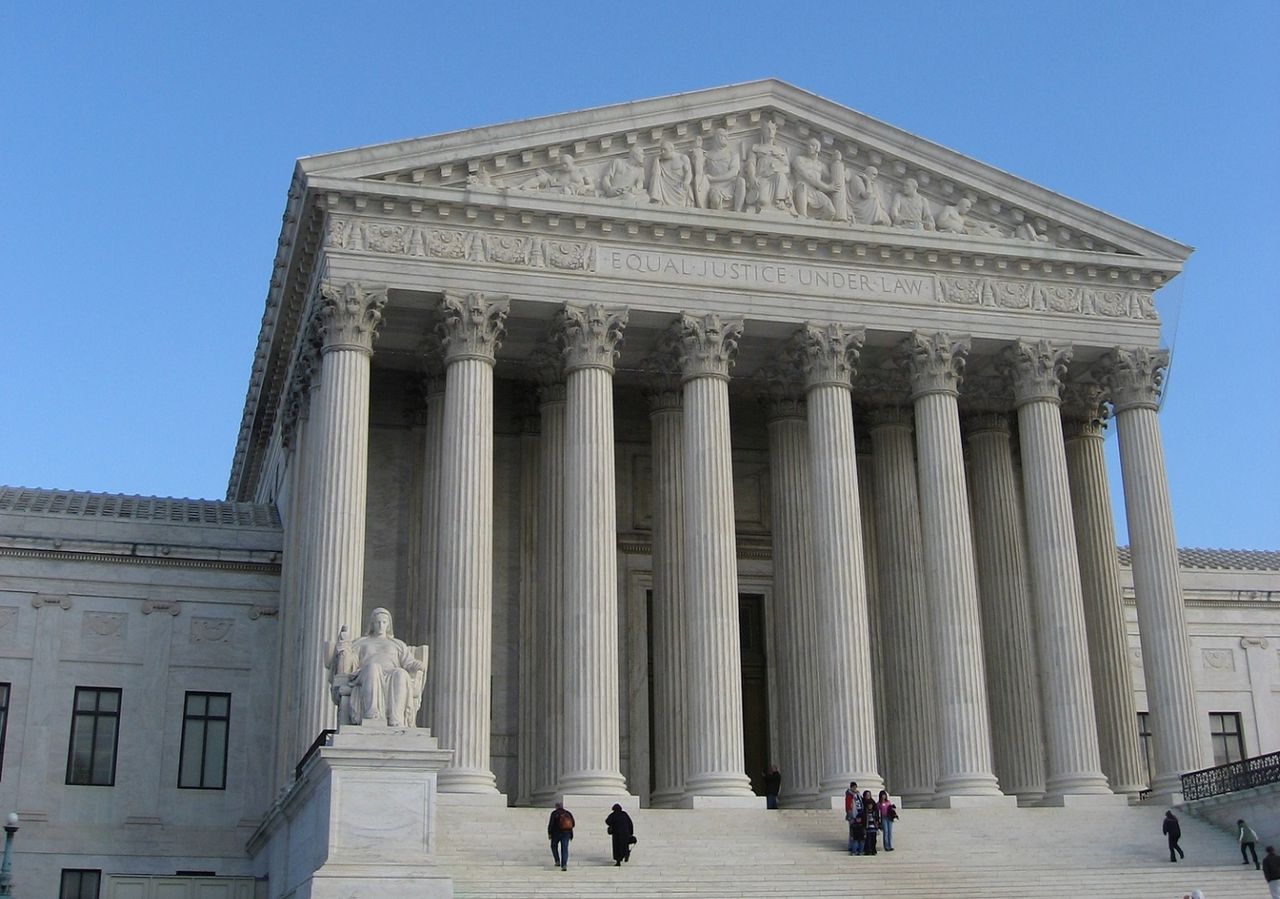
New Jersey Challenges Prediction Markets in Supreme Court Petition Over Sports Betting Jurisdiction
New Jersey's Attorney General has petitioned the US Supreme Court to resolve whether CFTC-regulated prediction markets can circumvent state sports betting laws, marking the most significant gambling jurisdiction battle since PASPA's repeal.
New Jersey has launched a high-stakes legal challenge that could redefine the regulatory landscape of sports wagering in America, petitioning the U.S. Supreme Court to settle a growing conflict between state gambling laws and federally licensed prediction markets. This action comes exactly eight years after New Jersey's successful Supreme Court case overturned the Professional and Amateur Sports Protection Act (PASPA), the federal ban on sports betting that had stood since 1992.
The Legal Battle Takes Shape
Attorney General Jennifer Davenport filed the petition for writ of certiorari following a pivotal 2-1 ruling by the Third Circuit Court of Appeals in April that favored prediction market operator Kalshi. The legal question at the heart of this dispute centers on the interpretation of the 2010 Dodd-Frank Act, specifically whether this financial reform legislation implicitly prevents states from regulating sports bets when they are structured as event contracts registered with the Commodity Futures Trading Commission (CFTC). New Jersey argues that prediction markets are fundamentally sports wagers repackaged as financial derivatives to bypass state oversight and taxation requirements.
Mounting Judicial Conflict
The likelihood of Supreme Court review significantly increased after a three-judge panel from the Ninth Circuit Court of Appeals issued a unanimous ruling on August 28 supporting Nevada's position in a parallel case. This created a direct conflict between federal appellate circuits, with the Third Circuit maintaining that CFTC jurisdiction supersedes state gambling laws regarding these markets while the Ninth Circuit upheld state regulatory authority. Such circuit splits are a primary factor in Supreme Court case selection. Notably, five of the nine current justices participated in the landmark 2018 PASPA decision that legalized sports betting nationwide.
Economic Stakes and Industry Impact
The financial implications of this legal battle are substantial, with traditional commercial sports betting generating approximately $17 billion in nationwide revenue in 2025. Meanwhile, just two prediction market platforms - Kalshi and Polymarket - recorded over $45 billion in trading volume during August 2024 alone, though this represents total market activity rather than direct operator revenue. The American Gaming Association estimates states have lost about $1.3 billion in potential tax revenue as these platforms have drawn business from state-licensed sportsbooks. This revenue loss explains why states are aggressively defending their regulatory turf.
Prediction Markets Defend Their Model
Kalshi spokesperson Dani Lever maintains the platform operates as an open financial exchange fundamentally different from traditional sportsbooks, arguing it cannot practically comply with 50 different state regulatory regimes. The company points to favorable rulings from both the Third Circuit and District of New Jersey that affirmed CFTC's exclusive jurisdiction over their markets. CFTC Chairman Michael Selig has been a vocal advocate for prediction markets as legitimate financial instruments, overseeing regulatory changes that some observers interpret as preparing for potential Supreme Court scrutiny of the agency's oversight approach.
Federalism Debate Reignited
This case revives the federalism questions that surrounded the PASPA litigation, pitting state gambling regulators against federal financial market oversight. Traditional sports betting operates under state-by-state regulation with varying rules and tax structures, while prediction markets benefit from uniform federal oversight through the CFTC - a framework established during the Trump administration after previous administrations had rejected such markets. The CFTC under Selig has taken extraordinary steps to defend its jurisdiction, including filing lawsuits against nine states that attempted to restrict prediction market operations and issuing emergency orders to counter state mandates.
Regulatory Uncertainty and Market Response
The CFTC currently operates with just one commissioner, Michael Selig, rather than its traditional bipartisan five-member structure. Selig has overseen a series of rule proposals regarding prediction markets, which critics argue still allow for sports contracts while potentially tightening oversight to strengthen the agency's position ahead of possible Supreme Court review. The prediction market industry has responded to this uncertain regulatory environment with caution - while no Supreme Court-specific contracts currently appear on Kalshi, Polymarket lists a 41% probability that the Court will accept an event contract case by December 31.
Industry Transformation Underway
A Supreme Court decision in this matter could represent the most significant development in gambling regulation since the PASPA ruling. The outcome may determine whether innovative wagering products can circumvent state gambling laws by structuring themselves as financial instruments. Major sportsbook operators like DraftKings have already begun expanding into prediction markets, recognizing their growing popularity since prediction markets entered mainstream consciousness during the 2024 U.S. presidential elections. The platforms themselves have seen valuations skyrocket, with Kalshi reaching $40 billion and Polymarket $21 billion.
Historical Parallels and Legal Strategy
New Jersey's legal team draws direct parallels to their successful PASPA challenge, quoting the Court's own 2018 language about states' rights to regulate sports betting in their petition introduction. The state lost numerous lower court battles before ultimately prevailing in the Supreme Court on PASPA, suggesting a similar long-game strategy may be at play here. As with PASPA, this case may ultimately hinge on whether justices view the matter primarily through the lens of state sovereignty or federal regulatory authority over financial markets. The Supreme Court's upcoming term begins October 7, with the justices typically granting only about 80 of the 7,000-8,000 petitions they receive annually, making case selection itself a high hurdle for New Jersey's challenge.
Broader Implications for Gambling Regulation
This legal battle represents more than just a jurisdictional dispute - it could determine the future framework for regulating emerging forms of event-based wagering in the digital age. The case has united gaming stakeholders across commercial operators, tribal entities, state regulators and legislators who share concerns about prediction markets operating outside established gambling oversight systems. As CFTC Chairman Selig noted during an August 20 Innovation Advisory Committee meeting featuring industry CEOs, the fundamental question is where innovation will occur and who will write the rules governing these new markets. The Supreme Court's eventual decision, should it take the case, may answer that question for the entire prediction market industry.