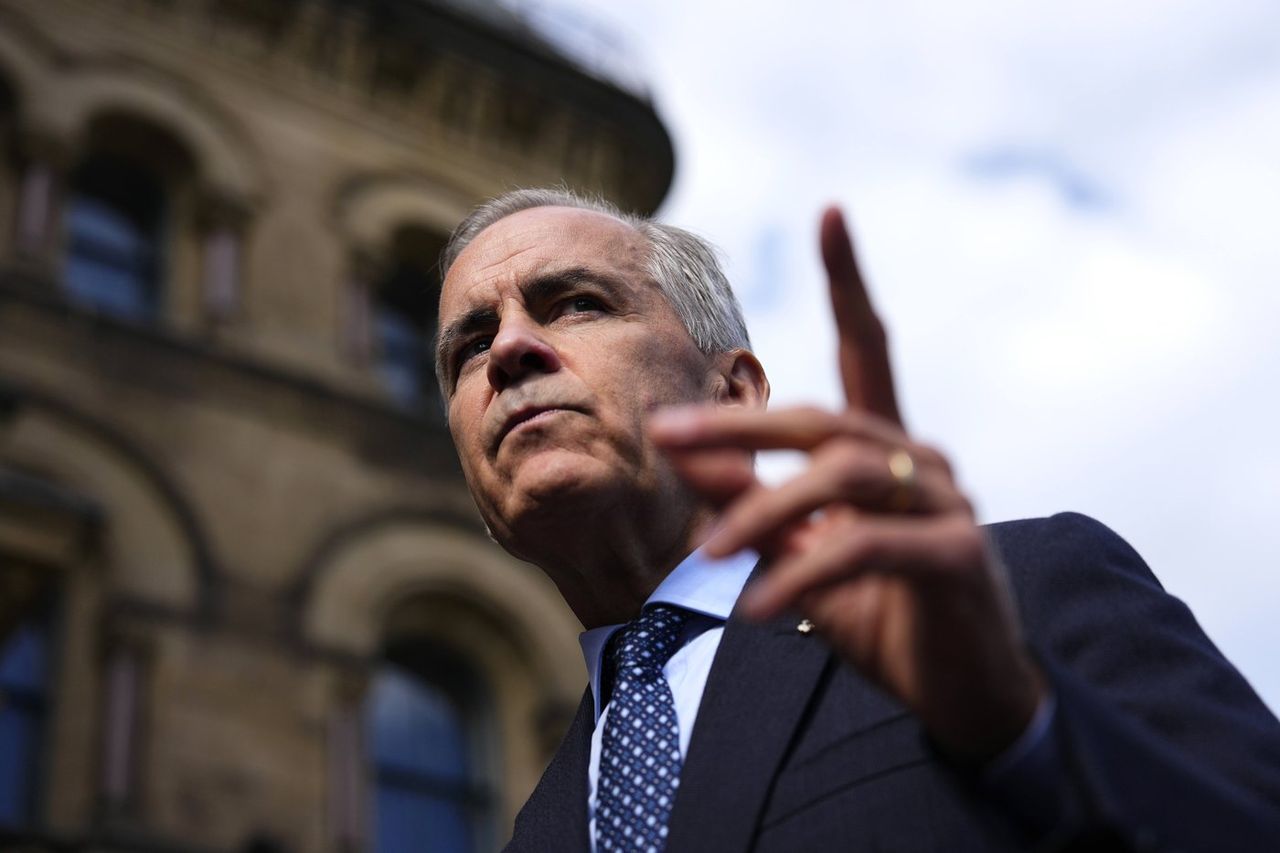
Carney's Toronto Investment Summit Draws Global Leaders and Protesters
Prime Minister Mark Carney touts Canada's economic potential at Toronto investment summit as protesters decry corporate influence.
TORONTO, Prime Minister Mark Carney opened Canada's first-ever Investment Summit in Toronto on Sunday with an ambitious vision for the country's economic future, even as protest groups prepared demonstrations against what they call the corporate takeover of public policy. The high-profile event at the Royal Ontario Museum brings together hundreds of global investors, business leaders and political figures to pitch major Canadian projects.
Carney's Trillion-Dollar Vision for Canada
The summit marks a key milestone in Carney's plan to stimulate $1 trillion in domestic investment over five years, an unprecedented target that would significantly reshape Canada's economic landscape. The Prime Minister framed this goal as essential for securing Canada's position in a rapidly changing global economy. Speaking to assembled business leaders and politicians, Carney positioned Canada as uniquely equipped to meet global demands, declaring
"We have what the world wants: the energy, the resources, the talent, the technology and the capital"in remarks that carried subtle contrasts with U.S. political turbulence under President Donald Trump.
Carney's emphasis on trust as Canada's distinctive advantage,
"something that cannot be found on any balance sheet", reflected strategic positioning in an era of geopolitical instability. His vision extends beyond traditional resource sectors to include advanced technology and sustainable development, with artificial intelligence featuring prominently through attendees like Cohere CEO Aidan Gomez.
Global Investors Eye Canadian Opportunities
The summit has drawn an impressive international roster, with Ontario Premier Doug Ford confirming participation from investment leaders across three continents including Kuwait, Malaysia, the Netherlands, Singapore, Qatar, Norway, Japan and Australia. These global players are being presented with fifteen major Ontario projects carefully selected to showcase Canada's competitive advantages. The portfolio spans traditional strengths like energy production and transmission alongside emerging sectors such as critical minerals mining and advanced manufacturing.
Ford's bullish assertion that
"Ontario has what the world needs and we're going to make sure the world knows it"underscores the provincial-federal alignment on this investment push. The presence of Canada's chief trade commissioner Sara Wilshaw signals the government's commitment to turning summit discussions into concrete trade and investment outcomes.
Cross-Partisan Support for Economic Strategy
The investment summit has achieved rare political consensus, with former Conservative Prime Minister Stephen Harper set to deliver closing remarks according to a Canadian Press source. This bipartisan endorsement strengthens Canada's pitch to international investors by demonstrating policy continuity regardless of electoral outcomes. Carney acknowledged ideological differences while emphasizing shared national objectives, stating participants align on Canada's direction even if they disagree on methods.
This political unity represents a significant shift from years of polarized debates over economic policy, potentially creating more stable conditions for long-term capital commitments. The participation of provincial leaders like Ford alongside federal officials presents a coordinated front to global investors accustomed to handling complex government relationships.
Grassroots Opposition Challenges Corporate Influence
While political and business leaders celebrate the summit's potential, a coalition of labor unions, Indigenous leaders and climate activists is mobilizing under the banner
"The Many vs. The Money"to challenge the gathering's underlying philosophy. These groups plan demonstrations and direct engagements with attendees, arguing that excessive corporate influence threatens public services, environmental commitments and democratic decision-making.
Their concerns focus particularly on sectors like pipeline development and arms manufacturing that feature in the investment portfolio. This opposition reflects growing societal tensions over who should control Canada's economic future, a debate intensified by Carney's ambitious private investment targets. The protesters' planned interventions aim to highlight alternative visions of development prioritizing public needs over corporate returns.
Strategic Positioning in Global Investment Flows
Carney's summit arrives at a pivotal moment in international capital movements, with governments worldwide competing fiercely for investments in strategic sectors like clean energy and critical minerals. Canada's pitch emphasizes both its resource wealth and stable governance as dual advantages in this environment. The focus on critical minerals, essential for renewable energy technologies and electronics manufacturing, positions Canada as a reliable supplier amid global supply chain restructuring.
The Prime Minister's emphasis on sustainable prosperity suggests an attempt to reconcile economic growth with environmental responsibilities, though activists question whether this balance can be achieved through primarily private investment channels. Ontario's project selection appears designed to appeal to both traditional resource investors and those seeking exposure to next-generation industries.
Measuring the Summit's Impact
The true test of Carney's initiative will come in its ability to convert high-level discussions into concrete investments that benefit broader Canadian society. While the Prime Minister teased already-signed deals, specifics remain undisclosed, leaving open questions about the terms and beneficiaries of these arrangements. The participation of global asset managers suggests serious interest, but whether this translates into the trillion-dollar target depends on both market conditions and government follow-through.
Equally important will be how the government addresses concerns raised by protesters about equitable development and public oversight. The summit represents not just an economic opportunity but a potential inflection point in Canada's development model, one that could reshape relationships between government, business and civil society for years to come.
Long-Term Implications for Canadian Economy
This gathering marks perhaps the most concerted effort in recent Canadian history to systematically attract global capital across multiple sectors. Its success or failure could determine Canada's ability to fund major infrastructure, technological advancement and industrial expansion without relying solely on public coffers. The inclusion of projects at various development stages offers investors opportunities ranging from early-phase financing to mature infrastructure acquisitions.
As the summit unfolds, observers will watch for signs of whether Carney's vision of a privately-funded but publicly-beneficial economic transformation can be realized, or whether protesters' warnings about corporate dominance prove prescient. The outcome will influence not just investment flows but fundamental questions about who shapes Canada's future and who benefits from its development.