Wonderbra
The Wonderbra is a globally recognized lingerie brand and a specific type of push-up underwire brassiere that originated in Canada. Developed by the Canadian Lady Corset Company in Montreal, the brand gained prominence in the 1970s as Canada's market leader before achieving worldwide sensation in the 1990s. Its 1961 Model 1300 plunge push-up design became a cultural phenomenon, particularly through the famous "Hello Boys" advertising campaign. The Wonderbra holds a notable place in Canadian industrial and cultural history, ranking fifth in a CBC poll of the greatest Canadian inventions.
Origins and Patent Acquisition
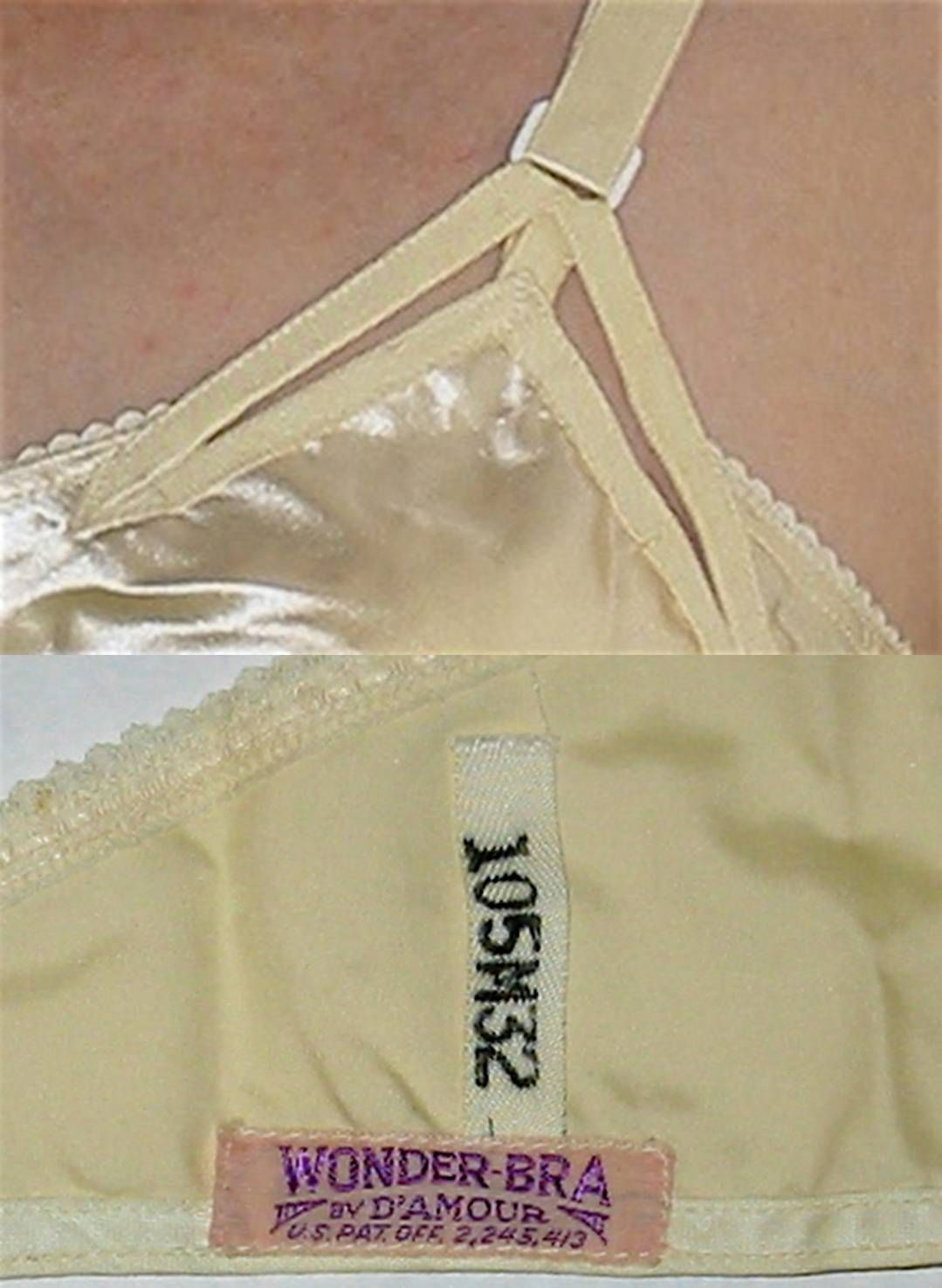
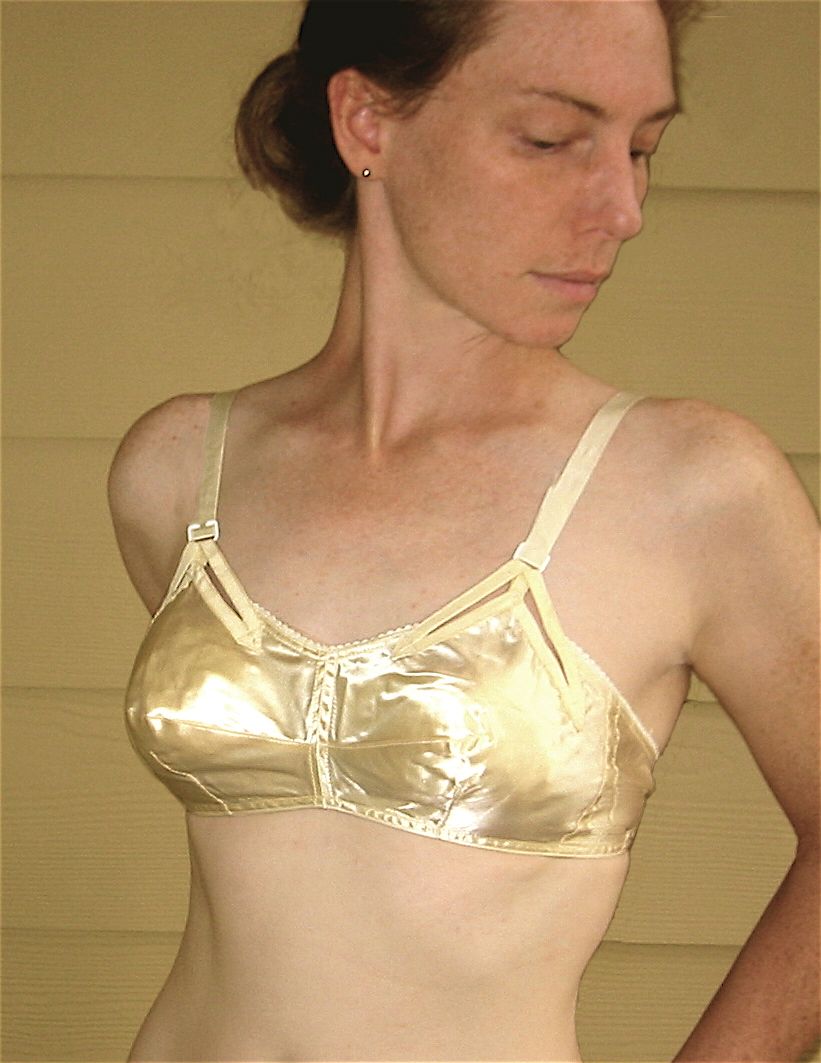
The Wonderbra's foundation lies in a 1935 innovation by American inventor Israel Pilot. He designed an improved brassiere cup with a diagonal slash and shoulder strap attachment, which provided greater comfort and freedom of movement by cutting the fabric on the bias for maximum stretch. Pilot patented this design in the United States in 1941 under patent number 2,245,413 and coined the name "Wonder-Bra". In 1939, Montreal entrepreneur Moses (Moe) Nadler founded the Canadian Lady Corset Company with the goal of producing well-fitting, mid-priced brassieres retailing from $1.00 to $1.50. Nadler travelled to New York City, met with Israel Pilot, and secured the license for the Wonder-Bra trademark and patent for the Canadian market. The Canadian iteration of the brand soon lost the hyphen, becoming "Wonderbra". During the Second World War, material rationing made elastic scarce, which inadvertently gave the diagonal slash design a competitive advantage as it offered a better fit without relying on elastic materials. From 1939 to 1955, Canadian Lady marketed a full line of intimate apparel under the Wonderbra name, including girdles, panties, slips, and swimsuits.
Post-Patent Strategy and Design Innovation
As the 1941 U.S. patent approached its expiration in 1955, Moe Nadler prepared for negotiations with Israel Pilot's company, D'Amour. Anticipating tough talks, Canadian Lady launched a new line called Petal Burst by Wonderbra in 1952. This line adapted to the new fashion trend for a pointed bust inspired by Christian Dior's "New Look" and was very successful, delivering 50 percent of the company's bra sales by 1957. When the patent expired, D'Amour demanded Canadian Lady stop using the designs and return pattern templates. Moe Nadler ignored this demand and instead successfully acquired the Canadian, European, and Asian rights to the Wonderbra trademarks. This acquisition allowed the company to move into the 1960s with the brand intact. In the late 1950s, Nadler began travelling to Europe to source new styles. In 1960, Wonderbra introduced a lacy, half push-up bra described in Europe as Pigeonnant. In 1961, Nadler directed designer Louise Poirier to develop a deeply plunged, laced push-up design, which was numbered Model 1300. This bra became one of the best-selling Canadian styles and its design remains virtually unchanged today.
Corporate Evolution and Market Leadership
The corporate structure behind Wonderbra changed significantly in the late 1960s. In 1968, Canadian Lady changed its name to Canadian Lady-Canadelle Inc. and was sold to Consolidated Foods, which later became the Sara Lee Corporation. The company was later known as Canadelle Inc. During this period, the Canadian intimate apparel market was undergoing a major shift. Girdle sales, which represented close to 40 percent of industry volume in the early 1960s, declined rapidly due to fashion changes like pantyhose and the miniskirt, and shifting social attitudes. When Moe Nadler died in 1964, his son Larry Nadler, a Harvard-trained MBA, inherited control. He commissioned market research that found women did not hate their bras but saw them as a means to feel beautiful, fashionable, and attractive. While competitors cut bra marketing, Canadian Lady aggressively pursued bra market share. The company's wholesale revenue doubled from $12.6 million in 1972 to $24.9 million in 1977. By 1979, Canadelle held 30 percent of the Canadian market with $27 million in sales, and by 1980, Wonderbra's wholesale sales exceeded $30 million in a country with only 10.3 million women and girls over age 13.
Marketing Transformation and Brand Building
Larry Nadler initiated a complete overhaul of the company's marketing strategy beginning in 1966. The company introduced television advertising and shifted emphasis from product features to building the Wonderbra brand name. Market research had shown women did not want girdles advertised on television, viewing them as "armor against sex," while bras were seen as a means of attraction. Wonderbra advertisements began to frame the product as a cosmetic beauty enhancer rather than a functional garment. In 1968, Nadler hired Goodis Advertising to develop a new campaign based on fashion and emotional appeal. The commercials often featured a storyline with a man as a fashion photographer or buyer, suggesting a budding romance, and used a male voice-over. Every ad contained variations of the musical theme "We care about the shape you're in. Wonderful, wonderful, Wonderbra". A 1979 television commercial directed by photographer Richard Avedon won a Silver award for advertisements shown in Canada. For the youth market, the company launched the Dici by Wonderbra line in 1974, targeting women aged 15 to 20 who wanted "less bra, not no bra." The line used innovative hot fabric molding technologies to shape the cup, creating bras without visible seams and with less structure than typical designs of the period. These were packaged in distinctive die-shaped boxes, with animated ads featuring the tagline "Let it be Dici. Dici or nothing."
The Path to Global Popularity
The Wonderbra's journey to international fame was set in motion in 1964 when Canadian Lady licensed the Model 1300 and other designs to the Gossard division of Courtaulds Textiles for the UK market. For decades, it was a steady seller. Around 1991, as Gossard's license neared its January 1994 expiration, the plunge style unexpectedly became a major hit in Britain. Sales quadrupled between 1991 and 1993, reaching $28 million and capturing 12.5 percent of the UK branded bra market. Factors cited for this boom included an article in British Vogue on the return of the padded bra and a fashion trend for underwear as outerwear. With sales surging, Sara Lee Corporation decided not to renew Gossard's license. Sara Lee's Playtex division was tasked with reintroducing the Wonderbra to the United States. Although the bra was already being manufactured in Montreal, Playtex executives took a year to redesign it for the U.S. market, planning a late 1994 national launch. During this delay, Gossard introduced the similar Ultrabra, and Victoria's Secret promoted its Miracle Bra. The U.S. launch, featuring model Eva Herzigová in New York's Times Square, used slogans like "who cares if it's a bad hair day." Despite competing products, the U.S. push-up bra market saw a 43 percent sales increase by the end of 1994.

Advertising Campaigns and Spokesmodels
The 1994 global reintroduction established the use of international "spokesmodels" as a key marketing tactic for Wonderbra. The most famous campaign was the UK's "Hello Boys," featuring Czech model Eva Herzigová. The poster of Herzigová gazing down at her chest was so influential it was later exhibited at the Victoria and Albert Museum in London and voted number 10 in a "Poster of the Century" contest. This campaign defined the brand's sexy image in Europe and the UK. In the United States, the "One and Only Wonderbra" campaign also featured Herzigová initially, followed by a succession of other models including Madison Michele in 1995, Australian model Sarah O'Hare in 1997, and Polish model Magdalena Wróbel for the "Three Degrees of Wonder" campaign starting in 2000. German model Nadja Auermann became a U.S. spokesmodel in 2003, and Serbian model Maja Latinović was featured for the brand's 10th anniversary in 2004. In the UK, subsequent campaigns included "Necklines, come on down!" with Russian model Inna Zobova from 2002 to 2006 and featured British model Sophie Anderton and Slovakian model Adriana Sklenaříková from 1998 to 2000. American burlesque performer Dita Von Teese fronted UK campaigns from 2008 to 2009, and Slovakian model Adriana Čerňanová became a spokesmodel in 2011.
Ownership Changes and Product Expansion
Following its 1968 sale, the Wonderbra brand remained under the Sara Lee Corporation umbrella for decades. In 2006, Sara Lee sold its intimate apparel brands. The Wonderbra trademark became the property of Canadelle Limited Partnership of Canada, a wholly owned subsidiary of HanesBrands. HanesBrands acquired the license to sell and distribute products under the Wonderbra trademark in most countries, excluding the European Union member states, several other European nations, and South Africa. In those excluded markets, the license is held by an affiliate of Sun Capital Partners under the Dim Branded Apparel group based in Paris. On December 1, 2025, Gildan Activewear completed its acquisition of HanesBrands, bringing the Wonderbra brand under its ownership. Since the 1994 relaunch, the product line expanded from the single push-up design into a full-range lingerie fashion label in most of the world. The brand's marketing emphasis diverges by region, focusing on sex appeal globally but often promoting functional qualities in its native Canadian market, a departure from the strategy that made it the top-seller in the 1970s.
Cultural Recognition and Lasting Impact
The Wonderbra has secured a lasting place in popular culture and is recognized as a significant Canadian innovation. On January 3, 2007, the Canadian Broadcasting Corporation broadcast the results of an internet poll in which Canadian respondents ranked the Wonderbra fifth out of the top 50 "Greatest Canadian Inventions," placing it after insulin, the light bulb, and the telephone, but ahead of the pacemaker. In a March 2008 survey of 3,000 women in the United Kingdom, the Wonderbra was reported as the greatest fashion innovation in history, with respondents nearly unanimous in giving push-up bras the number one position. The brand's advertising, particularly the "Hello Boys" campaign, transcended marketing to become a subject of urban legend, with stories attributing car accidents to distracted drivers. The bra itself evolved from a single push-up style into a full-range lingerie label, maintaining its status as a part of the cultural lexicon. The company's history from a Montreal sewing shop to a global brand is frequently cited in business strategy literature, including works by management professor Henry Mintzberg who used the case to illustrate strategy formation.
Questions about Wonderbra
Is Wonderbra a Canadian invention?
Yes, the Wonderbra brand is a Canadian development. While the original diagonal slash bra design was patented by American Israel Pilot in 1935, Montreal entrepreneur Moe Nadler licensed the trademark for Canada in 1939 and built the company that made it famous. The push-up Model 1300 was designed in Canada in 1961. The brand became a market leader in Canada during the 1970s and was ranked the fifth greatest Canadian invention in a 2007 CBC poll.
What was the famous "Hello Boys" Wonderbra campaign?
The "Hello Boys" campaign was a provocative and highly successful advertising launch for the Wonderbra in the United Kingdom in 1994. It featured Czech model Eva Herzigová wearing a Wonderbra and gazing down at her cleavage, with the caption "Hello Boys". The poster became a cultural icon, was featured in an exhibition at London's Victoria and Albert Museum, and was voted the 10th best "Poster of the Century" in a contest. Urban myths even attributed car accidents to drivers being distracted by the billboards.
What is the Wonderbra Model 1300?
The Wonderbra Model 1300 is the specific plunge push-up bra design that propelled the brand to global fame. It was developed in 1961 by designer Louise Poirier under the direction of Moe Nadler at the Canadian Lady Corset Company in Montreal. Known as the "Dream Lift", this deeply plunged, laced design was licensed to the UK in 1964. It became a surprise hit there in the early 1990s and was subsequently launched worldwide in 1994 as the "One and Only Wonderbra". The design from 1961 is virtually identical to the push-up Wonderbra sold today.
How did Wonderbra become so popular in Canada in the 1970s?
Wonderbra became Canada's market leader in the 1970s through savvy marketing and strategic pivoting. Under CEO Larry Nadler, the company used market research to understand that women saw bras as tools for fashion and attraction. While competitors cut bra marketing, Canadian Lady aggressively pursued bra market share with television ads that built the Wonderbra brand as a fashionable, sexy cosmetic. They introduced youth-focused lines like Dici and priced Wonderbra as a premium product. By 1979, Canadelle held 30 percent of the Canadian bra market with $27 million in sales.
Who were some of the famous models who advertised Wonderbra?
Wonderbra has used many high-profile international models, known as spokesmodels, in its advertising. The most famous is Eva Herzigová, the face of the 1994 "Hello Boys" campaign. Other notable spokesmodels for U.S. campaigns include Madison Michele, Sarah O'Hare, and Magdalena Wróbel. UK campaigns have featured models like Inna Zobova, Sophie Anderton, Adriana Sklenaříková, and Dita Von Teese. This strategy was implemented to enhance the brand's fashionable and international image during its global reintroduction.
Who owns the Wonderbra brand now?
The Wonderbra brand is now owned by Gildan Activewear. This ownership change occurred on December 1, 2025, when Gildan Activewear acquired HanesBrands. HanesBrands had previously owned the brand since 2006 through its wholly owned subsidiary, Canadelle Limited Partnership of Canada. The Wonderbra trademark is the property of Canadelle. The licensing rights for selling and distributing products under the Wonderbra trademark are divided geographically. Gildan holds the license for most countries, while an affiliate of Sun Capital Partners, operating as the Dim Branded Apparel group, holds the license for the European Union member states, several other European nations, and South Africa.
Sources and further reading
- Wonderbra (Wikipedia)
- Welcome to WonderBra (wonderbra.ca)
- Discover The Unstoppable Legacy Of WonderBra (admin.elitegen.ca)
Checked by the Your Space Hamilton desk. Last updated 2026-10-23.