Trivial Pursuit
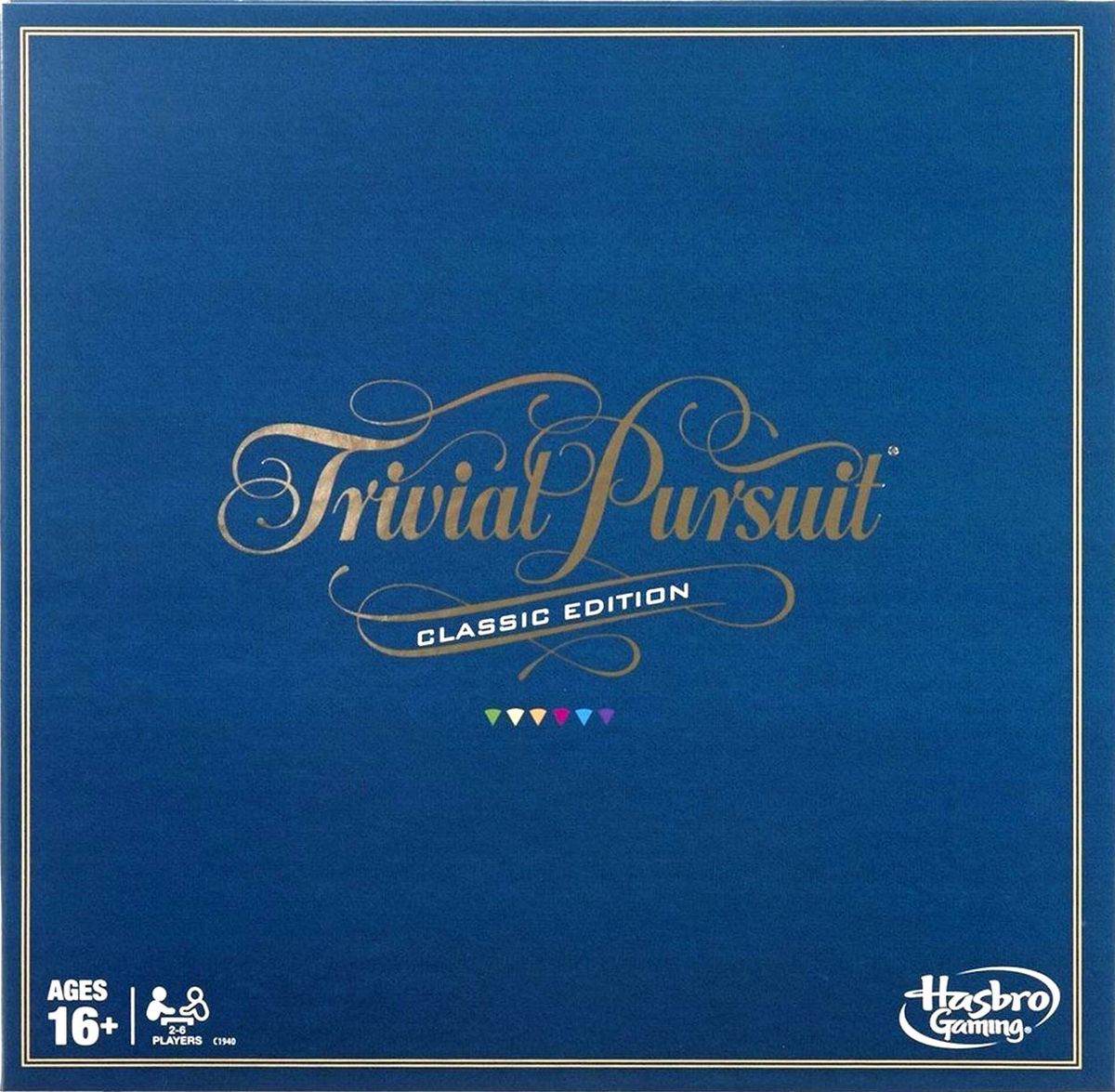
Trivial Pursuit is a Canadian board game where players win by answering trivia questions from six categories, earning coloured plastic wedges for correct answers on designated spaces. Created in Montreal in 1979 by photo editor Chris Haney and sports editor Scott Abbott, the game became a global phenomenon, selling over 100 million copies worldwide. Its blend of general knowledge and popular culture questions made it a staple in Canadian homes and a significant export of Canadian creativity. The game has spawned countless themed editions, television adaptations, and digital versions, securing its place as a cultural fixture.
Origins and Development
The concept for Trivial Pursuit was famously conceived on December 15, 1979, in Montreal by Chris Haney, a photo editor for The Gazette, and Scott Abbott, a sports editor for The Canadian Press. The initial design was sketched out in roughly 45 minutes on the back of a cigarette carton, inspired by a game of Scrabble. Over the following year, Haney and Abbott, joined by Chris's brother John Haney and friend Ed Werner, conducted extensive research to compile thousands of questions. Some of this early development and question writing took place in Weymouth Library in Dorset, England, while the Haney brothers were visiting family. The game was first test marketed in 1981 before its official Canadian release that same year, launching a journey that would redefine the trivia genre. The team financed the initial production themselves, facing the challenges of bringing a new board game to market without the backing of a major toy company at the outset.
Gameplay and Components
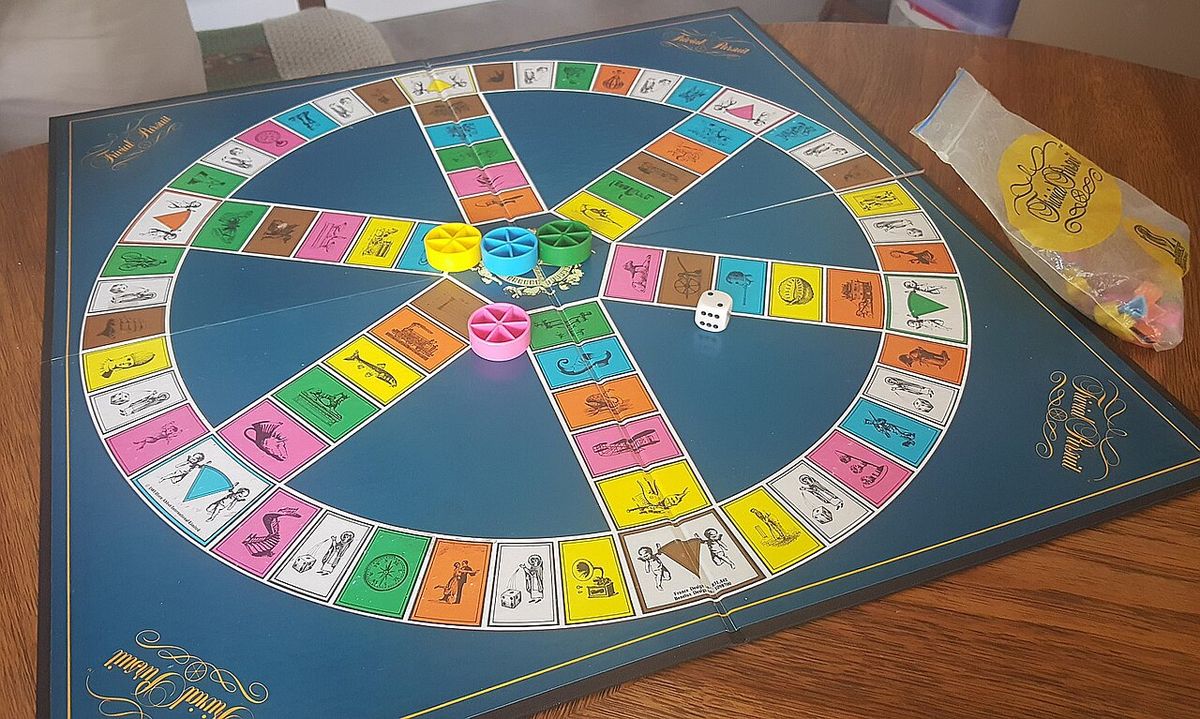
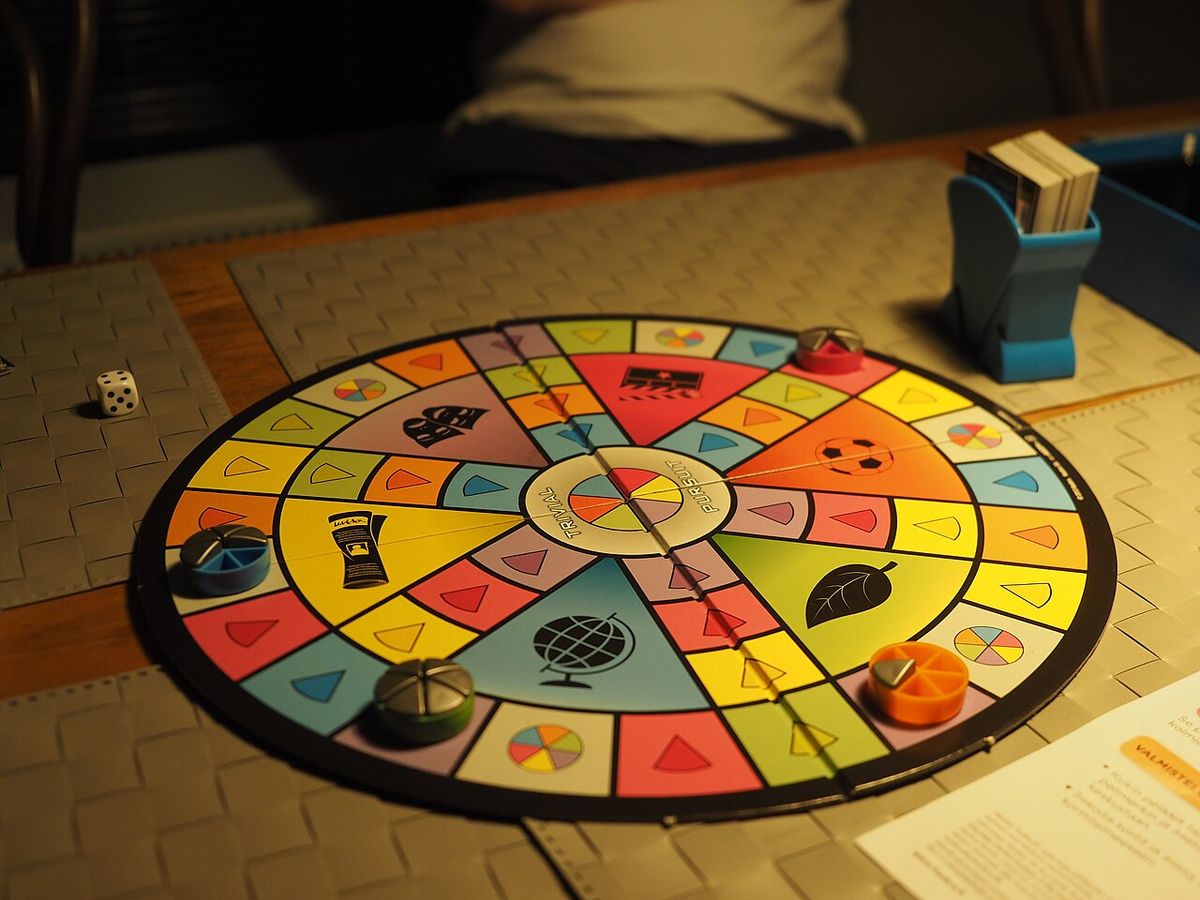
Trivial Pursuit is played on a circular board shaped like a wheel with six spokes, leading to 'category headquarters' spaces. Players roll a single die to move their round playing pieces, which are designed with six sections to hold small plastic wedges often colloquially called 'cheese.' The classic version features six categories, each with a distinctive colour: Geography (blue), Entertainment (pink), History (yellow), Art & Literature (brown, later purple), Science & Nature (green), and Sports & Leisure (orange). When a player lands on a coloured space, they are asked a corresponding question from a card, and a correct answer allows the player to roll again and continue their turn, while an incorrect answer passes play to the next player. Questions must be answered without any outside assistance, and players may move in any direction, changing direction at a headquarters space or the hub, but cannot backtrack.
Landing on a 'category headquarters' space and answering correctly earns a player a wedge of that colour to slot into their piece, provided they do not already have one. The central hexagonal 'hub' space serves as the starting point and the final destination. Landing on the hub allows a player to choose a category for a question if they do not yet have all six wedges. After a player collects all six wedges, they must return to the hub by exact die roll and correctly answer a final question in a category chosen by the other players to win the game. If they miss this final question, they must leave the hub and attempt to return for another chance. The game includes a board, playing pieces, question cards, a die, and the signature plastic wedges, with 'Roll Again' spaces providing a free roll without a question.
Commercial Success and Ownership History
The game experienced meteoric sales growth following its Canadian debut. By 1982, it had sold 100,000 copies domestically, and upon its entry into the United States market in 1983, its popularity exploded. At its peak production in the mid-1980s, Northern Plastics of Elroy, Wisconsin manufactured 30 million game sets between 1983 and 1985 to meet demand. The ownership and licensing of the game has changed hands several times, beginning with a licensing deal to the American game company Selchow and Righter in 1982 after an initial rejection by the Virgin Group. In 1988, the license moved to Parker Brothers, which later became part of Hasbro. Finally, in 2008, Hasbro purchased the full rights to Trivial Pursuit for US$80 million, consolidating its control over the brand and its future editions.
Notable Editions and Variations
Since the original 'Genus' edition, often called Genus I, Hasbro and its predecessors have released over 100 different themed editions in numerous languages. These editions often cater to specific interests or demographics, expanding the game's appeal far beyond its general knowledge roots. A second general knowledge set, Genus II, was released, and specialty editions began with the Junior Edition in 1985 designed for younger players. Themed sets like All-Star Sports, Baby Boomers, and decade-focused editions for the 1980s and 1990s followed. Licensed editions have included Harry Potter, Star Wars, Saturday Night Live, and The Lord of the Rings, often serving as promotional tie-ins. Some editions, like the 2006 UK version, faced criticism from players for allegedly simplifying questions and focusing more on celebrity culture compared to earlier, more challenging sets. The continuous release of new editions has been a key strategy in maintaining the game's relevance across generations and interest groups.
- Genus I & II (1980s): The original and follow-up general knowledge editions.
- Junior Edition (1985): Designed with younger players in mind.
- All-Star Sports & Baby Boomers (1980s): Themed editions for specific interests.
- 1980s, 1990s, & All About the 80s Editions: Focused on pop culture from those decades.
- Harry Potter, Star Wars, Lord of the Rings Editions: Licensed editions based on popular film series.
- Silver Screen, Music, and TV Editions: Specialized question sets for entertainment genres.
Legal Challenges and Copyright Disputes
Trivial Pursuit's success attracted significant legal scrutiny. In October 1984, author Fred L. Worth, who wrote The Trivia Encyclopedia and other books, filed a $300 million lawsuit against the game's distributors. He claimed that more than a quarter of the questions in the Genus Edition had been taken from his books, even reproducing typographical errors and deliberate misinformation, such as a fabricated answer stating Columbo's first name was 'Philip.' The inventors acknowledged using his books as sources but argued that facts are not protected by copyright. The district court and later the United States Court of Appeals for the Ninth Circuit in September 1987 ruled in favour of the Trivial Pursuit creators, a decision the Supreme Court declined to review in March 1988.
A separate lawsuit was launched in 1994 by David Wall of Cape Breton, Nova Scotia, who claimed he had hitchhiked with Chris Haney in the fall of 1979 and detailed his game idea, including the shape of the markers. Wall's mother testified about drawings she had seen, though they were destroyed, and Wall's alleged hitchhiking companion never testified. Haney denied ever meeting Wall. The case involved prolonged legal arguments over whether it should be heard by a judge or jury, culminating in a ruling against Wall by the Nova Scotia Supreme Court on June 25, 2007.
Adaptations in Television and Film
The brand has been extensively adapted into other media formats. Television game shows based on Trivial Pursuit have aired in multiple countries. In the United States, a version hosted by Wink Martindale aired on The Family Channel from 1993 to 1994, following an unpicked pilot by Jay Wolpert in 1987. A syndicated version called Trivial Pursuit: America Plays hosted by Christopher Knight ran from 2008 to 2009. ESPN aired a sports trivia show called ESPN Trivial Pursuit for five episodes in September 2004, hosted by Roger Lodge. A new version hosted by LeVar Burton premiered on The CW on October 3, 2024. International versions aired in the UK hosted by Rory McGrath and Tony Slattery, in Austria hosted by Bernadette Schneider on ORF in 1991, in Germany hosted by Birgit Lechtermann on VOX from 1993 to 1994, and in Spain hosted by Silvia Jato on Veo7 in 2011. A 1988 Canadian made-for-television movie, 'Breaking All the Rules: The Creation of Trivial Pursuit,' dramatized the game's origin story with actors Gordon Clapp, Malcolm Stewart, and Bruce Pirrie portraying the creators.
Digital and Video Game Adaptations
The game transitioned into digital formats early, with an arcade game released by Bally Sente in 1984. British software company Domark released home computer versions in the 1980s, including Trivial Pursuit: The Computer Game, which added pictorial and musical questions, and a later plot-driven version called Trivial Pursuit: A New Beginning. Hasbro Interactive's 'Millennium Edition' in 1999 featured three modes: Classic Pursuit, Party Pursuit, and Point Pursuit, with multiple choice or spelling-based answering and voice-overs for the host and each category. An online game was hosted by Sony Online Entertainment on The Station@Sony from 1999 to 2001, allowing live chat between up to three auto-matched players. Another online version appeared on Uproar.com in 2003 with five editions including Genus and Silver Screen. Video game adaptations have been released for nearly every major platform, including Sega CD, PlayStation 2, Xbox, Wii, Windows Phone, and modern consoles. Notable releases include Atari's Trivial Pursuit: Unhinged (2004) and Ubisoft's Trivial Pursuit: Live! (2014) and its sequel Trivial Pursuit Live! 2 (2022) for PlayStation, Xbox, Nintendo Switch, and Stadia. The game was also a featured title on the NTN bar-trivia video system in the early 2000s and adapted into the mobile game Trivia Crack and a version for Nokia and Siemens phones.
Critical Reception and Accolades
Trivial Pursuit has been consistently praised for its engaging question design and broad appeal. Games magazine included the game in its Games 100 list in 1982, 1983, 1984, 1985, and 1986, stating the game's winning formula was to offer well-written, entertaining questions in a continuing flow of new categories for players of all ages and interests. In a review for Issue 31 of Games, Mike Shenk stated the game's questions were excellent in quantity, scope, and level of difficulty but warned that the wait between turns could be uncomfortably long. Jeux & Stratégie reviewed Trivial Pursuit in Issue 28, generally praising the quality and accessibility of the game's questions but also expressing that they are sometimes subject to doubt. The Toy Insider mentioned that it can be enjoyed by baby boomers, millennials, and everyone in between, while Board Games Land called it the timeless classic and the godfather of trivia games. In December 1993, Trivial Pursuit was named to the Games Hall of Fame by Games magazine, and in 2025, it was inducted into the National Toy Hall of Fame at The Strong National Museum of Play.
Sales Milestones and Cultural Impact
The commercial trajectory of Trivial Pursuit is a landmark in toy and game history. The game was released in 1981 in Canada, and by 1982, it had sold 100,000 copies in the country. By 1986, the board game had sold 20 million units, grossing 600 million dollars in sales. As of 2014, more than 100 million games had been sold in 26 countries and 17 languages.
| Year | Milestone | Notes |
|---|---|---|
| 1981 | Initial Release | Game launched and test marketed in Canada. |
| 1982 | 100,000 copies | Sold in Canada within the first full year. |
| 1983 | U.S. Launch | Sales began in the United States market. |
| 1983 to 1988 | 30 million copies | Sales of the original Genus version globally. |
| 1986 | 20 million units | Cumulative sales reached, grossing $600 million. |
| 2014 | Over 100 million | Total games sold across 26 countries and 17 languages. |
Beyond sheer numbers, the game became a social phenomenon, a common feature at parties and family gatherings. Its success demonstrated the viability of the adult board game market and paved the way for later trivia-based entertainment and game nights. The game's questions, covering a wide array of topics from history to pop culture, have sparked debates, laughter, and a shared celebration of knowledge. Its format has been widely imitated and its name is synonymous with trivia, cementing its status as a true Canadian cultural export with a lasting influence on leisure activities worldwide. The game also had an international broadcast presence, with the Soviet Union buying rights in 1989 and broadcasting a family championship show called Lucky Case on Soviet Central Television until 1991.
Questions about Trivial Pursuit
Who invented Trivial Pursuit?
Trivial Pursuit was invented by two Canadians from Montreal: Chris Haney, a photo editor for The Gazette, and Scott Abbott, a sports editor for The Canadian Press. They conceived the game on December 15, 1979, with significant development help from Chris's brother, John Haney, and their friend Ed Werner. The initial design was famously drafted in about 45 minutes on the back of a cigarette carton. The team researched questions throughout 1980 and released the game in Canada in 1981.
What are the original six categories in Trivial Pursuit?
The classic Genus edition features six categories, each with a specific colour. Geography is represented by blue, Entertainment is pink, History is yellow, Art & Literature was originally brown (later changed to purple), Science & Nature is green, and Sports & Leisure is orange. These categories form the core of gameplay, with questions drawn from each to test players' knowledge. The colours help players quickly identify the category when landing on a space on the board.
Has Trivial Pursuit been inducted into any halls of fame?
Yes, Trivial Pursuit has received two major hall of fame inductions. It was named to the Games magazine 'Games Hall of Fame' in December 1993. More recently, in 2025, the game was inducted into the National Toy Hall of Fame at The Strong National Museum of Play in the United States, recognizing its enduring impact as a toy and game. These accolades highlight its status as a classic in the gaming industry.
What are some of the notable themed editions of Trivial Pursuit?
Over 100 different themed editions have been produced. Notable ones include the Junior Edition (1985) for younger players, decade-specific editions like the 1980s and 1990s versions, and licensed editions such as Harry Potter, Star Wars, Saturday Night Live, and The Lord of the Rings. Other popular editions focus on specific topics like All-Star Sports, Baby Boomers, Silver Screen, Music, and TV. The Genus II edition provided a second set of general knowledge questions.
Have there been any TV shows based on Trivial Pursuit?
Yes, several television game show adaptations have aired. In the United States, versions hosted by Wink Martindale (1993 to 1994) and Christopher Knight (2008 to 2009) were produced, with a new series hosted by LeVar Burton premiering on The CW in October 2024. ESPN aired a sports trivia version in 2004. International versions have aired in the UK hosted by Rory McGrath, in Austria (1991), Germany (1993 to 1994), and Spain (2011). A Canadian made-for-TV movie about the game's creation, 'Breaking All the Rules,' aired in 1988.
How many copies of Trivial Pursuit have been sold?
As of 2014, more than 100 million copies of Trivial Pursuit had been sold in 26 countries and 17 languages. By 1986, total sales had reached 20 million units, grossing approximately $600 million. The 1982 Canadian sales were 100,000 copies before the U.S. launch. Northern Plastics of Elroy, Wisconsin produced 30 million games between 1983 and 1985 to help meet this demand. The game's widespread commercial success cemented its status as a global phenomenon.
Sources and further reading
- Trivial Pursuit (Wikipedia)
- Five Facts About Trivial Pursuit (historymuseum.ca)
- Trivial Pursuit (thecanadianencyclopedia.ca)
Checked by the Your Space Hamilton desk. Last updated 2026-10-21.