Tomahawk
The tomahawk is a single-handed axe of North American origin, traditionally associated with the Indigenous peoples of the continent. Its design, which evolved from stone and antler heads to the iron and steel trade axes introduced by Europeans, made it a versatile tool, weapon, and ceremonial object. In Canada, the tomahawk holds significant historical and cultural importance as an artifact of Indigenous material culture and early colonial interactions. Today, it sees modern use in recreational bushcraft, historical reenactment, and as a specialized tool in certain military and law enforcement contexts.
Etymology and Origins
The word 'tomahawk' entered the English language in the 17th century as an adaptation of the Powhatan word tamahaac. This term is derived from the Proto-Algonquian root *temah-, meaning 'to cut off by tool'. Alternative etymological sources trace it to the Algonquian word otomahuk, which translates to 'to knock down'. The term has clear cognates in related Algonquian languages, including the Lenape təmahikan, Malecite-Passamaquoddy tomhikon, and Abenaki demahigan, all of which mean 'axe'. Before European contact, Indigenous peoples across North America crafted early tomahawks by attaching knapped and pecked stone heads to wooden handles, securing them with rawhide strips. The tool is believed to have been originally created by Algonquian peoples, from whom its use spread to tribes across the South and the Great Plains regions.
Historical Development and Design
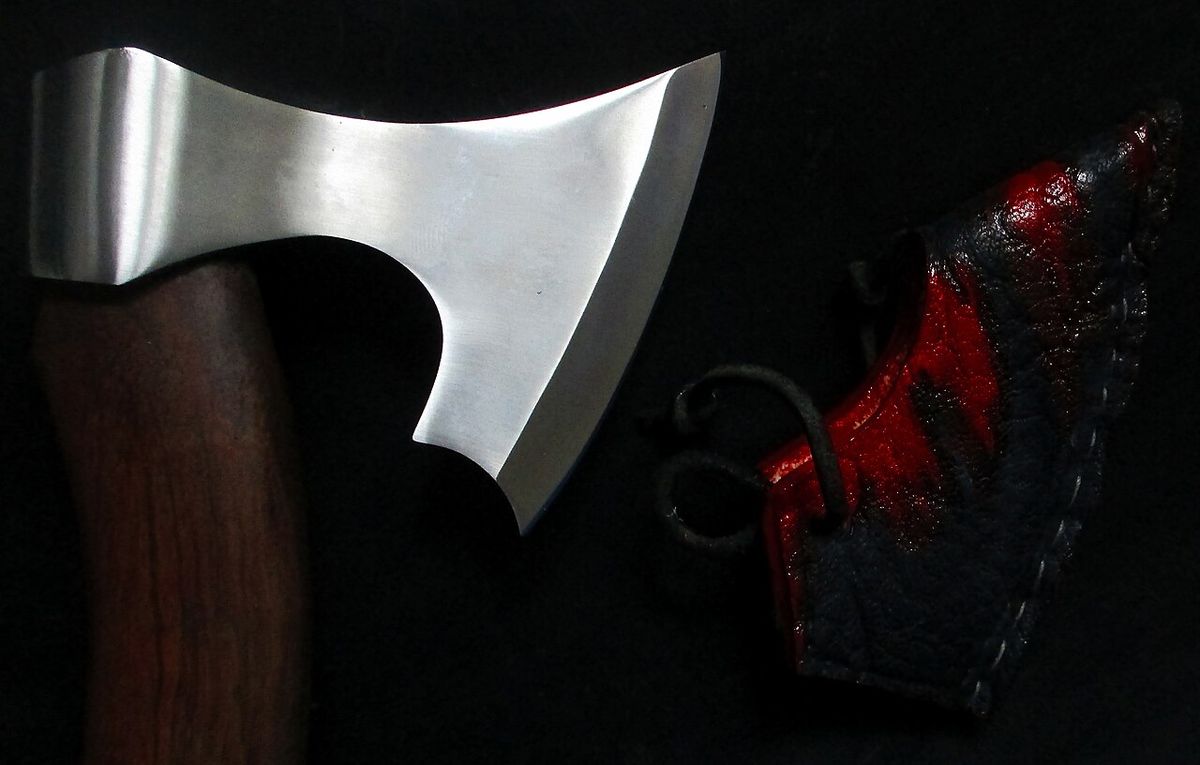
The design of the tomahawk evolved significantly through the colonial period, influenced by trade and intercultural exchange. In pre-colonial times, heads were fashioned from stone, bone, or antler. European traders later introduced iron and steel axe heads, which were rapidly adopted and adapted. These metal heads were often based on the design of the Royal Navy's lightweight boarding axe, becoming a staple trade item exchanged for food and other provisions. A key innovation was the development of the pipe tomahawk, a unique North American artifact created by European and American artisans for trade and diplomatic gifts. This design featured a hollowed-out shaft and a bowl carved into the poll, or back, of the head, allowing it to be used for smoking tobacco. The pipe tomahawk became a powerful symbol, representing the dual choices of peace and war in encounters between Indigenous peoples and Europeans. During the American Revolutionary War, the British Army issued tomahawks to their colonial regulars as a combined tool and weapon. In French colonial territories, a tomahawk design closer to the ancient European francisca throwing axe was in use among settlers and local peoples.
Physical Characteristics and Traditional Construction
Original Models
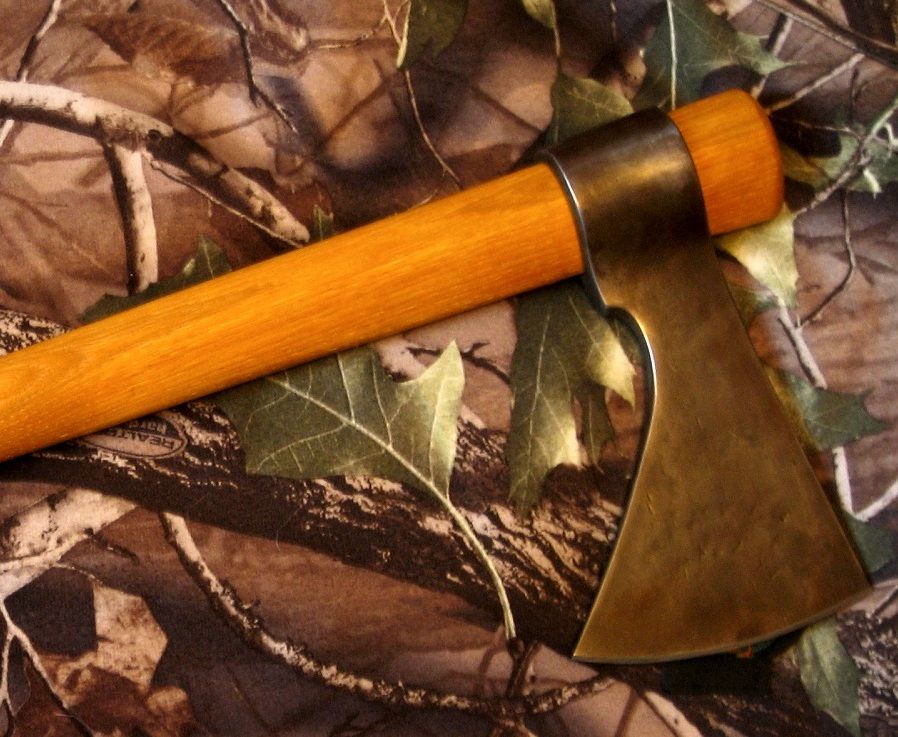
The original Indigenous tomahawks were fitted with heads of bladed or rounded stone or deer antler. The traditional shaft, usually less than two feet (61 cm) in length, was crafted from strong, resilient woods such as hickory, ash, or maple. The axe heads were relatively light, weighing between 9 and 20 ounces (260 to 570 grams), with a cutting edge typically not exceeding four inches (10 cm) from toe to heel. The poll, or the side opposite the blade, could be rounded off or fashioned into a functional hammer or spike. Traditional designs typically did not include lugs, the protruding cheeks found on many European axes.
Colonial and Pipe Tomahawks
The colonial period saw the refinement of the metal-headed tomahawk. The pipe tomahawk, as noted, combined utility with ceremony. The metal head was forged with a pipe bowl on the poll, and a hole was drilled down the centre of the wooden shaft, turning the entire tool into a functional smoking pipe. These were not merely tools but important cultural objects exchanged in diplomacy. The British military tomahawks of the late 18th century were simpler, durable tools designed for the rigours of campaign life and close combat.
Modern Tomahawks and Manufacturing
Contemporary tomahawk manufacturing employs advanced metallurgy and is driven by diverse applications, from sport to tactical use. Many modern tomahawks are made from drop-forged, alloy steel that undergoes differential heat treatment. This process makes the chopping blade and any spike harder and more durable, while the middle section of the head remains tougher and more shock-resistant. Master craftsmen throughout the United States produce hand-forged tomahawks, while companies like the American Tomahawk Company, which reemerged in 2001, and Cold Steel produce them on a larger scale. The American Tomahawk Company notably collaborated with custom knife-maker Ernest Emerson. Specific designs have been developed for distinct modern uses.
Contemporary Uses and Applications
Civilian and Recreational Use
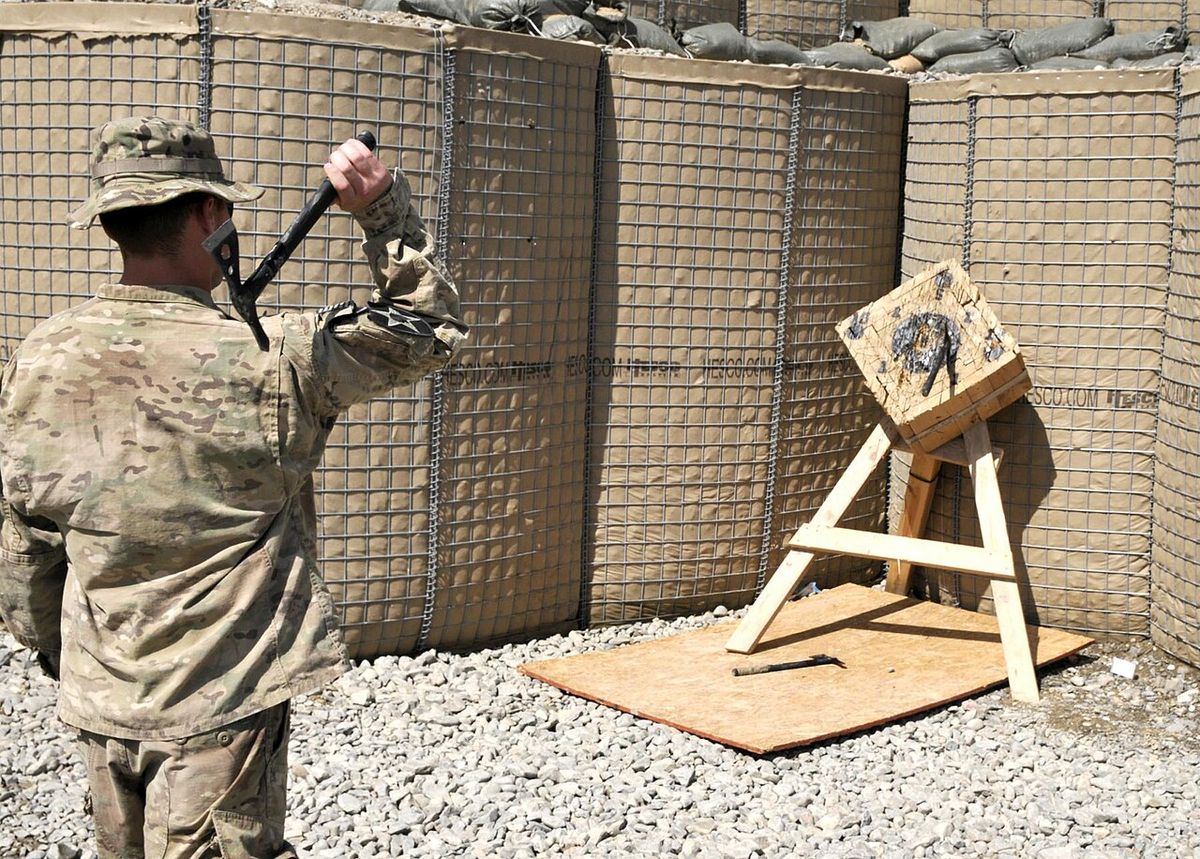
In civilian contexts, tomahawks are popular in camping and bushcraft as a lighter, slimmer alternative to a hatchet. They are valued for their versatility, often incorporating additional tools like spikes or hammers in the head. Tomahawk throwing has become a popular sport within historical reenactment communities in both Canada and the United States. Martial arts such as Okichitaw, a First Nations martial art, actively revive and teach traditional tomahawk fighting techniques from the colonial era. The tomahawk also appears in cultural performances, such as being carried by Gombey dance troupes in Bermuda during their ritual war dances, and it is among the weapons used in the Filipino martial art of Escrima.
Military and Law Enforcement Application
The tomahawk saw a notable resurgence in modern military use. During the Vietnam War, selected units of the US armed forces used non-traditional 'Vietnam tomahawks'. Its use expanded significantly during the wars in Iraq and Afghanistan, where it was employed by soldiers from units like the US Army Stryker Brigade, the 3rd Brigade, 2nd Infantry Division, and many others as both a tool and a hand-to-hand combat weapon. Through the US military's Rapid Fielding Initiative, a modern tomahawk design was issued a NATO stock number (4210-01-518-7244) and classified as a 'Class 9 rescue kit'. It is included as part of the 'modular entry tool set' in every Stryker vehicle. In law enforcement, tactical tomahawks are marketed as specialized breaching and entry tools for SWAT operations.
Cultural Depictions and Popularity
The tomahawk has been prominently featured in 20th and 21st-century popular culture, which has significantly influenced public interest. Its dramatic appearance in major films such as Dances with Wolves, The Last of the Mohicans, The Patriot, and Abraham Lincoln: Vampire Hunter has reinforced its image as a historic weapon. Video games have further amplified this presence, with tomahawks appearing in titles like the Red Dead Redemption series, Assassin's Creed III, Prey, and Resident Evil: Requiem. These depictions have contributed to a renewed fascination with the tomahawk's history, its practical uses, and its crafting, driving interest in collecting, throwing sports, and historical study.
Questions about Tomahawk
What is a tomahawk?
A tomahawk is a type of single-handed axe traditionally used by Indigenous peoples of North America. It resembles a hatchet with a straight shaft and originally featured heads made of stone, bone, or antler. After European contact, metal heads became common through trade. It served as a versatile tool, a weapon, and, in the case of pipe tomahawks, a ceremonial object.
What is a pipe tomahawk?
A pipe tomahawk is a unique artifact from colonial North America that combines an axe with a smoking pipe. European and American artisans created them for trade and as diplomatic gifts. The design features a metal head with a pipe bowl carved into the poll (the back) and a hollow shaft, allowing tobacco to be smoked through it. It symbolized the dual choices of peace (the pipe) and war (the axe).
Are tomahawks still used today?
Yes, tomahawks are used in several modern contexts. They are popular in camping and bushcraft as lightweight tools. Tomahawk throwing is a competitive sport governed by organizations like the World Axe Throwing League. Specialized 'tactical tomahawks' are used by some military and law enforcement units for breaching and as multi-tools. Traditional fighting techniques are also taught in martial arts like Okichitaw.
Where does the word 'tomahawk' come from?
The word 'tomahawk' originates from the Powhatan (Virginian Algonquian) word 'tamahaac'. This term is derived from the Proto-Algonquian root '*temah-' meaning 'to cut off by tool'. It entered the English language in the 17th century. The name has cognates in other Algonquian languages, including Lenape 'təmahikan' and Abenaki 'demahigan', all of which translate to 'axe'. Alternative etymological sources suggest it may come from the Algonquian word 'otomahuk', meaning 'to knock down'.
Did the US military use tomahawks?
Yes, the US military has used modern tomahawks. Selected units employed them during the Vietnam War, where they were referred to as 'Vietnam tomahawks'. Their use saw a resurgence with soldiers in Iraq and Afghanistan, notably within units like the US Army Stryker Brigade. A specific modern design was issued a NATO stock number and classified as a 'Class 9 rescue kit' under the Rapid Fielding Initiative. This tomahawk is included as part of the modular entry tool set within every Stryker vehicle, serving as both a tool and a hand to hand combat weapon.
What are tomahawks made of now?
Contemporary tomahawks are often made from advanced materials such as drop forged, differentially heat treated alloy steel. This specialized heat treatment allows the chopping blade and spike to be harder while the middle section remains tougher and more shock resistant. Handles are traditionally made from woods like hickory, ash, or maple, typically under 2 feet in length. For tactical models marketed to law enforcement, the shaft may be designed as a pry bar and incorporate other tools. Specialized throwing tomahawks for sport are also produced according to competition regulations.
Sources and further reading
- Tomahawk (Wikipedia)
- Tomahawk Restaurant, North Vancouver, Whim (letswhim.com)
- North Vancouver's Tomahawk Restaurant turns 100 (ca.news.yahoo.com)
- The Tomahawk Restaurant (evelazarus.com)
Checked by the Your Space Hamilton desk. Last updated 2026-10-20.