Surtitles
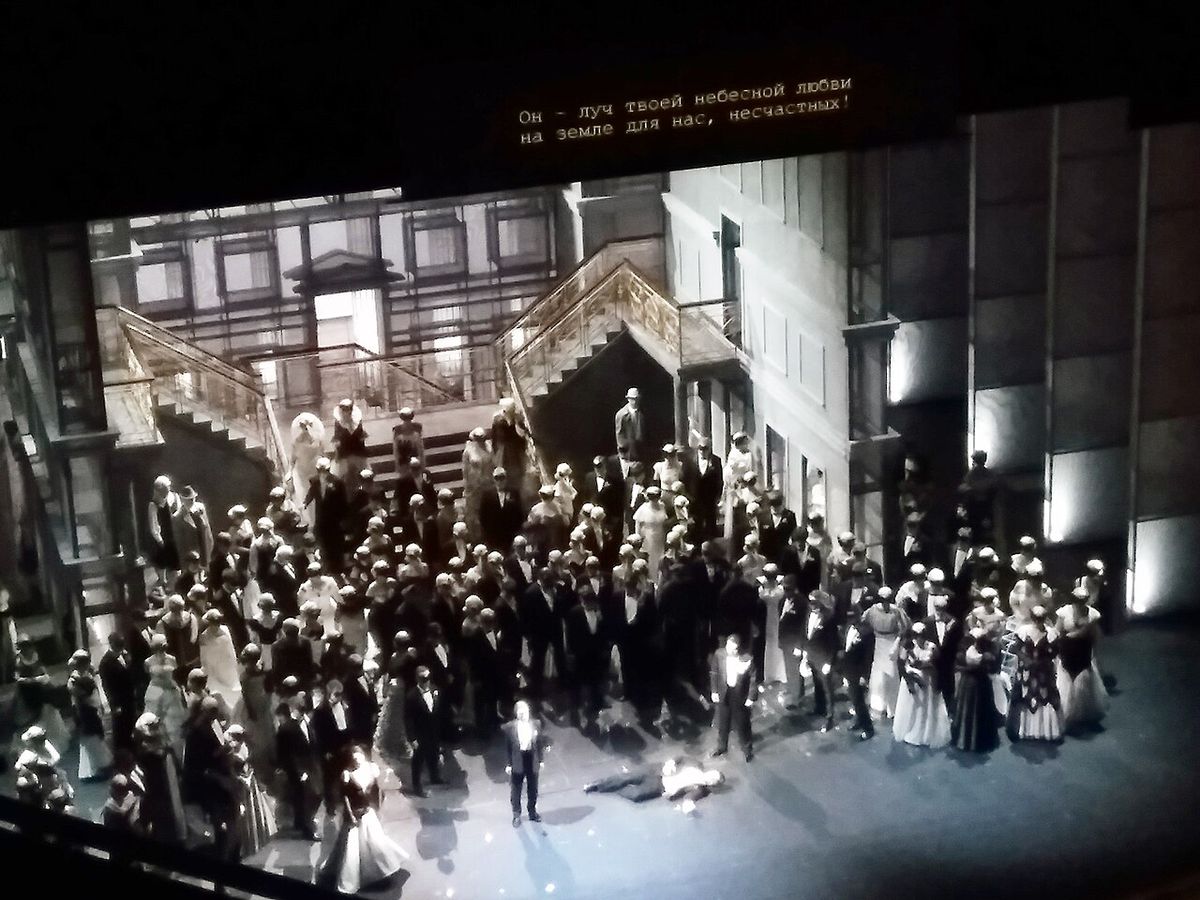
Surtitles, also known as supertitles, are translated or transcribed lyrics or dialogue projected above a stage or displayed on a screen during live performances such as opera and theatre. The term 'surtitle' is a trademark of the Canadian Opera Company, which was central to the technology's development for live performance. These textual aids are used to translate foreign-language works or to clarify lyrics that are difficult to understand when sung, thereby broadening access to the performing arts. Their adoption has proven commercially successful and has expanded to include various systems for hearing-impaired patrons. Surtitles function for live productions in a manner analogous to subtitles in film and television.
Development and Early Adoption
The concept of surtitles was pioneered by Sonya Friedman, who initially used them for televised operas in the late 1970s. Their transition to the live stage was driven by Lotfi Mansouri, then general director of the Canadian Opera Company (COC). Mansouri hired Friedman to implement the system for the COC's production of Richard Strauss's 'Elektra' in January 1983, marking the first use of surtitles in a live theatrical performance. Following this innovation, John Leberg, the COC's director of operations, developed the trademarked Surtitle system for the company, cementing its role in the technology's history. The practice quickly spread to the United States, with the New York City Opera becoming the first American opera company to adopt supertitles later in 1983. The basic technology originally involved photographing translated text onto slides for projection, but this has been largely superseded by computer and video projector systems. On Broadway, a form of titles was used earlier, in 1964, for a production of 'Rugantino' imported from Rome, though this did not involve the later projected surtitle technology.
Technology and Operation
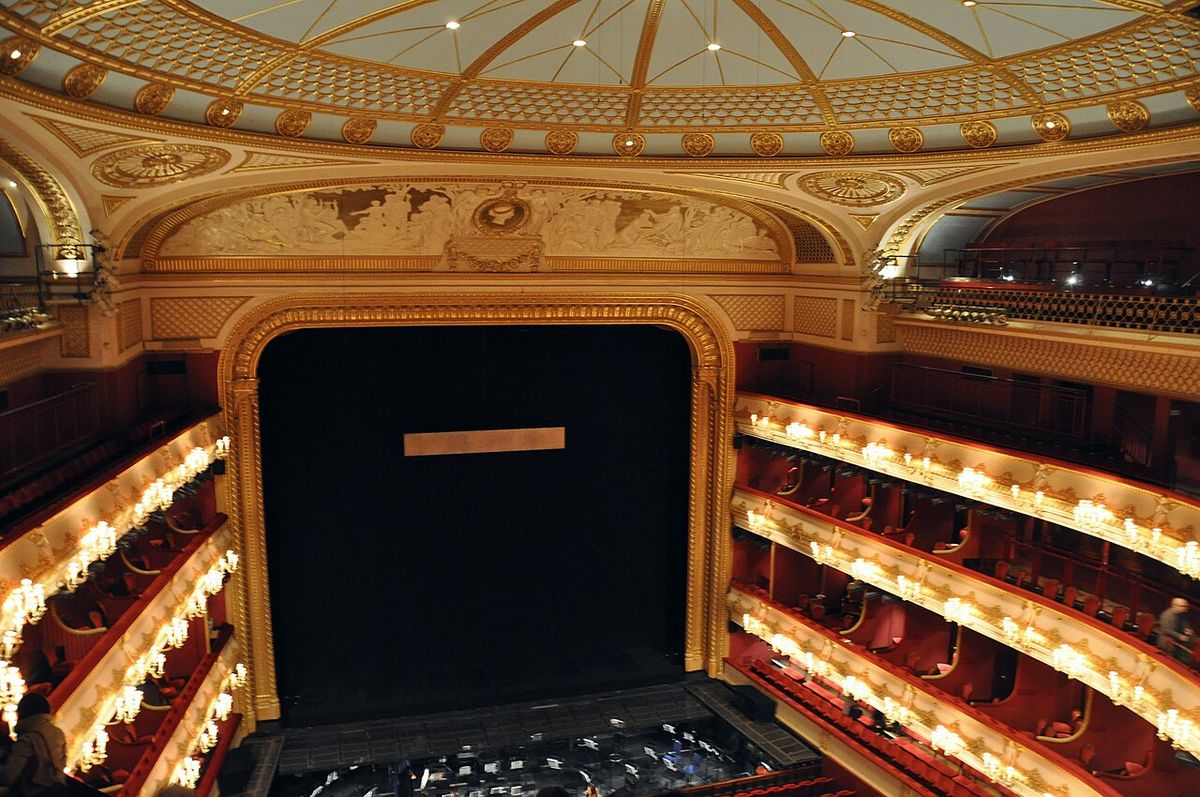
In a typical theatrical setup, surtitles are projected onto a screen mounted above the stage's proscenium arch or on screens positioned to the sides. A surtitling machine, operated by a person following a musical score or script, controls the display. The operator triggers each text cue at a pre-marked insertion point in the score, ensuring the titles appear in sync with the performance on stage. Modern surtitling relies on specialized computer software that allows for the preparation, editing and live display of text. This software often supports features like multiple language tracks, text formatting and integration with external projection systems or individual accessibility devices. Unlike subtitle editing for film, which uses timecodes, surtitling software must accommodate the variable timing of live performances, often relying on manual cueing by the operator. These machines and software systems can also be used for non-artistic events where displaying text is more practical than vocalizing it to an audience.
Personal and Assistive Titling Systems
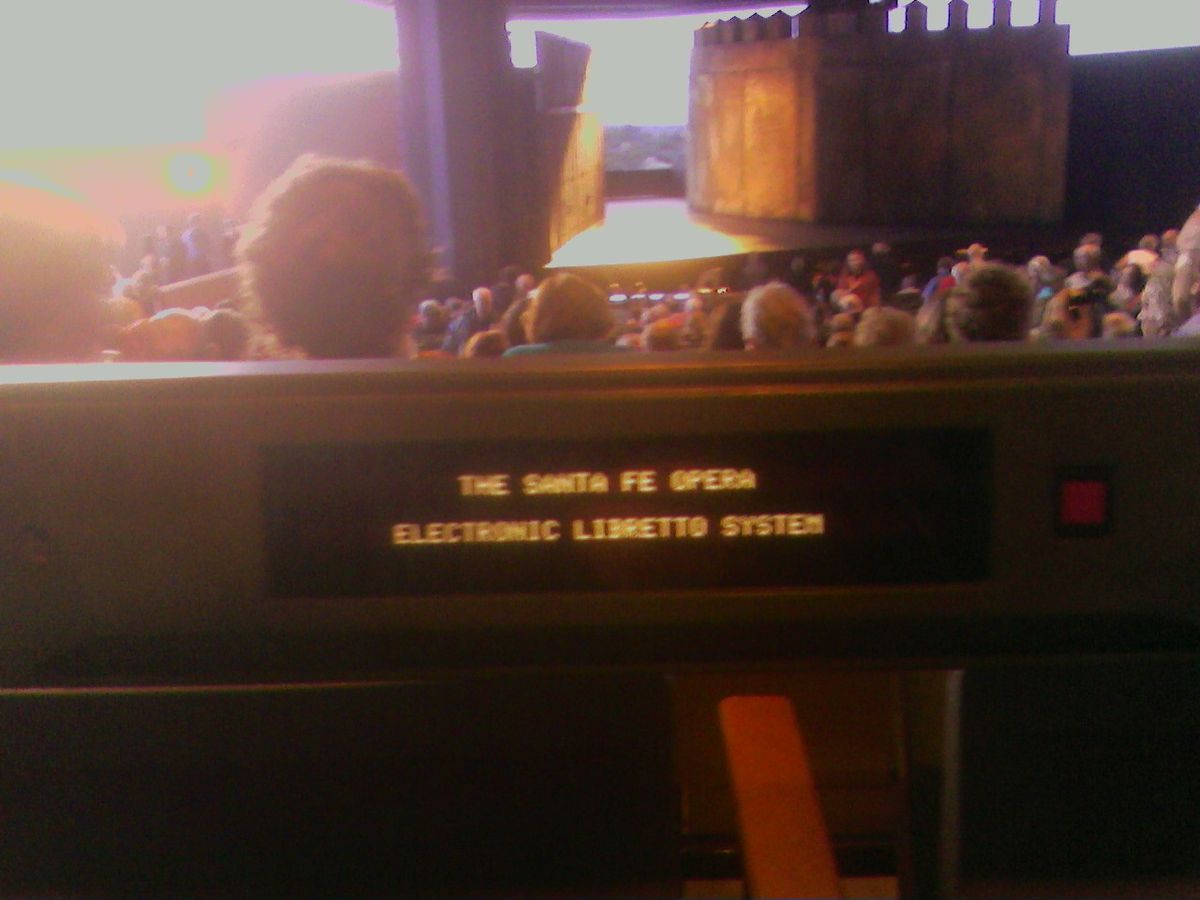
While traditional projected surtitles benefit many audience members, they can also be a visual distraction, focusing attention away from the stage. To address this, several personalized systems have been developed. The electronic libretto system, first installed at New York's Metropolitan Opera as the patented 'Met Titles', places individual screens in front of each seat. Patrons can select from multiple language translations or turn the display off entirely during the performance, a feature also used at the Vienna State Opera and Santa Fe Opera. A different approach for film screenings in theatres is the Rear Window Captioning System, co-developed by WGBH and Rufus Butler Seder. This system provides captions via a large LED display at the rear of the theatre, which is read in mirror image on a reflective plastic panel held by the individual viewer, making the captions invisible to other patrons. The system was initially targeted at people who are deaf or hard-of-hearing, and viewers pick up the plastic panel mounted on a flexible stalk on their way into the theatre.
A significant innovation in personal surtitling came with the development of smart glasses. After a test run in 2015, the French-German company Panthea launched a larger pilot project at the Festival d'Avignon in 2017. The system displays surtitles directly on the lenses of smart glasses, allowing the wearer to focus more easily on the stage action, as noted in a test user report from The Theatre Times. A study on the technology was later published by the French Ministry of Culture, and the device became commercially available the following year, tested by houses like the Paris Opera. In October 2019, Paris's Théâtre Édouard VII, in partnership with Panthea and the Fondation pour l'audition, became the first Parisian theatre to offer the glasses for a full season, providing them at no extra cost to patrons with hearing impairments.
Purpose and Commercial Impact
Surtitles serve two primary functions: translating performances into the audience's language and transcribing lyrics that are difficult to decipher in sung form. This has dramatically increased the accessibility and commercial viability of opera and musical theatre, allowing companies to present works in their original languages without alienating audiences. The technology has also become an important tool for accessibility, greatly enhancing the experience for deaf and hard-of-hearing theatregoers. From the initial slide projectors to today's sophisticated electronic librettos and smart glasses, the evolution of surtitling reflects a continual effort to integrate textual support into the live performance experience. The American company Figaro Systems, founded by Patrick Markle, Geoff Webb and Ron Erkman, was instrumental in developing early assistive technology for individualized libretto reading, allowing audience members to select their preferred language from a list or simply turn it off. Titles in the theatre have proven a commercial success in areas such as opera and are finding increased use for allowing hearing-impaired patrons to enjoy theatre productions more fully.
Surtitling Tools and Software
Modern surtitling systems are built on specialized computer software designed for the unique demands of live performance. This software allows operators to prepare, edit and display titles during a show, with functionality that often includes support for multiple languages and custom text formatting. A key distinction from conventional subtitle editors is the method of synchronization. Film subtitles are locked to timecodes, while surtitling systems frequently allow an operator to trigger individual titles manually in response to the live timing on stage. These systems also integrate with various output devices, from large venue projectors to individual captioning devices for accessibility. This technological foundation enables the precise delivery of text that is central to the surtitling process, ensuring that translations enhance rather than disrupt the artistic presentation.
Notable Firsts and Adopters
The history of surtitles is marked by several key milestones and early adopters across North America and Europe. These events chart the technology's path from a novel experiment to a standard feature in many theatres and opera houses. The first live use occurred in January 1983 at the Canadian Opera Company for 'Elektra', developed by Sonya Friedman and directed by Lotfi Mansouri. Later that same year, the New York City Opera became the first American company to adopt the technology. The Metropolitan Opera pioneered the electronic libretto system with its patented Met Titles, while the Vienna State Opera and Santa Fe Opera also adopted similar multi-language systems. The development of surtitling smart glasses saw a test run in 2015, a pilot at the Festival d'Avignon in 2017, and a full season deployment at Paris's Théâtre Édouard VII in October 2019. These developments highlight the global performing arts community's embrace of surtitling as both an artistic and accessibility tool, with continuous innovation aimed at improving the audience experience.
- 1964: An early form of titles was used on Broadway for the production of 'Rugantino', imported from Rome.
- January 1983: First live surtitles used at the Canadian Opera Company for 'Elektra', developed by Sonya Friedman.
- 1983: First use by an American opera company at New York City Opera.
- 1983 onward: John Leberg develops the trademarked Surtitle system for the Canadian Opera Company.
- Metropolitan Opera: First US house to install the electronic libretto system, known as Met Titles.
- Vienna State Opera & Santa Fe Opera: Early adopters of electronic libretto systems with multiple language options.
- 2015: First test run of surtitling smart glasses by Panthea.
- 2017: Panthea's smart glasses piloted on a larger scale at the Festival d'Avignon.
- October 2019: Théâtre Édouard VII offered a full season with surtitling smart glasses at no extra cost for hearing-impaired patrons.
Comparison with Related Technologies
Surtitles are part of a broader family of textual display technologies used across different media. They are distinct from subtitles, which are primarily used in filmmaking and television production for prerecorded content. Closed captioning, designed for television and video, includes not only dialogue but also sound effects and other audio information for viewers who are deaf or hard of hearing. Same language subtitling, often used for language learning or music videos, displays text in the same language as the audio. Karaoke systems also display lyrics in sync with music, but for participatory singing rather than theatrical comprehension. Radio Marconi represents an early form of wireless communication. The common thread is the use of text to augment audio, but surtitles are uniquely tailored to the live, unpredictable environment of the stage, requiring real-time operation and integration with the physical space of a theatre.
Questions about Surtitles
What are surtitles?
Surtitles are translated or transcribed text displayed above or beside a stage during live performances like opera and theatre. They help audiences understand lyrics sung in a foreign language or that are difficult to comprehend. The term is a trademark of the Canadian Opera Company. They are the live-performance equivalent of subtitles used in film and television.
What is the difference between surtitles and subtitles?
Surtitles are used in live stage performances like opera or theatre. Subtitles are more often used in filmmaking and television production. Surtitles are usually projected above a stage. Subtitles are used for recorded media.
What are electronic libretto systems?
Electronic libretto systems use individual screens placed in front of each seat. They allow patrons to view a translation or to switch them off. New York's Metropolitan Opera installed the patented Met Titles system. It was the first house in the United States to use this system.
How do surtitling smart glasses work?
Surtitling smart glasses display supertitles on the lenses during a performance. This allows a viewer to concentrate more on the stage. The system was tested in 2015 and piloted on a larger scale in 2017. It was offered for a full season at the Théâtre Édouard VII in Paris in 2019.
When were surtitles first used in a live performance?
Surtitles were first used in a live performance in January 1983. This historic event occurred during the Canadian Opera Company's staging of Elektra. The system was developed and used by Sonya Friedman, who was hired for this purpose by the company's then general director, Lotfi Mansouri. This innovation marked the beginning of surtitles becoming a standard feature in live opera and theatre productions. The technology allowed audiences to better understand the lyrics, which can be difficult to comprehend in sung form. Following this successful implementation, surtitles gained widespread use throughout the 1990s.
Which opera companies were early leaders in using surtitles?
The Canadian Opera Company was the definitive pioneer, staging the first live surtitled performance of Elektra in January 1983 and later trademarking the term Surtitle. The New York City Opera followed closely as the first American opera company to use supertitles later in 1983. Another significant early adopter was the Metropolitan Opera in New York, which installed an advanced electronic libretto system called Met Titles, allowing patrons to view translations on individual screens. Other notable houses that adopted similar personal systems include the Vienna State Opera and the Santa Fe Opera, which allow audience members to choose from multiple languages.
Sources and further reading
- Surtitles (Wikipedia)
- surtitles (lunitheatre.ca)
- Forty years after being invented in Toronto, why aren't ... (theglobeandmail.com)
- Subtitles and Surtitles, words and music, WordPress.com (jonathanburton.wordpress.com)
Checked by the Your Space Hamilton desk. Last updated 2026-10-31.