Richard S. Sutton
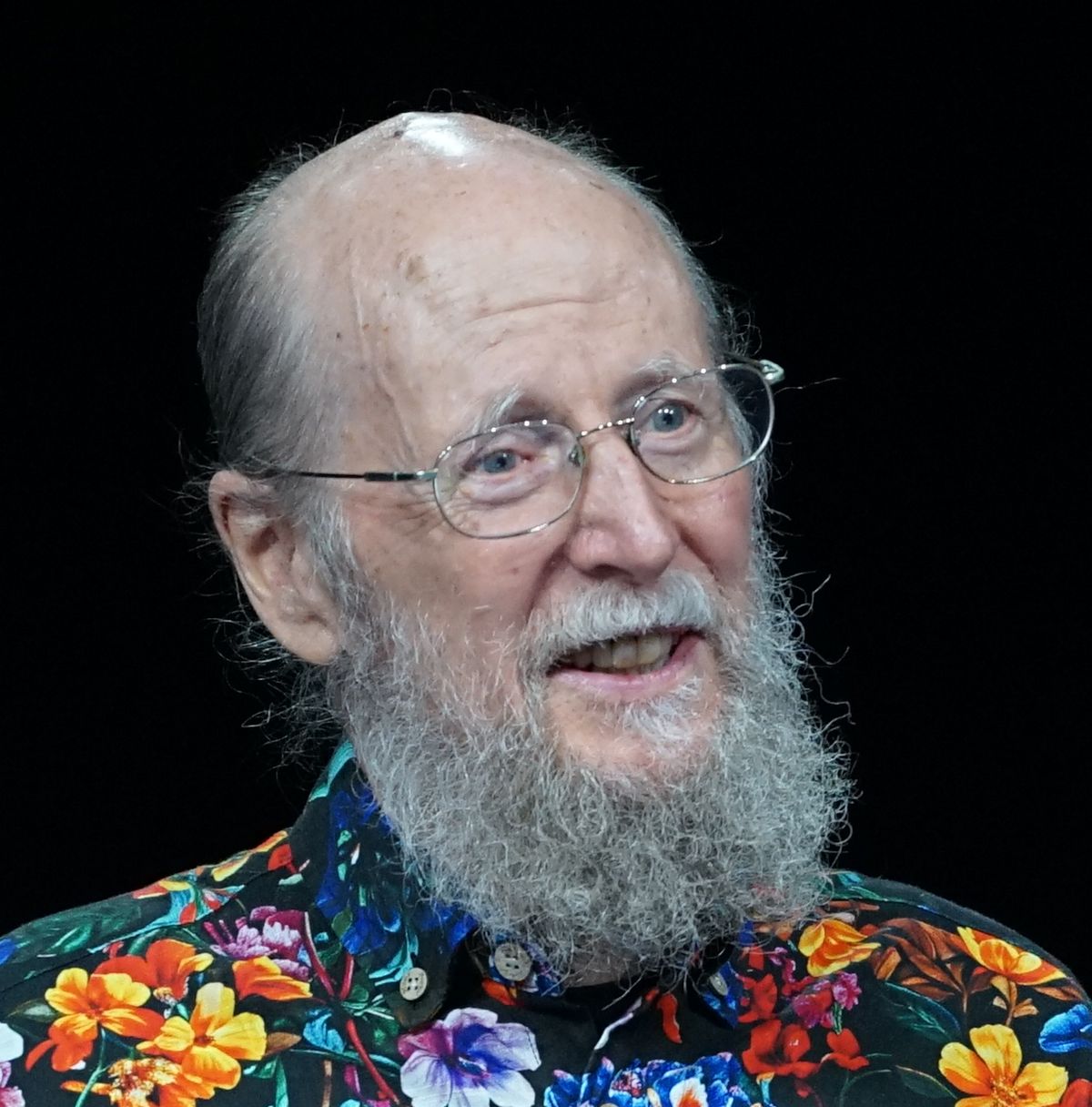
Richard S. Sutton is a Canadian computer scientist and professor of computing science at the University of Alberta, widely regarded as one of the founding pioneers of modern computational reinforcement learning. His foundational work with Andrew Barto established the mathematical and algorithmic principles for this critical branch of artificial intelligence, earning them the 2024 ACM Turing Award, often described as the Nobel Prize of computing. As a Canada CIFAR AI Chair and chief scientific advisor at the Alberta Machine Intelligence Institute, Sutton's research continues to shape Canada's leadership in AI. His influential "bitter lesson" essay and his advocacy for continual learning agents represent significant contributions to the philosophical and technical direction of the field.
Early Life and Academic Foundation
He began his academic journey with a broad interest in intelligent behaviour, earning a Bachelor of Arts in psychology from Stanford University in 1978. Sutton then shifted his focus to computer science, pursuing graduate studies at the University of Massachusetts Amherst under the supervision of Andrew Barto. He completed his Master of Science in 1980 and his PhD in 1984, with a doctoral dissertation that introduced seminal concepts like actor-critic architectures and temporal credit assignment. A key intellectual influence during this period was the work of A. Harry Klopf, whose theories on trial-and-error learning as a necessity for intelligence steered Sutton's research away from supervised learning paradigms and toward what would become reinforcement learning.
Career Path and Institutional Roles
Following his PhD in 1984, Sutton held a postdoctoral research position at the University of Massachusetts Amherst. He then worked at GTE Laboratories as a principal member of technical staff from 1985 to 1994. Sutton returned to the University of Massachusetts Amherst as a senior research scientist before joining AT&T Labs Shannon Laboratory as a principal technical staff member from 1998 to 2002. His career trajectory reflects the applied and theoretical development of reinforcement learning over four decades.
- 1984: Postdoctoral researcher, University of Massachusetts Amherst.
- 1985 to 1994: Principal member of technical staff, GTE Laboratories, Waltham, Massachusetts.
- 1998 to 2002: Principal technical staff member, AT&T Labs Shannon Laboratory, Florham Park, New Jersey.
- 2003 to present: Professor of Computing Science, University of Alberta, Edmonton.
- 2017 to 2023: Distinguished Research Scientist, Google DeepMind.
- 2023 to 2026: Researcher, Keen Technologies.
- 2026 to present: Co-founder, Oak Lab AI startup.
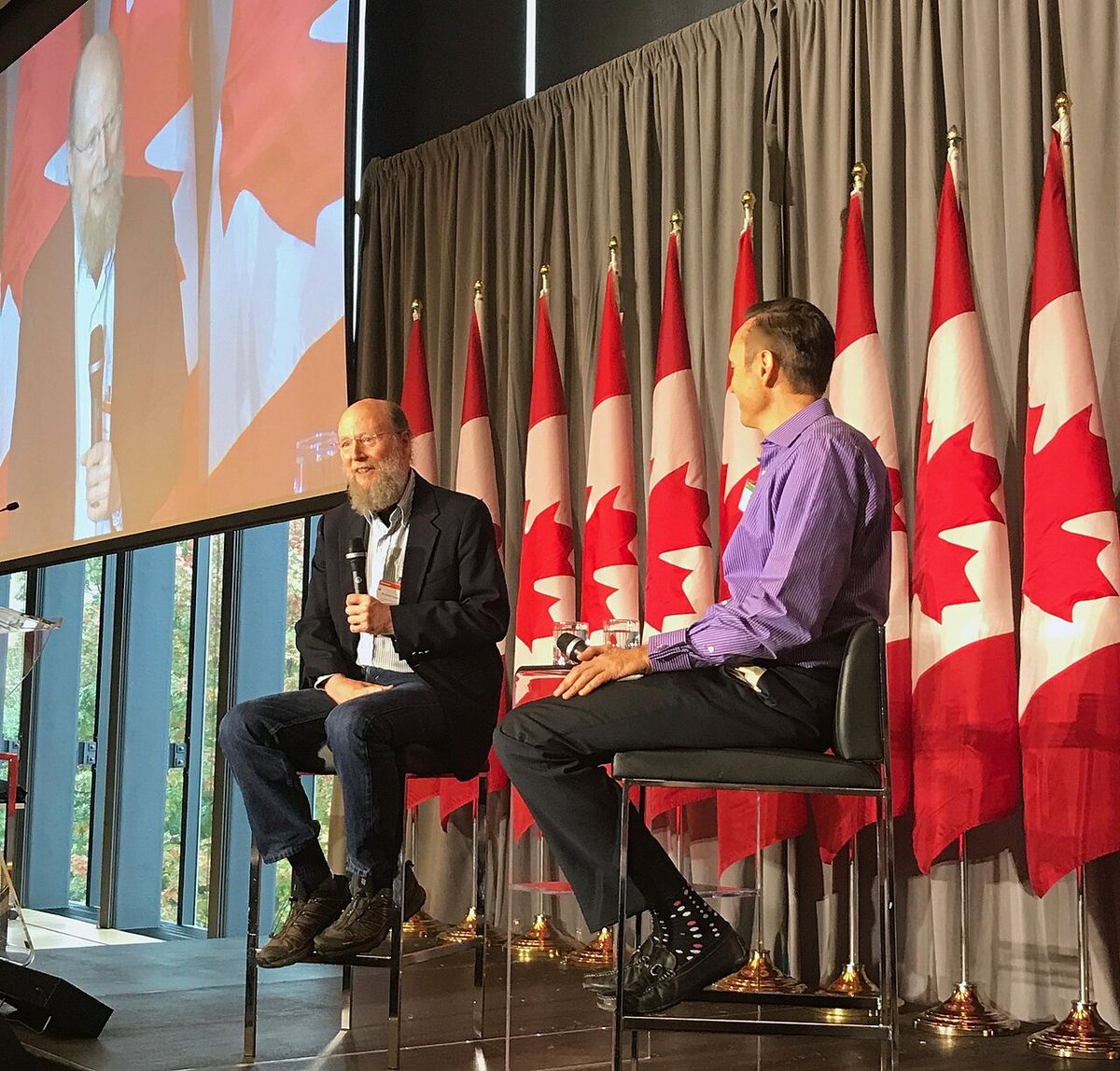
His appointment as a professor of computing science at the University of Alberta in 2003 was particularly significant. At the university, he helped establish the Reinforcement Learning and Artificial Intelligence Laboratory. Sutton also serves as the chief scientific advisor at the Alberta Machine Intelligence Institute. He became a central figure in the Canadian AI ecosystem and helped launch the DeepMind Alberta research office in Edmonton.
Foundational Contributions to Reinforcement Learning
Richard Sutton's most celebrated work, conducted in collaboration with his doctoral advisor Andrew Barto beginning in the early 1980s, established the conceptual and mathematical foundations of modern reinforcement learning. They formalized the problem of how an algorithmic agent learns to make optimal decisions through trial and error while interacting with an environment. A central part of their work was the application of Markov decision processes as a mathematical framework, but with a critical innovation. While traditional MDP theory assumed the agent had complete knowledge of its environment and reward structure, Sutton and Barto's methods allowed the environment and rewards to be unknown, vastly expanding the range of practical applications. Their research produced several key algorithmic families that remain central to the field today. Sutton introduced and analyzed temporal-difference learning methods for prediction and control, which blend ideas from Monte Carlo methods and dynamic programming. He proposed the Dyna architecture, which integrates learning and planning. He also co-developed the options framework for temporal abstraction and co-authored the first modern policy gradient formulation with function approximation. This body of work provided the essential toolkit that later enabled breakthroughs like DeepMind's AlphaGo, which defeated a human world champion in the game of Go.
The Bitter Lesson and Vision for AI
In 2019, Sutton published an influential essay titled "The Bitter Lesson," which critiqued historical trends in artificial intelligence research. The essay argued that over seventy years, the most consistent and powerful advances in AI came not from building human knowledge or domain-specific insights into systems, but from leveraging general-purpose methods that scale enormously with available computation. He observed that attempts to encode human understanding of domains like chess, computer vision, or speech recognition were ultimately overtaken by simpler, more general approaches powered by massive data and computing power. Sutton extrapolates this lesson to current AI paradigms, arguing that large language models, while powerful, are limited by their inability to learn continually from ongoing interaction with the world. He advocates for the development of new agent architectures capable of "on-the-job" or continual learning, where a special training phase becomes unnecessary and learning happens on-the-fly. This vision directly informs his current entrepreneurial work at Oak Lab and his 2023 partnership announcement with John Carmack aimed at the development of artificial general intelligence.
Awards, Honours, and Recognition
Richard Sutton's contributions have been recognized with the highest honours in computer science and academia. The pinnacle of this recognition came in 2024 when he and Andrew Barto were jointly awarded the ACM Turing Award for developing the conceptual and algorithmic foundations of reinforcement learning. His election to prestigious scholarly societies demonstrates his standing as a leading scientist. He has received a series of major awards and fellowships throughout his career.
- 2001: Elected Fellow of the Association for the Advancement of Artificial Intelligence (AAAI).
- 2003: President's Award from the International Neural Network Society.
- 2013: Outstanding Achievement in Research award from the University of Massachusetts Amherst.
- 2016: Elected Fellow of the Royal Society of Canada.
- 2021: Appointed Canada CIFAR AI Chair.
- 2021: Received the IJCAI Award for Research Excellence.
- 2021: Elected Fellow of the Royal Society of London (FRS).
- 2024: ACM Turing Award (with Andrew Barto).
These accolades reflect both the foundational nature of his early work and his ongoing influence. He was elected a Fellow of the Association for the Advancement of Artificial Intelligence in 2001 and a Fellow of the Royal Society of Canada in 2016. Sutton was elected a Fellow of the Royal Society of London in 2021 and received the IJCAI Award for Research Excellence the same year. In 2024, he received the Turing Award with Andrew Barto for developing the foundations of reinforcement learning.
Impact on Canadian AI and Legacy
Sutton's decision to move to the University of Alberta in 2003 was a catalytic event for artificial intelligence research in Canada. He became a central figure in building Edmonton and Alberta into a global hub for reinforcement learning research. His leadership at the university's research lab helped train a new generation of world-class scientists, including notable former students like David Silver, a principal architect of AlphaGo and AlphaZero, and Doina Precup, a leading researcher and Canada CIFAR AI Chair at McGill University. In his role as chief scientific advisor at the Alberta Machine Intelligence Institute, he helps guide the province's strategic direction in AI. By becoming a Canadian citizen in 2015, Sutton further cemented his commitment to the country's research ecosystem. His legacy is defined not only by the technical frameworks he created but also by his philosophical guidance, challenging the field to embrace scalable, general methods and to pursue the next frontier of continually learning agents.
Questions about Richard S. Sutton
What is Richard Sutton known for?
Richard Sutton is known as one of the founders of modern computational reinforcement learning. He is known for his contributions to temporal difference learning and policy gradient methods. Sutton is also known for proposing the influential observation about AI scaling limits called the bitter lesson. He is known for receiving the 2024 Turing Award alongside Andrew Barto for their work in reinforcement learning.
What award did Richard Sutton win in 2024?
In 2024, Richard Sutton received the Turing Award from the Association for Computing Machinery. He received the award together with his supervisor Andrew Barto. The award citation read for developing the conceptual and algorithmic foundations of reinforcement learning. The Turing Award is often described as the highest distinction in computer science.
Where does Richard Sutton work in Canada?
Richard Sutton works as a professor of computing science at the University of Alberta. He also works as the chief scientific advisor at the Alberta Machine Intelligence Institute. He has been a professor at the University of Alberta since 2003. He helped establish the Reinforcement Learning and Artificial Intelligence Laboratory at the university.
What is the "bitter lesson" in AI?
The bitter lesson is an influential observation about AI scaling limits proposed by Richard Sutton. Sutton argued that general methods that leverage computation are ultimately the most effective by a large margin. He criticized AI research for failing to learn that building in how we think we think does not work in the long run. Sutton proposed the bitter lesson in a 2019 essay.
Did Richard Sutton work for DeepMind?
Yes, Richard Sutton worked for Google DeepMind as a distinguished research scientist. He worked there from 2017 to 2023. During that time, he helped launch DeepMind Alberta in Edmonton. The DeepMind Alberta office operates in close collaboration with the University of Alberta.
What is Richard Sutton's new company, Oak Lab?
Oak Lab is an AI startup launched by Richard Sutton and Khurram Javed in 2026. They launched it after Sutton left Keen Technologies. The company aims to develop AI agents that can continually learn from their environment through reinforcement learning. This aligns with Sutton's arguments that new model architectures are required to enable continual learning.
Sources and further reading
- Richard S. Sutton (Wikipedia)
- Richard S. Sutton (amii.ca)
- Richard S. Sutton (cifar.ca)
- Rich Sutton's Publications (incompleteideas.net)
Checked by the Your Space Hamilton desk. Last updated 2026-10-21.