Kerosene
Kerosene, also known as paraffin, is a combustible hydrocarbon liquid fuel derived from petroleum. Its name, coined by Canadian geologist and inventor Abraham Gesner in 1854, derives from the Greek word for wax, and it became a foundational fuel for lighting, heating, and later, aviation. For Canadians, kerosene's history is intertwined with Gesner's pioneering work in the Maritimes and the subsequent development of the nation's early petroleum industry in Ontario. The Drake Well was drilled in Pennsylvania in 1859, and petroleum was discovered at Oil Springs, Ontario in 1858, fueling this industry's growth.
Chemical properties and grades
Kerosene is a low-viscosity, clear liquid formed from hydrocarbons obtained through the fractional distillation of petroleum between 150 and 275 degrees Celsius. It has a density ranging from 0.78 to 0.81 grams per cubic centimetre and is miscible with petroleum solvents but not with water. The hydrocarbon molecules in kerosene typically contain between 6 and 20 carbon atoms per molecule, with a predominant range of 9 to 16 carbon atoms. The major components are branched- and straight-chain alkanes and naphthenes, which normally constitute at least 70 percent of its volume, while aromatic hydrocarbons do not usually exceed 25 percent by volume.
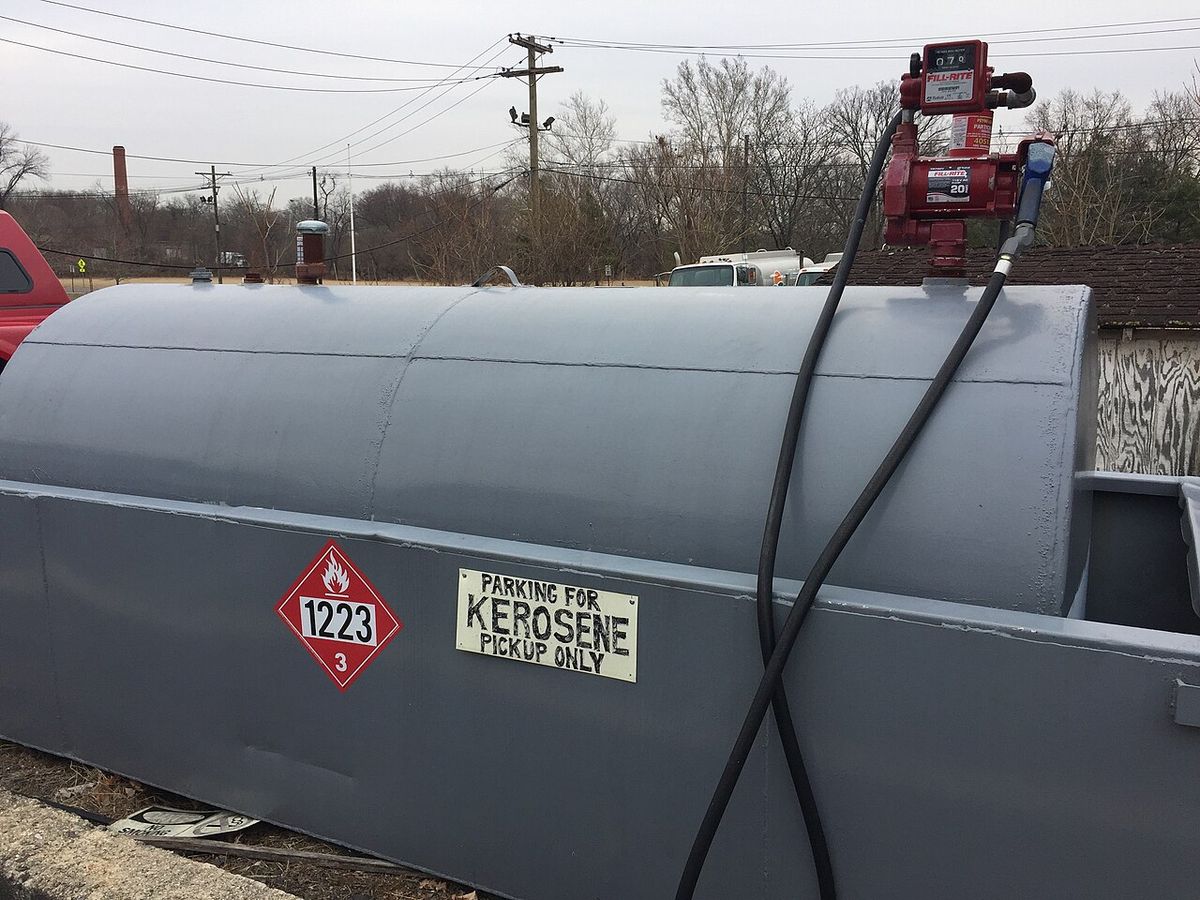
The fuel's heat of combustion is similar to that of diesel, with a lower heating value of 43.1 megajoules per kilogram and a higher heating value of 46.2 megajoules per kilogram. ASTM International recognizes two primary grades based on sulfur content, which significantly impact cleanliness and applications. Grade 1-K contains less than 0.04 percent sulfur by weight and burns cleaner with fewer deposits and toxins, making it the preferred grade for indoor heaters and stoves. Grade 2-K contains up to 0.3 percent sulfur by weight and is less refined.
In the United Kingdom, standards define different grades for heating oil, with Class C1 used for lanterns and camping stoves and Class C2 used as domestic heating oil. Premium kerosene sold in small containers is often dyed purple for identification. For aviation, specific grades of jet fuel are defined by stringent national and international standards that govern properties critical for safety and operation. These standards strictly define parameters such as flash point and freezing point, with commercial aviation fuel standardized to freeze at -47 degrees Celsius, and also mandate additives for purposes like static electricity control.
Early history and invention
The process of distilling crude oil into kerosene was first written about in the ninth century by the Persian scholar Rāzi. In his Book of Secrets, he described two methods for producing kerosene, which he termed 'naft abyad' or white naphtha. During the Chinese Ming Dynasty, the Chinese made use of kerosene through extracting and purifying petroleum and then converted it into lamp fuel. The Chinese had made use of petroleum for lighting lamps and heating homes as early as 1500 BC. For centuries in the West, the lucrative market for indoor lamp fuel was supplied by whale oil, specifically from sperm whales, which burned brighter and cleaner. Industrial byproducts like coal oil burned with a smoky flame that prevented their use for indoor illumination.
The modern era of kerosene began with Canadian geologist Abraham Pineo Gesner, who gave a public demonstration in Charlottetown, Prince Edward Island in 1846. Gesner heated coal in a retort and distilled a clear, thin fluid that proved to be an excellent lamp fuel. He coined the name 'kerosene' for this fuel, a contraction of the Greek 'keroselaion', meaning wax-oil. Gesner's early attempts to use New Brunswick's albertite were blocked by a local coal conglomerate, leading him to move to New York in 1854. There, with backing from businessmen, he formed the North American Gas Light Company and was granted a U.S. patent for his improved purification process in 1854, two years after a patent by Scottish chemist James Young.
Gesner registered 'Kerosene' as a trademark in 1854, and for several years only his company and its licensees could use the name in the United States. Meanwhile, James Young developed a process for producing paraffine oil from torbanite (boghead coal) and shale, building the first commercial oil-works in Bathgate, Scotland in 1851. Young secured patents in both Britain and the United States, and his methods were upheld in court, obliging other producers to pay royalties. These early processes relied on coal and oil shale as feedstocks, making production relatively expensive compared to later petroleum-based methods.
Transition to petroleum and market impact
The discovery of easily accessible petroleum sources in the late 1850s dramatically transformed the kerosene industry. In 1859, Edwin Drake drilled his famous well in Pennsylvania, triggering an oil boom. This followed the 1858 discovery of petroleum at Oil Springs, Ontario, and the earlier work of Ignacy Łukasiewicz in Poland, who had been distilling lamp oil from petroleum seeps since 1852. The increased supply of crude oil allowed refiners to bypass the existing patents for producing oil from coal held by Gesner and Young, enabling them to manufacture illuminating oil from petroleum without paying royalties.
As a result, the entire illuminating oil industry in the United States switched to petroleum as its feedstock during the 1860s. The petroleum-based product was widely sold under the name 'kerosene', which soon lost its trademark status and became a generic term. In some parts of the U.S., it was still commonly called 'coal oil' well into the 20th century. This shift had a major impact on other industries, most notably whaling. The American whaling fleet, which peaked at 199 ships in 1858, dwindled to just 39 ships by 1876 as kerosene captured the lucrative market for lamp oil.
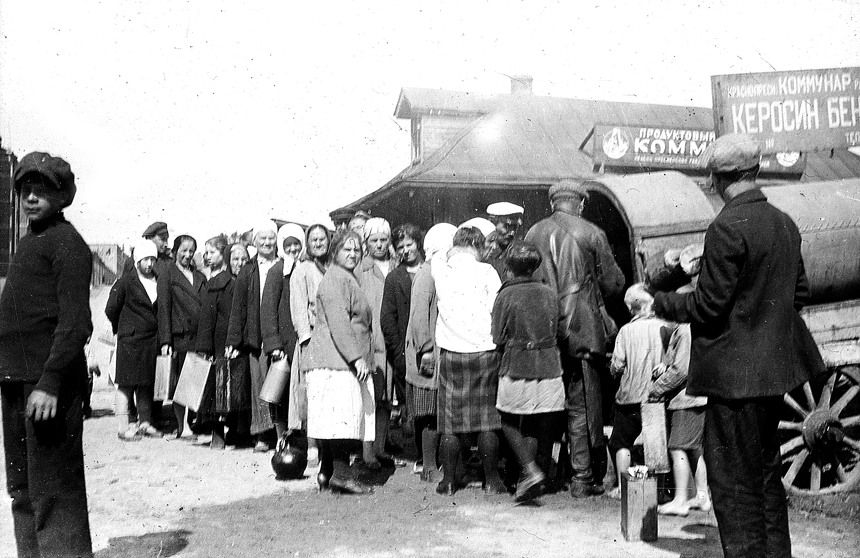
The rise of kerosene from petroleum established the foundational economics of the modern oil refinery, where it was produced by fractional distillation at a temperature intermediate between more volatile gasoline and less volatile diesel fuel. For decades, kerosene was the predominant commercial product of U.S. petroleum refining. This dominance lasted until 1909, when it was finally exceeded by motor fuels like gasoline, driven by the advent of the gasoline-powered automobile. Refiners then developed methods to increase gasoline output at the expense of kerosene, though kerosene retained market share in heating and cooking applications.
Primary applications and uses
Kerosene's applications are diverse, spanning from historic lighting to modern propulsion. Its initial and most historically significant use was as an illuminant, replacing whale oil in lamps and lanterns across the globe. The development of the gas mantle in the 19th century, a mesh bag impregnated with thorium and cerium oxides, greatly improved the quality of light from kerosene lamps, producing a whiter, brighter flame. Such lamps remain in use in areas without electricity. In the 19th century, kerosene also posed a significant fire hazard, with defective lamps causing nearly 40 percent of New York City fires in 1880.
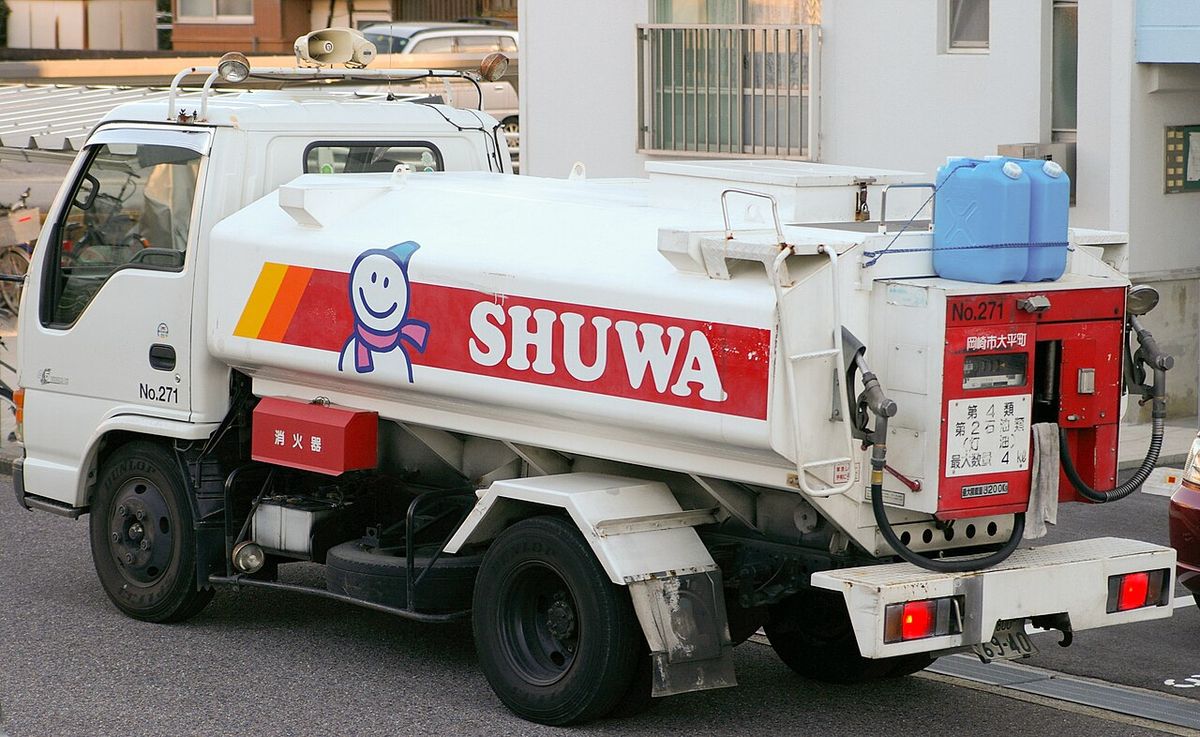
As a heating fuel, kerosene is used in portable and installed heaters, particularly in countries like Chile and Japan, and in rural areas of the United Kingdom and Ireland not connected to the gas grid. It is a common fuel for portable stoves used in backpacking and mountaineering, valued for its reliability in adverse conditions. In many developing nations, such as Nigeria and India, kerosene is a primary cooking fuel, especially for low-income households. Governments sometimes subsidize its price to discourage deforestation for firewood, as seen in India where it was historically priced around 15 U.S. cents per litre.
Beyond domestic use, kerosene has numerous industrial and agricultural applications. It has been used in 'salamander' space heaters on construction sites, in smudge pots to protect citrus groves from frost, and as fuel for road flares. The Amish community, which generally abstains from electricity, relies on kerosene for lighting. Perhaps its most critical modern application is in aviation, where highly refined kerosene, known as jet fuel (or RP-1 for rockets), powers turbine engines. This single use now constitutes the vast majority of kerosene consumption in developed nations, accounting for 8.4 percent of total U.S. petroleum refinery output by volume in 2021.
- Lighting: Used in wick lamps and lanterns, improved by gas mantles.
- Heating: Fuel for portable and fixed heaters in homes and on worksites.
- Cooking: Primary fuel for stoves in many developing nations.
- Aviation: The base for jet fuel and some rocket propellants.
- Agriculture: Historically used in smudge pots for frost protection.
- Outdoor: Fuel for reliable portable stoves for backpacking.
- Industrial: Used in range cookers and as a solvent or cleaner.
Production and modern developments
Kerosene is produced in oil refineries through the fractional distillation of crude oil. In this process, crude oil is heated, and its various components are separated based on their different boiling points. Kerosene condenses at a temperature intermediate between the more volatile naphtha and gasoline fractions and the less volatile diesel fraction. The yield of kerosene can be adjusted by refiners based on market demand, particularly the balance between jet fuel, gasoline, and diesel. In 2021, kerosene-type fuels made up 8.5 percent by volume of total U.S. petroleum refinery output, demonstrating its continued importance in the product slate.
Modern refiners must meet strict specifications for different kerosene grades, especially for aviation. Jet fuel must adhere to rigorous international standards ensuring performance at high altitudes, including specific flash points, freezing points, and energy content. Additives are blended into aviation kerosene to inhibit corrosion, prevent static electricity buildup, and improve other handling characteristics. For heating and lighting grades, the primary differentiation remains sulfur content, with lower-sulfur 1-K grade mandated for indoor use to minimize toxic emissions.
A significant modern development is the exploration of sustainable production methods to reduce the carbon footprint of aviation. In a landmark pilot project in July 2022, researchers at ETH Zurich used solar power to produce synthetic kerosene from carbon dioxide and water. This 'solar kerosene' is chemically identical to conventional jet fuel and can be used in existing aircraft engines, either neat or blended with fossil-derived kerosene. This technology represents a potential pathway for decarbonizing aviation, though it is not yet produced at a commercial scale. Such innovations point to a future where kerosene may maintain its role as an energy-dense fuel while transitioning to renewable feedstocks.
Terminology, safety, and environmental considerations
The terminology for kerosene varies significantly around the world, reflecting its widespread use. In much of Canada, the United States, Australia, and India, the term 'kerosene' is standard. In the United Kingdom, Chile, South Africa, and Norway, it is commonly called 'paraffin'. In many parts of Asia and the southeastern United States, it is known as 'lamp oil'. It is crucial to distinguish kerosene from other petroleum products also called paraffin, such as paraffin wax (a solid) and liquid paraffin (a highly refined mineral oil used as a laxative). Historically, it was also called 'coal oil', especially in parts of the United States.
Safety is a major concern due to kerosene's combustibility. Its flash point, the temperature at which it can form an ignitable vapour-air mixture, ranges between 37 and 65 degrees Celsius, making it less volatile than gasoline but still a fire hazard. To prevent accidental confusion with gasoline, many jurisdictions mandate specific container colours. For example, in Pennsylvania, kerosene containers are required to be blue, as opposed to red for gasoline or yellow for diesel. Proper handling and use in well-ventilated areas are essential to avoid the risks of fire and inhalation of fumes.
From an environmental and health perspective, burning kerosene releases pollutants. The World Health Organization classifies it as a polluting fuel because its smoke contains high levels of harmful particulate matter. When burned in simple wick lamps or inefficient heaters, it contributes to indoor air pollution, which is a major health risk in developing countries. The combustion of conventional kerosene also releases carbon dioxide, a greenhouse gas. These impacts drive the search for cleaner-burning formulations, such as low-sulfur 1-K grade, and the development of alternative lighting and cooking solutions, including solar-powered devices and cleaner-burning stoves, to reduce dependence on kerosene in off-grid communities.
Questions about Kerosene
Who invented kerosene?
Canadian geologist and inventor Abraham Pineo Gesner is credited with inventing and naming kerosene. In 1846, he demonstrated a process in Charlottetown, Prince Edward Island, for distilling a clear lamp fuel from coal. He coined the name 'kerosene', from the Greek for wax-oil, and registered it as a trademark in 1854. While others like James Young were working on similar coal-derived oils, Gesner's purification process was considered superior, resulting in a cleaner and better-smelling fuel.
Is kerosene still used today?
Yes, kerosene is still widely used today, though its applications have shifted. Its most significant modern use is as jet fuel for aviation, which consumes millions of barrels daily worldwide. It is also commonly used as a heating fuel in portable and installed heaters, particularly in rural areas and countries like Japan and Chile. In many developing nations, it remains a primary fuel for cooking and lighting, especially in communities without access to electricity or natural gas pipelines.
Why did kerosene replace whale oil?
Kerosene replaced whale oil because it became a cheaper and more abundant source of lamp fuel. Initially produced from coal and oil shale, kerosene production soared after the discovery of petroleum in Pennsylvania in 1859 and in Ontario in 1858. This allowed refiners to produce illuminating oil from petroleum without paying royalties on earlier patents. As petroleum-based kerosene flooded the market in the 1860s, the demand for whale oil plummeted. The American whaling fleet, which peaked at 199 ships in 1858, dwindled to only 39 ships by 1876 as kerosene took over the lucrative lamp oil market.
Is kerosene the same as jet fuel?
Jet fuel is a highly refined type of kerosene with very strict specifications for performance and safety in aircraft. While all jet fuel is kerosene-based, not all kerosene meets the stringent standards required for aviation. Jet fuel has specific requirements for freezing point, flash point, and energy content, and contains additives to prevent icing and static electricity buildup. Lower-grade kerosene used for heating or lighting does not meet these aviation standards and is not suitable for use in jet engines.
Can kerosene be made sustainably?
Research is underway to produce kerosene from sustainable sources. In July 2022, a pilot project by ETH Zurich successfully used solar power to produce synthetic kerosene from carbon dioxide and water. This 'solar kerosene' is chemically identical to conventional jet fuel and can be used in existing aircraft engines, either on its own or blended with fossil kerosene. While not yet commercially viable at scale, this technology represents a promising pathway for reducing the carbon footprint of aviation in the future.
What is the difference between kerosene and paraffin?
Kerosene and paraffin are different names for the same combustible hydrocarbon liquid fuel derived from petroleum. The term 'kerosene' is common in Canada, the United States, Australia, India, and New Zealand, while 'paraffin' is the preferred term in the United Kingdom, South Africa, Norway, and Chile. However, the name 'paraffin' is also used for distinct petroleum byproducts, which can cause confusion. For instance, paraffin wax is a waxy solid extracted from petroleum, and liquid paraffin, called mineral oil in the US, is a more viscous and highly refined product used as a laxative. Therefore, while referring to the common fuel, the terms are often regional synonyms, but one must be careful not to mistake it for these other products.
Sources and further reading
- Kerosene (Wikipedia)
- The Discovery of Kerosene | The Channel, Ingenium (ingeniumcanada.org)
- ACS Landmarks Laud Pennsylvania Oil Industry, C&EN (cen.acs.org)
Checked by the Your Space Hamilton desk. Last updated 2026-10-19.