Film colorization
Film colourisation, known in Canada as colourization, is the process of adding colour to black-and-white, sepia, or other monochrome moving pictures. The technique has evolved from early 20th-century hand-painting to sophisticated digital methods, sparking both artistic innovation and significant controversy within the film industry. It is employed for various purposes, including modernizing classic films, creating visual effects, and restoring lost colour to archival footage. The process has a notable Canadian connection through its digital pioneer, Wilson Markle, whose work laid the groundwork for contemporary colourisation technology.
Early hand-colouring techniques
The earliest methods of film colourisation were entirely manual, requiring immense labour and artistic skill. In Paris, a studio operated by Elisabeth Thuillier employed a team of over 220 women who hand-painted individual frames of film stock using brushes, with each worker assigned a specific colour in an assembly-line fashion. This studio was responsible for colouring at least four percent of Georges Méliès's output, including notable works like A Trip to the Moon from 1902, of which about 60 hand-coloured copies were produced. The Pathécolor process later introduced a slightly more efficient method using stencils cut from a second print of the film with the aid of a reducing pantograph. Hand-colouring persisted into the 1920s for specific effects in major films such as Greed and The Phantom of the Opera, which used the Handschiegl color process invented for Cecil B. DeMille's 1917 film Joan the Woman. The first full-length feature film created through hand-colouring was the 1912 film The Miracle, setting a precedent for the artistic alteration of monochrome footage.
Hand-colouring techniques were also applied to animation decades later as a cost-saving measure. From around 1968 to 1972, black-and-white cartoons like Betty Boop and Looney Tunes were redistributed in colour under the supervision of Fred Ladd. This process involved tracing original frames onto new animation cels in South Korea and adding colour, but it often skipped every other frame, halving the frame rate and degrading the quality and timing of the original animation. The most recent examples of this redrawn colourisation were the Popeye, Merrie Melodies, and The Captain and the Kids cartoons, which were colourised in 1987 for airing on Turner networks before computer technology took over.
The advent of digital colourisation
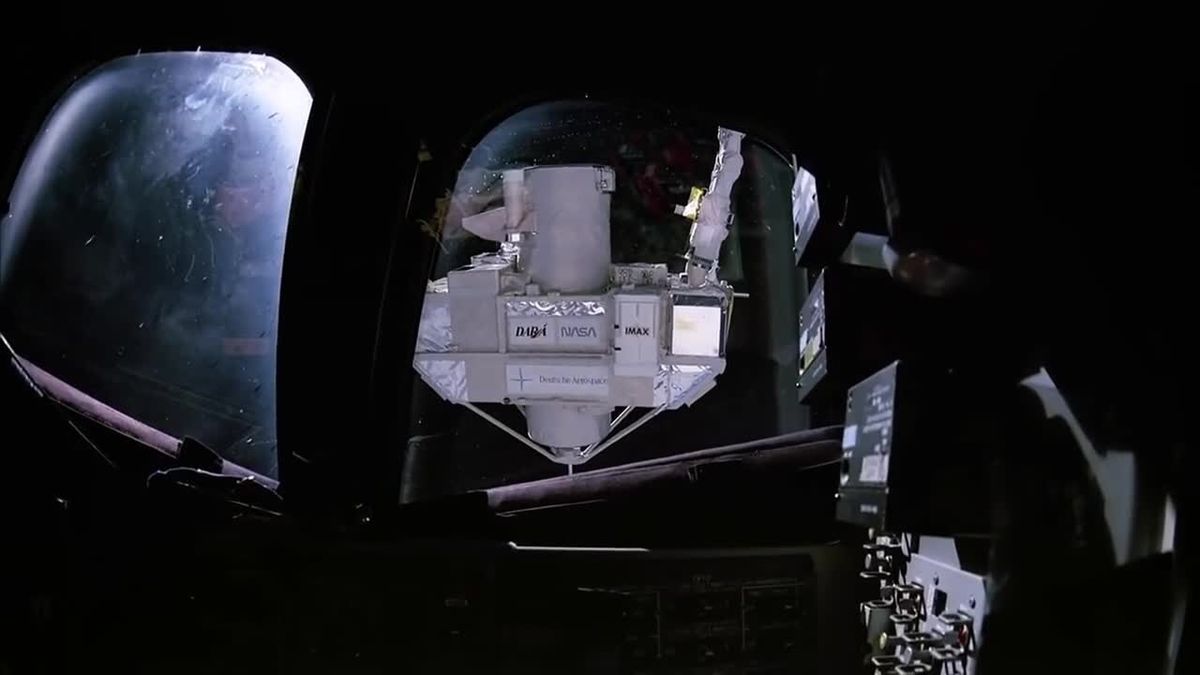
The transition to digital colourisation began in the 1970s with technology invented by Canadian Wilson Markle. His process was first used in 1970 to add colour to monochrome footage from the Apollo moon missions. Early digital results were often characterized by soft contrast and pale, washed-out colours, but the technology improved significantly throughout the 1980s. The fundamental digital process involves creating a digitized copy of a black-and-white film, after which technicians use software to associate colours with specific objects and gray levels within each frame. The software tracks these objects from frame to frame, applying consistent colours, a technique that was patented in 1991. This method relies on common memory colours for elements like sky, grass, and flesh tones, and may use colour publicity stills or props for authentic reference when available.
Modern advancements have focused on automating the labour-intensive segmentation and tracking of regions within a frame. Different companies and research institutions have developed proprietary approaches to improve efficiency and quality. Legend Films utilizes pattern recognition and background compositing, creating masks that move and morph from frame to frame while colouring backgrounds in a single composite frame. Timebrush employs neural net technology for cost-effective, saturated results that rely on computers rather than human effort. A team at the Hebrew University of Jerusalem developed an interactive method that does not require precise manual region detection, instead propagating colour based on similarities in gray levels between adjacent pixels in space and time. In a highly detailed project for the BBC in 2013, artist Stuart Humphryes manually colourised approximately 7,000 key frames for Doctor Who serials, which were then used by SVS Resources in a part-computerized, part-manual process to interpolate colour across the remaining frames.
Applications and uses in filmmaking
Colourisation serves several distinct purposes in film and television production, extending beyond simply modernizing old movies. Its earliest application was for partial colour effects, such as in the Annabelle Serpentine Dance series from Edison films, where aniline dyes were painted onto the emulsion. The Handschiegl Color Process, used in films like Phantom of the Opera, allowed for striking isolated colour, such as a character's bright-red cape against a monochrome background, achieved by painting the cape and then applying a sulfur solution to the rest of the frame. In contemporary filmmaking, colourisation is a tool for restoration and historical integration. A significant restoration effort by the BBC in the 1990s involved colourising black-and-white telerecordings of Doctor Who episodes by adding colour signals from poor-quality off-air recordings, successfully returning them to a colour state.
Directors also use colourisation to integrate archival footage into modern colour films. For instance, Thirteen Days incorporated colourised news footage from the 1962 Cuban Missile Crisis. In Sky Captain and the World of Tomorrow, colourised 1940s footage of Laurence Olivier was blended with digitally generated sets. Martin Scorsese's The Aviator featured extensive colourisation work by Legend Films, blending colourised stock footage of events like the Hell's Angels premiere and scenes featuring Jane Russell from The Outlaw with newly shot material, carefully colour-corrected to match period-appropriate two-strip film. Partial colourisation continues to be used in music videos and commercials to highlight specific visual elements, such as in Dave Matthews Band's The Space Between and Outkast's Bombs Over Baghdad, to facilitate the director's artistic vision.
Restoration efforts have also employed new detection technologies. In March 2008, the BBC announced it would use technology that detects colour artifacts in high resolution scans of black and white film recordings. This technology was intended to restore other Doctor Who episodes as well as shows like Steptoe and Son where some episodes originally produced in colour only exist in black and white. The method relies on detecting colour artifacts in the scans. There are no plans to use this colourisation on BBC programmes originally produced in black and white, such as 1960s Doctor Who episodes, since they have no colour information available.
Controversies and legal battles
The practice of colourising classic black-and-white films for commercial re-release sparked intense debate and legal action beginning in the 1980s. When Hal Roach Studios, after buying a 50 percent interest in Wilson Markle's Colorization Inc., released digitally colourised versions of films like Topper and Way Out West, it prompted a backlash from many filmmakers and critics. Defenders argued it introduced films to new audiences unaccustomed to black-and-white, while detractors condemned it as artistic vandalism that ignored the original lighting and compositional intentions. Prominent figures opposing the process included directors John Huston, George Lucas, and Woody Allen, along with critics Roger Ebert and Gene Siskel, who dedicated a 1986 episode of their show to criticizing colourisation as Hollywood's new vandalism, comparing it to defacing subway cars or museum artworks.
The controversy reached a peak when media mogul Ted Turner explored colourising Citizen Kane in 1988, leading to a public outcry and memories of Orson Welles's deathbed wish to protect his film. Turner Entertainment ultimately halted the project in February 1989, citing contractual provisions that could be read to prohibit colourisation without the permission of the Welles estate. The opposition led by John Huston resulted in a landmark 1991 French court case, where his daughter Anjelica Huston successfully used copyright law to ban the distribution of colourised versions of his films in France without the creator's or heirs' consent. In the United States, the National Film Preservation Act of 1988 was passed, requiring labels on materially altered films, including colourised versions listed in the National Film Registry, to disclose the changes. This legislative reaction established a formal, though limited, federal framework addressing the alteration of culturally significant films.
Individual filmmakers had complex experiences with the process. Cary Grant was reportedly very enthusiastic about the colourisation of Topper, which led director Frank Capra to meet with Wilson Markle about colourizing It's a Wonderful Life. After seeing ten minutes of colourised footage, Capra signed a contract, but when it was discovered the film was in the public domain, Markle returned Capra's investment and refused him artistic control, prompting Capra to join the campaign against colourization. Actor Jimmy Stewart also publicly criticized the colourisation of It's a Wonderful Life on The Tonight Show in December 1989, reflecting the deep personal and artistic stakes involved for the original creators.
Notable colourised films and projects
Over the decades, numerous films and television programs have undergone colourisation. The results have ranged from celebrated restorations to contentious alterations. Examples include the early hand coloured films of Georges Méliès from the early 20th century. Later examples include the controversial digital colourisation of films like Topper in the 1980s. The process has also been used for restoration, such as with some Doctor Who episodes. It has also been used for integration into colour films, as seen in The Aviator.
- A Trip to the Moon (1902): Hand-coloured by Elisabeth Thuillier's studio in Paris, with only one known copy surviving today.
- The Miracle (1912): Recognized as the first full-length feature film made by a hand-coloured process.
- Topper (1937) and Way Out West (1937): The first black-and-white films redistributed using the digital colourisation process in the 1980s, sparking major controversy.
- Godzilla, King of the Monsters! (1956): An unofficial 1977 colourised version by Italian director Luigi Cozzi, created using gels for a psychedelic effect after Italian cinemas refused to release black-and-white films.
- The Aviator (2004): Martin Scorsese's film used extensive colourisation by Legend Films for historical stock footage and scenes from Hell's Angels and The Outlaw.
- Three Stooges films: Several shorts were colourised in the 2000s by West Wing Studios for DVD release, with access to original Columbia Studios props for colour reference.
The commercial viability of colourisation saw a resurgence with the advent of DVD technology. Companies like Legend Films colourised approximately 100 films between 2003 and 2009 using their patented automated process. Legend Films worked with stars like Jane Russell on projects such as colourising footage for The Aviator. Turner Entertainment largely ceased colourising titles due to high costs. The practice continues selectively for purposes like restoration and historical integration. It also continues for niche market releases, such as Laurel and Hardy box sets in the UK that included older 1980s colourised versions.
Technical processes and modern methods
The technical execution of colourisation has diversified, with several modern companies and research institutions developing distinct methodologies. The core challenge involves accurately defining regions within an image and tracking them across frames, a task known as motion compensation. Legend Films describes its technology as relying on pattern recognition and background compositing, creating masks that move and morph from frame to frame while backgrounds are colourised in a single composite frame containing all camera movement data. Timebrush utilizes a neural net-based process that aims to produce saturated and crisp colours efficiently, reducing reliance on human labour and being suitable for both low-budget and broadcast-quality projects. Researchers at the Hebrew University of Jerusalem developed an interactive method that does not require precise manual region detection, instead propagating colour based on the premise that adjacent pixels in space and time with similar gray levels should have similar colours.
Another approach from the University of Minnesota uses a colour propagation method based on geodesic distance. In contrast, the manual technique demonstrated by Stuart Humphryes for the BBC involved colourising every fifth PAL video frame by hand without masks, layers, or the segmentation method. The quality of digital colourisation is heavily dependent on the source material, with the best available black-and-white print being digitized to begin the process. Technicians must make artistic decisions about colour palettes, often referencing memory colours, existing colour stills, or historical research to approximate the director's original intent, especially when no definitive colour record exists. The software itself is designed to sense and correct variations in light levels from frame to frame, ensuring consistency throughout a scene once the initial colour assignments are made.
Economic and cultural impact
The economics of colourisation have driven its adoption and abandonment at various points in film history. The high cost of the early digital process led Turner Entertainment to eventually stop colourising titles, despite an initial aggressive push. The advent of DVD technology revived the commercial proposition, as a single disc could offer viewers a choice between the original and colourised versions without the need for separate inventory. This made the release of colourised titles profitable again, leading studios like Sony Pictures to commission new colourisation work for DVD sets of the Three Stooges. The process also created business opportunities for specialized firms like American Film Technologies, which worked for Ted Turner, and West Wing Studios, which was given rare access to original studio props to ensure colour authenticity.
Culturally, colourisation has forced a broader conversation about film as art versus commodity, preservation versus modernization, and directorial intent versus commercial prerogative. The fierce opposition from figures like James Stewart, John Huston, and Orson Welles framed colourisation as an attack on artistic integrity. The resulting legal and legislative actions, including the French court precedent and the U.S. National Film Preservation Act, created formal mechanisms to acknowledge and, in some cases, restrict the alteration of cinematic works. These debates highlight the tension between making historical media accessible to contemporary audiences and respecting the original artistic conditions under which films were created, a balance that continues to be negotiated with each new technological advancement in the field. The process also influenced broadcast practices, as networks in the 1980s were often unable to show classic black-and-white films in prime-time unless they offered a colourised version, a commercial reality that fueled much of the initial industry push for the technology.
Questions about Film colorization
Who invented digital film colourisation?
Digital film colourisation was invented by Canadian Wilson Markle. His pioneering process was first used in 1970 to add colour to monochrome footage from NASA's Apollo program missions. This early work laid the foundation for the digital colourisation industry that emerged in the following decades. Markle's company, Colorization Inc., later partnered with Hal Roach Studios to release the first digitally colourised feature films in the 1980s.
Why is the colourisation of Citizen Kane so famous?
The proposed colourisation of Citizen Kane in the late 1980s became a famous flashpoint in the debate over film preservation. Media mogul Ted Turner's interest in colourising the film triggered a major public and industry outcry, as it was considered a masterpiece of black-and-white cinematography. Critics and filmmakers, recalling Orson Welles's own wishes, vehemently opposed the idea. Turner Entertainment ultimately stopped the project in February 1989, citing potential contractual prohibitions, making it a symbolic victory for opponents of colourisation.
Can colourisation be used to restore lost colour TV episodes?
Yes, colourisation has been successfully used to restore colour to television episodes where only black-and-white copies survive. A prime example is the BBC's restoration of the Doctor Who serial The Dæmons in the 1990s. The BBC used a poor-quality off-air colour recording to extract colour signal information, which was then applied to the high-quality black-and-white film recordings. This technical process effectively returned the episodes to colour for commercial release, though it relies on the existence of some colour reference material.
What was the first hand-coloured feature film?
The first full length feature film made by a hand coloured process was The Miracle in 1912. This process involved individuals painting directly on film stock. Studios like the one directed by Elisabeth Thuillier used an assembly line of workers, each assigned a different colour. Hand colouring methods were used until effective colour film processes were developed.
How does modern digital colourisation work?
Modern digital colourisation typically begins with digitizing the best available black-and-white film print. Using specialized software, technicians assign colours to objects based on gray levels and track these objects across frames. Common memory colours guide choices for elements like sky and skin tones, and historical references are used when available. Companies like Legend Films use automated pattern recognition to create masks, while other methods employ neural nets or interactive colour propagation to increase efficiency and improve the final colour quality and consistency.
Is colourising a black-and-white film legal?
The legality of colourisation depends on copyright law and specific contractual agreements. A landmark case involved Citizen Kane, where a review of the contract between RKO Pictures and Orson Welles's production company led Turner Entertainment to stop colourisation work, as provisions could be read to prohibit it without the estate's permission. In contrast, the colourisation of It's a Wonderful Life proceeded because the film was believed to be in the public domain at the time, though director Frank Capra was denied artistic control. In France, a 1991 legal precedent set by Anjelica Huston prevents the distribution of colourised versions against the wishes of the creator or their heirs. In the United States, the National Film Preservation Act of 1988 requires proper labelling for colourised films on the National Film Registry.
Sources: Wikipedia and current public reporting, checked by the Your Space Hamilton desk. Last updated 2026-10-24.