Alkaline battery
An alkaline battery is a type of primary battery that uses an alkaline electrolyte, most commonly potassium hydroxide, to generate electrical energy from the reaction between zinc and manganese dioxide. Distinguished from earlier zinc-carbon cells, alkaline batteries offer a higher energy density and a longer shelf life while maintaining the same 1.5-volt output. The modern, commercially successful alkaline dry battery was invented by Canadian engineer Lewis Urry in the 1950s, a development with significant global commercial and technological impact. As of 2011, alkaline batteries accounted for 80% of manufactured batteries in the United States and over 10 billion individual units were produced worldwide annually, making them a ubiquitous power source in household devices from flashlights to digital cameras.
History and Canadian Invention
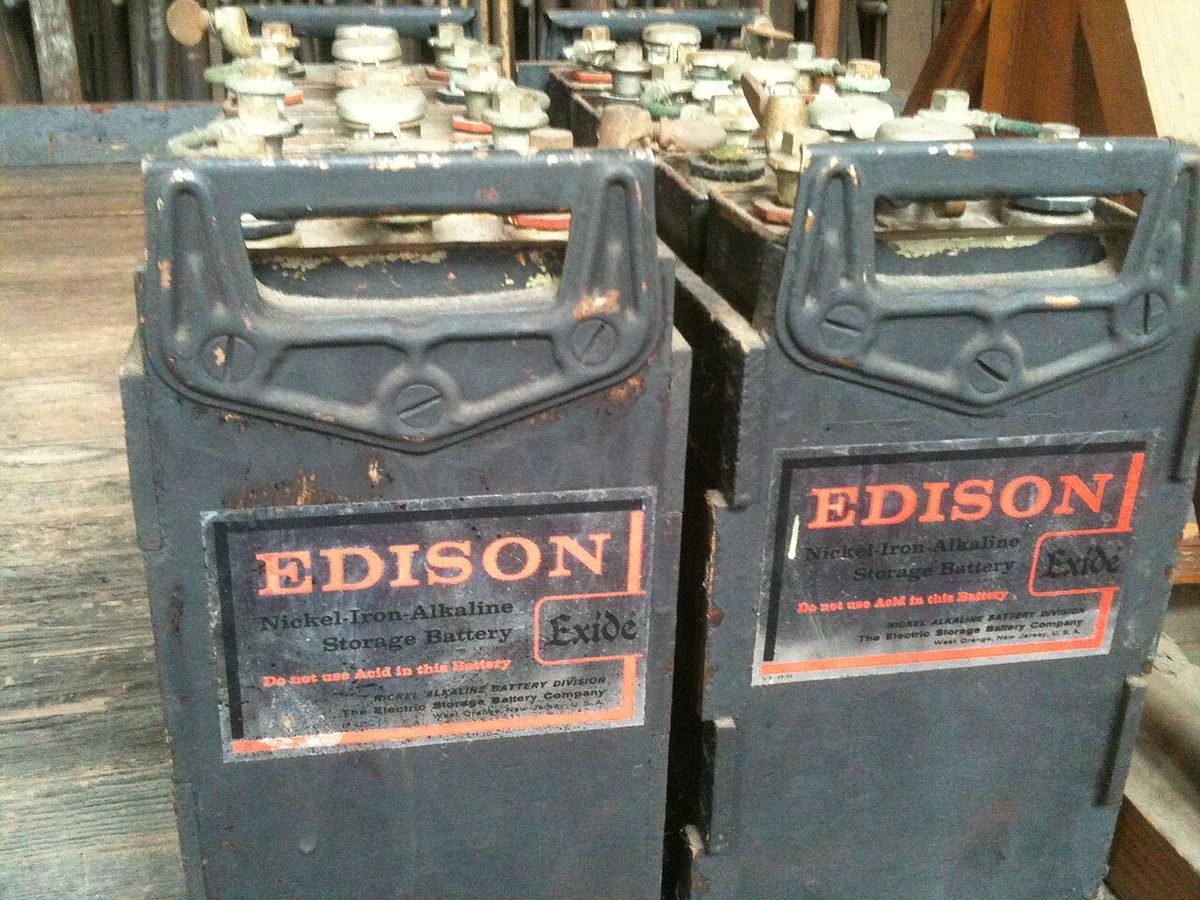
The foundational concept of using an alkaline electrolyte in batteries dates back to the work of Waldemar Jungner in 1899 and Thomas Edison in 1901. The modern alkaline dry battery, which utilizes the specific zinc and manganese dioxide chemistry that became the global standard, was invented by Canadian engineer Lewis Urry in the 1950s. Urry developed the technology before joining Union Carbide's Eveready Battery division in Cleveland, Ohio, building directly upon Edison's earlier research. On October 9, 1957, Urry, along with colleagues Karl Kordesch and P. A. Marsal, filed for the key United States patent (number 2,960,558) for the alkaline battery, which was granted in 1960 and assigned to Union Carbide. When alkaline batteries were first commercially introduced in the late 1960s, their zinc electrodes contained a mercury amalgam coating to control impurities and extend shelf life, a practice that was later phased out due to environmental regulations. The subsequent mandate to reduce mercury content drove significant improvements in the purity and manufacturing consistency of the zinc used in these batteries, which was necessary to maintain performance and prevent leakage without the mercury additive.
Chemistry and Operation
Within an alkaline battery, the negative electrode (anode) is composed of zinc, while the positive electrode (cathode) is manganese dioxide. The alkaline electrolyte of potassium hydroxide facilitates the reaction but is not consumed during normal discharge, as there are equal amounts of hydroxide anions consumed and produced in the two half-reactions. The electrochemical process involves the oxidation of zinc, which loses electrons, and the reduction of manganese dioxide, which gains them. Formally, the discharging process converts zinc from a metallic oxidation state of 0 to +2, and it converts manganese from an oxidation state of +4 to +3. The two half-reactions sum to produce the overall cell reaction that generates electrical current. This chemistry provides a stable voltage output and is central to the battery's performance characteristics, with only the zinc and manganese dioxide being consumed as the cell discharges.
Performance Characteristics: Capacity, Voltage, and Current
The performance of an alkaline battery is defined by its capacity, voltage, and current delivery, all of which are dependent on the load applied. The capacity, measured in ampere-hours, decreases significantly under high drain because the voltage of the battery declines steadily during use, and the total usable capacity depends on the cutoff voltage of the application. For example, a standard AA alkaline battery may have an effective capacity of about 3000 mAh under a very low drain, but this can drop to as little as 700 mAh when supplying a one-ampere load typical for a digital camera. The nominal voltage of a fresh alkaline cell is 1.5 volts, though the actual zero-load voltage of a new battery can range from 1.50 to 1.65 volts depending on the purity of the manganese dioxide and the zinc oxide content in the electrolyte. A cell is generally considered fully discharged when its voltage drops to approximately 0.9 volts under load, and cells connected in series produce a voltage equal to the sum of the individual cell voltages.
The amount of current an alkaline battery can deliver is roughly proportional to its physical size due to decreasing internal resistance as the internal surface area of the cell increases. A common rule of thumb is that an AA alkaline cell can deliver about 700 mA without any significant heating. Larger C and D cells can deliver more current and are required for applications demanding several amperes, such as in powerful portable audio equipment. In comparison, other chemistries like lithium-ion and nickel-metal hydride batteries in the AA size can handle 2 amperes with greater ease, highlighting a performance difference under very high drain conditions.
Physical Construction and Design
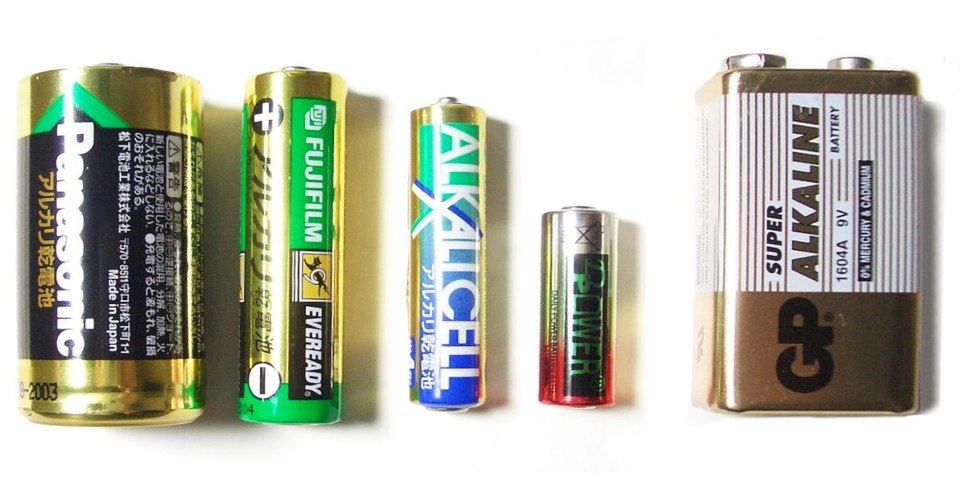
Alkaline batteries are manufactured in standard cylindrical sizes that are interchangeable with older zinc-carbon batteries, as well as in button forms, and several individual cells may be interconnected to form a multi-cell battery like a 9-volt PP3 battery. A cylindrical cell consists of a drawn stainless steel can that serves as the cathode current collector and connection. The positive electrode is a compressed paste of manganese dioxide mixed with carbon powder to enhance conductivity, and this paste may be pressed into the can or deposited as pre-molded rings. A separator, made from a non-woven layer of cellulose or a synthetic polymer, lines the hollow centre of the cathode to prevent internal short circuits while allowing ion conduction, and it must remain stable in the highly alkaline electrolyte solution. The negative electrode is a gel-like dispersion of zinc powder within the potassium hydroxide electrolyte, with the powdered form providing greater surface area for reactions and lower internal resistance compared to a solid zinc can.
To mitigate gassing at end-of-life, the cell is designed with an excess of manganese dioxide beyond what is required to react with all the zinc. A plastic gasket is included to increase leakage resistance, and the final assembly is wrapped in aluminium foil, a plastic film, or rarely cardboard, which acts as a final leak protection layer and provides a surface for printing logos. In common cylindrical sizes like AAA, AA, C, and D, the flat end is the negative terminal and the raised button is the positive terminal, a configuration that is usually reversed in button cells where the flat-ended cylindrical can is the positive terminal. This construction is engineered for both performance and safety during the battery's service life.
Recharging Attempts and Advanced Developments
While designed as primary cells, some alkaline batteries are specifically marketed as rechargeable alkaline batteries and can be recharged a limited number of times. Attempting to recharge standard, non-rechargeable alkaline batteries carries risks of rupture and leakage of corrosive electrolytes, and applying reverse current by mixing batteries of different types or states of charge can also increase leakage risk. Commercial chargers exist for standard alkaline cells, but performance is inconsistent and capacity drops sharply. A test by the UK consumer organisation Which? using two such chargers with Energizer alkaline batteries found that battery capacity dropped on average to 10% of its original value after two charge cycles, with huge variations in results. Significant research is ongoing to improve the fundamental rechargeability of the alkaline chemistry, moving beyond limited-cycle consumer products.
In 2017, research by Gautam G. Yadav reported that alkaline batteries made by interleaving the cathode interlayers with copper ions could be recharged for over 6,000 cycles due to accessing the theoretical second electron capacity of manganese dioxide. These experimental batteries were reported to achieve energy densities over 160 Wh/L, described as the best among aqueous-based battery chemistries. The research indicated this approach could be capable of reaching energy densities comparable to lithium-ion batteries, which are at least 250 Wh/L, if zinc utilization within the batteries were further improved. This line of research points to a potential future where the low-cost, safe aqueous chemistry of alkaline batteries could be combined with high cycle life for new applications.
Leakage Causes, Effects, and Prevention
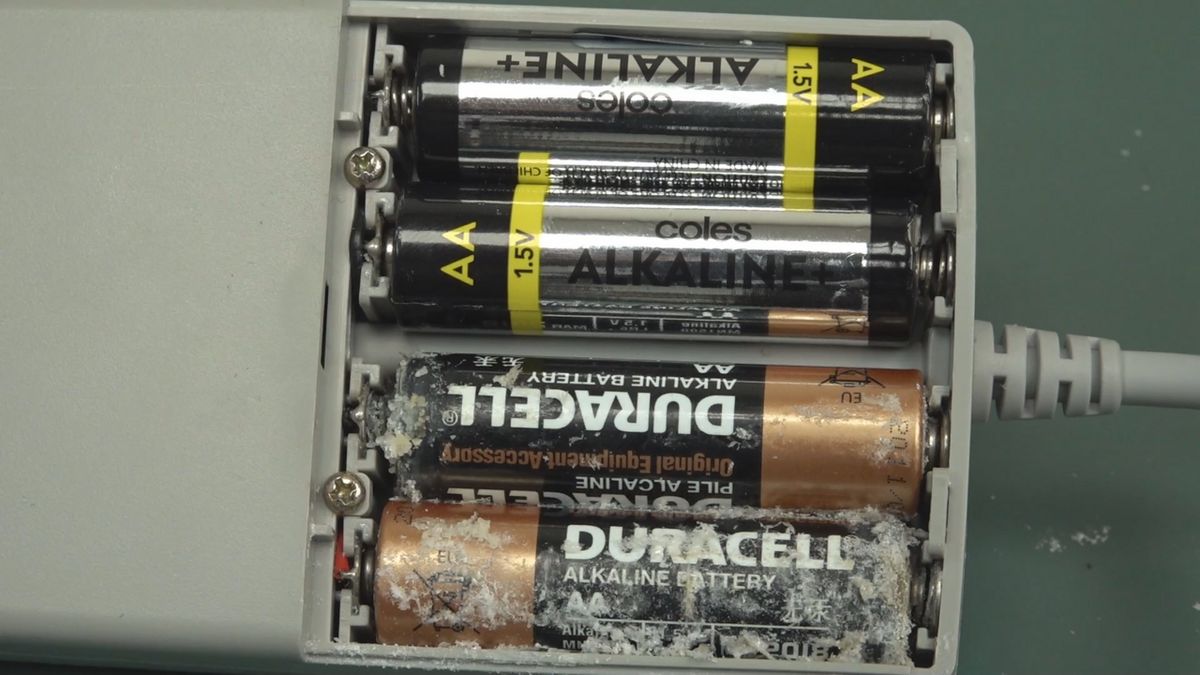
Alkaline batteries are prone to leaking potassium hydroxide, a caustic substance that can irritate skin, eyes, and respiratory systems and cause permanent damage to electronic equipment. Leakage risk increases with age, extreme temperatures such as in a car during summer, and improper practices like attempting to recharge disposable cells or mixing batteries of different types or charge levels in a device. All batteries gradually self-discharge whether installed or not, and dead batteries will eventually leak as the chemical changes during discharge generate some hydrogen gas, increasing internal pressure. This excess pressure can eventually rupture the insulating seals at the battery ends, the outer metal canister, or both, and the steel canister may also corrode over time, contributing to containment failure.
Once a leak occurs, potassium hydroxide absorbs carbon dioxide from the air to form a feathery crystalline structure of potassium carbonate that grows and spreads from the battery. This growth can follow along metal electrodes to circuit boards where it commences oxidation of copper tracks and other components, leading to permanent circuitry damage. The crystalline growths can also emerge from seams around battery covers to form a furry coating outside the device, which corrodes any objects in contact with it. The risk of leakage can be reduced by storing batteries in a dry place at room temperature and by removing batteries from devices intended for long-term storage, as damage from leakage is best mitigated by preventing the leak from occurring in the first place.
Recycling, Disposal Regulations and Practices
Alkaline batteries made prior to 1996 contained mercury and are considered hazardous waste, but modern alkaline batteries, while mercury-free, still contain other heavy metals and corrosive chemicals like zinc and manganese dioxide, which can cause problems in landfills such as leaching toxic chemicals into soil and water or causing fires that threaten sanitation workers. Disposal regulations vary significantly by jurisdiction, creating a complex landscape for consumers. For example, the state of California considers all batteries hazardous waste when discarded and has banned their disposal in domestic waste, while Vermont has implemented a statewide alkaline battery collection program. In Europe, battery disposal is controlled by the WEEE Directive and Battery Directive regulations, which forbid throwing alkaline batteries in with domestic waste and require most stores that sell batteries to accept old ones for recycling. The disposable battery market grows at an estimated rate of 5.5% every year, increasing the volume of material requiring management. In the United States, the Environmental Protection Agency recommends recycling alkaline batteries with a battery recycler or local waste disposal program, but only California mandates universal recycling. Many retailers participate in voluntary take-back programs, though policies differ.
- Retailers that commonly accept alkaline batteries include Batteries Plus, Home Depot, Staples, and IKEA.
- Some stores like Best Buy advertise battery recycling but typically only accept rechargeable batteries, not single-use alkaline cells.
- Consumers can purchase battery recycling kits to mail batteries to certified recyclers.
- Online recycling databases such as Call2Recycle, Greener Gadgets, Earth911, and Green Citizen list local drop-off locations.
- Recycling reduces the need for new raw materials and energy for battery production, lessening environmental damage from mining.
- During the recycling process, the metals from crushed alkaline batteries are mechanically separated, and the waste black mass is treated chemically to separate zinc, manganese dioxide and potassium hydroxide for recovery.
Common Applications and Global Market Presence
Alkaline batteries are a dominant power source for a vast array of portable consumer electronics and household items due to their reliability, shelf life, and availability. They are commonly found in devices such as remote controls, portable media players, digital cameras, children's toys, flashlights, clocks, and radios, providing convenient and immediate power. Their standard cylindrical forms (AAA, AA, C, D) and rectangular 9-volt configuration make them universally compatible with a wide range of existing device designs. The market penetration and sales volume of alkaline batteries are substantial on a global scale, reflecting their status as a default consumer choice for primary battery power. As of 2011, alkaline batteries accounted for 80% of manufactured batteries in the United States, and over 10 billion individual units were produced worldwide that year.
International market shares from the same period illustrate their widespread adoption. In Japan, alkaline batteries accounted for 46% of all primary battery sales. In Switzerland, they represented 68% of all battery sales, while in the United Kingdom the figure was 60%. Across the entire European Union, alkaline batteries accounted for 47% of all battery sales when including secondary battery types in the calculation. The disposable battery market grows at a consistent rate of 5.5% every year. These high market shares demonstrate the sustained commercial importance of the alkaline battery invented by Canadian engineer Lewis Urry. Alkaline batteries contain zinc and manganese dioxide, and the latter is a cumulative neurotoxin that can be toxic in higher concentrations. However, compared to other battery types, the overall toxicity of alkaline batteries is considered moderate.
Questions about Alkaline battery
Who invented the modern alkaline battery?
The modern alkaline dry battery, using the zinc and manganese dioxide chemistry, was invented by the Canadian engineer Lewis Urry in the 1950s. He developed this technology before he started working for Union Carbide's Eveready Battery division. On October 9, 1957, Urry, Karl Kordesch, and P. A. Marsal filed the key United States patent (2,960,558) for the alkaline battery. This patent was granted in 1960 and was assigned to Union Carbide. His work built on earlier battery developments by Thomas Edison.
What is the voltage of an alkaline battery?
The nominal voltage of a fresh alkaline battery is 1.5 volts as established by manufacturer standards. The actual zero-load voltage when new typically ranges from 1.50 to 1.65 volts, depending on the purity of the manganese dioxide used and the zinc oxide content in the electrolyte. During use, the voltage delivered to a load decreases as more current is drawn and as the cell discharges. A cell is generally considered fully discharged when its voltage drops to about 0.9 volts, and multiple cells are connected in series to achieve higher voltages, such as 4.5 volts from three new cells.
Can you recharge regular alkaline batteries?
Standard alkaline batteries are designed as single-use, primary cells and are not intended for recharging. Attempting to recharge them can cause rupture, leakage of hazardous liquids, and corrosion of equipment. While some commercial chargers are sold for this purpose, performance is poor and inconsistent. A test by the UK consumer organisation Which? found that using such chargers on Energizer alkaline batteries resulted in capacity dropping on average to 10% of its original value after just two charge cycles, with huge variations. Specially designed rechargeable alkaline batteries exist for limited recharging, but standard ones pose risks if recharged.
Why do alkaline batteries leak and is it dangerous?
Alkaline batteries leak due to hydrogen gas generation during discharge or self-discharge, which increases internal pressure until it ruptures the seals or metal canister. The leaked substance is potassium hydroxide, a caustic electrolyte that can cause skin, eye, and respiratory irritation. Upon exposure to air, it forms potassium carbonate crystals that can spread and corrode electronic components, leading to permanent circuit board damage. Leakage risk is heightened by storing batteries in hot environments, mixing old and new batteries, attempting to recharge them, or storing them in devices for long periods without use.
How should I dispose of alkaline batteries in Canada?
Disposal rules for alkaline batteries in Canada vary by province and municipality, as there is no single federal mandate requiring their recycling. Residents should check local municipal waste guidelines for specific instructions. Many retailers, including some Home Depot, Staples, and IKEA locations, offer battery recycling drop-off bins as a voluntary service. Online resources like Call2Recycle or Earth911 provide searchable databases to find local recycling centres. Given that alkaline batteries contain heavy metals and corrosive materials, recycling is the recommended best practice to recover materials and prevent potential environmental contamination from landfill disposal.
What are the main advantages of alkaline batteries over old zinc-carbon batteries?
Alkaline batteries have a higher energy density and longer shelf life compared to zinc carbon batteries while providing the same voltage. The key difference lies in the electrolyte, as alkaline batteries use an alkaline potassium hydroxide electrolyte instead of the acidic ammonium chloride or zinc chloride found in zinc carbon types. This fundamental chemical change is responsible for their improved performance and durability. As a result, alkaline batteries became the dominant primary battery, accounting for 80% of manufactured batteries in the US as of 2011. Their widespread adoption is reflected in global sales figures, such as comprising 68% of all battery sales in Switzerland and 60% in the UK.
Sources and further reading
- Alkaline battery (Wikipedia)
- Shop Alkaline Batteries products (store.chandlersales.com)
- What Are the Origins of Alkaline Batteries? | Johnson Eletek (zscells.com)
- What are Alkaline Batteries? (batteryguy.com)
Checked by the Your Space Hamilton desk. Last updated 2026-10-21.