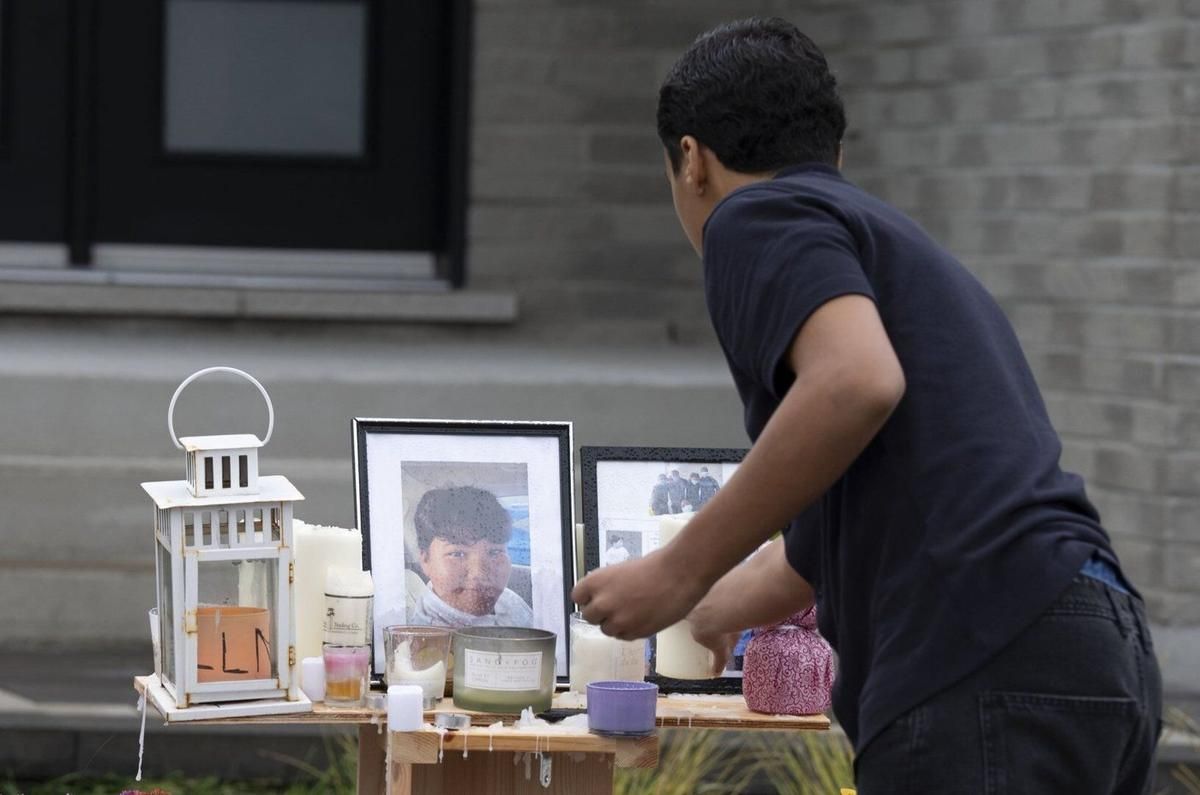
Vigil Marks One Year Since Police Shooting of 15-Year-Old Nooran Rezayi in Longueuil
Family and supporters gathered in Longueuil to remember Nooran Rezayi and demand answers as Quebec prosecutors weigh charges against the officer who shot him.
A solemn procession of mourners walked from a Longueuil police station to the site where 15-year-old Nooran Rezayi was fatally shot one year ago, marking the anniversary of his death with calls for justice and accountability. About a dozen participants, many dressed in black and carrying signs, joined Rezayi's family in a vigil that blended grief with unresolved questions about the police shooting that claimed the teenager's life.
The March and Vigil
The group took 20 minutes to walk from the Service de Police de l'Agglomération de Longueuil station to the residential Saint-Hubert neighbourhood where Rezayi died on September 21, 2025. His mother, Fahima Rezayi, carried a framed photo of her son and cried out
"Justice for my son"during the emotional gathering. Attendees observed a minute of silence at the exact location where the teenager was killed, creating a powerful moment of collective mourning.
White T-shirts bearing Rezayi's smiling image and the words "Justice for Nooran" were worn by family members, while some young attendees wore masks with similar messages. Signs reading "Nooran means light" and "Forever 15" dotted the crowd, alongside a larger banner denouncing police violence. The visual symbolism of the event underscored both personal loss and systemic concerns about police accountability.
READ MORE: Quebec Election Parties Sharply Divided Over Immigration and French Language Policies
Remembering Nooran
Rezayi's sister Frozan remembered her brother as
"the light of our home, of our days"in tearful remarks to the assembled mourners. She painted a portrait of a vibrant teenager who brought joy to those around him through his humor and kindness, with dreams and ambitions that were abruptly ended.
"How has it already been a year since they took my brother's life? And there are still no answers,"she said, encapsulating the family's anguish over the prolonged uncertainty surrounding the case.
Family lawyer Fernando Belton provided additional context about the circumstances of Rezayi's death, telling the crowd that surveillance video showed the teenager had been sitting on a sidewalk with friends when police arrived, and was shot within seconds of their appearance at the scene. This account contrasted sharply with initial police reports about the incident, creating tensions that have persisted throughout the year-long investigation.
The Unresolved Investigation
Quebec's Bureau des enquêtes indépendantes (BEI), the province's police watchdog, completed its investigation into the shooting in March 2026 and submitted findings to prosecutors. According to the BEI, the only firearm recovered at the scene belonged to the officer who shot Rezayi, while investigators also collected a baseball bat, backpack and ski masks. These findings have fueled ongoing debates about whether the police response was proportionate to the situation they encountered.
The processing of the case has moved slowly through Quebec's legal system. Nearly eighteen months after the incident, prosecutors have yet to decide whether to lay criminal charges against the involved officer. This delay has compounded the family's grief and left community members questioning the effectiveness of police oversight mechanisms. Belton articulated these broader concerns when he noted the shooting has left other young people questioning their safety during police encounters.
"I think of every one of these young people who ask themselves, 'Will I be next?'"he said.
Legal and Institutional Fallout
The shooting has spawned multiple legal and administrative proceedings that reflect the complex layers of accountability in police-involved deaths. Six family members have filed a $2.2 million civil lawsuit against Longueuil and its police service, alleging excessive force. These claims remain untested in court but represent one avenue the family is pursuing for accountability.
Separately, the Quebec government launched an administrative investigation into the police service's conduct following the shooting, particularly focusing on the delayed notification of the BEI. Documents revealed Longueuil officers continued questioning witnesses at the scene for one hour and 36 minutes before notifying the independent watchdog, a delay police maintain was justified by operational needs. This aspect of the case has raised questions about potential conflicts of interest when police investigate their own colleagues.
Meanwhile, Montreal police conducted a parallel criminal investigation into events preceding the shooting that resulted in charges against eleven youths. These charges were later stayed in August 2026 after prosecutors obtained new evidence that raised complex legal issues, though none of the original charges involved firearm possession or harm to others. This development added another layer of complexity to the case's legal landscape.
Community Impact and Ongoing Concerns
Belton highlighted how Rezayi's death has altered family dynamics and community perceptions of safety.
"I think of the mothers who have to send their child to school and who are forced to tell them, 'Please, my boy, come back. Come back alive,'"he told mourners, illustrating how the shooting has eroded trust between law enforcement and the communities they serve.
The case has become emblematic of broader concerns about police use of force and accountability in Quebec, particularly involving young people from diverse communities. Rezayi's family and their legal team have vowed to continue pressing for answers, with Belton promising to
"fight until the end to get justice for Nooran."This commitment reflects both personal determination and a recognition of the case's potential to influence broader policy discussions about policing practices.
Systemic Questions and Accountability
The vigil for Nooran Rezayi underscores how fatal police encounters reverberate through families and communities long after the initial tragedy. As prosecutors weigh their decision about potential charges, the case tests Quebec's mechanisms for police accountability and the justice system's ability to provide timely resolutions in sensitive investigations involving law enforcement.
Beyond the legal questions, Rezayi's death has become a touchpoint for discussions about policing practices, youth vulnerability, and the psychological toll on families awaiting answers in such cases. The sustained public attention reflects growing societal expectations for transparency in police-involved deaths, particularly when minors are involved. The visual documentation of the vigil, with its powerful images of grief and protest, has helped maintain public awareness of the case during the prolonged investigative process.
As Frozan Rezayi urged attendees to keep saying her brother's name, the event highlighted how vigils serve both as acts of remembrance and as sustained demands for systemic change. The unresolved nature of this case leaves open fundamental questions about the circumstances of Rezayi's death and the adequacy of current oversight mechanisms to address community concerns. The coming months will reveal whether the legal system can provide answers that satisfy both the family's need for closure and the public's demand for accountability in police-involved fatalities.