Quebec Election Parties Sharply Divided Over Immigration and French Language Policies
As Quebec's population declines, political parties offer starkly different visions on immigration levels and French language integration ahead of the October 5 provincial election, with proposals ranging from cuts to increases in newcomers.
Quebec's October 5 provincial election has become a defining moment for immigration policy as the province grapples with concerning demographic trends and heated debates about cultural identity. New data from the Institut de la statistique du Québec paints a worrying picture of population decline, with the province losing 9,600 residents last year and settling at an estimated 9.03 million as of January 1. These numbers reveal deeper challenges as net migration decreased by 7,150 people in 2025 while the non-permanent resident population - including temporary foreign workers, international students and asylum seekers who fill crucial roles in Quebec's economy - plummeted by 51,400.
The Demographic Imperative
Quebec's shrinking population creates an economic and social paradox that political parties must confront. The province faces acute labor shortages in healthcare, construction and technology sectors while simultaneously experiencing an aging demographic that requires younger workers to sustain social services and economic growth. These realities collide with public sentiment, as a recent SEGMA/Radio-Canada/Le Soleil poll shows 55% of Quebec residents favor reduced immigration levels, 34% support current numbers, and only 7% advocate for increases. The political debate often overlooks how temporary residents and immigrants help address these structural challenges while contributing to Quebec's cultural richness.
Party Platforms on Immigration Targets
The major parties have staked out dramatically different positions that reflect broader ideological divides. The governing Coalition Avenir Québec (CAQ) proposes maintaining the current level of 45,000 permanent immigrants annually through 2029, representing a cautious middle ground. The Parti Libéral du Québec (PLQ) suggests a more flexible approach with a range of 45,000 to 70,000 without fixed annual targets, allowing for responsiveness to economic conditions.
READ MORE: Mississauga mayoral candidates clash on tax freeze, housing and crime
READ MORE: Chaotic Final Quebec Leaders' Debate Sees Clashes Over Health Care Privatization, Referendum Plans
At the progressive end of the spectrum, Québec Solidaire (QS) would raise immigration to 70,000 per year while restoring the Québec Experience Program (PEQ) - a fast-track residency pathway that provided stability for temporary residents before its controversial 2025 closure. In stark contrast, the currently leading Parti Québécois (PQ) proposes slashing permanent immigration to 35,000 annually while cutting temporary immigration in half to between 250,000 and 300,000. The PQ platform prioritizes students and skilled workers already in Quebec while implementing a pause on permanent immigration from outside the province - a policy that could have significant economic repercussions.
French Language Integration Strategies
The immigration debate is fundamentally tied to Quebec's fierce protection of French language and culture, with parties proposing markedly different integration approaches. The PQ's stringent measures include raising French language requirements for work permits, mandating francophone schooling for temporary immigrants' children after 12 months in Quebec, and requiring working-age spouses to demonstrate occupation-specific French proficiency. These policies reflect a cultural preservation agenda that prioritizes linguistic purity over economic pragmatism.
The Conservative Party of Québec (PCQ) takes a decentralized approach by proposing to empower municipalities and regional county governments to determine local immigration needs and integration priorities. This localism contrasts with the PLQ's proposal to give newcomers a two-year grace period before government communications switch exclusively to French, combined with accelerated access to francization courses that help immigrants develop practical language skills for daily life.
Québec Solidaire's workplace-centered plan includes innovative measures like employer-funded French courses and $100 million in new funding for language services, with $30 million specifically allocated for workplace integration programs. These investments recognize that language acquisition happens most effectively through employment and daily interactions rather than classroom instruction alone.
The Human Cost of Policy Debates
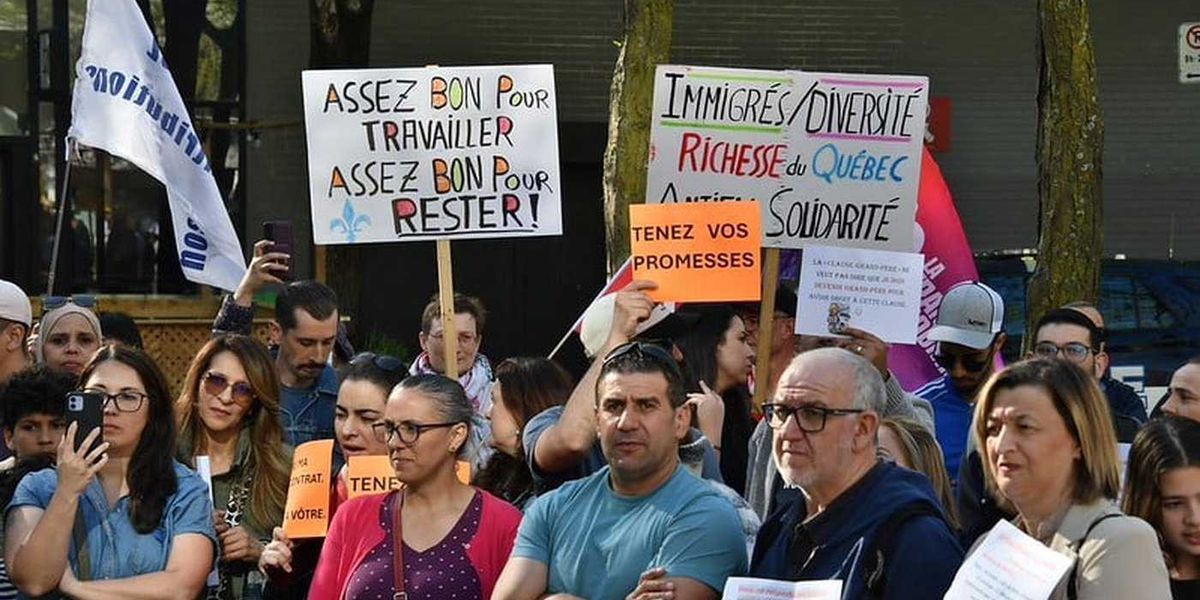
Behind the political rhetoric lie real human consequences that often go unacknowledged in campaign debates. Thibault Camara, president of immigrant rights group Coalition Le Québec c'est nous aussi, articulates the frustration felt by many permanent and temporary residents who contribute to Quebec society but feel excluded from democratic participation.
"We're fighting to say that we're Québécois yet many people refuse to see us as Québécois,"Camara said, highlighting the painful paradox faced by immigrants who build lives in Quebec but remain politically voiceless.
Concordia University researcher Marie-Jeanne Blain identifies troubling narratives that categorize immigrants as either assets or liabilities.
"There is a discourse of the legitimate immigrant contributing to society, the economy and everything, and the immigrant that costs society,"Blain explained. She traces how these classifications evolve with political climates, noting that Quebec society has shifted from viewing immigrants as contributors to seeing them as burdens - a change she attributes to the "banalization of racism" and digital media's polarizing effects.
Unaddressed Systemic Challenges
The political focus on immigration numbers obscures pressing practical issues affecting immigrants' lives. Camara identifies several critical policy gaps: the need to permanently reinstate the PEQ program that provided stability for thousands, the impending expiration of work permits for temporary residents, the lack of pathways to regularize status for those in legal limbo, and chronic backlogs in family reunification applications. These systemic issues receive minimal attention in a campaign dominated by ideological clashes over immigration levels rather than practical integration solutions.
Quebec's Identity at a Crossroads
This election serves as a referendum on Quebec's evolving identity in an interconnected world. The spectrum of party positions - from the PQ's cultural protectionism to QS's inclusive pluralism - reflects deeper societal tensions about belonging and cultural preservation. The campaign rhetoric and eventual policies will influence whether Quebec can maintain its distinct linguistic character while creating meaningful pathways for newcomers to participate fully in society. The outcome will shape the province's social cohesion, economic vitality, and position within Canada for decades to come.
As voters prepare to cast ballots, the fundamental question remains: Can Quebec address its demographic and economic challenges without sacrificing the values of openness that have historically defined Canadian society? The answer will determine whether the province embraces its role in a globalized world or retreats into cultural isolationism at a moment when its workforce needs renewal more than ever.