Arctic Ocean bacterium uses acetone to consume carbon dioxide
The bacterium Porticoccus arcticus was found to use acetone carboxylation, a process that also captures atmospheric CO2.
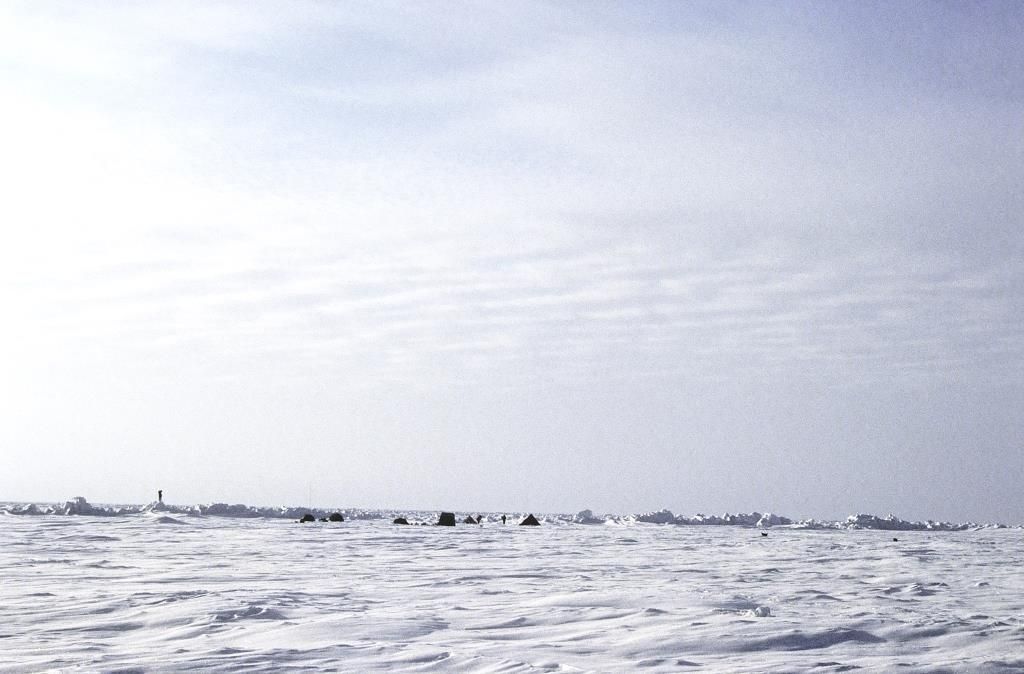
A newly identified Arctic Ocean bacterium uses acetone to incorporate carbon dioxide into its metabolism, a process that helps it survive in nutrient-scarce waters. Researchers from Concordia University describe the organism, Porticoccus arcticus, in a study published in Nature Communications. The team found genomic evidence that the bacterial population uses a process called acetone carboxylation, converting acetone and carbon dioxide into compounds for its central metabolism. The bacterium was studied in the frigid waters of the Beaufort Sea, just north of the Yukon in the Arctic Ocean's Canada Basin.
"This study introduces two new discoveries," said David Walsh, a professor in Concordia's Department of Biology and the paper's corresponding author. "The first is a group of organisms, P. arcticus, that has a unique metabolism that uses organic carbon while at the same time has the capacity to use light as an energy source. We call this process photoheterotrophy." He added, "The second discovery is the way the organism consumes acetone to also consume carbon dioxide out of the atmosphere. This acetone-mediated inorganic carbon assimilation combines what animals do, eating food, in this case, acetone, with what plants do: fixing CO2."
Acetone is produced by marine organisms, including microscopic algae, and through chemical reactions involving sunlight and dissolved organic matter. While scientists have identified other ways marine bacteria consume acetone, this study provides evidence of a different pathway in Arctic waters. Genetic analyses suggest P. arcticus has adapted to life near the ocean surface and can be an important member of the Arctic microbial community, accounting for up to nine per cent of detected bacteria at some locations. The bacterium's relatively small genome contains the complete set of genes needed for acetone carboxylation. It also has multiple genes for light-sensitive proteins called proteorhodopsins that help cells capture energy from sunlight. The genes involved in both acetone processing and light capture were among the organism's most active, according to the researchers. This combination of traits may allow the bacterium to use sunlight for energy while supplementing its carbon supply.
READ MORE: Wildfire smoke cools lakes across North America, scientists find
READ MORE: Auditor general to release reports on emissions, dental care and military ammunition
"The genomic composition of these organisms led us to reconstruct the different types of energy and carbon metabolisms that exist," Walsh said. "That is how we found this very specific set of genes associated with the use of acetone, which was unexpected. We discovered that the organism's genes were telling us about something we did not suspect was happening in an ecosystem. This was a surprise, as we were not actively looking for acetone-degrading bacteria that can use light."
Walsh said he does not know what the implications of a warming Arctic Ocean mean for P. arcticus. Changing sea-ice conditions could affect the bacterium's future distribution by influencing sunlight and acetone availability. The research team plans to look for evidence of this kind of behaviour in other oceans and in freshwater bacterial populations. The study's lead author was Susan McLatchie, who earned her MSc in 2023, with contributions from PhD student Sara Palestini and research assistant Asher Woodhead of Concordia, and Tony Gutierrez of Heriott-Watt University in Edinburgh, Scotland. The Natural Sciences and Engineering Research Council of Canada helped fund the study.
With files from Mirage News