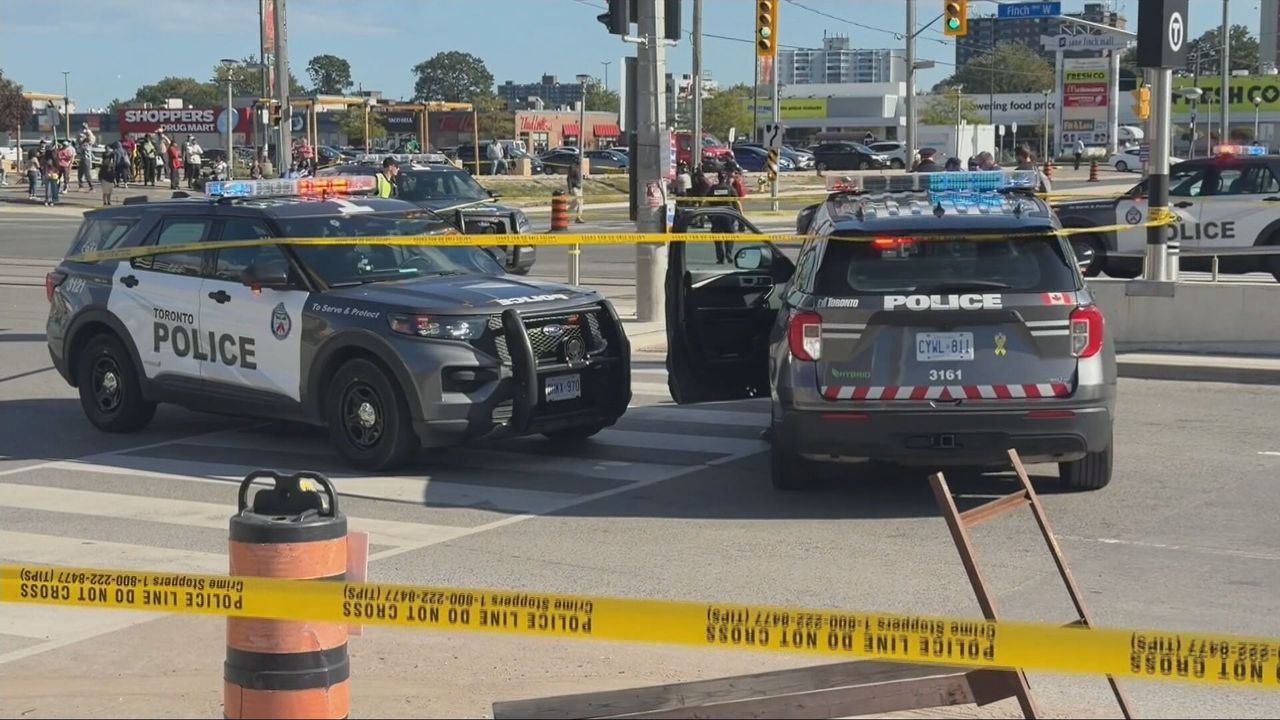
Teenage boy killed in daytime shooting at Jane and Finch intersection
A teenage boy has died after being shot Monday afternoon at one of Toronto's most notorious intersections, with police urging the shooter to surrender as homicide detectives take over the investigation and community members grapple with another tragic loss of young life in an area with a long history of violence.
A teenage boy was pronounced dead after being shot in broad daylight at Toronto's Jane Street and Finch Avenue West intersection on Monday afternoon, marking the latest violent incident in an area that has become synonymous with gun violence in Canada's largest city. The shooting occurred just after 3:30 p.m., with police responding to reports of gunfire at the troubled intersection that has been the site of multiple violent crimes spanning decades.
Crime scene investigation details
Officers arriving at the scene found the victim, whose exact age has not been officially released but is confirmed to be a teenage male. Emergency medical services transported him to hospital in critical condition where he succumbed to his injuries. Police have not released the victim's identity pending notification of family members, a process that often takes additional time when dealing with minors. Investigators located a skateboard at the scene but have not determined its connection to the incident. The presence of this personal item suggests the victim or potential witnesses may have been local youth engaged in typical neighborhood activities before the violence erupted.
The eastbound lanes of Finch Avenue West at Elana Drive were closed for several hours as police forensic teams meticulously processed the extensive crime scene, causing significant traffic disruptions in the area. The Toronto Transit Commission reported service interruptions on Line 6 Finch West between Norfinch Oakdale and Driftwood stations during the police investigation, with regular service resuming later in the evening after evidence collection was completed.
Police response and investigation status
The Toronto Police Service's Homicide and Missing Persons Unit has assumed control of the investigation, with Insp. Dan Pravica confirming the transition to specialized detectives who handle the city's most serious violent crimes. The lack of released suspect description at this early stage indicates investigators face substantial challenges in solving the shooting, a common obstacle in gang-related violence cases where witness cooperation is frequently hampered by fear of retaliation.
Supt. Jack Gurr made an emotional statement at the scene that reflected the human toll of such incidents, calling it a "very, very sad day" and directly addressing the perpetrator with a plea that combined legal advice with moral appeal:
"For the person who did this, get a lawyer, and turn yourself in."Authorities are urging anyone with information to come forward, emphasizing the option of anonymous tips through Toronto Crime Stoppers as an alternative for those reluctant to speak directly with police.
Community impact and neighborhood history
The shooting occurred in a neighborhood that has struggled with systemic violence for generations, despite numerous police initiatives and community outreach programs. Local residents and community organizations have repeatedly expressed concerns about youth involvement in gang activity and the alarming prevalence of firearms in the area. Monday's fatal shooting represents at least the second major violent incident in North York this summer, continuing a troubling pattern that community leaders have long sought to break.
Jane and Finch has consistently ranked among Toronto's most dangerous intersections, with police statistics documenting multiple shootings reported annually. The area's concentration of social housing combined with limited economic opportunities for youth has created persistent challenges for violence prevention efforts. Past initiatives have included increased police patrols, community centers, and youth employment programs, yet the fundamental issues driving violence remain deeply entrenched.
Timing and public safety implications
The 3:30 p.m. timing of the shooting represents a concerning departure from more typical late-night violence patterns in the area. A daytime shooting in a public space significantly raises public safety concerns and suggests either increasing boldness among perpetrators or the erosion of informal community safeguards that previously limited such overt violence. The timing also increases the potential number of witnesses, though historical reluctance to cooperate with police investigations often hampers solving such cases.
Evidence analysis and forensic potential
The skateboard found at the scene represents a potentially crucial piece of evidence that forensic teams will examine for DNA evidence, fingerprints, or other trace materials. If linked to the victim, it could provide investigators with valuable insight into his activities and movements prior to the shooting. If connected to a witness, it might help identify individuals who fled during the chaotic aftermath. However, the absence of immediate suspect information underscores the investigative challenges posed by gang-related shootings where witness intimidation frequently creates an atmosphere of silence.
Systemic issues and root causes
This tragedy extends beyond being another statistic in Toronto's gun violence tally; it highlights the complex interplay of factors that perpetuate cycles of violence in marginalized neighborhoods. The incident occurs against a backdrop of ongoing debates about police funding versus social program investments, with community advocates arguing that reactive policing alone cannot address the root causes of violence. Deep-seated issues including generational poverty, lack of economic opportunity, inadequate youth services, and gang recruitment tactics continue to fuel violence in underserved communities like Jane and Finch.
Community response and prevention strategies
Local organizations are expected to organize vigils and renewed calls for action following this latest loss of young life. Past community responses have included peace marches, youth mentorship programs, and neighborhood safety initiatives, though sustaining these efforts has proven challenging without consistent government support. The shooting will likely reignite discussions about implementing more effective witness protection programs that could encourage community cooperation while keeping informants safe from retaliation.
Long-term solutions and policy implications
The tragedy underscores the need for comprehensive, long-term solutions that address both immediate safety concerns and underlying social determinants of violence. Community leaders have consistently advocated for increased funding for youth programs, better access to mental health services, and economic development initiatives that provide viable alternatives to gang involvement. As the investigation continues, residents face the dual challenge of mourning another lost young life while mobilizing for meaningful change in one of Toronto's most troubled neighborhoods.