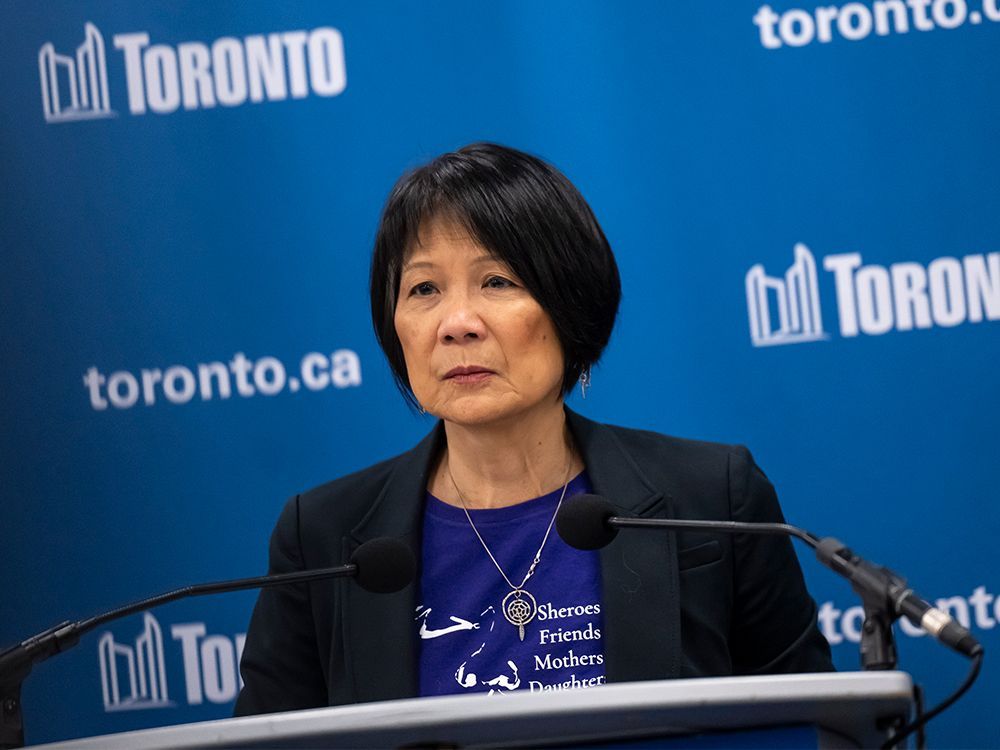
Olivia Chow's Relationship with Toronto's Jewish Community Reaches Breaking Point Over Debate Snub and Controversial Rhetoric
Toronto Mayor Olivia Chow faces escalating criticism from the city's Jewish community after refusing to attend an antisemitism debate while maintaining controversial positions on Israel, raising questions about her commitment to their security concerns.
Growing Tensions Between Mayor and Jewish Community
The relationship between Toronto Mayor Olivia Chow and the city's Jewish community has deteriorated to its lowest point in decades, with community leaders expressing profound disappointment over what they perceive as the mayor's inadequate response to their security crisis. This breakdown comes at a time when Toronto's Jewish institutions face unprecedented threats, including shootings, bomb threats, and daily security concerns that have forced many members to conceal visible signs of their Jewish identity in public spaces.
The Debate That Never Happened
At the center of the controversy is Chow's refusal to participate in a September 8 mayoral debate focused on antisemitism and Jewish community safety. Her justification - that she doesn't attend candidate events before her campaign officially launched on September 9 - struck many as a flimsy excuse for avoiding a critical discussion. Organizers revealed they had been in communication with Chow's campaign for weeks without receiving this explanation earlier, and had even offered to adjust the date to accommodate her schedule. The fact that all other mayoral candidates attended the forum while Chow abstained sent a powerful message about her priorities, according to community leaders.
Toronto police statistics underscore why the debate mattered so deeply to the Jewish community. In 2025, Jews were the targets of 82% of religiously motivated hate crimes in the city, despite comprising only about 3% of Toronto's population. This disproportionate targeting has created a climate of fear unlike anything the community has experienced since the 1930s, making the mayor's absence from the safety discussion particularly painful.
Controversial Rhetoric on Israel
The debate controversy follows another incident that damaged trust between Chow and Jewish leaders - her November 2023 speech at a National Council of Canadian Muslims gala where she declared "The genocide in Gaza impacts us all" to audience applause. The use of the term "genocide," which legally refers to the deliberate and systematic destruction of a racial, ethnic or religious group, represents one of the most serious accusations that can be made against a state. While Chow has every right to criticize Israeli government policies, Jewish organizations argue this specific language crosses a line into demonization.
Howard Levitt, a prominent labour lawyer and National Post columnist, notes there's a crucial distinction between legitimate criticism of a government and rhetoric that essentially denies the right of the world's only Jewish state to exist. "Genocide is not a synonym for war or civilian suffering," Levitt writes, pointing out that Israel was established in the wake of an actual genocide that killed six million Jews. For many in Toronto's Jewish community, Chow's choice of words in this context feels particularly insensitive given their current vulnerability.
Pattern of Engagement Raises Questions
While Chow's defenders point to her public statements condemning antisemitism and supporting security measures for Jewish institutions, critics argue these gestures appear perfunctory when examined alongside her broader pattern of engagement. The mayor has shown willingness to use strong language before audiences aligned with Palestinian causes, yet when Toronto's Jewish community directly requested her presence to discuss their safety concerns, she offered a procedural excuse for her absence.
This selective engagement has led to questions about political calculations. As Levitt observes: "A politician does not have to personally be politically opposed to the Jewish community's interests to make herself useful to people who are. She only has to decide that confronting them is politically inconvenient. That is how prejudice becomes normalized." The comparison to how Chow would likely respond to a similar crisis affecting other minority groups in Toronto hangs over the controversy.
Community in Crisis
Toronto's Jewish leaders describe a community under siege, with schools, synagogues and businesses requiring constant security protection against physical threats. Many parents report their children no longer feel safe wearing Star of David necklaces or kippahs in public, while elderly community members avoid certain neighborhoods altogether. In this context, the mayor's debate absence represents more than a scheduling conflict - it's seen as a failure to acknowledge the severity of their predicament.
The pain stems not just from Chow's recent actions but from a growing accumulation of perceived slights. From the "genocide" remarks to the debate refusal, many in the community now question whether their safety ranks as a priority for the mayor. This sentiment has been exacerbated by the timing, coming during what community leaders describe as their worst crisis since the 1930s.
Accountability and Leadership
The controversy raises fundamental questions about political leadership during moments of crisis for minority communities. When groups face existential threats, constituents look beyond boilerplate condemnations to examine where leaders choose to show up, which language they use in different forums, and whose concerns they visibly prioritize. Chow's choices in these areas have created a perception among many Jewish Torontonians that their safety concerns don't receive equal consideration.
Toronto's complex demographics, with significant Jewish and Muslim populations deeply invested in Middle East issues, present unique challenges for municipal leaders. The test for Chow now is whether she can demonstrate through concrete actions - not just statements - that she's equally committed to protecting all communities, even when doing so carries political costs. Rebuilding trust will require more than words; it demands consistent, visible engagement with Jewish leaders and institutions during their time of need.
Moving Forward
As Levitt notes in his column, the burden of proof now rests with Chow to demonstrate her commitment to Toronto's Jewish community goes beyond symbolic gestures. This may require explaining why she chose such extreme language about Israel while avoiding direct engagement with Jewish concerns, and what concrete steps she'll take to ensure the community's safety receives the same urgency as other groups facing discrimination in the city.
The coming weeks and months will reveal whether Chow can repair this fractured relationship or whether the alienation becomes a permanent feature of her mayoralty. For Toronto's Jewish community, still reeling from unprecedented threats to their safety, the stakes couldn't be higher.