Major Canadian Language School ILAC Closes After Bankruptcy Filing
The International Language Academy of Canada has ceased operations after filing for bankruptcy, citing financial struggles and regulatory challenges over the past three years.
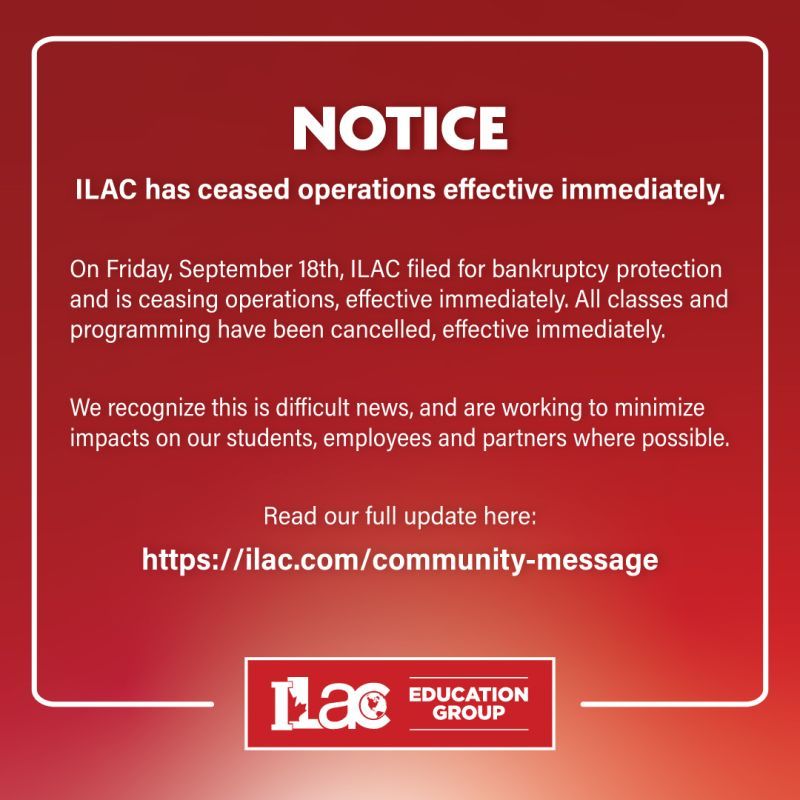
One of Canada's most prominent private language schools has permanently closed its doors following a bankruptcy protection filing. The International Language Academy of Canada (ILAC), operating campuses in Vancouver and Toronto, announced its immediate shutdown in a public notice dated September 19, 2026. This sudden closure marks the end of an institution that played a significant role in Canada's international education sector for three decades.
Three Decades of Operation Ends Abruptly
Established more than 30 years ago, ILAC built a reputation as a leading provider of English language training primarily catering to international students. The school's programs were designed to help students improve their language proficiency for academic studies or professional advancement in Canada. In its final statement, ILAC emphasized its historical role in helping international students build communities and careers through language education. The abrupt nature of the closure left students and staff without advance notice, as all current classes and programming were immediately cancelled following the bankruptcy filing.
Mounting Financial and Regulatory Pressures
ILAC's public notice cited progressively worsening financial difficulties over the preceding three years, with specific reference to significant regulatory challenges affecting the private language school sector. While the statement didn't detail specific regulations, the timing aligns with broader changes in Canada's oversight of educational institutions serving international students. These include enhanced scrutiny of student visa applications, stricter accreditation standards, and increased monitoring of international student programs. The school maintained it had exhausted all possible avenues to secure necessary operational resources before concluding that continuing operations was untenable.
READ MORE: International students left in limbo as Toronto's ILAC school abruptly closes amid bankruptcy
READ MORE: Third Ontario education union schedules strike vote as contract talks stall
Bankruptcy Process Underway
The school has engaged KPMG Inc., a major professional services firm, to serve as the licensed insolvency trustee overseeing the bankruptcy proceedings. This appointment indicates the process will adhere to standard bankruptcy protection procedures under Canadian law. The formal bankruptcy protection filing occurred on Friday, September 16, 2026, preceding the public announcement by three days. While initial details remain limited, the school pledged to provide ongoing updates about the bankruptcy process through its website as new information becomes available.
Immediate Consequences for Stakeholders
The unexpected shutdown creates significant disruption for current students, especially international students who may have made substantial life changes to attend ILAC programs in Canada. Faculty and staff face immediate job losses without clear information about compensation or support during the transition. Partner institutions that collaborated with ILAC on academic pathways or student placements must now reconsider their arrangements. The school acknowledged these hardships in its statement, saying
We understand and deeply regret the challenges our community will face because of this news,but offered no specific remedies or assistance measures at this preliminary stage.
Communication Plan for Affected Parties
ILAC established basic communication channels through its website, committing to post updates about the bankruptcy process and its implications for various stakeholders. A separate notice directed current students and institutional partners to monitor the site for developments regarding programs and services. While the school promised direct outreach to impacted individuals, it provided no details about how this communication would occur or when key information might be shared. This lack of specificity leaves many practical questions unresolved, including potential tuition reimbursement, transfer of academic credits, or alternative program options for displaced students.
Broader Implications for International Education
The collapse of ILAC, as one of Canada's most established language schools, raises important questions about financial sustainability across the private education sector serving international students. Language institutions like ILAC frequently serve as gateway providers for foreign students who later progress to Canadian colleges and universities. The closure temporarily reduces available options for prospective students seeking English language instruction in two of Canada's largest cities. This development also underscores potential financial vulnerabilities among private education providers, particularly those heavily reliant on international student enrollments. Regulatory authorities may face growing calls to examine oversight frameworks and financial safeguards for private educational institutions in light of this high-profile failure.
Historical Context of Language Education in Canada
ILAC's three decades of operation placed it among Canada's longest-running private language schools, having established itself during a period of significant expansion in international education. Its closure follows patterns observed in other national contexts where private language schools have contended with evolving regulations and market pressures. The Canadian language education sector has traditionally been regarded as stable, making ILAC's bankruptcy particularly notable. This event may stimulate renewed discussion about quality assurance mechanisms and financial health requirements within the industry.
Looking Ahead
As KPMG administers the bankruptcy process, forthcoming disclosures will provide greater clarity about the school's financial circumstances and potential outcomes for various stakeholders. The coming months will determine whether any components of ILAC's operations might continue under alternative management or if the closure will prove absolute. Other language schools may experience increased enrollment inquiries from displaced ILAC students, while regulators could revisit policies governing private education providers. The full implications for Canada's standing as a preferred destination for language education remain uncertain, but the disappearance of a major institution like ILAC undoubtedly creates significant short-term disruption in the sector.