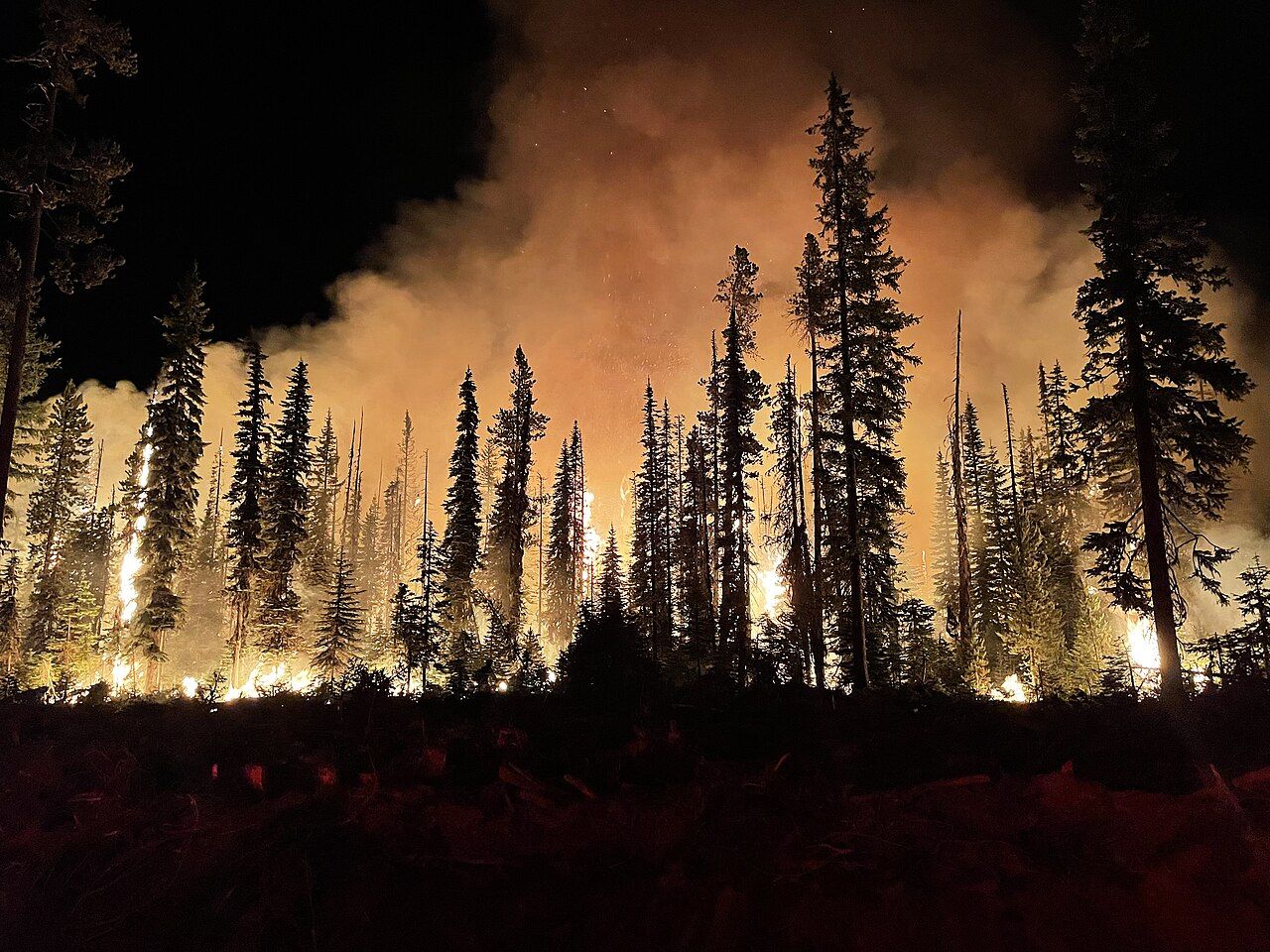
Wildfire smoke deaths in Canada surge 275 percent since early 2000s, report finds
A major report says an average of 4,000 deaths were linked to wildfire smoke annually from 2021 to 2025.
A new report shows deaths associated with wildfire smoke in Canada have risen by about 275 percent since the early 2000s. The study, published Tuesday in The Lancet medical journal, found an average of 4,000 such deaths occurred annually between 2021 and 2025. That compares to an average of 1,050 deaths per year in the period from 2003 to 2012. The findings come as Canada has endured several of its worst wildfire seasons on record, with smoke blanketing urban centres far from the flames.
Ian Culbert, executive director of the Canadian Public Health Association, said the data demonstrates the current impact of climate change on health. "Climate change and the impacts on health are not some abstract environmental issue that will affect us some at some point in decades from now. We can measure its effect on health in Canada today," Culbert said. The report also attributed 80 percent of Canada's heatwave days in 2025 directly to fossil fuel-driven climate change. It noted a dramatic increase in tree cover loss, with 5.2 million hectares lost in 2024, a 148 percent rise from 2016, and wildfires caused 86 percent of that loss.
Report co-author Ian Hamilton, chair in planetary health at the George Institute for Global Health, explained the analysis looked at excess deaths during smoky periods compared to historical baselines. "For any individual, it might not be that [wildfire smoke] was the trigger," Hamilton said. "But on average across the population, we're seeing more death associated with those periods." The researchers used the 2003-12 period as a baseline for measuring wildfire smoke mortality.
READ MORE: Study finds most at-risk species face years-long delays for federal protection
READ MORE: Los Angeles wildfires show growing health threat of wildfire smoke
Scott Weichenthal, an epidemiology professor at McGill University, said the death toll understates the full health burden. "When wildfires happen, PM 2.5 goes up and we know that PM 2.5 is a cause of premature death, I think that’s where those numbers are coming from," Weichenthal said. He added that fires release many other harmful substances known to cause cancer. He noted that mortality figures do not capture all health effects from exposure.
Weichenthal said short-term pollution spikes lead to more hospitalizations for heart and lung problems, especially among people with pre-existing conditions. The report also measured increased heat exposure, finding Canadians faced 36 more hours per year of heat stress risk during moderate outdoor activity in 2016-25 compared to the 1990s. Dr. Courtney Howard of the Global Climate and Health Alliance said this is particularly dangerous for young athletes who may push themselves too hard. "Young people are almost so strong, especially athletes, that they push through heat and heat related exhaustion," Howard said. "And unfortunately that can actually lead to mortality."
Dr. Anna Gunz, a pediatrician in London, Ont., described a case where a young patient died after cardiac arrest while playing outside. Tests pointed to asthma, and the child's mother immediately connected it to the humid weather. "It sends chills down my spine," Gunz said, to hear a parent relate their child's death to the weather. Older adults, young children, pregnant women and people with health conditions face the highest risks from heat and smoke.
Culbert warned that climate trends are moving in the wrong direction, with the El Niño climate pattern likely to bring another hot, dry summer. "The data that we’re seeing is really serious, and the trends are moving in the wrong direction," he said. The Canadian Public Health Association called for a permanent federal climate and health adaptation fund, as current Health Canada funding is set to expire in 2027-28. "Public health really needs predictable, sustained capacity to prepare for heat, wildfire smoke and other climate related threats," Culbert said. "These aren’t one-off emergencies anymore."
With files from The Canadian Press, Global News and CBC News