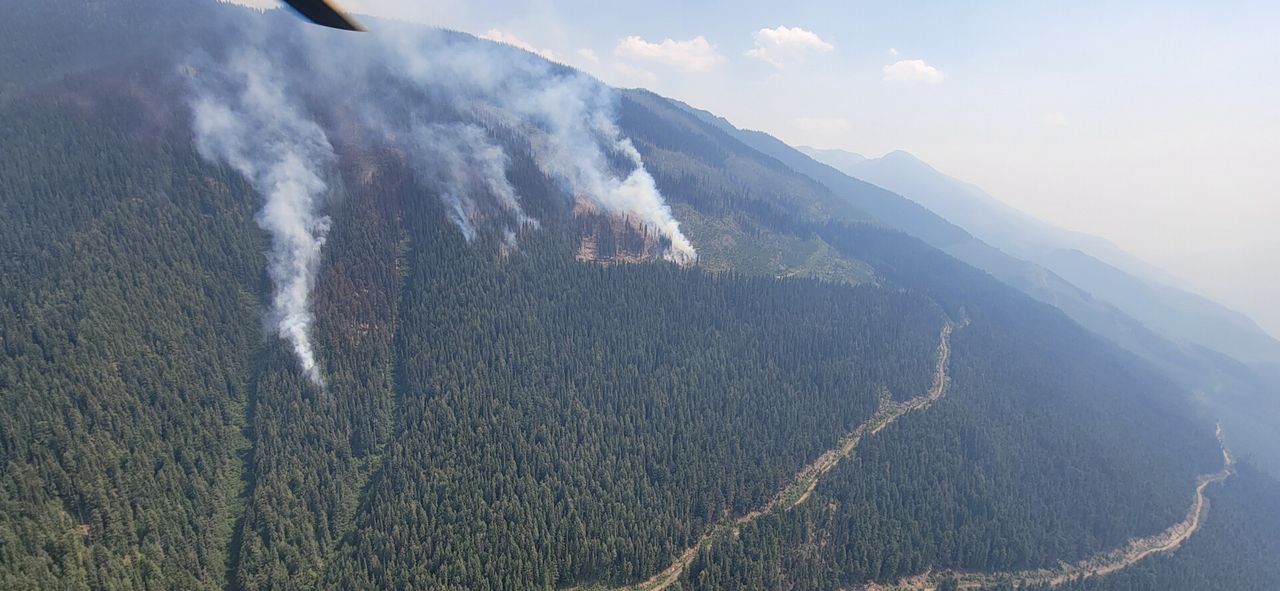
Most West Kootenay wildfires under control after rain, cooler weather
Only one of 41 fires in the Southeast Fire Centre is not under control, with the largest in the West Kootenay at 1,775 hectares.
Rain and cooler temperatures have brought the vast majority of wildfires in B.C.'s West Kootenay region under control, according to the B.C. Wildfire Service.
As of Friday morning, 43 per cent of the province's 96 total wildfires were burning in the Southeast Fire Centre region, which contains the West Kootenay, but none were considered out of control, the service said. Only two wildfires across B.C. are deemed out of control.
"After a summer of raised wildfire hazard and activity across southern B.C., rain and cooler temperatures in late August and early September moderated fire behaviour, assisting firefighters with initial attack response and progress on currently burning wildfires," the BCWS said in a province-wide statement.
READ MORE: Fire officer says crews caught in cycle of wildfires and floods
READ MORE: Endangered orangutans rescued from Indonesian wildfires as haze spreads
In the Southeast Fire Centre, all but one of 41 wildfires are listed as "under control." The sole exception is the Rossiter Creek wildfire, discovered on Sept. 18 seven kilometres southwest of Lardeau, which is listed as "being held."
The largest wildfire still burning in the West Kootenay portion of the region is the Hope Creek North wildfire at 1,775 hectares. The lightning-caused fire, burning five kilometres southeast of Trout Lake, has not had any resources committed to it.
The second largest in the area is the Inonoaklin Creek wildfire at 1,510 hectares, 20 kilometres northwest of Needles. The largest current wildfire in the southern portion of the Southeast district is the Matthew Creek wildfire at 1,826 hectares, 16 kilometres northwest of Kimberley.
The BCWS noted that fall weather brings shorter days, cooler temperatures and increased precipitation, which help decrease fire activity. However, the service warned that warmer and drier-than-normal conditions are expected this fall.
"There is potential for higher-than-normal fire activity later this fall, as well as warm, dry overwinter conditions that could affect existing drought and snowpack levels," the statement said.
With files from Castanet