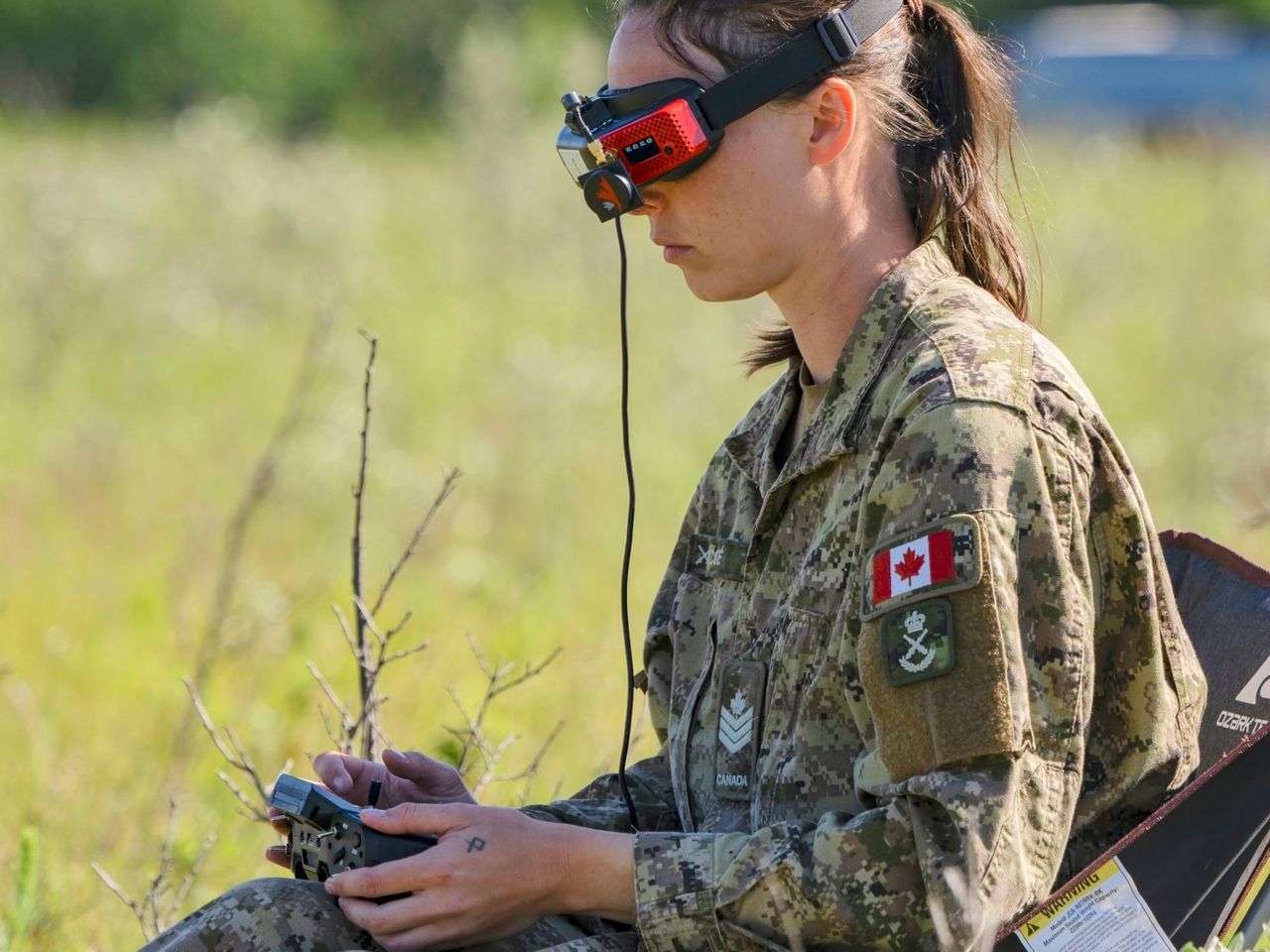
Canadian military accelerates drone development through industry partnership program
The Canadian Armed Forces is testing domestic drone technology at a NATO facility as part of its push to modernize military capabilities through rapid innovation.
The Canadian military is fast-tracking its drone capabilities through direct collaboration with domestic manufacturers, holding live demonstrations at a specialized NATO testing facility northwest of Ottawa. The RED COBALT Uncrewed Systems Accelerator event represents one of the military's most significant efforts to integrate cutting-edge drone technology into its operations as warfare increasingly relies on aerial surveillance and unmanned systems. This initiative comes amid rising global tensions and a recognition that technological superiority on the battlefield now often depends on rapid adaptation of commercial innovations.
Military-industry collaboration drives innovation
Lt.-Gen. Darcy Molstad, commander of Canadian Joint Forces Command, emphasized the importance of direct engagement between military operators and technology developers.
"This is an example of how the military must do business with industry to innovate swiftly,"Molstad told Global News. The program allows drone operators to provide real-time feedback to manufacturers about practical battlefield requirements and performance limitations, creating a dynamic testing environment impossible to replicate through conventional procurement processes.
The NATO test centre in the Ottawa Valley provides a controlled environment to evaluate systems under simulated combat conditions. Military analysts note this marks a departure from traditional procurement processes that often lag behind technological advancements by years. The facility's specialized infrastructure allows for testing of drone capabilities across various scenarios, from reconnaissance missions to electronic warfare applications.
Ukraine conflict informs Canadian drone strategy
Canadian defense planners are closely studying the extensive use of low-cost commercial drones in Ukraine's defense against Russia. The conflict has demonstrated how small, affordable unmanned systems can provide tactical advantages against larger conventional forces.
"Molstad is co-ordinating the Canadian Armed Forces' efforts to identify the types and mix of new uncrewed platforms the military will need, like the kinds of lower-cost drones that have been deployed in the Ukraine war,"according to Global News reporting. This strategic shift recognizes that modern warfare increasingly favors agile, decentralized systems over traditional expensive platforms.
This strategic shift comes amid broader military modernization efforts following increased defense spending commitments. After dropping to 1% of GDP under the Harper government, military expenditures rose to 1.4% under Trudeau and recently reached 2% - a NATO spending target - under current financial leadership. The increased budget allows for more rapid adoption of emerging technologies while maintaining core capabilities.
Domestic drone industry gets military showcase
The RED COBALT event provides Canadian technology firms with rare access to military decision-makers and end-users. Participating companies can demonstrate their systems' capabilities in scenarios that simulate actual operational requirements. This direct feedback loop helps manufacturers align their research and development with defense priorities, potentially giving Canadian firms a competitive edge in the growing defense technology market.
Unlike traditional defense contractors, many participants specialize in commercial drone technology that can be adapted for military use. The program reflects growing recognition that innovation often emerges from civilian technology sectors rather than traditional defense industrial bases. By tapping into Canada's vibrant commercial drone sector, the military gains access to cutting-edge developments that might otherwise take years to reach conventional defense channels.
Surveillance capabilities raise privacy concerns
While focused on military applications, the drone development program intersects with broader debates about surveillance technology. Some social media commentators have expressed alarm about potential domestic applications, with one anonymous poster claiming
"the AI data centres are being constructed for video and online surveillance."Others referenced the controversial use of Ring doorbell cameras and Flock automated license plate readers by law enforcement, highlighting public anxiety about expanding surveillance networks.
Military officials emphasize that RED COBALT specifically addresses defense requirements, though the underlying technologies often have dual-use potential. The event's focus remains on battlefield applications rather than domestic surveillance capabilities. However, the convergence of military and civilian surveillance technologies continues to spark debate about appropriate boundaries and oversight mechanisms.
Strategic implications for Canadian defense
The accelerated drone development program comes as Canada reassesses its military posture amid global instability. Some commentators connected the initiative to broader security concerns, with one social media user advocating to
"send some drones to Ukraine because if we don't stop Russia, they will set their sites on Poland next and Canada eventually."While such statements reflect heightened security anxieties, they also underscore the growing importance of drone technology in contemporary deterrence strategies.
Experts suggest the program positions Canada to contribute more effectively to NATO missions while developing sovereign capabilities less dependent on foreign suppliers. The emphasis on lower-cost systems could allow for broader deployment across military units compared to traditional high-end equipment. This approach aligns with NATO's focus on interoperability while maintaining national control over critical defense technologies.
Technological sovereignty and future warfare
The RED COBALT initiative represents more than just equipment testing; it embodies a strategic shift toward technological sovereignty in Canadian defense policy. By developing domestic expertise in drone systems, Canada reduces its reliance on foreign suppliers for critical military capabilities. This becomes particularly important as drones evolve from simple reconnaissance tools to complex networked systems capable of electronic warfare, logistics support, and even autonomous operations.
The program also acknowledges that future conflicts will likely involve extensive use of drone swarms and other unmanned systems, as demonstrated in recent conflicts. By building relationships with innovative Canadian firms now, the military ensures access to emerging technologies that could prove decisive in future operational scenarios.
Why this military shift matters
The RED COBALT initiative signals a fundamental change in how Canada develops and deploys military technology. By embracing rapid innovation cycles and closer industry collaboration, the armed forces aim to overcome traditional procurement bottlenecks that have left equipment outdated before deployment. The focus on drones reflects their transformative impact on modern warfare, where relatively inexpensive systems can dramatically enhance situational awareness and targeting capabilities.
This approach also strengthens Canada's domestic defense industry while reducing reliance on foreign suppliers - a strategic priority given global supply chain vulnerabilities. As autonomous systems become increasingly central to military operations worldwide, programs like RED COBALT help ensure Canadian forces remain interoperable with NATO allies while developing specialized capabilities suited to national security requirements. The initiative represents a proactive response to evolving threats and a recognition that military advantage increasingly depends on technological innovation and rapid adaptation.